

 Megtekintés
 Küldés
 Megosztás
 Részletek

 Letöltés
 Hasonló darabok
 X-ray felvétel
 Diavetítés
 Statisztika
untitled (8550)


 Összes részlet megjelenítése
Giclée / Műnyomat
Múzeumi minőségű giclée vagy vászonnyomat, gyors gyártással és rugalmas finomítási lehetőségekkel. ( Kézzel festett másolat rendelése Áttérés digitális képre)




P118B $10

P118H $10

P118W $10

P438Z $10

P508JH $12

P508YH $12

P805H $10

P805Z $10

P919BZ $10

P919G $10

P919XJ $10

P959ZH $10

P968JZ $12

W106C $8

W218G $10

W218JH $8

W218Y $10

W307PJ $10

W316G $10

W316PJ $8

W316Y $10

W398PJ $8

W4111J $10

W500HY $15

W500JH $15

W692G $12

W849H $8

W940BG $15

W953PJ $8




Válasszon előre meghatározott méreteink közül, amelyek megfelelnek a műalkotás eredeti arányainak.

Megadhat saját méreteket is egy konkrét kerethez vagy helyszínhez igazítva. Amennyiben a kiválasztott méret nem egyezik az eredeti kép arányokkal, a műalkotást le fogjuk vágni, vagy kiegészítjük a képet tükrözött vagy egyszínű szélekkel. A gyártás megkezdése előtt egy digitális tervezetet küldünk jóváhagyásra.
Kérjük, vegye figyelembe, hogy a képernyőn látható előnézet nem tükrözi a tényleges levágást vagy kiegészítést. Csak a tervezet mutatja pontosan a végső kompozíciót.
Bár az egyedi méretek is elérhetőek, az eredeti arányok megőrzése érdekében azt javasoljuk, hogy válasszon a előre meghatározott listából származó méretet.
Világszerte történő kiszállítás területére mindössze 2 hét alatt, a szokásos 4-5 hét helyett. (9 szeptember)

Ingyenes globális expressz szállítás

Prémium minőségű len vászon

Teljes körű szállítási biztosítás

Vámvisszatérítési Garancia

Hiteles színpontosság garancia

100 napos visszaküldési lehetőség (csak hibás termékek esetén)

100% pénzvisszatérítési garancia

Több darab vásárlása esetén kedvezmény
 Az üvegkeretes opció csak 110 cm alatti méretben érhető el

untitled (8550)
Giclée / Műnyomat
Reprodukció mérete
-


Összesített ár
$ 80
The Architecture of Silence: Deconstructing Reality in Braque's Untitled
To gaze upon Georges Braque’s Untitled is to witness a quiet revolution unfolding on canvas. This Cubist masterpiece does not merely present a subject; it interrogates the very nature of perception. At first glance, the eye wanders through a labyrinth of fragmented forms, where the familiar silhouette of a guitar is dismantled and reassembled into a complex arrangement of geometric planes. There is no singular focal point to anchor the viewer, instead inviting a rhythmic exploration of overlapping triangles, trapezoids, and rectangles. The composition breathes with a deliberate disjointedness, challenging the traditional Western obsession with single-point perspective and replacing it with a multi-dimensional experience that captures the essence of an object from several viewpoints simultaneously.
The palette is a masterclass in restraint, eschewing the vibrant, emotive explosions of Braque’s earlier Fauvist period for something far more introspective. A muted, earthy spectrum of greys, browns, and beiges dominates the scene, punctuated only by the most delicate whispers of pale green and soft pink. This somber tonality lends the work a profound sense of melancholy and intellectual depth. The lighting is diffused and remarkably even, stripping away dramatic shadows to emphasize the flatness of the picture plane. In this way, Braque reinforces the Cubist rejection of illusionistic depth, forcing the viewer to confront the physical reality of the paint and the structural integrity of the shapes themselves.
A Legacy of Fragmentation and Form
Born into a family of decorators, Braque possessed an innate understanding of texture and structure that would later become the bedrock of his revolutionary technique. In this work, we see the culmination of his collaboration with Pablo Picasso, where the boundaries between their styles were once nearly indistinguishable. The technique involves a sophisticated layering of oil paints, creating subtle variations in tone that suggest a tactile, almost sculptural quality beneath the surface. Through the use of sharp, angular lines and the rejection of organic curves, Braque transforms mundane objects—a guitar, perhaps some scattered sheet music—into a profound meditation on the deconstruction of modern life.
For the discerning collector or interior designer, this piece offers more than mere decoration; it provides a sophisticated intellectual anchor for a space. The artwork’s ability to evoke both tension and harmony makes it an ideal centerpiece for contemporary settings that value depth and historical significance. It serves as a window into a pivotal moment in art history—a time when the world was being reconfigured by industrialization and scientific discovery, and when artists sought to find new forms of truth within the fragments of a changing reality. To possess a reproduction of such a work is to invite the spirit of the Cubist revolution into one's own environment, fostering an atmosphere of contemplation and timeless elegance.
A művész életrajza
Early Life and Artistic Foundations
Georges Braque, born in Argenteuil, France, in 1882, embarked on a path deeply intertwined with the evolving landscape of modern art. His upbringing within a family of house painters and decorators instilled in him not only a technical mastery of materials—a direct inheritance from his father and grandfather—but also an early appreciation for form and structure. This wasn’t merely a trade; it was a foundation, a grounding in the tangible world that would later inform his radical departures from traditional representation. Though initially following in his family's footsteps, working as a house painter, Braque’s inherent artistic inclinations soon asserted themselves, leading him to formal training at the École des Beaux-Arts in Le Havre, marking the beginning of his journey toward becoming one of the most influential painters of the 20th century. This academic grounding—a blend of practical craftsmanship and rigorous study—proved crucial as he later deconstructed and reimagined established artistic conventions.
Moving to Paris in 1902, Braque continued his studies at the Académie Humbert, immersing himself in the vibrant and increasingly experimental artistic milieu of the city. It was here that he encountered artists like Marie Laurencin and Francis Picabia, forging connections that would profoundly shape his early development—relationships built on shared ambition and a desire to push the boundaries of art. His initial works reflected the prevailing influences of Impressionism and Post-Impressionism, capturing fleeting moments of light and color with a sensitivity reminiscent of Monet and Renoir. However, a pivotal encounter in 1905 – specifically, his exposure to the bold colors and expressive freedom of Fauvism—ignited a new direction in his artistic exploration, a shift away from traditional representation towards a more subjective and emotionally charged approach.
The Embrace of Fauvism and the Dawn of Cubism
Braque’s adoption of Fauvist principles – characterized by intense, non-naturalistic color and emotional expression – is vividly exemplified in paintings like The Patience. This period saw him working alongside artists such as Henri Matisse and André Derain, experimenting with vibrant palettes—often jarringly bright and unconventional—and simplified forms designed to evoke a particular mood or feeling. It wasn’t merely imitation; Braque infused Fauvism with a unique sensibility, tempering the movement's unrestrained exuberance with a more restrained and analytical approach. He sought to capture not just what he *saw*, but what he *felt*—a deeply personal response to the world around him.
A turning point arrived in 1907 with his exposure to the retrospective exhibition of Paul Cézanne's work at the Autumn Salon. Cézanne’s emphasis on geometric forms, multiple perspectives, and a systematic approach to depicting objects profoundly impacted Braque, laying the groundwork for his groundbreaking collaboration with Pablo Picasso. Beginning in 1908, these two artistic titans embarked on a period of intense intellectual exchange—a true partnership of equals—that would give birth to Cubism—a revolutionary movement that shattered traditional notions of representation and fundamentally altered the course of modern art.
Together, Braque and Picasso developed Analytical Cubism, dissecting objects into fragmented geometric shapes and presenting multiple viewpoints simultaneously. Works like Houses at L'Estaque demonstrate this early phase, showcasing a radical departure from conventional perspective and a focus on the underlying structure of forms—reducing everything to its essential components. The palette became deliberately muted, emphasizing form over color, as they sought to represent the totality of an object’s presence rather than merely its appearance. This wasn't simply about depicting a scene; it was about exploring the *idea* of an object.
Innovation Through Fragmentation and Collage
The partnership between Braque and Picasso continued to push the boundaries of artistic expression, leading to the development of Synthetic Cubism around 1912. This phase saw the introduction of collage—the incorporation of real-world materials such as newspaper clippings, wallpaper, and textured fabrics into paintings – a radical departure from traditional painting techniques. This innovation challenged the established hierarchy between painting and sculpture, blurring the lines between art and life and reflecting a growing interest in the relationship between representation and reality. Braque’s pioneering use of *papier collé* (pasted paper) marked a significant turning point in his artistic evolution. He didn't just paint; he built upon the canvas, layering textures and fragments to create new visual experiences.
The influence of Cézanne remained strong throughout this period, particularly in Braque’s exploration of line and surface. He experimented with techniques like stenciling letters onto his canvases—a playful gesture that hinted at a broader engagement with language and communication – and meticulously rendered wood grain and marble to achieve great levels of dimension and tactile quality within his paintings. These details weren't merely decorative; they were integral to the overall composition, adding layers of complexity and meaning.
Later Years and Enduring Legacy
Following World War I, Braque’s style evolved beyond the strict confines of early Cubism, incorporating elements of classical composition and a renewed interest in still life. While retaining the geometric influences that had defined his earlier work, he developed a more nuanced and contemplative approach to painting—a shift towards greater serenity and harmony. His later landscapes and interiors are characterized by their evocative atmosphere and subtle harmonies of color, reflecting a deeper understanding of light and shadow.
Throughout his career, Georges Braque remained committed to exploring the fundamental principles of form, space, and representation. He continued to experiment with different materials and techniques, pushing the boundaries of artistic expression until his death in 1963. His influence on subsequent generations of artists is immeasurable—shaping the course of modern art and inspiring countless painters, sculptors, and collagists. Braque’s legacy extends beyond his individual artworks; he fundamentally altered our understanding of how we perceive and represent the world around us – a true pioneer who dared to challenge conventions and redefine the possibilities of painting.
Influences and Notable Works
- Influenced By: Henri Matisse, André Derain, Paul Cézanne
- Key Works: Houses at L'Estaque, The Patience, Violin and Palette, Mandola
- Impact on Art History: Revolutionized 20th-century art through Cubism; challenged traditional notions of perspective and representation.
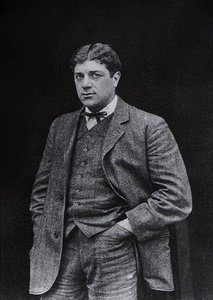
Georges Braque
1882 - 1963 , Franciaország
A művészről röviden
- Artistic Movement Or Style: Kubizmus, Fauvizmus
- Artists Or Movements Influenced By This Artist: ['Pablo Picasso']
- Artists Who Influenced This Artist:
- Henri Matisse
- Paul Cézanne
- Date Of Birth: 1882. 5. 13.
- Date Of Death: 1963. 8. 31.
- Full Name: Georges Braque
- Nationality: Francia
- Notable Artworks:
- Házak L'Estaque-ban
- A türelmi szobor
- Szórófa
- Mandolin
- Place Of Birth: Argenteuil, Francia
Kapcsolódó cikkek

Beyond Form & Color: Geometric Abstraction's Evolution in 20th/21st Century Art
Explore the evolution of geometric abstraction from Cubism to contemporary art. Discover key artists like Malevich & Mondrian, investment insights, and expert collecting advice at OriginalUniqueArt.

Paul Cézanne 25 Mesterműve: A Modern Művészet Úttörői | OriginalUniqueArt
Fedezze fel Paul Cézanne 25 legikonikusabb művét! Ismerje meg a posztimpresszionizmus úttörőjének festményeit, technikáját és inspirációit. Vászonképek, portrék, tájképfestmények – minden otthonba. Böngéssze gyűjteményünket a OriginalUniqueArt-on!

Kandinsky Mesterművei: 25 Lenyűgöző Festmény a Modern Művészet Gyöngyszemeiből | OriginalUniqueArt
Fedezze fel Wassily Kandinsky 25 legikonikusabb művét! Merüljön el az absztrakt művészet világában, ismerje meg a színek és formák lenyűgöző történetét. Prémium minőségű reprodukciók és inspiráló dekorötletek a OriginalUniqueArt.com-on.

Geometrikus Absztrakció Mesterei: 10 Alapvető Műalkotás a Lakberendezéshez
Fedezze fel a geometrikus absztrakció 10 legikonikusabb műalkotását! Kandinsky, Mondrian és más mesterek festményeinek története inspirálja otthona dekorációját. Múzeumi minőségű reprodukciók a OriginalUniqueArt.com-on – fedezze fel online!
Fernand Léger Mesterművei: A 25 Legikonikusabb Kép a Modern Művészetben | OriginalUniqueArt
Fedezze fel Fernand Léger 25 legikonikusabb műalkotását! Ismerje meg a kubizmus, a tubizmus mesterét és a gépi kor lenyűgöző festményeit. Múzeumi minőségű vászonképek és poszterek a OriginalUniqueArt-on. Explore the full collection online!


