
 Megtekintés
 Küldés
 Megosztás
 Részletek
 Útmutató

 Letöltés
 Hasonló darabok
 X-ray felvétel
 Diavetítés
 Kérdések és válaszok
 Statisztika
Lady Hamilton as

- 75.0 x 62.0 cm


 Összes részlet megjelenítése
Giclée / Műnyomat
Múzeumi minőségű giclée vagy vászonnyomat, gyors gyártással és rugalmas finomítási lehetőségekkel. ( Kézzel festett másolat rendelése Áttérés digitális képre)




P118B Ft10

P118H Ft10

P118W Ft10

P438Z Ft10

P508JH Ft12

P508YH Ft12

P805H Ft10

P805Z Ft10

P919BZ Ft10

P919G Ft10

P919XJ Ft10

P959ZH Ft10

P968JZ Ft12

W106C Ft8

W218G Ft10

W218JH Ft8

W218Y Ft10

W307PJ Ft10

W316G Ft10

W316PJ Ft8

W316Y Ft10

W398PJ Ft8

W4111J Ft10

W500HY Ft15

W500JH Ft15

W692G Ft12

W849H Ft8

W940BG Ft15

W953PJ Ft8




Válasszon előre meghatározott méreteink közül, amelyek megfelelnek a műalkotás eredeti arányainak.

Írja be a keretének vagy a falának megfelelő szélességet és magasságot. A nyomatot csak le lehet vágni, soha nem tehető nagyobbá, mint az eredeti kép, így egy eltérő alakú méretnél a kép egy része elveszik. Mielőtt bármit kinyatintanánk, küldünk egy digitális próbamodellt jóváhagyásra. Az oldalon látható kép nem tartalmazza a valós levágást — ezt csak a próbamodell mutatja meg.
Világszerte történő kiszállítás területére mindössze 2 hét alatt, a szokásos 4-5 hét helyett. (10 november)

Ingyenes globális expressz szállítás

Prémium minőségű len vászon

Teljes körű szállítási biztosítás

Vámvisszatérítési Garancia

Hiteles színarányosság garancia

100 napos visszaküldési lehetőség (csak hibás termékek esetén)

100% pénzvisszatérítési garancia

Több darab vásárlásakor kedvezmény
 Az üvegkeretes opció csak 110 cm alatti méretben érhető el

Lady Hamilton as
Giclée / Műnyomat
Reprodukció mérete
-


Összesített ár
Ft 26473
The Enigmatic Grace of Lady Hamilton as Circe
George Romney’s “Lady Hamilton as Circe,” painted in 1792, is more than just a portrait; it's an exquisitely crafted tableau vivant—a frozen moment brimming with narrative and psychological depth. This captivating work, now housed within the collections of the Frick Collection, offers a glimpse into the life of Emma Hart, later Lady Hamilton, a woman whose beauty, ambition, and scandalous affair with Lord Nelson captivated Regency England. Romney’s masterful handling of light, texture, and gesture transforms a simple sitting arrangement into a richly layered scene, inviting viewers to contemplate the complexities of her character.
The painting depicts Emma seated in an opulent chaise lounge, a small dog nestled at her feet—a deliberate reference to Homer's *Odyssey*, where Circe, the sorceress queen of the island of Aeaea, is often accompanied by her faithful hound. Romney’s choice of subject matter immediately establishes this allegorical framework, suggesting that Emma, like the mythical Circe, possesses a potent and alluring power. Her pose—relaxed yet alert, hand gently resting on the dog's head—conveys an air of quiet confidence and subtle command. The rich crimson velvet of her dress, contrasted against the muted tones of the background, draws immediate attention to her figure, emphasizing her beauty and drawing the eye into her gaze.
A Portrait of a Woman Transformed
Romney’s technique is characterized by its remarkable realism and sensitivity. He eschewed the overly polished surfaces favored by some of his contemporaries, opting instead for a looser, more expressive brushstroke that captures the nuances of Emma's features—the delicate curve of her lips, the subtle play of light on her skin, the intelligent sparkle in her eyes. Note particularly how Romney renders the texture of the velvet fabric and the fur of the dog, demonstrating his meticulous attention to detail. The use of sfumato, a technique borrowed from Leonardo da Vinci, creates an atmospheric haze around Emma’s figure, softening the edges and lending the scene a dreamlike quality.
The background is deliberately ambiguous, suggesting a lavish interior—likely a room within Sir William Hamilton's residence in Naples. The presence of a partially visible clock and a glimpse of a tree hint at the passage of time and the exotic setting of Emma’s life. However, Romney skillfully avoids providing any specific details, allowing the viewer to project their own interpretations onto the scene. This deliberate vagueness contributes to the painting's enduring mystique, prompting us to consider not just what we see but also what lies beneath the surface.
Symbolism and Scandal
Beyond its aesthetic qualities, “Lady Hamilton as Circe” is laden with symbolic meaning. The reference to Circe—a sorceress known for her ability to transform men into animals—underscores Emma’s own transformative power and her capacity to exert influence over those around her. Her affair with Lord Nelson was a closely guarded secret, fraught with social scandal and political intrigue. Romney's painting captures this duality—Emma as both a captivating beauty and a woman entangled in a dangerous game of desire and ambition.
The inclusion of the dog is particularly significant. In Greek mythology, dogs were often associated with loyalty, fidelity, and protection. Here, it serves as a visual reminder of Emma’s unwavering devotion to Sir William Hamilton, despite his infidelity. It also subtly hints at her own vulnerability—a loyal companion in a world of shifting alliances and treacherous relationships.
A Legacy of Beauty and Intrigue
“Lady Hamilton as Circe” remains one of Romney's most celebrated works, admired for its exquisite beauty, psychological insight, and masterful technique. It offers a compelling portrait of a remarkable woman—a dancer, actress, mistress, and ultimately, a figure of enduring fascination. Reproductions of this painting continue to captivate art lovers and collectors alike, offering a window into the glamorous and scandalous world of Regency England. Its timeless appeal lies in its ability to evoke both admiration and intrigue, prompting us to contemplate the complexities of human desire, ambition, and the power of image.
Kérdések és válaszok
Mely múzeum őrzi az eredeti "Lady Hamilton as" című alkotást?
Az eredeti "Lady Hamilton as" mű megtekinthető a The Frick Collection, New York-város, Egyesült Államok múzeumgyűjteményében.
Szabad-e jogilag másolni a(z) The Frick Collection gyűjteményében található „Lady Hamilton as”, George Romney alkotása alkotást?
A „Lady Hamilton as”, George Romney alkotása szerzői jogi státusza egyértelmű: a mű közösségi tulajdon – a szerzői jog lejártt. A The Frick Collection gyűjteményében való szereplése nem változtat ezen a státuszon.
Mikor készült a "Lady Hamilton as", és mely művészeti irányba tartozik?
A "Lady Hamilton as" 1782-ben készült, a Neoclassical Portraiture irányzat részeként.
A művész életrajza
A Life in Portraiture: The World of George Romney
Born in the picturesque landscape of Dalton-in-Furness, Lancashire, on December 15th, 1734, George Romney ascended to become one of the most sought-after portrait painters of his era. His journey from a cabinet maker’s son to the favored artist of British high society is a compelling narrative of innate talent and unwavering ambition. Early life offered little indication of the artistic path he would forge; initially apprenticed to his father, it was an inherent inclination towards drawing and craftsmanship that led him to Christopher Steele, a local portraitist who had studied in Paris. This apprenticeship proved pivotal, providing Romney with foundational skills and an introduction to European artistic traditions. He quickly surpassed his master, however, demonstrating a precocious talent demanding further cultivation. A brief, unhappy marriage and subsequent separation propelled him towards London in 1762, a city brimming with opportunity but also fierce competition.Establishing a Reputation: Style and Technique
London proved to be a crucible for Romney’s artistic development. He swiftly established himself as a formidable portraitist, challenging the dominance of artists like Thomas Gainsborough and Sir Joshua Reynolds. While he never sought membership in the Royal Academy – a decision that perhaps limited his access to certain patronage – his success was undeniable. Romney's style evolved over time, initially reflecting the influence of Steele and his Parisian training, but soon blossomed into something distinctly his own. He possessed an exceptional ability to capture not merely the likeness, but also the personality and social standing of his sitters. His portraits are characterized by elegant poses, a refined use of light and shadow, and a subtle psychological insight that set him apart. Romney’s technique was marked by a delicate touch and a preference for flowing lines, often drawing inspiration from classical sculpture. He skillfully employed color to convey texture and depth, creating portraits that were both visually striking and emotionally resonant. His ability to flatter his subjects while maintaining artistic integrity earned him the loyalty of an elite clientele. He understood the power of suggestion, hinting at character rather than explicitly defining it, a quality that appealed to those who valued discretion and refinement.The Muse and Her Influence: Emma Hamilton
Romney’s life took a dramatic turn with his encounter with Emma Hart, later known as Lady Hamilton, in 1782. She became not only his most celebrated model but also his muse, profoundly influencing his artistic output. Emma's beauty, intelligence, and theatrical flair captivated Romney, inspiring a series of portraits that explored themes of classical mythology, dramatic narrative, and feminine grace. He depicted her in various roles – as a spinner, as the tragic Miranda from Shakespeare’s *The Tempest*, and in numerous allegorical scenes that showcased her expressive range. These works demonstrate Romney's willingness to experiment with composition and symbolism, moving beyond conventional portraiture into more imaginative territory. The Tempest series, in particular, reveals a Romantic sensibility at play, anticipating the emotional intensity of later artists. The relationship was intense and all-consuming for Romney, though ultimately unfulfilled romantically; Emma eventually became the mistress of Lord Nelson, a union that cemented her place in history. Nevertheless, their artistic collaboration left an indelible mark on both their lives and produced some of Romney’s most enduring masterpieces. It is said he painted over 80 portraits of her, each revealing a different facet of her captivating personality.Notable Works and Artistic Development
Romney's oeuvre encompasses a diverse range of subjects, reflecting his versatility as an artist. Among his most celebrated works are *Peter and James Romney* (a touching portrait of his brothers), *Portrait of G. Cowper*, and the dramatic *The Death of General Wolfe*, which secured him a prestigious award from the Royal Society of Arts in 1799. These paintings showcase his evolving style, moving from more formal, classical compositions to increasingly dynamic and emotionally charged scenes. His later portraits often display a heightened sense of intimacy and psychological depth, indicative of his growing mastery of capturing the inner lives of his subjects. Romney’s artistic development can be traced through his exploration of light, color, and composition—elements that he skillfully employed to create works of enduring beauty and significance.Legacy and Historical Significance
George Romney's impact on British portraiture is undeniable. He helped shape the aesthetic sensibilities of the late 18th century, contributing to a style that emphasized elegance, psychological depth, and artistic flair. His portraits offer invaluable insights into the lives and tastes of the British elite during his time, providing a visual record of their social customs, fashion, and intellectual pursuits. While he faced periods of self-doubt and struggled with mental health issues in later life – leading to a decline in productivity before his death in Kendal in 1802 – his legacy endures through the hundreds of paintings and drawings that remain as testaments to his skill. His work continues to be admired for its technical brilliance and emotional resonance. Romney’s influence can be seen in the portraits of subsequent generations of British artists. The enduring fascination with his relationship with Emma Hamilton adds another layer of intrigue to his story. He remains a significant figure in the history of art, a master portraitist who captured the spirit of an age and left behind a body of work that continues to captivate and inspire. Romney’s portraits are not merely representations of individuals; they are windows into a vanished world.
George Romney
1734 - 1802 , Egyesült Királyság
Rövid információk
- Artistic Movement Or Style: Portréfestészet, Romantika
- Artists Or Movements Influenced By This Artist: ['Angol festők']
- Artists Who Influenced This Artist:
- Steele
- Vanloo
- Raffael
- Tiziano
- Date Of Birth: Dec 15, 1734
- Date Of Death: Nov 15, 1802
- Full Name: George Romney
- Nationality: Angol
- Notable Artworks:
- Peter Romney
- Cowper portréja
- Wolfe halála
- Place Of Birth: Dalton-in-Furness, UK
Kapcsolódó cikkek

Neoclassical Portraiture: The Timeless Elegance of Order, Grace, and Academic Mastery
Explore the refined world of Neoclassical portraiture. Discover the mastery of line, light, and order through an expert exploration of academic art history, from Jacques-Louis David to Jean-Antoine Houdon. Immerse yourself in the timeless elegance of classical realism.

George Romney: Portraiture, Patronage & the Shaping of Georgian Society
Explore the life & art of George Romney, leading portraitist of Georgian England. Discover his style, famous patrons like Emma Hamilton, and legacy in British society. Expert insights for collectors.

Georges Braque Mesterek: A 25 Leglenyűgözőbb Kép, Ami Megváltoztatta a Modern Festészetet
Fedezze fel Georges Braque 25 legikonikusabb műalkotását! Ismerje meg a kubizmus történetét, Picasso hatását és a francia művész lenyűgöző festményeit. Múzeumi minőségű reprodukciók és inspiráló dekorációs ötletek a OriginalUniqueArt.com-on.
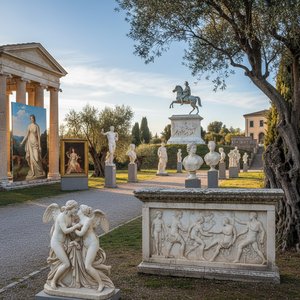
A Neoklasszicizmus 10 Mesterműve: A Történelem Legikonikusabb Festményei és Szobrai
Fedezze fel a neoklasszicizmus 10 legikonikusabb műalkotását! Jacques-Louis David, Ingres és Canova remekművei elmesélnek egy korszakot. Múzeumi minőségű reprodukciók otthonába a OriginalUniqueArt.com kínálatából – inspirációt és eleganciát nyújtunk. Böngésszen online!

Georges Seurat 25 Mesterműve: A Pontillizmus Zsenialitása – OriginalUniqueArt.com
Fedezze fel Georges Seurat 25 legikonikusabb művét! Ismerje meg a pontillizmus zsenialitását, az impresszionizmus forradalmát és a színek lenyűgöző játékát. Prémium minőségű reprodukciók és inspiráló otthoni dekorációk a OriginalUniqueArt.com-on. Fedezze fel a teljes gyűjteményt online!


