

 Megtekintés
 Küldés
 Megosztás
 Részletek
 Útmutató

 Letöltés
 Hasonló darabok
 X-ray felvétel
 Diavetítés
 Statisztika
John Tyler


 Összes részlet megjelenítése
Giclée / Műnyomat
Múzeumi minőségű giclée vagy vászonnyomat, gyors gyártással és rugalmas finomítási lehetőségekkel. ( Kézzel festett másolat rendelése Áttérés digitális képre)




P118B Ft10

P118H Ft10

P118W Ft10

P438Z Ft10

P508JH Ft12

P508YH Ft12

P805H Ft10

P805Z Ft10

P919BZ Ft10

P919G Ft10

P919XJ Ft10

P959ZH Ft10

P968JZ Ft12

W106C Ft8

W218G Ft10

W218JH Ft8

W218Y Ft10

W307PJ Ft10

W316G Ft10

W316PJ Ft8

W316Y Ft10

W398PJ Ft8

W4111J Ft10

W500HY Ft15

W500JH Ft15

W692G Ft12

W849H Ft8

W940BG Ft15

W953PJ Ft8




Válasszon előre meghatározott méreteink közül, amelyek megfelelnek a műalkotás eredeti arányainak.

Írja be a keretének vagy a falának megfelelő szélességet és magasságot. A nyomatot csak le lehet vágni, soha nem tehető nagyobbá, mint az eredeti kép, így egy eltérő alakú méretnél a kép egy része elveszik. Mielőtt bármit kinyatintanánk, küldünk egy digitális próbamodellt jóváhagyásra. Az oldalon látható kép nem tartalmazza a valós levágást — ezt csak a próbamodell mutatja meg.
Világszerte történő kiszállítás területére mindössze 2 hét alatt, a szokásos 4-5 hét helyett. (27 október)

Ingyenes globális expressz szállítás

Prémium minőségű len vászon

Teljes körű szállítási biztosítás

Vámvisszatérítési Garancia

Hiteles színarányosság garancia

100 napos visszaküldési lehetőség (csak hibás termékek esetén)

100% pénzvisszatérítési garancia

Több darab vásárlásakor kedvezmény
 Az üvegkeretes opció csak 110 cm alatti méretben érhető el

John Tyler
Giclée / Műnyomat
Reprodukció mérete
-


Összesített ár
Ft 25827
A Glimpse into American Dignity: The Portrait of John Tyler
To stand before this portrait is to step directly into the weighty atmosphere of mid-nineteenth-century American history. George Peter Alexander Healy, master chronicler of an era, has captured not merely a likeness, but the very essence of authority and enduring character in his depiction of John Tyler. The composition immediately commands attention; the subject is presented with a stately gravity, seated within a formal setting that speaks volumes without uttering a word. It is a masterful exercise in portraiture, where every fold of fabric and subtle turn of the head contributes to an overwhelming sense of historical presence. The dramatic lighting, originating from the upper left, does more than illuminate—it sculpts. It carves deep shadows across his brow and jacket, lending a profound three-dimensionality that makes the figure feel both monumental and intimately present.
Mastery in Technique and Realism
Healy’s technical prowess is breathtaking to behold. This work exemplifies the height of 19th-century oil painting realism. Observe the meticulous brushwork; it is visible upon close inspection, particularly where the artist has rendered the varied textures—the stiff drape of the background fabric contrasting with the softer modeling of the skin and the rich weight of his formal attire. The palette itself is deliberately somber, dominated by deep browns, blacks, and muted reds. These dark tones do not suggest melancholy, but rather a profound sense of gravitas and enduring dignity. While the lines define the structure—the geometric solidity of the chair, the planes of the face—it is the subtle blending of color and shadow that gives life to the canvas, allowing the subject’s features to emerge from the surrounding darkness like memories brought into sharp focus.
The Context of Command
Painted in 1859, this portrait situates us at a pivotal moment in American history. Healy specialized in capturing the visages of those who shaped the nation, and here we see that dedication crystallized. The formal nature of the sitting, combined with the subject’s direct, unwavering gaze, suggests a man accustomed to command and public scrutiny. It is more than just a record; it functions as an artifact of national self-perception. For the collector or designer, this piece offers an unparalleled connection to the period's elite culture—a tangible echo of political power rendered with artistic reverence.
Symbolism and Emotional Resonance
The symbolism within the painting is subtle but potent. The formal setting and the subject’s composed demeanor speak to ideals of civic virtue and enduring leadership. There is a quiet wisdom emanating from his expression, suggesting a life lived through significant change. When considering this piece for an interior space, one must consider its emotional weight. It does not shout; it resonates. It invites contemplation, encouraging the viewer to pause and reflect on the passage of time and the weight of legacy. Reproducing such a work allows one to incorporate a piece of profound narrative depth into any room, transforming a mere wall hanging into a focal point of intellectual conversation.
Kérdések és válaszok
A „John Tyler” 1859-es dátuma George Peter Alexander Healy pályájának mely szakaszára tekintthető?
A 1859 évszám alapján a "John Tyler" George Peter Alexander Healy Mature Period korszakába tartozik.
Mi a(z) domináns színe a(z) „John Tyler”, George Peter Alexander Healy alkotása alkotásnak?
A(z) Walnut (#715137) a(z) „John Tyler”, George Peter Alexander Healy alkotása domináns színe.
Mire ajánlott használni a „John Tyler”, George Peter Alexander Healy alkotása reprodukcióját?
A „John Tyler”, George Peter Alexander Healy alkotása javasolt felhasználása Focal. Emellett más célokra is alkalmas lehet.
A művész életrajza
George Peter Alexander Healy: A Painter of American Souls
George Peter Alexander Healy, a name that resonates deeply within the annals of 19th-century American art, was far more than simply a portraitist; he was a meticulous recorder of an era, a keen observer of human character, and a master storyteller who imbued his canvases with both realism and profound historical significance. Born in Boston on July 15, 1813, Healy’s life unfolded against the backdrop of significant social and political change, shaping not only his artistic vision but also his enduring legacy. His early years were marked by hardship – the sudden loss of his father, a merchant marine captain – forcing him to contribute financially to his family's well-being from a remarkably young age. Yet, amidst these challenges, an innate talent for drawing blossomed, nurtured by the encouragement of Jane Stuart, daughter of the celebrated Gilbert Stuart, who recognized and fostered Healy’s burgeoning artistic potential.European Immersion: Refining Technique and Vision
In 1834, at the tender age of twenty-one, Healy embarked on a transformative journey to Europe, an odyssey that would span sixteen years and fundamentally alter the trajectory of his career. This extended sojourn proved pivotal in shaping his artistic sensibilities, exposing him to the vibrant art scenes of Paris and Rome – centers of innovation and tradition alike. He immersed himself completely within these environments, studying under masters such as Antoine-Jean Gros, a leading figure in French Romanticism, and Thomas Couture, known for his academic realism. These encounters weren’t merely about technical instruction; they were about absorbing the cultural currents, intellectual debates, and artistic philosophies that defined Europe at the time. The influence of French Realism is strikingly evident throughout his work – a commitment to portraying subjects with honesty, detail, and an acute awareness of their surroundings. A significant milestone during this period was his receipt of a third-class medal at the Paris Salon in 1840, a prestigious recognition that firmly established him as a rising star within the European artistic community. This achievement served as validation for his dedication and skill, solidifying his position on both sides of the Atlantic.Capturing American Power: Presidential Portraits
Upon his return to the United States in 1843, Healy swiftly cemented his reputation as a leading portraitist, quickly establishing himself as the artist of choice for prominent figures across the nation. His remarkable ability to capture not just physical likeness but also the essence and character of his subjects – their personalities, their authority, their very souls – made him exceptionally sought after by those in positions of power. He painted portraits of a staggering array of individuals: John C. Calhoun, James Buchanan, and countless others who shaped the course of American history. However, it was his series of presidential portraits that truly secured his place in art historical memory. Commissioned by the Corcoran Gallery in Washington, D.C., Healy undertook the monumental task of immortalizing every U.S. president from John Quincy Adams to Ulysses S. Grant, creating a visual chronicle of American leadership during a period of profound transformation and national growth. These portraits weren’t mere flattering representations; they were insightful studies of personality and authority, offering glimpses into the minds and lives of those who steered the nation through turbulent times. His portrait of Abraham Lincoln stands as perhaps his most iconic work – a powerful depiction of the 16th president's solemnity, his unwavering resolve, and the weight of responsibility he carried during the Civil War.Beyond Likeness: Historical Narratives
Healy’s artistic ambition extended far beyond the realm of traditional portraiture. He sought to capture not just individual likenesses but also moments of historical significance, imbuing his canvases with narrative power and emotional resonance. A testament to this ambition is *The Peacemakers* (1868), a monumental painting depicting a strategy session between Abraham Lincoln and his advisors following the end of the Civil War. This work transcends mere documentation; it’s a poignant meditation on peace, reconciliation, and the immense burden of leadership. Healy masterfully orchestrates a complex composition, conveying emotional depth through carefully considered gestures and expressions – capturing the tension, the deliberation, and ultimately, the hope for a new era. *The Peacemakers* remains a powerful example of his ability to transform historical events into compelling visual narratives.A Legacy in Chicago: Family and Art
In 1892, Healy returned to Chicago, Illinois, where he spent his final years surrounded by family. He passed away on June 24, 1894, leaving behind a vast and influential body of work that continues to captivate and inspire art enthusiasts today. His autobiography, *Reminiscences of a Portrait Painter*, published posthumously, offers invaluable insights into his life, artistic philosophy, and the world he inhabited – a window into the mind of a truly remarkable artist. Healy’s legacy extends beyond the sheer volume of his output; it resides in the quality, historical significance, and enduring emotional impact of his paintings. He was a master of realism, a keen observer of human nature, and a skilled storyteller who used his art to document the lives and times of those who shaped America. His portraits remain treasured artifacts, offering timeless glimpses into the past and reminding us of the individuals whose actions continue to resonate through history. Healy’s contribution to American art is undeniable – a testament to the power of portraiture to transcend mere likeness and capture the very soul of an era.
George Peter Alexander Healy
1813 - 1894 , Egyesült Államok
Rövid információk
- Artistic Movement Or Style: Realizmus
- Artists Or Movements Influenced By This Artist: ['Europai művészet']
- Artists Who Influenced This Artist:
- Gros
- Couture
- Sully
- Date Of Birth: 1813. 7. 15.
- Date Of Death: 1894. 6. 24.
- Full Name: George Peter Alexander Healy
- Nationality: Amerikai
- Notable Artworks:
- A Egyezség
- Lincoln portré
- Place Of Birth: Boston, USA
Kapcsolódó cikkek

Georges Seurat 25 Mesterműve: A Pontillizmus Zsenialitása – OriginalUniqueArt.com
Fedezze fel Georges Seurat 25 legikonikusabb művét! Ismerje meg a pontillizmus zsenialitását, az impresszionizmus forradalmát és a színek lenyűgöző játékát. Prémium minőségű reprodukciók és inspiráló otthoni dekorációk a OriginalUniqueArt.com-on. Fedezze fel a teljes gyűjteményt online!

John Constable 25 Mesterműve: A Természet Lényege Vászonon – OriginalUniqueArt.com
Fedezze fel John Constable 25 legszebb művészeti alkotását! Ismerje meg a romantika ikonikus tájképeit, Dedham Vale szépségét és a természet lenyűgöző ábrázolásait. Vászonkép reprodukcióinkkal eleganciát csempészhet otthonába – OriginalUniqueArt.com
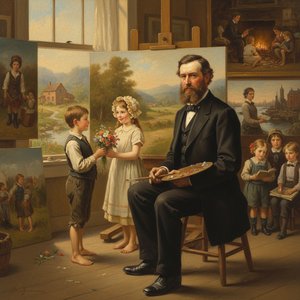
John George Brown: Capturing American Life & Sentiment in 19th-Century Genre Painting
Explore the captivating genre paintings of John George Brown, celebrated for his realistic depictions of 19th-century American life. Discover his legacy & find museum-quality reproductions at OriginalUniqueArt.

John Singer Sargent 25 Mesterműve: Elegancia és Portrék a OriginalUniqueArt Galériában
Fedezze fel John Singer Sargent 25 legikonikusabb művészeti alkotását! Portrék, impresszionista stílus és a fény játéka – inspirálódjon Sargent életrajzából és vászonképeiből. Művészeti reprodukciók otthonába a OriginalUniqueArt-on!

Georges Braque Mesterek: A 25 Leglenyűgözőbb Kép, Ami Megváltoztatta a Modern Festészetet
Fedezze fel Georges Braque 25 legikonikusabb műalkotását! Ismerje meg a kubizmus történetét, Picasso hatását és a francia művész lenyűgöző festményeit. Múzeumi minőségű reprodukciók és inspiráló dekorációs ötletek a OriginalUniqueArt.com-on.