Megosztás
 Megosztás
 Részletek
 Útmutató

 Letöltés
 Hasonló darabok
 Diavetítés
 Statisztika
Bowl


 Tovább olvasom
Giclée / Műnyomat
Múzeumi minőségű giclée vagy vászonnyomat, gyors gyártással és rugalmas finomítási lehetőségekkel. ( Kézzel festett másolat vásárlása Áttérés digitális képre)




































Válasszon előre meghatározott méreteink közül, amelyek megfelelnek a műalkotás eredeti arányainak.

Megadhat saját méreteket is egy konkrét kerethez vagy helyszínhez igazítva. Amennyiben a kiválasztott méret nem egyezik az eredeti kép arányokkal, a műalkotást le fogjuk vágni, vagy kiegészítjük a képet tükrözött vagy egyszínű szélekkel. A gyártás megkezdése előtt egy digitális tervezetet küldünk jóváhagyásra.
Kérjük, vegye figyelembe, hogy a képernyőn látható előnézet nem tükrözi a tényleges levágást vagy kiegészítést. Csak a tervezet mutatja pontosan a végső kompozíciót.
Bár az egyedi méretek is elérhetőek, az eredeti arányok megőrzése érdekében azt javasoljuk, hogy válasszon a előre meghatározott listából származó méretet.
Világszerte történő kiszállítás területére mindössze 2 hét alatt, a szokásos 4-5 hét helyett. (1 október)

Ingyenes globális expressz szállítás

Prémium minőségű len vászon

Teljes körű szállítási biztosítás

Vámvisszatérítési Garancia

Tökéletes színarányosság garancia

100 napos visszaküldési garancia (csak gyártási hibás termékek esetén)

100% pénzvisszatérítési garancia

Több darab vásárlásakor kedvezmény
 Az üvegkeretes opció csak 110 cm alatti méretben érhető el

Bowl
Giclée / Műnyomat
Reprodukció méretei
-


Összesített ár
Ft 25360
The Soul of the Clay: Embracing Imperfection
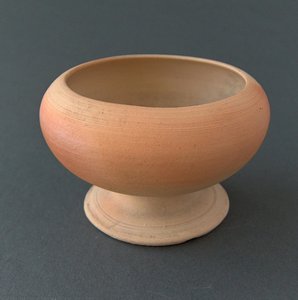
In the quiet, salt-misted atmosphere of Biloxi, Mississippi, a revolution was quietly being molded by hands that refused to follow the rules. George Edgar Ohr, famously known as the "Mad Potter of Biloxi," did not merely create vessels; he breathed life into the very earth itself. His Bowl stands as a profound testament to this radical philosophy, where the beauty of the piece is found not in the precision of its rim or the smoothness of its surface, but in the raw, tactile energy of its creation. To look upon this work is to witness a deliberate departure from the polished, predictable ceramics of the late 19th century, offering instead a window into a world where texture and form dance in an unpredictable, organic embrace.
The piece serves as a captivating bridge between the traditional folk art of the American South and the burgeoning whispers of modern abstraction. For the discerning collector or interior designer, this bowl offers more than just a decorative element; it provides a focal point of profound character. Its earthy brown tones, punctuated by unexpected accents, evoke the rugged landscapes of the Gulf Coast, reminding us that true artistry often lies in the ability to find elegance within the irregular and the weathered. It is an object that demands attention not through flashiness, but through its deep, resonant presence.
A Masterclass in Texture and Technique
The allure of Ohr’s work lies heavily in his revolutionary use of slip-trailing and incising. Unlike his contemporaries who sought to erase the marks of the maker, Ohr celebrated them. By pouring thin layers of liquid clay onto the vessel's surface, he built up a topographical landscape of ridges and valleys that invite the touch as much as the eye. This technique creates a rhythmic, almost musical quality to the surface, where light and shadow play across the raised motifs, changing the bowl's appearance with every shift in the room's illumination.
This mastery of materiality transforms a simple ceramic object into a sculptural experience. The bowl’s organic, slightly asymmetrical form exhibits irregular curves and ridges that suggest a hand-thrown technique, far removed from the sterile perfection of industrial production. The color palette, consisting primarily of muted greens and browns, creates a naturalistic feel that grounds the piece in the physical world, while the deliberate use of texture ensures that it remains a dynamic subject for any curated space.
The Legacy of a Singular Vision
To understand this bowl is to understand the spirit of George Edgar Ohr himself. Born into a landscape rich with clay deposits and artisan traditions, Ohr used his medium to embark on a radical exploration of form and materiality—a quest to liberate ceramics from convention. His work foreshadowed the Abstract Expressionist movement, embracing imperfection as an inherent element of artistic expression. He rejected the symmetrical and the polished, favoring instead the visceral and the spontaneous.
For those seeking to bring a piece of American art history into their homes, a reproduction of this bowl offers an opportunity to possess a fragment of that rebellious spirit. It is an ideal acquisition for those who appreciate the Arts and Crafts movement's emphasis on craftsmanship and the modern desire for organic, soulful decor. Whether placed as a centerpiece on a minimalist pedestal or integrated into a rich, textured collection, this work continues to inspire awe through its unwavering dedication to artistic freedom.
A művész életrajza
The Singular Vision of George Edgar Ohr: The Mad Potter of Biloxi
George Edgar Ohr, a name that echoes through the annals of American ceramics, stands as an enigmatic and profoundly influential figure. Born on July 12, 1857, in the vibrant coastal city of Biloxi, Mississippi, he wasn’t merely a potter; he was a revolutionary, a visionary who dared to shatter conventions and forge his own unique path in a world dominated by tradition. His story is one of restless creativity, unwavering independence, and ultimately, a triumphant rediscovery that cemented his place as the “Mad Potter of Biloxi” – a title both affectionate and indicative of his delightfully unconventional approach.
Early Influences and a Turbulent Youth
Ohr’s early life was marked by movement and a search for purpose. After a brief stint in New Orleans, he embarked on a series of jobs—a blacksmith, a printer's hand, a clerk—each attempt proving ultimately unsatisfying. It was through an apprenticeship with Joseph Fortune Meyer, a potter connected to the Arts & Crafts movement, that Ohr’s destiny began to take shape. This experience provided him with a foundational understanding of traditional ceramic techniques, but it was his subsequent, extensive travels across sixteen states – a veritable pilgrimage through American pottery workshops – that truly ignited his creative fire. He absorbed diverse methods and styles, meticulously studying the work of masters and experimenting with new approaches. However, Ohr wasn’t content to simply imitate; he sought to transcend convention, driven by an innate desire to express himself through clay in ways no one had ever conceived.
A Revolution in Clay: Technique and Innovation
Ohr's work represents a radical departure from the prevailing norms of his time. While many potters focused on producing functional, symmetrical pieces, Ohr embraced asymmetry, distortion, and a deliberate rejection of perfection. He wasn’t interested in creating beautiful objects; he was sculpting with clay, pushing its boundaries to their absolute limit. His techniques were groundbreaking: twisting, crumpling, folding, and stretching the wet clay while still malleable, resulting in vessels that seemed to defy gravity and logic. The walls of his pieces were astonishingly thin – sometimes paper-thin – a testament to his extraordinary skill and daring experimentation. His glazes were equally revolutionary, often exhibiting vibrant, unpredictable colors reminiscent of molten metal or shimmering jewels. He wasn’t simply decorating pottery; he was imbuing it with emotion, texture, and light. Ohr's work foreshadowed the abstract expressionist movement decades before it fully emerged, demonstrating a profound understanding of form and feeling over strict representational accuracy.
Years of Isolation and Rediscovery
Despite his innovative spirit and undeniable talent, Ohr faced significant challenges during his lifetime. The public wasn’t always receptive to his radical designs, and he often struggled to find an audience willing to appreciate his vision. Frustrated by the lack of recognition and unwilling to compromise his artistic integrity, he ceased production around 1910, meticulously packing away thousands of pieces in his studio – a silent testament to his unfulfilled ambitions. Tragically, Ohr died on April 7, 1918, during the influenza pandemic, largely unknown outside of Biloxi. It wasn’t until the late 1960s and early 1970s that his genius was finally recognized. James Carpenter, an antiques dealer, stumbled upon the hidden trove of pottery, initiating a remarkable journey of rediscovery that brought Ohr's work to the attention of the wider art world.
Legacy and Enduring Influence
Today, George Edgar Ohr is celebrated as one of the most important figures in American ceramic history. His pioneering spirit continues to inspire artists across disciplines, demonstrating the power of courage, independence, and unwavering commitment to one’s artistic vision. His work can be found in major museums, including the Smithsonian Institution and the Metropolitan Museum of Art, and a dedicated museum – the Ohr–O'Keefe Museum of Art in Biloxi – stands as a poignant tribute to his enduring legacy. Ohr’s influence extends beyond ceramics; he challenged conventional notions of beauty and artistry, reminding us that true creativity lies in embracing imperfection and daring to be different. The “Mad Potter of Biloxi” may have been ahead of his time, but his work continues to speak volumes about the transformative power of artistic expression.

George Edgar Ohr (Mad Potter of Biloxi)
1857 - 1918 , Egyesült Államok
Gyors információk
- Artistic Movement Or Style: Ábrázattal keleti
- Artists Or Movements Influenced By This Artist: ['Amerikai kerámia']
- Artists Who Influenced This Artist: ['Joseph Meyer']
- Date Of Birth: 1857. 07. 12.
- Date Of Death: 1918. 04. 07.
- Full Name: George Edgar Ohr
- Nationality: Amerikai
- Notable Artworks:
- Tálca
- Vase
- Kancsó
- Place Of Birth: Biloxi, USA
Kapcsolódó cikkek

Georges Seurat 25 Mesterműve: A Pontillizmus Zsenialitása – OriginalUniqueArt.com
Fedezze fel Georges Seurat 25 legikonikusabb művét! Ismerje meg a pontillizmus zsenialitását, az impresszionizmus forradalmát és a színek lenyűgöző játékát. Prémium minőségű reprodukciók és inspiráló otthoni dekorációk a OriginalUniqueArt.com-on. Fedezze fel a teljes gyűjteményt online!
The Art of Ceramics: A Guide to Mastery, Texture, and Timeless Form for the Discerning Collector
Explore the profound elegance of ceramic art. From master glazes to sculptural forms, our expert guide offers discerning collectors deep insights into the mastery, texture, and timeless value of fine ceramics for sophisticated collections and luxury interiors.

George Stubbs: Anatomical Precision & Romantic Vision in 18th-Century British Art
Explore the captivating world of George Stubbs, the 18th-century master renowned for his anatomical precision & Romantic animal paintings. Discover his legacy and investment potential.

Georges Braque Mesterek: A 25 Leglenyűgözőbb Kép, Ami Megváltoztatta a Modern Festészetet
Fedezze fel Georges Braque 25 legikonikusabb műalkotását! Ismerje meg a kubizmus történetét, Picasso hatását és a francia művész lenyűgöző festményeit. Múzeumi minőségű reprodukciók és inspiráló dekorációs ötletek a OriginalUniqueArt.com-on.

The Alchemy of Clay: A Collector's Guide to the Mastery, Texture, and Timeless Form of Ceramic Art
Discover the profound beauty of ceramic art. Our expert guide explores the alchemy of clay, texture, and glaze, offering collectors deep insights into mastering earth and fire to create timeless, sculptural masterpieces for any curated collection.