

 Előnézet
 Megosztás
 Megosztás
 Részletek
 Útmutató

 Letöltés
 Hasonló darabok
 X-ray felvétel
 Diavetítés
 Statisztika
Houqua
 Oil On Canvas
- WallArt
- British Romantic Painting
 1843
1843- 19th Century
 64.0 x 46.0 cm
 Metropolitan Művészeti Múzeum
 Tovább olvasom
Giclée / Műnyomat
Múzeumi minőségű giclée vagy vászonnyomat, gyors gyártással és rugalmas finomítási lehetőségekkel. ( Kézzel festett másolat vásárlása Áttérés digitális képre)




P118B $10

P118H $10

P118W $10

P438Z $10

P508JH $12

P508YH $12

P805H $10

P805Z $10

P919BZ $10

P919G $10

P919XJ $10

P959ZH $10

P968JZ $12

W106C $8

W218G $10

W218JH $8

W218Y $10

W307PJ $10

W316G $10

W316PJ $8

W316Y $10

W398PJ $8

W4111J $10

W500HY $15

W500JH $15

W692G $12

W849H $8

W940BG $15

W953PJ $8




Válasszon előre meghatározott méreteink közül, amelyek megfelelnek a műalkotás eredeti arányainak.

Megadhat saját méreteket is egy konkrét kerethez vagy helyszínhez igazítva. Amennyiben a kiválasztott méret nem egyezik az eredeti kép arányokkal, a műalkotást le fogjuk vágni, vagy kiegészítjük a képet tükrözött vagy egyszínű szélekkel. A gyártás megkezdése előtt egy digitális tervezetet küldünk jóváhagyásra.
Kérjük, vegye figyelembe, hogy a képernyőn látható előnézet nem tükrözi a tényleges levágást vagy kiegészítést. Csak a tervezet mutatja pontosan a végső kompozíciót.
Bár az egyedi méretek is elérhetőek, az eredeti arányok megőrzése érdekében azt javasoljuk, hogy válasszon a előre meghatározott listából származó méretet.
Világszerte történő kiszállítás területére mindössze 2 hét alatt, a szokásos 4-5 hét helyett. (26 szeptember)

Ingyenes globális expressz szállítás

Prémium minőségű len vászon

Teljes körű szállítási biztosítás

Vámvisszatérítési Garancia

Tökéletes színarányosság garancia

100 napos visszaküldési garancia (csak gyártási hibás termékek esetén)

100% pénzvisszatérítési garancia

Több darab vásárlásakor kedvezmény
 Az üvegkeretes opció csak 110 cm alatti méretben érhető el

Houqua
Giclée / Műnyomat
Reprodukció méretei
-


Összesített ár
$ 80
A Glimpse into Mid-19th Century Opulence
In the quiet, dignified presence of George Chinnery’s “Houqua,” we are transported back to the year 1843, a pivotal era of cultural intersection in Southeast Asia. This masterful portrait is far more than a mere likeness of a prominent figure; it is a window into a world where British colonial influence and Chinese mercantile prestige met in a delicate dance of diplomacy and trade. The subject, Houqua, sits with an air of profound composure upon a vibrant crimson couch, his posture radiating the quiet confidence of a man accustomed to both respect and immense responsibility. As one gaz and observes the meticulously arranged interior, there is an immediate sense of being invited into a private moment of aristocratic repose, making this piece an extraordinary centerpiece for any collection that values historical depth and narrative richness.
The artistry of Chinnery shines through his sophisticated use of chiaroscuro, where the dramatic interplay of light and shadow breathes life into the textures of the scene. The artist’s training at the Royal Academy Schools in London is evident in the way he sculpts form through oil on canvas, capturing the heavy, luxurious folds of traditional Chinese attire with breathtaking precision. Every brushstroke serves to highlight the contrast between the soft glow illuminating the subject's face and the deep, velvety shadows that anchor him within his opulent surroundings. For the discerning collector or interior designer, this technique offers a visual depth that commands attention, providing a focal point that changes character depending on the lighting of the room.
Symbolism and the Art of Cultural Exchange
Beyond the technical brilliance, “Houqua” is steeped in symbolic meaning, acting as a visual record of the burgeoning British East India Company’s presence in Asia. The choice of a vibrant red couch is not merely aesthetic; it serves as a powerful anchor for the composition, symbolizing wealth, status, and the vitality of the era's trade routes. Scattered throughout the scene are subtle yet significant nods to Chinese artistic conventions—a vase brimming with delicate blossoms and strategically placed bowls that suggest a refined, cosmopolitan lifestyle. These elements weave a story of cultural exchange, where European oil painting techniques were used to document and romanticize the splendor of the Orient.
The emotional impact of the work lies in its ability to evoke a sense of nostalgia and reverence for a lost age of elegance. There is a palpable stillness in Houqua’s gaze, a meditative quality that invites the viewer to contemplate the complexities of history and the individual lives shaped by global shifts. Whether placed in a grand library, a sophisticated study, or a curated gallery space, a high-quality reproduction of this painting brings with it an atmosphere of intellectual curiosity and timeless grace. It is an investment not just in art, but in a piece of history that continues to resonate with the themes of identity, prestige, and the enduring beauty of human connection.
A művész életrajza
Early Life and Training (1774-1801)
George Chinnery, a name synonymous with the vibrant landscapes and captivating portraits of 19th-century India and China, was born in London on January 5, 1774. His early life was steeped in a unique artistic lineage; his father, a skilled craftsman, had pioneered the Gurney system of shorthand – a revolutionary method for rapid note-taking that would profoundly influence Chinnery’s own approach to art. This meticulous attention to detail and desire to capture fleeting moments became hallmarks of his oeuvre. Following in his father's footsteps, Chinnery received formal training at the Royal Academy Schools in London, where he honed the foundational techniques of classical painting – mastering perspective, anatomy, and color theory. However, it was not merely a pursuit of academic rigor that drove him; a keen desire to experience the world beyond the confines of England fueled his ambition.
Move to India and Rise as a Calcutta Artist (1802-1825)
In 1802, Chinnery embarked on a transformative journey eastward, sailing to Madras (now Chennai), India. This marked a pivotal moment in his career, establishing him as one of the leading Western artists within the British community. Madras quickly became his base of operations, and he swiftly gained recognition for his ability to capture the essence of Indian life – from bustling marketplaces to serene temple complexes. He was particularly sought after for his portraits, skillfully portraying prominent figures like Colonel James Achilles Kirkpatrick and his family, offering a fascinating glimpse into colonial society and familial relationships. The Calcutta Residency, where Chinnery spent much of this period, proved to be an exceptionally fertile ground for artistic development; he became the preeminent painter within the British community in Kolkata (Calcutta), documenting the city’s rich cultural tapestry with remarkable sensitivity.
Macau and the Influence of Lam Qua (1825-1846)
As mounting debts threatened his financial stability, Chinnery made a strategic move to Macau in 1825. This relocation proved remarkably fruitful, as he quickly established himself as a highly sought-after portraitist among European merchants and Chinese residents alike. His style during this period was closely imitated by the Cantonese artist Lam Qua – a testament to Chinnery’s considerable influence on the local artistic scene. The techniques of Lam Qua were essentially copies of Chinnery's, highlighting the latter's skill and popularity. Interestingly, Chinnery’s time in Macau coincided with his visit to Hong Kong in 1846, where he meticulously documented the newly established colony through a series of detailed studies – capturing its rapid growth and unique atmosphere.
Artistic Style and Techniques
Chinnery's artistic style is characterized by a captivating blend of Orientalist influences and meticulous realism. While undeniably influenced by European traditions, his work possesses an undeniable empathy and observational acuity that transcends simple exoticization. He was particularly adept at capturing the nuances of Asian subjects – their clothing, expressions, and surroundings – with remarkable detail and sensitivity. Chinnery primarily worked in oil paint and watercolor, often employing a combination of both mediums to achieve desired effects. Perhaps most notably, he utilized a modified version of the Gurney shorthand system to quickly jot down notes on his sketches, providing invaluable contextual information about his subjects and observations – a technique that reveals his dedication to capturing not just appearances but also the essence of what he witnessed.
Legacy and Historical Significance
George Chinnery’s legacy extends far beyond his individual artistic achievements. He stands as a unique chronicler of 19th-century India and China, documenting a period of profound transformation and cultural exchange. His paintings offer invaluable historical insights into British colonial life, the interactions between Europeans and Asians, and the daily lives of ordinary people. He was the only Western painter residing in southern China during this era, making him an unparalleled witness to a rapidly changing world. Furthermore, his influence can be seen in the work of local artists like Lam Qua, demonstrating his profound impact on the artistic landscape of the region. His depictions of everyday life – from bustling marketplaces to serene temple complexes – provide a rare and intimate glimpse into the past. Notably, his story has been brought to wider attention through James Clavell’s novel Tai-pan, where he is portrayed as Aristotle Quance, a fascinating figure in the narrative. Today, substantial collections of his drawings are held in museums across Europe and America, ensuring that his remarkable artistic legacy continues to be appreciated and studied.
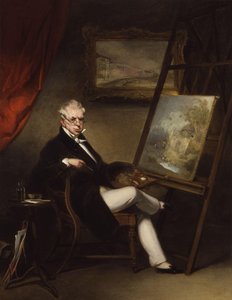
George Chinnery
1774 - 1852 , Egyült Királyföld
Gyors információk
- Artistic Movement Or Style: Orientalizmus, portréfestés
- Artists Or Movements Influenced By This Artist: ['Lam Qua']
- Date Of Birth: 1774. jan 5.
- Date Of Death: 1852. máj 30.
- Full Name: George Chinnery
- Nationality: Angol
- Notable Artworks:
- Öntörtszellem (1825)
- Macao
- Gilbert Elliot portréi
- Place Of Birth: London, Anglia
Kapcsolódó cikkek

Raja Ravi Varma: Bridging Tradition & Modernity in 19th-Century Indian Art
Explore the life & art of Raja Ravi Varma, a pioneer who fused European techniques with Indian iconography. Discover his iconic paintings, lasting legacy, and influence on modern Indian art at OriginalUniqueArt.

Sir George Clausen: Capturing Edwardian Life & British Impressionism's Nuances
Explore the luminous world of Sir George Clausen, a leading British Impressionist painter. Discover his captivating scenes of Edwardian life, rural England & poignant war art. Learn about his legacy and find high-quality reproductions at OriginalUniqueArt.
George Hayter: Portraiture, Power & Victorian Society's Canvas
Explore the life & work of George Hayter, Queen Victoria’s Principal Painter. Discover his iconic Victorian portraits, historical masterpieces, and lasting impact on British art history. Learn more at OriginalUniqueArt.

Georges Braque Mesterek: A 25 Leglenyűgözőbb Kép, Ami Megváltoztatta a Modern Festészetet
Fedezze fel Georges Braque 25 legikonikusabb műalkotását! Ismerje meg a kubizmus történetét, Picasso hatását és a francia művész lenyűgöző festményeit. Múzeumi minőségű reprodukciók és inspiráló dekorációs ötletek a OriginalUniqueArt.com-on.

Georges Seurat 25 Mesterműve: A Pontillizmus Zsenialitása – OriginalUniqueArt.com
Fedezze fel Georges Seurat 25 legikonikusabb művét! Ismerje meg a pontillizmus zsenialitását, az impresszionizmus forradalmát és a színek lenyűgöző játékát. Prémium minőségű reprodukciók és inspiráló otthoni dekorációk a OriginalUniqueArt.com-on. Fedezze fel a teljes gyűjteményt online!
