
 Megtekintés
 Küldés
 Megosztás
 Részletek
 Útmutató

 Letöltés
 Hasonló darabok
 X-ray felvétel
 Diavetítés
 Q&A
Q&A Statisztika
Hard Hickory, an Amiable Man

- 54.0 x 42.0 cm


 Összes részlet megjelenítése
Giclée / Műnyomat
Múzeumi minőségű giclée vagy vászonnyomat, gyors gyártással és rugalmas finomítási lehetőségekkel. ( Kézzel festett másolat rendelése Áttérés digitális képre)




P118B Ft10

P118H Ft10

P118W Ft10

P438Z Ft10

P508JH Ft12

P508YH Ft12

P805H Ft10

P805Z Ft10

P919BZ Ft10

P919G Ft10

P919XJ Ft10

P959ZH Ft10

P968JZ Ft12

W106C Ft8

W218G Ft10

W218JH Ft8

W218Y Ft10

W307PJ Ft10

W316G Ft10

W316PJ Ft8

W316Y Ft10

W398PJ Ft8

W4111J Ft10

W500HY Ft15

W500JH Ft15

W692G Ft12

W849H Ft8

W940BG Ft15

W953PJ Ft8




Válasszon előre meghatározott méreteink közül, amelyek megfelelnek a műalkotás eredeti arányainak.

Írja be a keretének vagy a falának megfelelő szélességet és magasságot. A nyomatot csak le lehet vágni, soha nem tehető nagyobbá, mint az eredeti kép, így egy eltérő alakú méretnél a kép egy része elveszik. Mielőtt bármit kinyatintanánk, küldünk egy digitális próbamodellt jóváhagyásra. Az oldalon látható kép nem tartalmazza a valós levágást — ezt csak a próbamodell mutatja meg.
Világszerte történő kiszállítás területére mindössze 2 hét alatt, a szokásos 4-5 hét helyett. (2 november)

Ingyenes globális expressz szállítás

Prémium minőségű len vászon

Teljes körű szállítási biztosítás

Vámvisszatérítési Garancia

Hiteles színarányosság garancia

100 napos visszaküldési lehetőség (csak hibás termékek esetén)

100% pénzvisszatérítési garancia

Több darab vásárlásakor kedvezmény
 Az üvegkeretes opció csak 110 cm alatti méretben érhető el

Hard Hickory, an Amiable Man
Giclée / Műnyomat
Reprodukció mérete
-


Összesített ár
Ft 26198
The Unblinking Gaze of the Frontier
To stand before George Catlin's "Hard Hickory, an Amiable Man" is not merely to observe a portrait; it is to confront history itself. Painted in 1831, this oil on canvas captures more than just the likeness of a Seneca man; it arrests a moment suspended between two worlds—the vibrant, enduring spirit of Native American culture and the relentless march of encroaching American expansion. Catlin, whose life became a poignant bridge between these civilizations, imbued this piece with an intensity that transcends simple documentation. The subject stares out from the canvas with a gaze so direct, so piercing, that it seems to penetrate the veil of time, demanding that the viewer acknowledge his presence and story.
Mastery in Oil on Canvas: Technique and Detail
The technical brilliance evident in this work is breathtaking. Catlin utilized oil paint on canvas to achieve a remarkable depth of texture and shadow. Notice the meticulous rendering of the man's features—the prominent structure of his face, the subtle sheen on his long hair, and the rich contrast provided by the blue headband and red scarf. While the background dissolves into an atmospheric blur, it serves only to push the viewer’s focus inexorably toward the subject. This masterful use of shallow depth of field ensures that every nuance of expression, every line etched by experience upon his skin, is given paramount importance. It is a study in focused intimacy, allowing one to appreciate the sheer virtuosity of 19th-century American portraiture.
A Historical Echo: The Spirit of Documentation
Understanding the context of 1831 adds layers of profound melancholy to the viewing experience. Catlin was driven by a deep, almost desperate need to record what he felt was vanishing before his very eyes. This painting functions as both an ethnographic study and a deeply personal testament. It speaks to a pivotal moment in American history—a time of immense cultural collision. Owning a reproduction of this piece is not just acquiring art; it is curating a tangible connection to a rapidly fading chapter of the continent’s narrative, honoring the resilience and dignity of its people.
Symbolism and Emotional Resonance for the Modern Collector
The emotional impact of "Hard Hickory" lingers long after one has stepped away from the painting. The man's expression is complex—it suggests weariness tempered by an unwavering self-possession, a quiet dignity that resists easy categorization. For the collector or designer seeking art with soul, this piece offers profound depth. It speaks to themes of endurance, cultural memory, and the power of the individual spirit against overwhelming odds. Whether placed in a formal study where history is contemplated, or within a modern space needing an anchor of deep character, its commanding presence elevates any interior setting with undeniable gravitas.
Kérdések és válaszok
Milyen domináns alapszín jellemzi „Hard Hickory, an Amiable Man”, George Catlin alkotása alkotást?
A „Hard Hickory, an Amiable Man” egy Golden Yellow Range tónus felé hajlik.
Mikor készült a "Hard Hickory, an Amiable Man", és mely művészeti irányba tartozik?
A „Hard Hickory, an Amiable Man”, George Catlin alkotása alkotás 1831-ból származik, és a American Realism stílushoz tartozik.
A „Hard Hickory, an Amiable Man”, George Catlin alkotása portré, tájékép vagy négyzet alakú kompozíció?
A „Hard Hickory, an Amiable Man”, George Catlin alkotása egy Portrait kompozíció. A nyomtatási méret kiválasztása előtt érdemes ellenőrizni az arányokat.
A művész életrajza
Early Life and the Call of the Frontier
George Catlin, born in Wilkes-Barre, Pennsylvania, in 1796, was destined for a life profoundly shaped by the frontier—a world both alluringly romantic and relentlessly dangerous. His childhood wasn’t one of quiet refinement but rather steeped in tales spun by his mother, Polly Sutton, a woman who herself bore the indelible mark of an Indian raid, vividly recounting her harrowing capture and eventual escape. These stories ignited within young Catlin a deep fascination with the West—a land perceived as simultaneously forbidding and brimming with an untamed beauty he felt compelled to understand and preserve. Initially pursuing a career in law, he found himself drawn not to the courtroom but to the act of capturing fleeting moments and enduring traditions. After only two years, recognizing this inner calling, he abandoned legal practice, driven by an artistic impulse and a growing conviction that the unique cultures of Native American tribes were rapidly disappearing, demanding meticulous documentation for posterity. This wasn’t merely a pursuit of aesthetic appreciation; it was a sense of urgency—a premonition that westward expansion would irrevocably alter these vibrant societies. His early work began with engravings depicting scenes along the Erie Canal, showcasing his developing technical skill and an eye for detail – qualities that would later become hallmarks of his ambitious projects. These initial endeavors served as a crucial foundation, honing his observational abilities and solidifying his commitment to visual storytelling as a means of preserving a vanishing world.Documenting a Vanishing World: The Indian Gallery
Catlin’s most enduring legacy is undoubtedly “The Indian Gallery,” an extraordinary collection comprising over 500 paintings dedicated to portraying the lives, customs, and spiritual beliefs of Native American tribes across North America. Beginning in the 1830s, he embarked on five extensive expeditions into the vast territories of the American West—ascending the Missouri River and venturing deep into lands inhabited by diverse tribes such as the Mandan, Sioux, Blackfeet, and Choctaw. Crucially, Catlin didn’t simply observe from a detached perspective; he immersed himself within these communities, participating in ceremonies, witnessing daily life, and forging genuine relationships with tribal leaders. His paintings are not merely portraits but vibrant windows into a world on the brink of transformation. Consider *Sham Fight, Mandan Boys* (1832-1833), a dynamic depiction of a playful mock battle among young Mandan warriors—a scene brimming with youthful energy and cultural significance. Similarly, *Medicine Buffalo of the Sioux* (1839) captures the dignity and power of a prominent Sioux leader, conveying not just his physical presence but also his spiritual authority. Catlin’s meticulous attention to detail extends beyond mere likeness; he often incorporates elaborate backgrounds—landscapes, tipis, ceremonial objects—that provide crucial context for understanding his subjects and their environments. His work stands as a testament to his belief that accurate representation was essential to preventing the misrepresentation and ultimately, the erasure of Native American cultures.The Journey West: Challenges and Artistic Evolution
Catlin’s expeditions were far from easy. He faced immense logistical challenges—navigating treacherous rivers, enduring harsh weather conditions, and overcoming the skepticism and sometimes hostility of settlers and government officials. Financially, he struggled throughout his career, often relying on the sale of prints and paintings to support himself and his family. Despite these difficulties, Catlin remained steadfast in his commitment to documenting Native American life. He meticulously recorded his observations in a series of detailed letters and books, including *Letters and Notes on the Manners, Customs, and Conditions of North American Indians* (1841) and *Last Rambles Amongst the Indians of the Rocky Mountains and the Andes* (1868). These writings provided invaluable insights into tribal customs, social structures, religious beliefs, and artistic traditions—information that would have been lost to history without his dedicated efforts. His style evolved over time, moving from more literal engravings to increasingly expressive oil paintings. He experimented with color and composition, striving to capture not just the outward appearance of his subjects but also their inner spirit and connection to the land.Recognition and Legacy
Despite facing considerable resistance and a lack of widespread recognition during his lifetime, Catlin’s work eventually gained acclaim in Europe, particularly in London and Paris, where exhibitions of “The Indian Gallery” drew large audiences and sparked significant interest in Native American cultures. His paintings were lauded for their realism, emotional depth, and the way they challenged prevailing stereotypes. However, financial difficulties persisted, leading to a period of hardship and ultimately, the loss of his collection to creditors. In later years, he attempted to recreate over 400 of his most important paintings in a smaller “cartoon collection,” hoping to recoup some of his losses, but this effort proved largely unsuccessful. George Catlin died in 1872, leaving behind a remarkable body of work that continues to be studied and appreciated today. His legacy extends beyond the artistic realm—he is remembered as a passionate advocate for Native American rights and a pioneer in documenting a culture on the brink of extinction. His paintings serve as powerful reminders of the importance of cultural preservation and the need to challenge biased perspectives about indigenous peoples, ensuring that their stories are not forgotten.Key Works
- Sham Fight, Mandan Boys (1832-1833): A lively depiction of a playful mock battle among young Mandan warriors.
- Mrs. George Catlin (Clara Bartlett Gregory) (1850): A portrait showcasing the artist’s wife, offering insight into his personal life.
- Pipestone Quarry, Coteau Des Prairies (1848): Illustrates a sacred site for many tribes and their spiritual connection to the land.
- Medicine Buffalo of the Sioux (1839): A striking portrait capturing the dignity and power of a prominent Sioux leader.
- Prairie Meadows Burning (1832): Depicts a dramatic scene of controlled burning, highlighting the relationship between Native Americans and their environment.
- Little Wolf, A Famos Warrior (1844): A powerful portrait of a Native American warrior, symbolizing strength and resilience.

George Catlin
1796 - 1872 , Egyesült Államok
Rövid információk
- Artistic Movement Or Style: Frontier festészet
- Artists Or Movements Influenced By This Artist: ['Western art']
- Artists Who Influenced This Artist:
- Peale
- Sully
- Date Of Birth: 1796
- Date Of Death: 1872
- Full Name: George Catlin
- Nationality: Amerikai Egyesült Államok
- Notable Artworks:
- Sham Fight
- Prairie
- Pipestone
- Medicine
- Eagle Dance
- Place Of Birth: Wilkes-Barre, USA
Kapcsolódó cikkek

Georges Braque Mesterek: A 25 Leglenyűgözőbb Kép, Ami Megváltoztatta a Modern Festészetet
Fedezze fel Georges Braque 25 legikonikusabb műalkotását! Ismerje meg a kubizmus történetét, Picasso hatását és a francia művész lenyűgöző festményeit. Múzeumi minőségű reprodukciók és inspiráló dekorációs ötletek a OriginalUniqueArt.com-on.
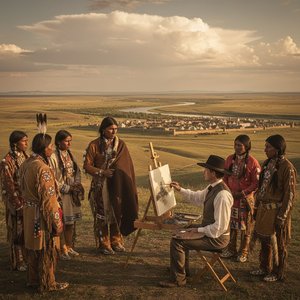
George Catlin: Witnessing & Representing Indigenous Life on the American Frontier
Explore the captivating art of George Catlin, renowned for his vivid portraits & landscapes documenting Native American life on the frontier. Discover a vanishing world through stunning paintings and historical context.

Az amerikai realizmus 10 ikonikus remekműve – festmények otthonra a OriginalUniqueArt kínálatából
Fedezze fel az amerikai realizmus 10 legikonikusabb remekművét! Ismerje meg Andrew Wyeth, Edward Hopper és más festők történetét. Múzeumi minőségű reprodukciók otthonra a OriginalUniqueArt kínálatából – inspiráló faliképek és dekorációk online.

Georges Seurat 25 Mesterműve: A Pontillizmus Zsenialitása – OriginalUniqueArt.com
Fedezze fel Georges Seurat 25 legikonikusabb művét! Ismerje meg a pontillizmus zsenialitását, az impresszionizmus forradalmát és a színek lenyűgöző játékát. Prémium minőségű reprodukciók és inspiráló otthoni dekorációk a OriginalUniqueArt.com-on. Fedezze fel a teljes gyűjteményt online!
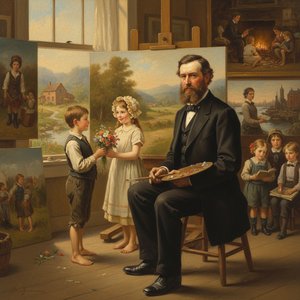
John George Brown: Capturing American Life & Sentiment in 19th-Century Genre Painting
Explore the captivating genre paintings of John George Brown, celebrated for his realistic depictions of 19th-century American life. Discover his legacy & find museum-quality reproductions at OriginalUniqueArt.

