

 Előnézet
 Megosztás
 Megosztás
 Részletek
 Útmutató

 Letöltés
 Hasonló darabok
 X-ray felvétel
 Diavetítés
 Statisztika
Boatmen on the Missouri

 Tovább olvasom
Giclée / Műnyomat
Múzeumi minőségű giclée vagy vászonnyomat, gyors gyártással és rugalmas finomítási lehetőségekkel. ( Kézzel festett másolat vásárlása Áttérés digitális képre)




































Válasszon előre meghatározott méreteink közül, amelyek megfelelnek a műalkotás eredeti arányainak.

Megadhat saját méreteket is egy konkrét kerethez vagy helyszínhez igazítva. Amennyiben a kiválasztott méret nem egyezik az eredeti kép arányokkal, a műalkotást le fogjuk vágni, vagy kiegészítjük a képet tükrözött vagy egyszínű szélekkel. A gyártás megkezdése előtt egy digitális tervezetet küldünk jóváhagyásra.
Kérjük, vegye figyelembe, hogy a képernyőn látható előnézet nem tükrözi a tényleges levágást vagy kiegészítést. Csak a tervezet mutatja pontosan a végső kompozíciót.
Bár az egyedi méretek is elérhetőek, az eredeti arányok megőrzése érdekében azt javasoljuk, hogy válasszon a előre meghatározott listából származó méretet.
Világszerte történő kiszállítás területére mindössze 2 hét alatt, a szokásos 4-5 hét helyett. (27 szeptember)

Ingyenes globális expressz szállítás

Prémium minőségű len vászon

Teljes körű szállítási biztosítás

Vámvisszatérítési Garancia

Tökéletes színarányosság garancia

100 napos visszaküldési garancia (csak gyártási hibás termékek esetén)

100% pénzvisszatérítési garancia

Több darab vásárlásakor kedvezmény
 Az üvegkeretes opció csak 110 cm alatti méretben érhető el

Boatmen on the Missouri
Giclée / Műnyomat
Reprodukció méretei
-


Összesített ár
$ 80
A Glimpse into Frontier Life: "Boatmen on the Missouri" by George Caleb Bingham
- Artist: George Caleb Bingham
- Date: Unknown
- Materials: Oil paints, canvas
Subject and Historical Context
"Boatmen on the Missouri," painted by George Caleb Bingham, offers a captivating snapshot of 19th-century American life centered around river transportation. The artwork depicts three boatmen navigating the Missouri River, portraying an everyday scene from the frontier era. This period was crucial for westward expansion in the United States, with rivers serving as vital arteries for trade and travel. Bingham's work provides a valuable historical record of this time, showcasing the individuals who facilitated movement across the country.
Style and Technique: Luminism and American Realism
Bingham’s style is rooted in realism, characteristic of American landscape and genre painting from the mid-19th century. While influenced by the Hudson River School's focus on landscapes, Bingham distinguishes himself with a more intimate portrayal of human figures within those settings. His technique demonstrates a skillful rendering of textures through visible brushstrokes that contribute to the scene’s realism. The use of oil paints allows for subtle color variations achieved through glazes, adding depth and nuance to the composition. Linear perspective is employed effectively to create a sense of distance, while atmospheric perspective (aerial perspective) further enhances the illusion of depth by softening details in the background.
Composition, Color Palette, and Emotional Impact
The painting’s balanced composition divides the canvas into distinct zones: foreground (the boat and men), middle ground (riverbank and trees), and background (sky). This structure guides the viewer's eye to the central figures. The color palette is dominated by earthy tones—muted greens, browns, and blues—creating a subdued and naturalistic atmosphere. Touches of white in clothing and sky, along with subtle yellows/oranges highlighting water and foliage, add visual interest. The overall effect evokes a sense of tranquility, hard work, and connection to nature. The stoic expressions of the boatmen suggest resilience and determination, inviting contemplation on the challenges and rewards of frontier life.
Symbolism and Lasting Significance
"Boatmen on the Missouri" isn't overtly symbolic but resonates with deeper meanings. It represents the spirit of American expansion, the importance of rivers in shaping the nation’s development, and the often-overlooked lives of working men who played a crucial role in this process. Bingham’s ability to capture the essence of everyday life with such detail and sensitivity has cemented his place as one of America's greatest 19th-century artists, offering viewers a timeless glimpse into a pivotal era in American history.
A művész életrajza
A Life Painted on the American Frontier
George Caleb Bingham, born in 1811 amidst the rolling landscapes of Virginia, wasn’t destined for a life steeped in artistic convention. His early years were marked by movement and adaptation, a family relocation to the burgeoning Missouri frontier shaping his perspective in profound ways. This shift from the established East to the raw energy of the West became the very bedrock of his artistic vision. The hardships faced by his family instilled within him an acute awareness of the struggles and triumphs inherent in the American experience – themes that would dominate his canvases for decades to come. A pivotal encounter at age nine with Chester Harding, a traveling portraitist passing through Franklin, Missouri, ignited a spark. This brief exposure wasn’t merely an introduction to technique; it was a revelation of art's power to capture not just likeness but the very essence of human character. Though largely self-taught initially, Bingham honed his skills through apprenticeships with cabinet makers, learning meticulous draftsmanship and an eye for detail – qualities that would become hallmarks of his mature style. By nineteen, he was already earning a living as a portrait painter, demonstrating an innate talent that quickly established him within the local community. This early success propelled him towards St. Louis, a vibrant hub where he sought to refine his skills and immerse himself in a growing artistic milieu.The Luminist Touch and American Realism
Bingham’s artistic journey wasn't confined by formal training; it was deeply interwoven with the world around him – the majestic Mississippi and Missouri Rivers, the bustling river towns teeming with life, and the diverse individuals who navigated this dynamic landscape. He became a keen observer of American society, particularly along these vital waterways that served as arteries of commerce and migration. His style gradually evolved, embracing elements of Luminism, an artistic movement characterized by its emphasis on atmospheric effects and the subtle interplay of light. This is strikingly evident in works like Order at the Border (1850), where the golden hues of the setting sun illuminate a tense negotiation between settlers and Native Americans, imbuing the scene with both beauty and underlying tension. However, Bingham wasn’t simply a Luminist painter; he infused his work with a powerful dose of realism, striving to depict American life with unflinching honesty and authenticity. The County Election (1844) stands as perhaps his most iconic representation of this approach – a vibrant tableau capturing the boisterous energy and democratic spirit of frontier politics. The painting isn’t merely a depiction of an event; it's a social commentary, offering insights into the values, anxieties, and aspirations of 19th-century Americans. His ability to capture the essence of American culture is also powerfully displayed in St. Louis Jockey, on the Battlefield (1862), a poignant reflection on the Civil War’s impact on everyday life, revealing the subtle scars left upon the nation's psyche.Themes of Frontier Life and Social Commentary
Throughout his career, Bingham consistently returned to themes central to the American experience: westward expansion, political participation, the rhythms of river life, and the complexities of human interaction. He wasn’t afraid to tackle difficult subjects, often embedding subtle social commentary within seemingly straightforward depictions of everyday scenes. His paintings weren't simply aesthetically pleasing; they were narratives, offering glimpses into the moral and ethical dilemmas facing a young nation grappling with its identity. Consider Raftsmen Playing Cards, or The Checker Players, both capturing moments of leisure but also hinting at the hardships and uncertainties faced by those who worked the rivers. These works demonstrate Bingham’s skill in imbuing seemingly mundane activities with a sense of depth and significance. He wasn't interested in idealizing the frontier; he sought to portray it as it was – a place of opportunity, hardship, and constant change. His paintings offer a valuable historical record, providing insights into the social customs, political attitudes, and daily lives of Americans during a pivotal period in their history. Family Life on the Frontier (1845) exemplifies this approach, offering a tender yet realistic portrayal of domesticity amidst the challenges of pioneer existence.The Influence of Missouri and His Artistic Style
Bingham’s connection to Missouri was profound, shaping not only his subject matter but also the distinctive qualities of his artistic style. The vastness of the landscape, the bustling river towns, and the diverse population all contributed to his unique vision. He meticulously observed the details of frontier life – the clothing, the tools, the architecture – rendering them with remarkable accuracy and sensitivity. His use of color was particularly noteworthy, employing a rich palette of earthy tones and vibrant hues to capture the light and atmosphere of the Missouri River region. His compositions were often dynamic and asymmetrical, reflecting the energy and movement of the frontier. He wasn’t afraid to experiment with perspective and scale, creating paintings that felt both intimate and expansive. The influence of Chester Harding, who first introduced him to the world of art, is also evident in his early work, particularly in his portraiture. However, Bingham quickly developed his own distinctive style, blending elements of Luminism with a strong sense of realism and narrative storytelling.Rediscovery and Lasting Legacy
Despite his prominence during his lifetime, Bingham’s work experienced a period of relative obscurity following his death in 1879. It wasn't until the 1930s that a renewed interest in his art emerged, fueled by a growing appreciation for American Regionalism and Realism. This rediscovery led to a reevaluation of his contributions to American art history, recognizing him as a master of both Luminist technique and social commentary. By the time of his bicentennial in 2011, George Caleb Bingham had firmly established himself as one of the greatest American painters of the 19th century. His influence continues to resonate today, inspiring artists who seek to capture the beauty and complexity of the American landscape and its people. His legacy extends beyond his individual paintings; he helped define a distinctly American artistic voice, one that celebrated the nation’s unique character and confronted its challenges with honesty and insight.- Canvassing for a Vote: A powerful depiction of political engagement on the frontier.
- Order No. 11: Illustrates the complexities of interactions between settlers and Native Americans.
- Lighter Relieving the Steamboat Aground: Captures a moment of rural American life with stunning detail.

Bingham George Caleb
1811 - 1879 , Egyesült Államok
Gyors információk
- Artistic Movement Or Style: Luminizmus, Realizmus
- Artists Or Movements Influenced By This Artist: ['Luminizmus']
- Artists Who Influenced This Artist: ['Chester Harding']
- Date Of Birth: 1811
- Date Of Death: 1879
- Full Name: George Caleb Bingham
- Nationality: Amerikai
- Notable Artworks:
- A Választópolgár
- Rámpafülkövesek
- Családi élet a határszélen
- Place Of Birth: Virginia, USA
Kapcsolódó cikkek
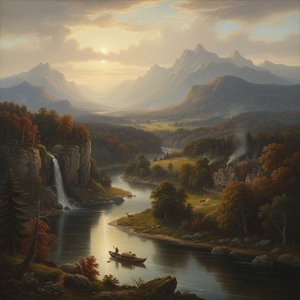
Capturing the American Spirit: A Journey Through Iconic Landscapes and the Legacy of the Hudson River School
Explore the profound beauty of American art history. From the Hudson River School to iconic landscapes, discover a curated journey through the masterpieces that defined a nation's spirit and the enduring legacy of American Romanticism.

The Unvarnished Truth: A Cultural Journey Through the Soul of American Realism
Explore the profound beauty of American Realism. From the Ashcan School's urban grit to intimate portraits, discover how artists captured the authentic soul of a nation through unvarnished truth and masterful observation.
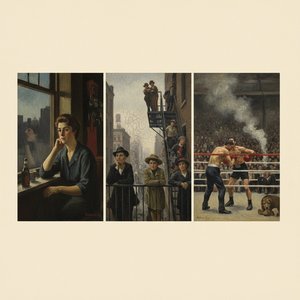
American Realism: Social Commentary & Artistic Representation in Early 20th-Century Painting
Explore the powerful social commentary & artistic representation of American Realism. Discover key artists like Bellows & Sloan, and understand the movement's lasting impact on 20th-century art history.

Az amerikai realizmus 10 ikonikus remekműve – festmények otthonra a OriginalUniqueArt kínálatából
Fedezze fel az amerikai realizmus 10 legikonikusabb remekművét! Ismerje meg Andrew Wyeth, Edward Hopper és más festők történetét. Múzeumi minőségű reprodukciók otthonra a OriginalUniqueArt kínálatából – inspiráló faliképek és dekorációk online.

Robert Spencer: Luminism, Narrative & the American Landscape Tradition
Explore the captivating world of Luminism & the Hudson River School with our expert analysis. Discover the history, artists, and enduring beauty of 19th-century American landscape painting. Find museum-quality reproductions at OriginalUniqueArt.