

 Megtekintés
 Küldés
 Megosztás
 Részletek

 Letöltés
 Hasonló darabok
 X-ray felvétel
 Diavetítés
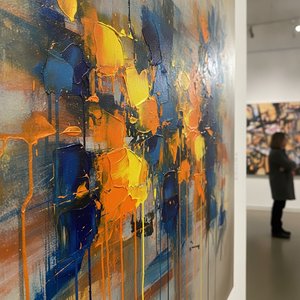
Waterfall
 Expressionism
 102.0 x 64.0 cm
 Összes részlet megjelenítése
Giclée / Műnyomat
Múzeumi minőségű giclée vagy vászonnyomat, gyors gyártással és rugalmas finomítási lehetőségekkel. ( Kézzel festett másolat rendelése Kép letöltése)




































Válasszon előre meghatározott méreteink közül, amelyek megfelelnek a műalkotás eredeti arányainak.

Megadhat saját méreteket is egy konkrét kerethez vagy helyszínhez igazítva. Amennyiben a kiválasztott méret nem egyezik az eredeti kép arányokkal, a műalkotást le fogjuk vágni, vagy kiegészítjük a képet tükrözött vagy egyszínű szélekkel. A gyártás megkezdése előtt egy digitális tervezetet küldünk jóváhagyásra.
Kérjük, vegye figyelembe, hogy a képernyőn látható előnézet nem tükrözi a tényleges levágást vagy kiegészítést. Csak a tervezet mutatja pontosan a végső kompozíciót.
Bár az egyedi méretek is elérhetőek, az eredeti arányok megőrzése érdekében azt javasoljuk, hogy válasszon a előre meghatározott listából származó méretet.
Világszerte történő kiszállítás területére mindössze 2 hét alatt, a szokásos 4-5 hét helyett. (29 augusztus)

Ingyenes globális expressz szállítás

Prémium minőségű len vászon

Teljes körű szállítási biztosítás

Vámvisszatérítési Garancia

Hiteles színpontosság garancia

60 napos visszaküldési lehetőség (csak hibás termékek esetén)

100% pénzvisszatérítési garancia

Több darab vásárlása esetén kedvezmény
 Az üvegkeretes opció csak 110 cm alatti méretben érhető el

Waterfall
Giclée / Műnyomat
Reprodukció mérete
-


Összesített ár
$ 80
A művész életrajza
A Visionary of Light and Loss: The Life of Georg Mayer-Marton
The life of Georg Mayer-Marton (1897–1960) serves as a profound testament to the resilience of the human spirit amidst the turbulent currents of twentieth-century history. Born in Győr, Hungary, during the twilight of the Austro-Hungarian Empire, his early years were steeped in the cultural richness of Central Europe. Like many of his generation, the shadows of conflict soon descended upon him; his service in the Austro-Hungarian army during World War I left an indelible mark on his psyche, a weight that would later manifest in the expressive, often somber depths of his artistic vision. This early exposure to the fragility of existence became a foundational element of his creative identity, informing a style that sought to find beauty within the fractured landscapes of memory and displacement.
Mayer-Marton’s formal artistic journey began in earnest following the Great War, as he pursued rigorous training at the prestigious Academy of Fine Arts in Vienna and later in Munich. It was in the vibrant, avant-garde atmosphere of interwar Vienna that he truly found his voice. His ascent within the art world was remarkably swift; he became a central figure in the Hagenbund, a progressive society of artists where he served as both secretary and vice-precedent. During this period, his work began to bridge the gap between classical tradition and modern expressionism, characterized by a masterful command of oil, watercolor, and graphic media. His ability to weave complex narratives through color and form earned him recognition across Europe, with his works finding homes in the esteemed galleries of Budapest, Vienna, Prague, and Rome.
Exile, Resilience, and the Byzantine Spirit
The trajectory of Mayer-Marton’s life was irrevocably altered by the rise of Nazism. The Anschluss of 1938 and the implementation of the Nuremberg Laws forced him into a harrowing exile. Alongside his wife, he fled to England, leaving behind not only his homeland but also much of his established career. This period of displacement was marked by profound personal tragedy, most notably the loss of his parents during the Holocaust. Yet, even in the face of such overwhelming grief, Mayer-Marton’s creative impulse remained unextinguished. Though the London Blitz brought further devastation—destroying his studio and a lifetime of irreplaceable artwork—he continued to find solace in the act of creation.
In England, Mayer-Marton underwent a fascinating stylistic evolution. He became a pioneer of the Byzantine mosaic technique within the United Kingdom, drawing inspiration from his earlier studies in Ravenna, Italy. This fascination with the spiritual and the eternal allowed him to channel his experiences of loss into something monumental and enduring. His later years, spent settling in Liverpool, saw him serving as a senior lecturer at the College of Art, where he passed his knowledge to a new generation. His work from this era often reflects a synthesis of his diverse influences:
- Expressive Brushwork: A technique that utilized thick impasto and fluid motion to evoke raw emotion.
- Spiritual Symbolism: The integration of mosaic-like patterns and Byzantine aesthetics to explore themes of transcendence.
- Emotional Depth: A palette that could shift from the cool, melancholic blues of an abstract waterfall to the poignant, humanistic focus of his portraits.
Ultimately, the legacy of Georg Mayer-Marton is one of profound historical significance. He stands as a bridge between the lost world of the Austro-Hungarian intelligentsia and the modern European landscape. His art does not merely document a life lived through war and exile; it captures the very essence of survival, transforming the scars of history into a luminous tapestry of light, color, and enduring human dignity.

georg mayer marton
1897 - 1960
A művészről röviden
- Artistic Movement Or Style: Expressionism
- Artists Or Movements Influenced By This Artist: ['Byzantine mosaic']
- Artists Who Influenced This Artist: ['Franz Marc']
- Date Of Birth: June 3, 1897
- Date Of Death: August 8, 1960
- Full Name: Georg Mayer Marton
- Nationality: Hungarian
- Notable Artworks:
- Self Portrait
- Llanthony Valley
- Waterfall
- Place Of Birth: Győr, Hungary
Kapcsolódó cikkek

Georges Braque Mesterek: A 25 Leglenyűgözőbb Kép, Ami Megváltoztatta a Modern Festészetet
Fedezze fel Georges Braque 25 legikonikusabb műalkotását! Ismerje meg a kubizmus történetét, Picasso hatását és a francia művész lenyűgöző festményeit. Múzeumi minőségű reprodukciók és inspiráló dekorációs ötletek a OriginalUniqueArt.com-on.

Georges Seurat 25 Mesterműve: A Pontillizmus Zsenialitása – OriginalUniqueArt.com
Fedezze fel Georges Seurat 25 legikonikusabb művét! Ismerje meg a pontillizmus zsenialitását, az impresszionizmus forradalmát és a színek lenyűgöző játékát. Prémium minőségű reprodukciók és inspiráló otthoni dekorációk a OriginalUniqueArt.com-on. Fedezze fel a teljes gyűjteményt online!

Absztrakt Expresszionizmus Mesterei: 10 alkotás, ami meghatározta a művészetet | OriginalUniqueArt.com
Fedezze fel a 10 legikonikusabb absztrakt expresszionista alkotást! Ismerje meg Jackson Pollock, Mark Rothko és más mesterek történetét. Művészeti reprodukciók prémium minőségben – OriginalUniqueArt.com.

Kandinsky Mesterművei: 25 Lenyűgöző Festmény a Modern Művészet Gyöngyszemeiből | OriginalUniqueArt
Fedezze fel Wassily Kandinsky 25 legikonikusabb művét! Merüljön el az absztrakt művészet világában, ismerje meg a színek és formák lenyűgöző történetét. Prémium minőségű reprodukciók és inspiráló dekorötletek a OriginalUniqueArt.com-on.
Beyond the Lines: Mastering the High-Impact World of Contemporary Abstraction
Master the high-impact world of contemporary abstraction. Discover how bold colors, textures, and modern movements like Abstract Expressionism can transform your space with premium, high-energy art curated for the design-conscious professional.

