

 Előnézet
 Megosztás
 Megosztás
 Részletek
 Útmutató

 Letöltés
 Hasonló darabok
 X-ray felvétel
 Diavetítés
 Statisztika
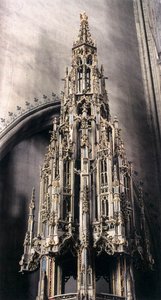
Tabernacle (detail)


 Tovább olvasom
Kézzel készített olajfestmény reprodukció
Kézzel festett olajvastú vászon, az Ön által választott méretben és keretben, művészeink készítik meglévőre. ( Váltás nyomtatványra Áttérés digitális képre)




































Válasszon előre meghatározott méreteink közül, amelyek megfelelnek a műalkotás eredeti arányainak.

Írja be a kívánt szélességet és magasságot, hogy illeszkedjen a keretéhez vagy a falához. Mivel ez kézzel festett alkotás, egy eltérő formájú méret esetén a művész akár festhet is valamivel többet a kép körül, vagy korolathat is belőle — az Ön döntésének megfelelően. A festés megkezdése előtt küldünk egy digitális tervezetet jóváhagyásra. Az oldalon látható kép nem tartalmazza a végeredményt — csak a tervezet mutatja meg a valódi eredményt.
A rendelést követően a OriginalUniqueArt.com csapata e-mailt küld az ügyfélnek az instrukciókért, és biztosít egy előnézeti képet (mockup).
Világszerte elérhető szállítás () 3-4 hét alatt a szokásos 5 hét helyett. (23 október). A minőség nem kérdőjelezhető.

Ingyenes globális expressz szállítás

Prémium minőségű len vászon

Teljes körű szállítási biztosítás

Vámvisszatérítési Garancia

Tökéletes színarányosság garancia

100 napos visszaküldési garancia (csak gyártási hibás termékek esetén)

100% pénzvisszatérítési garancia

Több darab vásárlásakor kedvezmény
 Az üvegkeretes opció csak 110 cm alatti méretben érhető el

Tabernacle (detail)
Reprodukciós technika
Reprodukció méretei
-


Összesített ár
Ft 95869
A művész életrajza
The Architect of Devotion: The Life and Legacy of Gabriel van den Bruyne
In the heart of the Northern Renaissance, amidst the burgeoning intellectual and artistic fervor of Flanders, lived a creator whose work bridged the gap between structural precision and spiritual transcendence. Gabriel van den Bruyne (circa 1500 – 1561) was not merely an artist in the traditional sense, but a master of form who operated at the intersection of architecture and fine art. Born in the historic city of Leuven, his life unfolded during a period of profound transformation in Europe, where the rigid lines of Gothic tradition were beginning to soften under the influence of humanist inquiry and the luminous realism of the Netherlandish masters.
To understand Van den Bruyn’s aesthetic, one must look to his formative years at Saint John's College in Leuven. This prestigious institution provided him with a foundation in classical learning and humanism, an education that would later imbue his architectural designs and artistic compositions with a deep sense of proportion and symbolic weight. While the precise details of his early apprenticeship remain shrouded in the mists of time, the echoes of giants like Jan van Eyck and Rogier van der Weyden are unmistakable in his approach to detail and light. He inherited the Flemish obsession with meticulous realism—the ability to render the texture of marble, the weight of fabric, and the subtle gradations of shadow—and applied it to the very bones of sacred spaces.
A Masterpiece in Marble and Faith
The zenith of Van den Bruyne’s career is inextricably linked to the Sint-Jacobskerk in Leuven. It was here that his dual identity as an architect and artist converged to produce works of enduring spiritual power. His most celebrated contribution, the Tabernacle (completed between 1536 and 1538), stands as a testament to his ability to manipulate physical medium to evoke divine presence. Working primarily in marble, Van den Bruyne achieved a level of sculptural finesse that transformed cold stone into a vessel for liturgical devotion.
This period of his work represents a sophisticated synthesis of several key artistic elements:
- Architectural Rigor: The use of structural geometry to create a sense of permanence and stability within the sacred space.
- Luminous Detail: A mastery of light and shadow, likely influenced by the oil painting techniques of his contemporaries, applied to the relief and surface of stone.
- Theological Narrative: The integration of complex religious symbolism that invited the faithful to contemplate deeper truths through visual beauty.
His monumental Saint James Altarpiece, completed in 1549, further solidified his reputation as a visionary. This work was not simply an object of decoration but a profound theological statement, commissioned by the clergy of St. James' Cathedral to push the boundaries of what an altarpiece could communicate to the masses. Through this ambitious undertaking, Van den Bruyne demonstrated that architecture and art were not separate disciplines, but rather two languages used to tell the same story of faith.
Historical Significance and the Flemish Spirit
Though history often favors the flamboyant brushstrokes of Rubens or the panoramic landscapes of Bruegel, the significance of Gabriel van den Bruyne lies in his role as a foundational pillar of the Northern Renaissance. He belonged to that vital generation of creators who navigated the transition from the medieval mindset to the modern era. His work reflects the intellectual currents of Antwerp and the wider Flemish territories during the reign of Philip II, a time when art was becoming increasingly sophisticated, driven by both religious fervor and the rising influence of wealthy merchant patrons.
Van den Bruyne’s legacy is found in the enduring presence of his structures within the sacred landscapes of Belgium. He remains a pivotal figure for scholars studying the evolution of Northern European art, reminding us that the beauty of the Renaissance was built not just on canvas, but on the very foundations of the cathedrals themselves. His ability to marry the structural logic of an architect with the emotive soul of an artist ensures that his name continues to resonate within the halls of art history.
Gabriel Van Den Bruyne
1500 - 1561 , Belgium
Gyors információk
- Full Name: Gabriel Belgeonne
- Nationality: Belgian
- Date Of Birth: 1500
- Date Of Death: 1561
- Place Of Birth: Leuven, Belgium
- Notable Artworks:
- Mai nouveau II
- Complicite trouble
- Artistic Movement Or Style: Engraving
- Artists Who Influenced This Artist: ['Gustave Marchoul']
- Artists Or Movements Influenced By This Artist: ['Far Eastern philosophy']