Menü
Megtekintés AR előnézet Váltás nyomtatványra Áttérés digitális képre Küldés
Részletek Útmutató Kedvencekhez ad Letöltés Hasonló darabok X-ray felvétel Diavetítés Statisztika

Salome

Franz Ritter von Stuck's "Salome" (1906) depicts a captivating dance of desire and tragedy, blending Symbolism with biblical drama. Explore the haunting beauty & dark narrative of this iconic masterpiece.

"HungarianMetaDescription": "Franz Ritter von Stuck német szimbolista festő volt, aki a mitológiával, szexuális érvényességvel és a müncheni Secessionnel foglalkozott. Művei klasszikus precizitást és álomképes képeket ötvöznek, és a 20. századi művészet alakításában kulcsfontosságú szerepet játszott."

Kézzel készített olajfestmény reprodukció

Kézzel festett olajvastú vászon, az Ön által választott méretben és keretben, művészeink készítik meglévőre. ( Váltás nyomtatványra Áttérés digitális képre)

Corner sample of the P118B picture frame: formázott polisztirol, 5 cm wide and 3 cm thick
P118B Ft10
Corner sample of the P118H picture frame: formázott polisztirol, 5 cm wide and 3 cm thick
P118H Ft10
Corner sample of the P118W picture frame: formázott polisztirol, 5 cm wide and 3 cm thick
P118W Ft10
Corner sample of the P438Z picture frame: formázott polisztirol, 5.5 cm wide and 3.5 cm thick
P438Z Ft10
Corner sample of the P508JH picture frame: formázott polisztirol, 7 cm wide and 3.5 cm thick
P508JH Ft12
Corner sample of the P508YH picture frame: formázott polisztirol, 7 cm wide and 3.5 cm thick
P508YH Ft12
Corner sample of the P805H picture frame: formázott polisztirol, 5 cm wide and 3.5 cm thick
P805H Ft10
Corner sample of the P805Z picture frame: formázott polisztirol, 5 cm wide and 3.5 cm thick
P805Z Ft10
Corner sample of the P919BZ picture frame: formázott polisztirol, 7 cm wide and 3.5 cm thick
P919BZ Ft10
Corner sample of the P919G picture frame: formázott polisztirol, 7 cm wide and 3.5 cm thick
P919G Ft10
Corner sample of the P919XJ picture frame: formázott polisztirol, 7 cm wide and 3.5 cm thick
P919XJ Ft10
Corner sample of the P959ZH picture frame: formázott polisztirol, 5 cm wide and 3 cm thick
P959ZH Ft10
Corner sample of the P968JZ picture frame: formázott polisztirol, 6 cm wide and 4 cm thick
P968JZ Ft12
Corner sample of the W106C picture frame: tömörfa, 5 cm wide and 3 cm thick
W106C Ft8
Corner sample of the W218G picture frame: tömörfa, 5 cm wide and 3 cm thick
W218G Ft10
Corner sample of the W218JH picture frame: tömörfa, 5 cm wide and 3 cm thick
W218JH Ft8
Corner sample of the W218Y picture frame: tömörfa, 5 cm wide and 3 cm thick
W218Y Ft10
Corner sample of the W307PJ picture frame: tömörfa, 6 cm wide and 3 cm thick
W307PJ Ft10
Corner sample of the W316G picture frame: tömörfa, 6 cm wide and 3 cm thick
W316G Ft10
Corner sample of the W316PJ picture frame: tömörfa, 6 cm wide and 3 cm thick
W316PJ Ft8
Corner sample of the W316Y picture frame: tömörfa, 6 cm wide and 3 cm thick
W316Y Ft10
Corner sample of the W398PJ picture frame: tömörfa, 5 cm wide and 3 cm thick
W398PJ Ft8
Corner sample of the W4111J picture frame: tömörfa, 6.5 cm wide and 3.5 cm thick
W4111J Ft10
Corner sample of the W500HY picture frame: tömörfa, 7 cm wide and 5 cm thick
W500HY Ft15
Corner sample of the W500JH picture frame: tömörfa, 7 cm wide and 5 cm thick
W500JH Ft15
Corner sample of the W692G picture frame: tömörfa, 8 cm wide and 4 cm thick
W692G Ft12
Corner sample of the W849H picture frame: tömörfa, 5 cm wide and 3 cm thick
W849H Ft8
Corner sample of the W940BG picture frame: tömörfa, 7.5 cm wide and 4.5 cm thick
W940BG Ft15
Corner sample of the W953PJ picture frame: tömörfa, 6 cm wide and 3.5 cm thick
W953PJ Ft8

Standard méret
egyedi méretű
CM
INCH

Válasszon előre meghatározott méreteink közül, amelyek megfelelnek a műalkotás eredeti arányainak.

szélesség
magasság

Írja be a kívánt szélességet és magasságot, hogy illeszkedjen a keretéhez vagy a falához. Mivel ez kézzel festett alkotás, egy eltérő formájú méret esetén a művész akár festhet is valamivel többet a kép körül, vagy korolathat is belőle — az Ön döntésének megfelelően. A festés megkezdése előtt küldünk egy digitális tervezetet jóváhagyásra. Az oldalon látható kép nem tartalmazza a végeredményt — csak a tervezet mutatja meg a valódi eredményt.

Példák arra, mit lehet módosítani: az arc kicserélése az ügyfél fotójára; háziállat hozzáadása (pl. macska helyett kutya); rejtett üzenet elhelyezése a háttérben; a háttér tájának vagy elemeinek megváltoztatása.
A rendelést követően a OriginalUniqueArt.com csapata e-mailt küld az ügyfélnek az instrukciókért, és biztosít egy előnézeti képet (mockup).

Világszerte elérhető szállítás () 3-4 hét alatt a szokásos 5 hét helyett. (28 október). A minőség nem kérdőjelezhető.

Ingyenes globális expressz szállítás
Prémium minőségű len vászon
Teljes körű szállítási biztosítás
Vámvisszatérítési Garancia
Hiteles színarányosság garancia
100 napos visszaküldési lehetőség (csak hibás termékek esetén)
100% pénzvisszatérítési garancia
Több darab vásárlásakor kedvezmény

Összesített ár

Ft 96851

Salome

Reprodukciós technika

Reprodukció mérete

-

Összesített ár

Ft 96851

Gyors információk

  • Medium: Oil on canvas
  • Year: 1906
  • Title: Salome
  • Artist: Franz Ritter von Stuck
  • Location: Städtische Galerie im Lenbachhaus
  • Notable elements: Dancer, severed head

Művészeti kvíz

Minden kérdésre csak egy helyes válasz létezik.

Kérdés 1:
What biblical event is depicted in Franz Ritter von Stuck’s ‘Salome’?
Kérdés 2:
Which artistic movement is most closely associated with Franz Ritter von Stuck’s style?
Kérdés 3:
What is the primary symbolic element present in the painting’s composition?
Kérdés 4:
In what year was Franz Ritter von Stuck’s ‘Salome’ painted?
Kérdés 5:
What is the significance of the platter presented by the servant in the painting?

The Enigmatic Dance: Unveiling Franz Ritter von Stuck’s “Salome”

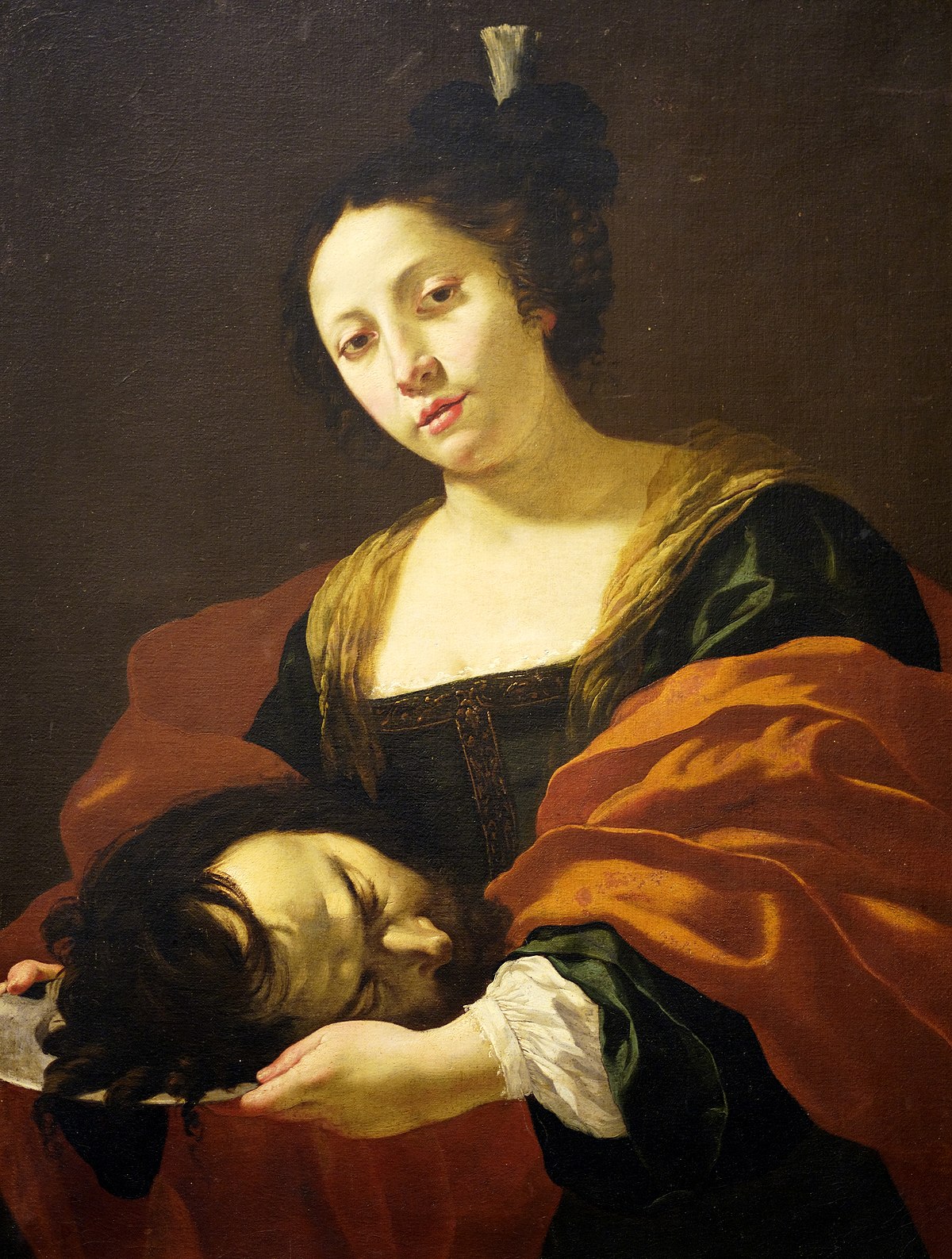
Franz Ritter von Stuck's 1906 painting, "Salome," is not merely a depiction of a biblical episode; it’s a profoundly unsettling and intensely symbolic exploration of desire, power, and the dark undercurrents of human nature. Emerging from the fertile ground of German Symbolism, Stuck masterfully blends classical precision with the dreamlike logic of the subconscious, creating an image that continues to captivate and disturb over a century later. The painting’s immediate impact lies in its dramatic composition – a carefully orchestrated tableau of figures poised on the precipice of violence and obsession. The scene unfolds within a shadowy, almost claustrophobic space, dominated by a towering, ornate architecture suggesting both opulence and impending doom. This isn't a straightforward narrative; it’s an atmosphere saturated with tension, inviting viewers to contemplate the motivations and fates of those involved.
Salome by Franz Ritter von Stuck

A Symphony of Contrasts: Style, Technique, and Materiality

Stuck’s artistic style is immediately recognizable as a potent blend of Symbolism and Art Nouveau influences. The painting showcases his signature use of rich, jewel-toned colors – deep reds, emerald greens, and shimmering golds – applied with meticulous detail to create an opulent yet unsettling effect. His brushwork is deliberately expressive, employing visible strokes that contribute to the overall sense of drama and movement. Notice particularly the way he renders the textures: the velvet drapery, the polished surfaces of the architecture, and even the glistening skin of Salome herself – all are rendered with a tactile quality that draws the viewer into the scene. The painting was executed in oil on canvas, a medium that allowed Stuck to achieve both luminous color saturation and remarkable textural detail. The use of chiaroscuro—the dramatic contrast between light and shadow—further intensifies the emotional impact, highlighting key figures and obscuring others in an atmosphere of mystery and foreboding.

The Narrative Unfolds: Biblical Context and Symbolism

At its core, “Salome” depicts a pivotal moment from the New Testament – the fulfillment of Herodias’s vengeful plot against John the Baptist. However, Stuck doesn't offer a simple retelling of the story; instead, he delves into the psychological complexities of the characters and imbues the scene with layers of symbolic meaning. Salome herself is not portrayed as a seductive temptress but rather as a figure caught in a web of manipulation and driven by a primal desire for power. The presence of the dark servant, clutching John’s severed head on a platter, introduces an element of grotesque horror – a stark reminder of the brutal consequences of unchecked ambition. The architecture—a blend of Romanesque and Byzantine styles—suggests both grandeur and decay, mirroring the moral corruption at the heart of the narrative. The star-studded night sky serves as a backdrop to this drama, hinting at a realm beyond earthly concerns and perhaps suggesting a connection between life and death.

A “Prince of Art”: Stuck’s Legacy and Artistic Significance

Franz Ritter von Stuck was more than just an artist; he was a cultural phenomenon. Nicknamed the "Prince of Art" during his lifetime, he bridged the gap between academic tradition and the burgeoning currents of modernism. His work explored themes of sin, beauty, and the subconscious with a boldness and emotional intensity that resonated deeply with audiences at the turn of the 20th century. Villa Stuck, his own architectural masterpiece in Munich, stands as a testament to his artistic vision—a lavishly decorated space filled with sculptures, paintings, and intricate details reflecting his fascination with mythology, symbolism, and the darker aspects of human experience. “Salome” is arguably one of his most enduring works, demonstrating his mastery of dramatic composition, evocative color palettes, and profound psychological insight. It remains a powerful and unsettling image that continues to provoke discussion and inspire interpretation.

Kérdések és válaszok

Milyen típusú műalkotás „Salome”, Stuck alkotása?

A „Salome”, Stuck alkotása művészeti alkotás a WallArt kategóriába tartozik. Ez a besorolás határozza meg az eredeti alkotás típusát.

Hányan tekintik meg a(t): "Salome"?

A "Salome" számára létre van hozva egy Statisztikák oldal. Ez az oldal ábrázolja a mű és a művész többi alkotásának havi látogatottságát, országon és nyelvenként bontva.

Mely művész és mely stílus áll a "Salome" mögött?

A "Salome" mögött Stuck és a German Symbolism irányzat áll.


A művész életrajza

A Life Steeped in Myth and Symbol

Franz Ritter von Stuck, a name that echoes through the halls of German art history, was more than just an artist; he was a cultural phenomenon, a “Prince of Art” as he became known during his lifetime. Born in 1863 in Tettenweis, a small village nestled in the Bavarian countryside, Stuck’s journey from a young caricature artist to a revered figure representing the height of Symbolism is a tale brimming with talent, innovation, and an enduring fascination with the darker corners of human experience. Initially destined for a life following his father as a forester, a path dictated by rural tradition, young Franz discovered an undeniable artistic inclination—a burning desire to capture the world not just as it was, but as it *felt*. This early aptitude led him inexorably to Munich, first to the School of Applied Arts in 1878 and then to the Academy of Fine Arts from 1882-1884, where he became utterly captivated by Arnold Böcklin’s hauntingly beautiful mythological scenes—a formative influence that would profoundly shape his artistic vision. Stuck wasn't merely an imitator; he absorbed the melancholic beauty and symbolic depth of Böcklin’s work, transforming it into something uniquely his own, a potent blend of classical precision and dreamlike imagery.

The Rise of a Symbolist Master

Stuck’s ascent to prominence was remarkably swift and dramatic. His breakthrough arrived in 1889 with *The Guardian of Paradise*, an arresting painting exhibited at the Munich Glass Palace. The work wasn't simply a display of technical skill; it announced a new artistic voice—one that boldly challenged established norms, blending classical precision with mythological subject matter and an undercurrent of Symbolist mystery. Critics were immediately captivated by its evocative power, awarding it a gold medal and catapulting Stuck to the forefront of the Munich art scene. He quickly became a central figure in challenging conservative constraints, co-founding the Munich Secession in 1892 alongside like-minded artists determined to break free from the stifling traditions of the academic establishment. This act of artistic rebellion was perfectly timed with his exploration into sculpture, debuting with *Athlete* (1892), a dynamic bronze figure that demonstrated an impressive versatility and foreshadowed his future success in three-dimensional form. However, it was *The Sin* (1893) – a visceral depiction of temptation and moral decay—that truly cemented his reputation as a master of Symbolist painting, captivating audiences with its dramatic intensity and profound psychological depth. This period marked the full flowering of Stuck’s unique style—a potent combination of sensuality, classical form, and symbolic resonance, reflecting both his artistic influences and his own complex inner world.

Themes and Influences: A World of Desire and Myth

The artistic universe of Franz von Stuck is populated by recurring motifs that reveal his profound engagement with timeless themes. Mythology served as a constant source of inspiration, drawing from Greek, Roman, and biblical narratives which he reimagined with a distinctly personal flair. These weren’t mere retellings; they were explorations of the human condition filtered through the lens of ancient stories—stories imbued with primal desires, moral dilemmas, and the eternal struggle between good and evil. Equally prominent was his fascination with sensuality and the *femme fatale*, powerfully embodied in his numerous depictions of Salome – a figure representing desire, danger, and moral ambiguity. These paintings weren’t simply about physical beauty; they delved into the psychological complexities of female power and its potential for both allure and destruction. Stuck's work wasn't solely rooted in mythology or sensuality, however. He was deeply influenced by Pre-Raphaelites like Dante Gabriel Rossetti and Gustave Moreau, absorbing their emphasis on rich color, intricate detail, and symbolic imagery. Moreover, he acknowledged the impact of classical art—particularly the works of Michelangelo and Rubens—in shaping his meticulous technique, anatomical accuracy, and compositional rigor. He wasn't merely a follower; he synthesized these influences into something uniquely his own, creating a style that was both deeply rooted in tradition and strikingly modern.

Major Works and Enduring Significance

Throughout his career, Franz von Stuck produced a remarkable body of work that continues to fascinate and inspire. Some of his most celebrated pieces include:
  • The Spring (1886): A vibrant depiction showcasing his early mastery of color and composition—a celebration of life and renewal.
  • Dissonance (1893): An unsettling portrayal embodying emotional turmoil through a woman playing the violin – a poignant exploration of inner conflict.
  • Salome (various versions): Perhaps his most iconic work, depicting the biblical story with striking sensuality and psychological depth—a powerful meditation on desire, power, and destruction.
  • Athlete (1892): A dynamic bronze sculpture demonstrating his skill in three-dimensional form – a testament to his versatility as an artist.
Beyond his artistic achievements, Stuck’s life was marked by significant personal events. In 1897, he married American widow Mary Lindpainter and began designing his own residence and studio—the Villa Stuck in Munich—a magnificent architectural masterpiece that reflected his artistic vision and served as a hub for creativity and social gatherings. The Villa Stuck remains a lasting monument to his life and work, offering invaluable insights into his artistic process and the cultural milieu of late 19th-century Germany.

Legacy and Influence

Franz von Stuck’s contribution to art history is undeniable. He played a pivotal role in shaping the Symbolist movement in Germany, bridging the gap between academic tradition and modern artistic experimentation. His work continues to captivate audiences with its dramatic intensity, mythological richness, and psychological depth. He remains a vital figure for understanding the transition from 19th-century historicism to the innovative spirit of the 20th century, an artist whose influence can still be felt in contemporary art today. He was also a respected teacher at the Munich Academy, nurturing the talents of future generations of artists and solidifying his legacy as a true visionary.
Stuck

Stuck

1863 - 1928 , Németország

Rövid információk

  • Artistic Movement Or Style: Szimbolizmus, Art Nouveau
  • Artists Or Movements Influenced By This Artist:
    • Paul Klee
    • Secesszió
  • Artists Who Influenced This Artist:
    • Arnold Böcklin
    • Corot
  • Date Of Birth: 1863. Feb 23.
  • Date Of Death: 1928. Aug 30.
  • Full Name: Franz Ritter von Stuck
  • Nationality: Német
  • Notable Artworks:
    • A Paradicsom őrze
    • Salóme
    • Bűn
    • Sportoló
  • Place Of Birth: Tettenweis, Németország