

 Megtekintés
 Küldés
 Megosztás
 Részletek
 Útmutató

 Letöltés
 Hasonló darabok
 X-ray felvétel
 Diavetítés
 Statisztika
Inferno
 Oil On Canvas
- WallArt
- German Symbolism
 1908
1908 129.0 x 210.0 cm
 Metropolitan Művészeti Múzeum
 Összes részlet megjelenítése
Giclée / Műnyomat
Múzeumi minőségű giclée vagy vászonnyomat, gyors gyártással és rugalmas finomítási lehetőségekkel. ( Kézzel festett másolat rendelése Áttérés digitális képre)




P118B Ft10

P118H Ft10

P118W Ft10

P438Z Ft10

P508JH Ft12

P508YH Ft12

P805H Ft10

P805Z Ft10

P919BZ Ft10

P919G Ft10

P919XJ Ft10

P959ZH Ft10

P968JZ Ft12

W106C Ft8

W218G Ft10

W218JH Ft8

W218Y Ft10

W307PJ Ft10

W316G Ft10

W316PJ Ft8

W316Y Ft10

W398PJ Ft8

W4111J Ft10

W500HY Ft15

W500JH Ft15

W692G Ft12

W849H Ft8

W940BG Ft15

W953PJ Ft8




Válasszon előre meghatározott méreteink közül, amelyek megfelelnek a műalkotás eredeti arányainak.

Írja be a keretének vagy a falának megfelelő szélességet és magasságot. A nyomatot csak le lehet vágni, soha nem tehető nagyobbá, mint az eredeti kép, így egy eltérő alakú méretnél a kép egy része elveszik. Mielőtt bármit kinyatintanánk, küldünk egy digitális próbamodellt jóváhagyásra. Az oldalon látható kép nem tartalmazza a valós levágást — ezt csak a próbamodell mutatja meg.
Világszerte történő kiszállítás területére mindössze 2 hét alatt, a szokásos 4-5 hét helyett. (25 október)

Ingyenes globális expressz szállítás

Prémium minőségű len vászon

Teljes körű szállítási biztosítás

Vámvisszatérítési Garancia

Hiteles színarányosság garancia

100 napos visszaküldési lehetőség (csak hibás termékek esetén)

100% pénzvisszatérítési garancia

Több darab vásárlásakor kedvezmény
 Az üvegkeretes opció csak 110 cm alatti méretben érhető el

Inferno
Giclée / Műnyomat
Reprodukció mérete
-


Összesített ár
Ft 25642
The Genesis of Darkness: Inferno and Dante’s Vision
Franz Ritter von Stuck's "Inferno," painted in 1908, isn’t merely a depiction of hell; it’s a visceral plunge into the darkest recesses of the human psyche. Born from the fertile ground of German Symbolism, this monumental oil on canvas transcends simple illustration, becoming a profound meditation on sin, guilt, and the inescapable consequences of moral transgression. Stuck, deeply influenced by the haunting imagery of Auguste Rodin's "The Gates of Hell," particularly the figure of The Thinker – a potent symbol of intellectual torment – crafted an artwork that resonates with both classical precision and unsettling modernity. The painting’s title directly references Dante Alighieri’s epic poem “Inferno,” serving as a visual embodiment of its core themes, but Stuck's interpretation diverges significantly from the medieval text, injecting a jarring dissonance into the traditional symbols of the underworld.
A Symphony of Discord: Style and Technique
Stuck’s masterful technique is immediately striking. He abandons the typically somber, muted palette associated with depictions of hell, instead employing a vibrant, almost hallucinatory range of colors – searing reds, sickly yellows, and bruised purples – that create an atmosphere of intense unease. The figures themselves are rendered in a deliberately stylized manner, their poses exaggerated and distorted to amplify the drama and psychological impact. This departure from academic realism is characteristic of Symbolism, prioritizing emotional expression over photographic accuracy. Notice how the musculature of the damned writhes with agony, not through anatomical correctness but through an almost sculptural intensity. The composition itself is dynamic, drawing the viewer’s eye relentlessly through a chaotic landscape of torment, punctuated by moments of stark clarity and unsettling detail.
- Color Palette: A jarring blend of vibrant reds, yellows, and purples creates a sense of unease and psychological intensity.
- Stylization: Figures are deliberately exaggerated and distorted to heighten the emotional impact.
- Composition: Dynamic and chaotic, guiding the viewer through a landscape of torment.
Decoding the Descent: Symbolism and Allegory
“Inferno” is rich in symbolic imagery, drawing heavily from Dante’s poem but also incorporating elements of Rodin's influence. The snake represents temptation, the demon embodies corruption, and the flaming pit signifies eternal damnation. However, Stuck doesn’t simply replicate these traditional symbols; he imbues them with a distinctly modern sensibility. The central figure, often interpreted as a representation of humanity itself, is caught in a moment of profound despair, mirroring The Thinker's contemplation. The inclusion of a book suggests the loss of knowledge and virtue, while the upward gaze hints at a desperate yearning for redemption – a hope that remains tragically elusive within this realm of eternal suffering. The overall effect is not one of simple horror but of a deeply unsettling exploration of human fallibility.
A Legacy of Vision: Context and Impact
“Inferno” debuted at an exhibition of contemporary German art in 1909, immediately generating considerable controversy and critical acclaim. Critics lauded its “sovereign brutality,” recognizing Stuck’s willingness to confront the darker aspects of the human condition – a boldness that solidified his reputation as a visionary artist. The painting's powerful imagery resonated with audiences grappling with anxieties about modernity, industrialization, and the perceived decline of traditional values. It stands as a testament to Stuck’s ability to translate complex philosophical ideas into a visually arresting and emotionally resonant work of art, cementing his place as a pivotal figure in the transition from Symbolism to Expressionism. Today, reproductions of “Inferno” continue to captivate viewers with their raw intensity and enduring exploration of the human soul.
Kérdések és válaszok
Milyen technika és stílus jellemzi a(z) „Inferno”, Stuck alkotása alkotást?
A „Inferno”, Stuck alkotása egyesíti a Oil On Canvas technikát a German Symbolism stílussal. A technika és a művészeti irány a mű elkészítésének módját és stílusát jellemzi.
Mennyire fényes „Inferno”, Stuck alkotása?
A „Inferno”, Stuck alkotása fényerőségi értéke Dark.
Hány éves volt Stuck, amikor megalkotta a "Inferno" című alkotást?
Stuck 45 éves korában festette a „Inferno” című művét. A művész 1863 született, a alkotás dátuma pedig 1908.
A művész életrajza
A Life Steeped in Myth and Symbol
Franz Ritter von Stuck, a name that echoes through the halls of German art history, was more than just an artist; he was a cultural phenomenon, a “Prince of Art” as he became known during his lifetime. Born in 1863 in Tettenweis, a small village nestled in the Bavarian countryside, Stuck’s journey from a young caricature artist to a revered figure representing the height of Symbolism is a tale brimming with talent, innovation, and an enduring fascination with the darker corners of human experience. Initially destined for a life following his father as a forester, a path dictated by rural tradition, young Franz discovered an undeniable artistic inclination—a burning desire to capture the world not just as it was, but as it *felt*. This early aptitude led him inexorably to Munich, first to the School of Applied Arts in 1878 and then to the Academy of Fine Arts from 1882-1884, where he became utterly captivated by Arnold Böcklin’s hauntingly beautiful mythological scenes—a formative influence that would profoundly shape his artistic vision. Stuck wasn't merely an imitator; he absorbed the melancholic beauty and symbolic depth of Böcklin’s work, transforming it into something uniquely his own, a potent blend of classical precision and dreamlike imagery.The Rise of a Symbolist Master
Stuck’s ascent to prominence was remarkably swift and dramatic. His breakthrough arrived in 1889 with *The Guardian of Paradise*, an arresting painting exhibited at the Munich Glass Palace. The work wasn't simply a display of technical skill; it announced a new artistic voice—one that boldly challenged established norms, blending classical precision with mythological subject matter and an undercurrent of Symbolist mystery. Critics were immediately captivated by its evocative power, awarding it a gold medal and catapulting Stuck to the forefront of the Munich art scene. He quickly became a central figure in challenging conservative constraints, co-founding the Munich Secession in 1892 alongside like-minded artists determined to break free from the stifling traditions of the academic establishment. This act of artistic rebellion was perfectly timed with his exploration into sculpture, debuting with *Athlete* (1892), a dynamic bronze figure that demonstrated an impressive versatility and foreshadowed his future success in three-dimensional form. However, it was *The Sin* (1893) – a visceral depiction of temptation and moral decay—that truly cemented his reputation as a master of Symbolist painting, captivating audiences with its dramatic intensity and profound psychological depth. This period marked the full flowering of Stuck’s unique style—a potent combination of sensuality, classical form, and symbolic resonance, reflecting both his artistic influences and his own complex inner world.Themes and Influences: A World of Desire and Myth
The artistic universe of Franz von Stuck is populated by recurring motifs that reveal his profound engagement with timeless themes. Mythology served as a constant source of inspiration, drawing from Greek, Roman, and biblical narratives which he reimagined with a distinctly personal flair. These weren’t mere retellings; they were explorations of the human condition filtered through the lens of ancient stories—stories imbued with primal desires, moral dilemmas, and the eternal struggle between good and evil. Equally prominent was his fascination with sensuality and the *femme fatale*, powerfully embodied in his numerous depictions of Salome – a figure representing desire, danger, and moral ambiguity. These paintings weren’t simply about physical beauty; they delved into the psychological complexities of female power and its potential for both allure and destruction. Stuck's work wasn't solely rooted in mythology or sensuality, however. He was deeply influenced by Pre-Raphaelites like Dante Gabriel Rossetti and Gustave Moreau, absorbing their emphasis on rich color, intricate detail, and symbolic imagery. Moreover, he acknowledged the impact of classical art—particularly the works of Michelangelo and Rubens—in shaping his meticulous technique, anatomical accuracy, and compositional rigor. He wasn't merely a follower; he synthesized these influences into something uniquely his own, creating a style that was both deeply rooted in tradition and strikingly modern.Major Works and Enduring Significance
Throughout his career, Franz von Stuck produced a remarkable body of work that continues to fascinate and inspire. Some of his most celebrated pieces include:- The Spring (1886): A vibrant depiction showcasing his early mastery of color and composition—a celebration of life and renewal.
- Dissonance (1893): An unsettling portrayal embodying emotional turmoil through a woman playing the violin – a poignant exploration of inner conflict.
- Salome (various versions): Perhaps his most iconic work, depicting the biblical story with striking sensuality and psychological depth—a powerful meditation on desire, power, and destruction.
- Athlete (1892): A dynamic bronze sculpture demonstrating his skill in three-dimensional form – a testament to his versatility as an artist.
Legacy and Influence
Franz von Stuck’s contribution to art history is undeniable. He played a pivotal role in shaping the Symbolist movement in Germany, bridging the gap between academic tradition and modern artistic experimentation. His work continues to captivate audiences with its dramatic intensity, mythological richness, and psychological depth. He remains a vital figure for understanding the transition from 19th-century historicism to the innovative spirit of the 20th century, an artist whose influence can still be felt in contemporary art today. He was also a respected teacher at the Munich Academy, nurturing the talents of future generations of artists and solidifying his legacy as a true visionary.
Stuck
1863 - 1928 , Németország
Rövid információk
- Artistic Movement Or Style: Szimbolizmus, Art Nouveau
- Artists Or Movements Influenced By This Artist:
- Paul Klee
- Secesszió
- Artists Who Influenced This Artist:
- Arnold Böcklin
- Corot
- Date Of Birth: 1863. Feb 23.
- Date Of Death: 1928. Aug 30.
- Full Name: Franz Ritter von Stuck
- Nationality: Német
- Notable Artworks:
- A Paradicsom őrze
- Salóme
- Bűn
- Sportoló
- Place Of Birth: Tettenweis, Németország
Kapcsolódó cikkek

The Enduring Legacy of Oil on Canvas: Technique, History & Aesthetic Impact
Explore the rich history & techniques of oil painting – from Renaissance masters to Impressionism. Discover pigments, layering methods, and why this timeless medium endures. Expert insights for artists & art enthusiasts.
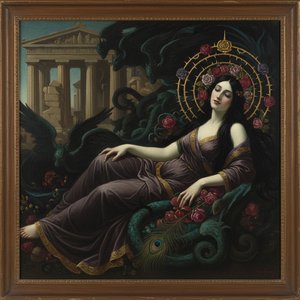
Franz von Stuck: Symbolism, Decadence & the Pursuit of Ideal Beauty
Explore the captivating world of Franz von Stuck, a leading Symbolist painter. Discover his mythological masterpieces, decadent themes, & investment potential. Expert analysis for discerning collectors.

The Enduring Power of Painting: A Historical & Contemporary Exploration of Form and Emotion
Explore the rich history & enduring techniques of oil painting with OriginalUniqueArt. Discover masterpieces, learn about art collecting, and find authentic handmade reproductions crafted by skilled artists.

Dante Gabriel Rossetti 25 Mesterműve: Szépség és Lelkiség a Vásznon – OriginalUniqueArt
Fedezze fel Dante Gabriel Rossetti 25 legszebb művészeti alkotását! Ismerje meg a prerafaeliták titkait, a viktoriánus festészet szépségét és a romantikus szimbolizmus mélységeit. Prémium minőségű art reprodukciók a OriginalUniqueArt-on – inspiráció otthonába!

Oil on Canvas: A Historical & Technical Exploration of a Timeless Artistic Medium
Explore the rich history & enduring techniques of oil painting on canvas. Discover the science behind its longevity, conservation practices, and contemporary relevance. Expert insights for art enthusiasts.