
 Megtekintés
 Küldés
 Megosztás
 Részletek

 Letöltés
 Hasonló darabok
 X-ray felvétel
 Diavetítés
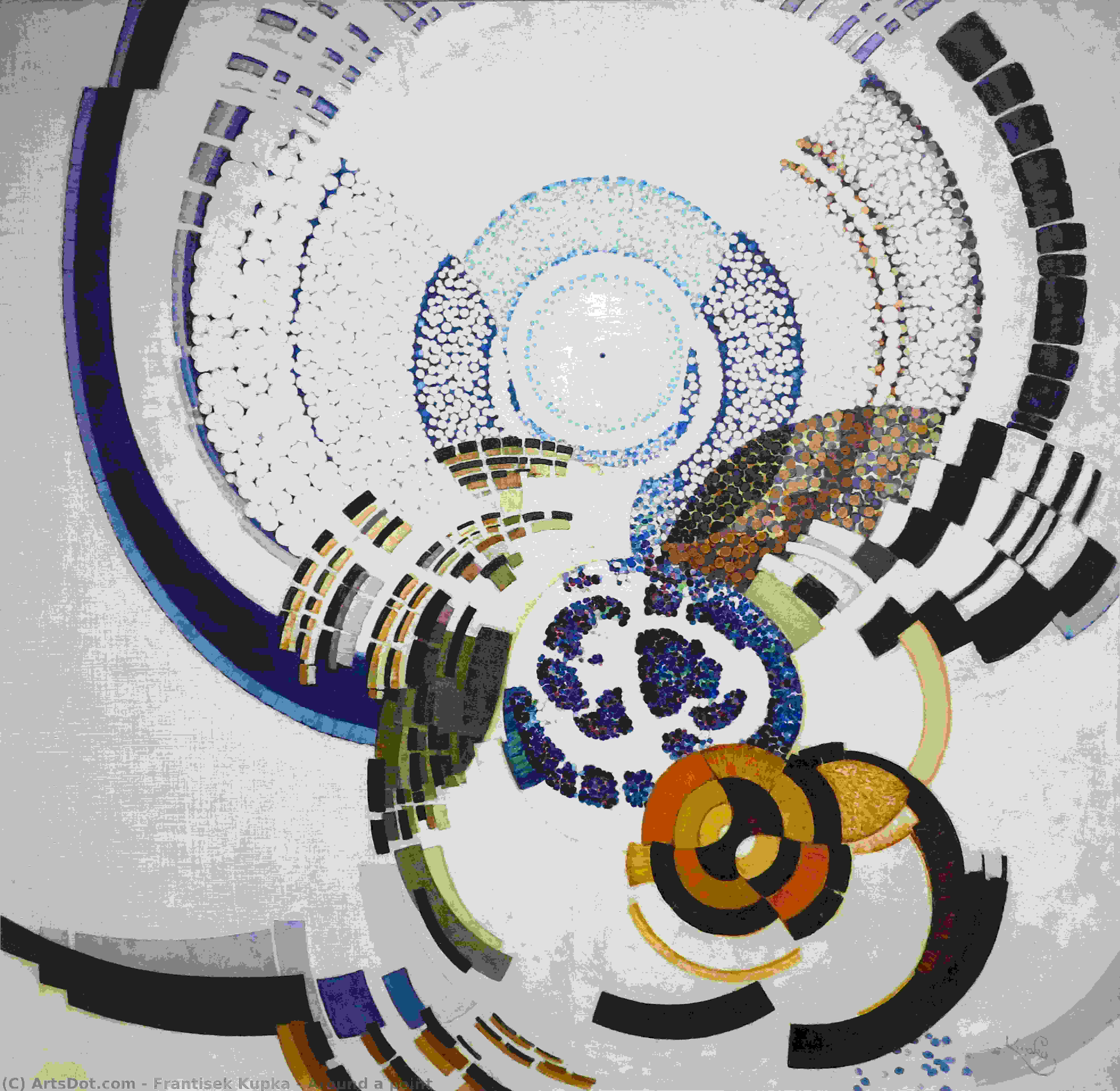
Around a Point


 Összes részlet megjelenítése
Giclée / Műnyomat
Múzeumi minőségű giclée vagy vászonnyomat, gyors gyártással és rugalmas finomítási lehetőségekkel. ( Kézzel festett másolat rendelése Kép letöltése)




































Válasszon előre meghatározott méreteink közül, amelyek megfelelnek a műalkotás eredeti arányainak.

Megadhat saját méreteket is egy konkrét kerethez vagy helyszínhez igazítva. Amennyiben a kiválasztott méret nem egyezik az eredeti kép arányokkal, a műalkotást le fogjuk vágni, vagy kiegészítjük a képet tükrözött vagy egyszínű szélekkel. A gyártás megkezdése előtt egy digitális tervezetet küldünk jóváhagyásra.
Kérjük, vegye figyelembe, hogy a képernyőn látható előnézet nem tükrözi a tényleges levágást vagy kiegészítést. Csak a tervezet mutatja pontosan a végső kompozíciót.
Bár az egyedi méretek is elérhetőek, az eredeti arányok megőrzése érdekében azt javasoljuk, hogy válasszon a előre meghatározott listából származó méretet.
Világszerte történő kiszállítás területére mindössze 2 hét alatt, a szokásos 4-5 hét helyett. (14 augusztus)

Ingyenes globális expressz szállítás

Prémium minőségű len vászon

Teljes körű szállítási biztosítás

Vámvisszatérítési Garancia

Hiteles színpontosság garancia

60 napos visszaküldési lehetőség (csak hibás termékek esetén)

100% pénzvisszatérítési garancia

Több darab vásárlása esetén kedvezmény
 Az üvegkeretes opció csak 110 cm alatti méretben érhető el

Around a Point
Giclée / Műnyomat
Reprodukció mérete
-


Összesített ár
$ 80
Gyűjthető leírása
Around a Point: A Journey into Cosmic Vibrations
František Kupka, a pivotal figure in early abstract art and Orphic Cubism, presents "Around a Point," a captivating work housed within the Paris Museum of Modern Art. This painting isn't merely an image; it’s an exploration of cosmic forces translated onto canvas through defined borders and a vibrant interplay of colors.
Background and Inspiration
Kupka embarked on this artistic endeavor around 1911, marking a significant shift from his earlier techniques that favored blurred boundaries. He consciously created distinct edges in "Around a Point." The genesis of the painting lies in Kupka's fascination with Isaac Newton’s “Disks of Newton.” He perceived parallels between these scientific representations and the patterns found within a lotus flower – specifically, the radiating arrangement of its petals. This analogy became central to his artistic vision, allowing him to convey a sense of movement and underlying cosmic vibration through visual form.
Artistic Techniques & Composition
“Around a Point” showcases Kupka’s deep engagement with theories of light and color. His aim was to reconcile seemingly opposing concepts: the infinite vastness of the cosmos and the infinitesimal nature of its components. The painting's composition revolves around a central blue circle, encircled by a vibrant yellow ring. This core is then surrounded by an array of circles varying in size and hue, creating a dynamic visual effect that draws the viewer’s eye to the focal point. Kupka masterfully employs shades of orange and blue – colors positioned opposite each other on the color wheel – achieving a harmonious balance within the composition. The use of a white background provides a lighter sensation for the human eye, representing a subtle departure from his previous artistic explorations.
Historical Significance & Artistic Style
Kupka’s contribution to art history is substantial, particularly within the realms of abstract expressionism and Orphic Cubism. His innovative approach – capturing cosmic vibrations through geometric shapes and a carefully orchestrated color palette – profoundly influenced subsequent generations of artists. "Around a Point" exemplifies his unique style, blending abstraction with an underlying sense of order and mathematical precision. It reflects the broader artistic currents of the early 20th century, where artists were actively seeking new ways to represent reality beyond traditional figurative forms. Kupka’s work stands as a testament to the power of abstract art to evoke profound emotions and explore universal themes.
A Timeless Masterpiece
"Around a Point" by František Kupka remains a compelling example of early abstract art, showcasing his distinctive fusion of abstraction and cosmic exploration. Its defined forms, vibrant colors, and underlying sense of movement make it an enduring masterpiece for art enthusiasts. For those seeking to experience the beauty and innovation of Kupka’s work firsthand, high-quality reproductions are available, allowing you to bring this iconic painting into your own space.
A művész életrajza
A Pioneer of Abstraction: The Life and Art of František Kupka
František Kupka, a name resonating with the dawn of abstract art, was born in 1871 in Opočno, Bohemia—a landscape that would subtly inform his later explorations of form and color. His journey from academic training to radical abstraction wasn’t a swift leap but rather a gradual unfolding, deeply influenced by spiritual currents and a relentless pursuit of visual truth. Initially steeped in historical and patriotic themes during his studies at the Academy of Fine Arts in Prague and then Vienna, Kupka's early work demonstrated technical skill yet lacked the distinctive voice that would soon define him. It was his move to Paris in 1894 that proved pivotal, immersing him in a vibrant artistic milieu where he briefly attended the Académie Julian and later studied with Jean-Pierre Laurens at the École des Beaux-Arts. However, it wasn’t merely formal training but the intellectual ferment of fin-de-siècle Paris—the burgeoning interest in symbolism, Neo-Impressionism, and Fauvism—that truly ignited his artistic evolution.The Path to Pure Abstraction: Influences and Innovations
Kupka’s artistic trajectory wasn't solely driven by aesthetic considerations; it was profoundly shaped by philosophical and spiritual inquiries. His engagement with Theosophy, a mystical system blending Eastern religions and Western esotericism, proved particularly influential. This belief system posited an underlying unity to all things and sought to reveal hidden realities beyond the visible world—a concept that resonated deeply with Kupka’s artistic aspirations. He began to believe that art could transcend mere representation and access these deeper truths through the manipulation of color, form, and line. This conviction led him away from depicting recognizable objects and towards a more subjective, internal exploration of visual experience. His early experiments involved blurring the boundaries between figuration and abstraction, as seen in works like *The Beginning of Life*, where symbolic imagery intertwined with emerging abstract elements. He wasn’t alone in this quest; Kupka engaged with contemporary scientific theories regarding color and light, seeking to understand their psychological effects on the viewer, believing that properly composed color had the ability to allow people to enter a transcendental state. This fusion of spiritual inquiry and scientific observation became a hallmark of his approach. He began to see color not as a descriptive element but as an independent force capable of evoking emotion and conveying meaning directly.Orphic Cubism and Beyond: A Unique Visual Language
By the early 1910s, Kupka had embarked on a path that would lead him to become one of the pioneers of abstract art. His paintings from this period, such as *Amorpha: Fugue in Two Colors* (1912), were among the first truly non-representational works exhibited publicly, challenging conventional notions of artistic representation. He wasn’t interested in simply dismantling form—as some Cubists were doing—but rather in creating a new visual language based on pure abstraction. This led to his association with Orphic Cubism (also known as Orphism), a movement spearheaded by Robert Delaunay that emphasized the dynamic interplay of color and light. However, Kupka’s approach differed from Delaunay's; while both explored abstract forms, Kupka often retained a sense of underlying structure and rhythm, evoking musical compositions in his paintings—hence the frequent use of terms like “fugue” and “disks.” His *Disks of Newton* series exemplifies this exploration, depicting circular forms that seem to vibrate with energy and suggest the forces governing the universe. He wasn’t merely creating aesthetically pleasing arrangements; he was attempting to visualize underlying cosmic principles.Key Works and Artistic Development
Kupka's artistic development can be traced through a series of key works. *The Beginning of Life* (1898) demonstrates his early interest in symbolism, drawing on religious imagery—particularly Buddhist motifs—to represent the cycle of birth and renewal. His experiments with pointillism, influenced by Seurat’s work, are evident in paintings like *Around a Point* (1903), where he meticulously applied tiny dots of color to create luminous effects. The transition to pure abstraction began around 1910, culminating in masterpieces such as *Fugue in Red and Blue* (1912) and *Amorpha: Fugue in Two Colors* (1912). These paintings are characterized by their dynamic compositions, vibrant color palettes, and a sense of rhythmic movement. Kupka’s later works, particularly those created during World War I, often featured geometric forms and bold colors, reflecting the turmoil and uncertainty of the era. He continued to explore abstract concepts throughout his career, experimenting with different techniques and approaches until his death in 1957.Legacy and Lasting Influence
František Kupka's contributions extended beyond his individual paintings. As a founding member of Abstraction-Création in 1931, an international group dedicated to promoting abstract art, he played a vital role in shaping the course of modernism. His work was recognized internationally, featured in landmark exhibitions like “Cubism and Abstract Art” at the Museum of Modern Art in New York in 1936. Though often overshadowed by more prominent figures like Kandinsky or Mondrian, Kupka’s pioneering spirit and unique visual language have secured his place as a crucial figure in the history of abstract art. His legacy continues to inspire artists today, reminding us that abstraction isn't merely about eliminating representation but about unlocking new possibilities for expression and revealing hidden dimensions of reality. He sought not to depict what he saw, but what he felt—and in doing so, he opened up a universe of visual experience. His dedication to exploring the fundamental elements of art – color, form, line – remains profoundly relevant, demonstrating that true innovation lies in questioning established norms and embracing the power of pure abstraction.Museums Featuring Kupka’s Work
- Solomon R. Guggenheim Museum (New York, United States)
- The Paris Museum of Modern Art (Paris, France)
- Galerie Manés (Prague, Czech Republic)

Kupka František
1871 - 1957 , Csehország
A művészről röviden
- Artistic Movement Or Style: Absztrakt művészet, Orfista kubizmus
- Artists Or Movements Influenced By This Artist: ['Orphism']
- Date Of Birth: 1871. szeptember 23.
- Date Of Death: 1957. június 24.
- Full Name: František Kupka
- Nationality: Cseh
- Notable Artworks:
- Diszkek Newton (Studium két színben)
- A szív színe
- Place Of Birth: Opočno, Csehország
Kapcsolódó cikkek

Geometrikus Absztrakció Mesterei: 10 Alapvető Műalkotás a Lakberendezéshez
Fedezze fel a geometrikus absztrakció 10 legikonikusabb műalkotását! Kandinsky, Mondrian és más mesterek festményeinek története inspirálja otthona dekorációját. Múzeumi minőségű reprodukciók a OriginalUniqueArt.com-on – fedezze fel online!

Absztrakt Expresszionizmus Mesterei: 10 alkotás, ami meghatározta a művészetet | OriginalUniqueArt.com
Fedezze fel a 10 legikonikusabb absztrakt expresszionista alkotást! Ismerje meg Jackson Pollock, Mark Rothko és más mesterek történetét. Művészeti reprodukciók prémium minőségben – OriginalUniqueArt.com.

Kandinsky Mesterművei: 25 Lenyűgöző Festmény a Modern Művészet Gyöngyszemeiből | OriginalUniqueArt
Fedezze fel Wassily Kandinsky 25 legikonikusabb művét! Merüljön el az absztrakt művészet világában, ismerje meg a színek és formák lenyűgöző történetét. Prémium minőségű reprodukciók és inspiráló dekorötletek a OriginalUniqueArt.com-on.

Jean Dominique Antony Metzinger: Pioneering Cubism & the Evolution of Abstract Form
Explore the life & work of Jean Metzinger, a pivotal Cubist painter and theorist. Discover his innovations in proto-Cubism, 'Du Cubisme,' and Crystal Cubism – a journey through modern art's evolution.
Deconstructing Reality: Cubism's Revolutionary Impact on 20th-Century Art
Explore the revolutionary impact of Cubism on 20th-century art. Discover Picasso, Braque & beyond with our expert guide to this pivotal movement. Learn about Analytic & Synthetic Cubism's techniques and lasting legacy.

