

 Megtekintés
 Küldés
 Megosztás
 Részletek
 Útmutató

 Letöltés
 Hasonló darabok
 X-ray felvétel
 Diavetítés
 Statisztika
Gran Cairo


 Összes részlet megjelenítése
Az ezen az oldalon megjelenített műalkotások szerzői jogi védelem alatt állnak, ami azt jelenti, hogy törvényileg nem készíthetünk és nem adhatunk el belőlük pontos másolatokat. Ez a védelem olyan nemzetközi megállapodások alapján érvényesül, mint például a Berni Egyezmény és a nemzeti jogszabályok által, beleértve azokat is, amelyeket meghatározott Az USA szerzői jogi törvénye – 17. cím.
Ez a módszer teljes mértékben megfelel a szerzői jogi szabályozásnak, mivel nem tartalmazza a védett műalkotás másolását vagy duplikálását. Ehelyett ez egy kreatív újinterpretáció – egy új festmény, amely az eredetivel való összefüggései miatt hatással van rá, de nem az az.
Giclée / Műnyomat
Múzeumi minőségű giclée vagy vászonnyomat, gyors gyártással és rugalmas finomítási lehetőségekkel. ( Kézzel festett másolat rendelése Áttérés digitális képre)




P118B Ft10

P118H Ft10

P118W Ft10

P438Z Ft10

P508JH Ft12

P508YH Ft12

P805H Ft10

P805Z Ft10

P919BZ Ft10

P919G Ft10

P919XJ Ft10

P959ZH Ft10

P968JZ Ft12

W106C Ft8

W218G Ft10

W218JH Ft8

W218Y Ft10

W307PJ Ft10

W316G Ft10

W316PJ Ft8

W316Y Ft10

W398PJ Ft8

W4111J Ft10

W500HY Ft15

W500JH Ft15

W692G Ft12

W849H Ft8

W940BG Ft15

W953PJ Ft8




Válasszon előre meghatározott méreteink közül, amelyek megfelelnek a műalkotás eredeti arányainak.

Írja be a keretének vagy a falának megfelelő szélességet és magasságot. A nyomatot csak le lehet vágni, soha nem tehető nagyobbá, mint az eredeti kép, így egy eltérő alakú méretnél a kép egy része elveszik. Mielőtt bármit kinyatintanánk, küldünk egy digitális próbamodellt jóváhagyásra. Az oldalon látható kép nem tartalmazza a valós levágást — ezt csak a próbamodell mutatja meg.
Világszerte történő kiszállítás területére mindössze 2 hét alatt, a szokásos 4-5 hét helyett. (27 október)

Ingyenes globális expressz szállítás

Prémium minőségű len vászon

Teljes körű szállítási biztosítás

Vámvisszatérítési Garancia

Hiteles színarányosság garancia

100 napos visszaküldési lehetőség (csak hibás termékek esetén)

100% pénzvisszatérítési garancia

Több darab vásárlásakor kedvezmény
 Az üvegkeretes opció csak 110 cm alatti méretben érhető el

Gran Cairo
Giclée / Műnyomat
Reprodukció mérete
-


Összesített ár
Ft 25827
A Symphony of Geometric Precision
In the vast landscape of twentieth-century abstraction, few works capture the hypnotic allure of pure form as effectively as Frank Stella’s Gran Cairo. Created in 1962, this masterpiece serves as a profound exploration of visual perception, where the boundaries between color and shape begin to dissolve into a mesmerizing dance. At first glance, the viewer is met with a striking interplay of concentric squares, each layer pulsating with a spectrum of hues that range from deep, resonant reds to luminous, sun-drenched yellows. It is an artwork that does not merely sit upon a wall; it commands the space around it, inviting the eye into a rhythmic journey through a meticulously constructed labyrinth of light and pigment.
The brilliance of Gran Cairo lies in its ability to achieve a sense of profound depth while maintaining a resolute flatness. Through the masterful application of oil paint on canvas, Stella achieves flawlessly smooth transitions that suggest a continuous, breathing surface. This technique draws heavily from the principles of Op Art, utilizing optical illusions to create a sensation of movement within a static medium. For the discerning collector or interior designer, this piece offers a unique architectural quality; its structured, grid-like arrangement provides a sense of order and stability, yet its vibrant palette injects an undeniable energy into any sophisticated environment.
The Legacy of Color and Form
To understand the intellectual weight behind Gran Cairo, one must look toward the pedagogical foundations that shaped Stella’s vision. The artwork is a brilliant manifestation of the theories of Josef Albers, particularly the concept of simultaneous contrast, where colors are seen to change based on their neighbors. Stella’s meticulous understanding of how a warm yellow might ignite when placed against a deep crimson allows the painting to function as a living experiment in color theory. This scientific precision is balanced by the expressive influence of Hans Hofmann, whose teachings encouraged an appreciation for the emotional resonance found within abstract structures.
This period of Stella's career marked a revolutionary departure from the turbulent, gestural emotions of Abstract Expressionism. Rather than seeking to express the artist's inner psyche through chaotic brushstrokes, Stella sought a purity of objecthood. In Gran Cairo, we see the seeds of Minimalism—a movement that prioritized the painting as a physical object rather than a window into another world. The work embodies a sense of contained energy, where the repetition of geometric forms creates a feeling of eternal balance and harmony. It is a sophisticated choice for those seeking to decorate a space with art that is both intellectually stimulating and aesthetically transcendent, offering a timeless elegance that resonates far beyond its mid-century origins.
Kérdések és válaszok
Gran Cairo színei erőteljesnek vagy lágynak tűnnek?
A „Gran Cairo”, Frank Stella alkotása színei Vivid intenzitásúak.
Van-e rozšíngtott valóság (AR) előnézete a(z) "Gran Cairo" alkotásnak?
A(z) "Gran Cairo" kiterjesztett valóság (AR) előnézettel rendelkezik: a mű Kiterjesztett valóság előnézet oldalán kompatibilis eszközön megtekinthető saját környezetében.
„Gran Cairo”, Frank Stella alkotása egy világos vagy egy sötét tónusú alkotás?
A "Gran Cairo" alkotás fényerisége összességében balanced, luminanciája pedig Gentle Luminance.
A művész életrajza
Frank Stella
Frank Stella, who passed away on May 4, 2024, at the age of 87, was a towering figure in American art, a relentless innovator whose career spanned seven decades and challenged conventional notions of painting, sculpture, and architectural design. Born in Malden, Massachusetts, in 1936 to first-generation Italian-American parents, Stella’s artistic journey began with an early exposure to the visual world through his mother's landscape paintings and a formative education at Phillips Academy Andover, where he encountered the rigorous color theories of Josef Albers and the expressive power of Hans Hofmann. These influences, coupled with studies in history at Princeton University and frequent trips to New York City galleries, laid the groundwork for a radical departure from the prevailing Abstract Expressionism of the time. Stella wasn’t interested in the emotional turmoil or subjective gesture that defined artists like Pollock and Kline; he sought something purer, more objective—a distillation of painting down to its most fundamental elements.Rejecting Illusion: The Rise of Minimalism
Stella's emergence onto the art scene in the late 1950s was nothing short of revolutionary. He famously declared that “a painting should be a flat surface with paint on it—nothing more,” a statement that became a manifesto for the burgeoning Minimalist movement. This philosophy materialized most strikingly in his *Black Paintings* (1958-1960), a series of canvases defined by precisely spaced, symmetrical black stripes separated by bands of exposed canvas. Works like Die Fahne Hoch! (1959) – a title deliberately provocative, referencing the Nazi anthem – weren’t intended as expressions of political sentiment but rather as explorations of form and surface, challenging viewers to confront the painting as an object in itself. The deliberate coolness and rejection of emotional content were jarring at the time, signaling a decisive break from Abstract Expressionism's emphasis on subjective experience. He wasn’t aiming to depict something *about* the world; he was presenting the world—or rather, the painting—as it *is*. This focus on materiality and geometric precision extended into his shaped canvases of the 1960s, where Stella abandoned the traditional rectangular format in favor of complex polygons, often crafted from aluminum and copper paint. These weren’t merely paintings; they were sculptural objects that blurred the boundaries between two and three dimensions, further emphasizing the artwork's physical presence.Expanding Boundaries: From Protractor Series to Maximalism
The 1970s saw Stella experimenting with new techniques and expanding his artistic vocabulary. The *Protractor Series* (1971) incorporated sweeping arcs and vibrant colors arranged within square borders, inspired by the circular cities he visited in the Middle East. Simultaneously, Stella explored printmaking extensively, mastering lithography, screenprinting, and etching to create abstract prints that mirrored the painting's geometric language. His engagement extended beyond visual art; he collaborated with Merce Cunningham on *Scramble* (1967), demonstrating his willingness to explore interdisciplinary connections. A retrospective at the Museum of Modern Art in 1970 solidified Stella’s position as a leading figure in contemporary art, marking a pivotal moment in his career. During this decade he began making series of increasingly elaborate relief constructions on canvas and aluminum, including *Polish Village* (1970–73) and *Exotic Bird Paintings* (1976–80). Departing from his hard-edged style, Stella embraced baroque patterns, fluorescent colors, gestural brushstrokes, and architectural elements. His *Moby Dick *series (1985–97) of 260 prints, sculptures, and reliefs considered the illustrative potential of abstraction.A Legacy of Innovation
Stella's later work continued to push boundaries, reflecting a profound engagement with artistic tradition while maintaining his distinctive visual style. He received numerous accolades throughout his life, including the National Medal of Arts in 2009 and the Lifetime Achievement Award in Contemporary Sculpture from the International Sculpture Center in 2011. Frank Stella’s unwavering dedication to formal clarity and geometric precision cemented his place as one of the most important and influential artists of the 20th century, leaving behind a vast body of work that continues to inspire generations of creatives.
Frank Stella
1936 - , Egyesült Államok
Rövid információk
- Artistic Movement Or Style:
- Minimalizmus
- Posztpainterly absztrakt
- Artists Who Influenced This Artist:
- Josef Albers
- Hans Hofmann
- Jackson Pollock
- Franz Kline
- Date Of Birth: May 12, 1936
- Date Of Death: May 4, 2024
- Full Name: Frank Philip Stella
- Nationality: Amerikai
- Notable Artworks:
- Die Fahne Hoch!
- Louisiana Lottery Co.
- Wolfeboro IV
- Place Of Birth: Malden, USA
Kapcsolódó cikkek

Neo-Abstract Art: The High-Impact Evolution of Modern Visual Energy and Geometric Sophistication
Discover the power of Neo-Abstract art. Explore how bold geometric forms and high-impact visual energy are redefining modern design. Learn to curate sophisticated, high-energy spaces with the latest trends in contemporary abstraction and structural color.

Geometrikus Absztrakció Mesterei: 10 Alapvető Műalkotás a Lakberendezéshez
Fedezze fel a geometrikus absztrakció 10 legikonikusabb műalkotását! Kandinsky, Mondrian és más mesterek festményeinek története inspirálja otthona dekorációját. Múzeumi minőségű reprodukciók a OriginalUniqueArt.com-on – fedezze fel online!

Beyond Form & Color: Geometric Abstraction's Evolution in 20th/21st Century Art
Explore the evolution of geometric abstraction from Cubism to contemporary art. Discover key artists like Malevich & Mondrian, investment insights, and expert collecting advice at OriginalUniqueArt.
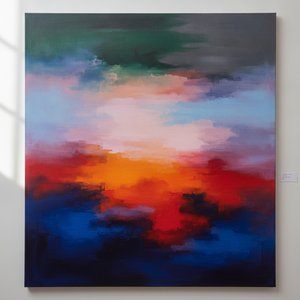
Color Field Painting: The Emotional Power of Pure Abstraction and Chromatic Depth
Explore the profound emotional depth of Color Field painting. Discover the history of mid-century abstraction, from Rothko to Newman, and learn how pure color transforms the viewer's experience through our expert art history guide.

Kandinsky Mesterművei: 25 Lenyűgöző Festmény a Modern Művészet Gyöngyszemeiből | OriginalUniqueArt
Fedezze fel Wassily Kandinsky 25 legikonikusabb művét! Merüljön el az absztrakt művészet világában, ismerje meg a színek és formák lenyűgöző történetét. Prémium minőségű reprodukciók és inspiráló dekorötletek a OriginalUniqueArt.com-on.
