

 Előnézet
 Megosztás
 Megosztás
 Részletek
 Útmutató

 Letöltés
 Hasonló darabok
 X-ray felvétel
 Diavetítés
 Statisztika
Basra Gate III


 Tovább olvasom
Kézzel készített olajfestmény reprodukció
Kézzel festett olajvastú vászon, az Ön által választott méretben és keretben, művészeink készítik meglévőre. ( Váltás nyomtatványra Áttérés digitális képre)




P118B $10

P118H $10

P118W $10

P438Z $10

P508JH $12

P508YH $12

P805H $10

P805Z $10

P919BZ $10

P919G $10

P919XJ $10

P959ZH $10

P968JZ $12

W106C $8

W218G $10

W218JH $8

W218Y $10

W307PJ $10

W316G $10

W316PJ $8

W316Y $10

W398PJ $8

W4111J $10

W500HY $15

W500JH $15

W692G $12

W849H $8

W940BG $15

W953PJ $8




Válasszon előre meghatározott méreteink közül, amelyek megfelelnek a műalkotás eredeti arányainak.

Ön megadhat saját méreteket egy adott kerethez vagy térhez igazításhoz. Ha a kiválasztott méret nem egyezik az eredeti kép arányával, akkor a műalkotást levágjuk, vagy további kézzel festett elemekkel meghosszabbítjuk a festményt. A gyártás megkezdése előtt küldünk Önnek egy digitális előnézetet jóváhagyásra.
Kérjük, vegye figyelembe, hogy a képernyőn megjelenő előnézet nem tükrözi a tényleges vágást vagy kiterjesztést. Csak az előnézet fog pontosan mutatni a végső kompozíciót.
Bár egyedi méretek állnak rendelkezésre, javasoljuk, hogy válasszon egy méretet az előre meghatározott listából az eredeti arányok megőrzése érdekében.
A rendelést követően a OriginalUniqueArt.com csapata e-mailt küld az ügyfélnek az instrukciókért, és biztosít egy előnézeti képet (mockup).
Világszerte elérhető szállítás () 3-4 hét alatt a szokásos 5 hét helyett. (26 szeptember). A minőség nem kérdőjelezhető.

Ingyenes globális expressz szállítás

Prémium minőségű len vászon

Teljes körű szállítási biztosítás

Vámvisszatérítési Garancia

Tökéletes színarányosság garancia

100 napos visszaküldési garancia (csak gyártási hibás termékek esetén)

100% pénzvisszatérítési garancia

Több darab vásárlásakor kedvezmény
 Az üvegkeretes opció csak 110 cm alatti méretben érhető el

Basra Gate III
Reprodukciós technika
Reprodukció méretei
-


Összesített ár
$ 300
The Geometry of Pure Color
To stand before Basra Gate III is to encounter a moment of pure, structured contemplation. This large-scale composition does not whisper; it declares with the confident precision of mathematical certainty. It presents itself as a magnificent semi-circular expanse, immediately drawing the eye into its vibrant, organized complexity. The dominant field of deep purple acts less as a background and more as a resonant void against which color can finally breathe and define itself. What strikes the viewer first is the sheer architectural quality of the piece—twelve distinct, sharply delineated sections radiating outward from an unseen center point. These segments are not merely colored; they are carefully calibrated planes of hue, ranging across the spectrum from fiery oranges and passionate reds to cool emerald greens and receding purples.
A Dialogue with Abstraction
The style here is a masterful exercise in geometric abstraction, echoing the intellectual rigor of Color Field painting while maintaining an undeniable structural backbone. There is no suggestion of narrative or recognizable subject matter; the art speaks purely in the language of form and chroma. The artist has stripped away the anecdotal, leaving only the elemental relationship between color blocks. This commitment to pure visual impact allows the piece to function as a powerful anchor for any sophisticated interior space. It demands attention not through drama, but through impeccable balance—a balance achieved by the even distribution and rhythmic repetition of its angular, rectangular forms.
Technique: Precision in Pigment
Examining the surface reveals an almost startling flatness. The technique employed suggests a meticulous application of acrylic paint, resulting in boundaries so crisp they appear etched rather than painted. There is a deliberate absence of visible brushwork or textural grit; the color transitions are immediate and absolute, giving the illusion of perfectly layered, polished planes. This technical mastery elevates the work beyond mere decoration into the realm of considered optical experience. It speaks to an artist who values the integrity of the line as much as the saturation of the tone.
Echoes of Modernist Thought
While the specific genesis of Basra Gate III may draw from various sources, its spirit aligns deeply with the mid-to-late 20th-century movements that sought to redefine painting's boundaries. It carries the weight of modernist inquiry—a desire to find universal order within the chaos of perception. For the collector or designer, this piece offers a connection to an artistic lineage that valued structure and optical theory over subjective outpouring. It is art that rewards close study, inviting one to trace the eye from one vibrant quadrant to the next, discovering patterns where none were explicitly intended.
Emotional Resonance and Placement
The emotional impact of Basra Gate III is one of controlled energy. It is invigorating without being chaotic; it is orderly without feeling sterile. The interplay between the deep, grounding purple and the bright, assertive color blocks creates a dynamic tension that feels both ancient and utterly contemporary. For a grand foyer, a library, or an art-centric living space, this reproduction serves not just as decoration, but as a visual centerpiece—a sophisticated conversation starter that speaks volumes about an appreciation for rigorous design and the sublime power of pure color.
A művész életrajza
Frank Stella
Frank Stella, who passed away on May 4, 2024, at the age of 87, was a towering figure in American art, a relentless innovator whose career spanned seven decades and challenged conventional notions of painting, sculpture, and architectural design. Born in Malden, Massachusetts, in 1936 to first-generation Italian-American parents, Stella’s artistic journey began with an early exposure to the visual world through his mother's landscape paintings and a formative education at Phillips Academy Andover, where he encountered the rigorous color theories of Josef Albers and the expressive power of Hans Hofmann. These influences, coupled with studies in history at Princeton University and frequent trips to New York City galleries, laid the groundwork for a radical departure from the prevailing Abstract Expressionism of the time. Stella wasn’t interested in the emotional turmoil or subjective gesture that defined artists like Pollock and Kline; he sought something purer, more objective—a distillation of painting down to its most fundamental elements.Rejecting Illusion: The Rise of Minimalism
Stella's emergence onto the art scene in the late 1950s was nothing short of revolutionary. He famously declared that “a painting should be a flat surface with paint on it—nothing more,” a statement that became a manifesto for the burgeoning Minimalist movement. This philosophy materialized most strikingly in his *Black Paintings* (1958-1960), a series of canvases defined by precisely spaced, symmetrical black stripes separated by bands of exposed canvas. Works like Die Fahne Hoch! (1959) – a title deliberately provocative, referencing the Nazi anthem – weren’t intended as expressions of political sentiment but rather as explorations of form and surface, challenging viewers to confront the painting as an object in itself. The deliberate coolness and rejection of emotional content were jarring at the time, signaling a decisive break from Abstract Expressionism's emphasis on subjective experience. He wasn’t aiming to depict something *about* the world; he was presenting the world—or rather, the painting—as it *is*. This focus on materiality and geometric precision extended into his shaped canvases of the 1960s, where Stella abandoned the traditional rectangular format in favor of complex polygons, often crafted from aluminum and copper paint. These weren’t merely paintings; they were sculptural objects that blurred the boundaries between two and three dimensions, further emphasizing the artwork's physical presence.Expanding Boundaries: From Protractor Series to Maximalism
The 1970s saw Stella experimenting with new techniques and expanding his artistic vocabulary. The *Protractor Series* (1971) incorporated sweeping arcs and vibrant colors arranged within square borders, inspired by the circular cities he visited in the Middle East. Simultaneously, Stella explored printmaking extensively, mastering lithography, screenprinting, and etching to create abstract prints that mirrored the painting's geometric language. His engagement extended beyond visual art; he collaborated with Merce Cunningham on *Scramble* (1967), demonstrating his willingness to explore interdisciplinary connections. A retrospective at the Museum of Modern Art in 1970 solidified Stella’s position as a leading figure in contemporary art, marking a pivotal moment in his career. During this decade he began making series of increasingly elaborate relief constructions on canvas and aluminum, including *Polish Village* (1970–73) and *Exotic Bird Paintings* (1976–80). Departing from his hard-edged style, Stella embraced baroque patterns, fluorescent colors, gestural brushstrokes, and architectural elements. His *Moby Dick *series (1985–97) of 260 prints, sculptures, and reliefs considered the illustrative potential of abstraction.A Legacy of Innovation
Stella's later work continued to push boundaries, reflecting a profound engagement with artistic tradition while maintaining his distinctive visual style. He received numerous accolades throughout his life, including the National Medal of Arts in 2009 and the Lifetime Achievement Award in Contemporary Sculpture from the International Sculpture Center in 2011. Frank Stella’s unwavering dedication to formal clarity and geometric precision cemented his place as one of the most important and influential artists of the 20th century, leaving behind a vast body of work that continues to inspire generations of creatives.
Frank Stella
1936 - , Egyesült Államok
Gyors információk
- Artistic Movement Or Style:
- Minimalizmus
- Posztpainterly absztrakt
- Artists Who Influenced This Artist:
- Josef Albers
- Hans Hofmann
- Jackson Pollock
- Franz Kline
- Date Of Birth: May 12, 1936
- Date Of Death: May 4, 2024
- Full Name: Frank Philip Stella
- Nationality: Amerikai
- Notable Artworks:
- Die Fahne Hoch!
- Louisiana Lottery Co.
- Wolfeboro IV
- Place Of Birth: Malden, USA
Kapcsolódó cikkek

Beyond Form & Color: Geometric Abstraction's Evolution in 20th/21st Century Art
Explore the evolution of geometric abstraction from Cubism to contemporary art. Discover key artists like Malevich & Mondrian, investment insights, and expert collecting advice at OriginalUniqueArt.
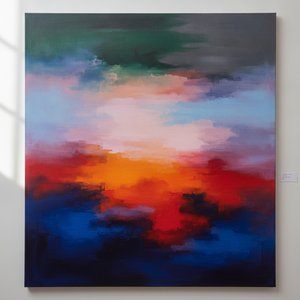
Color Field Painting: The Emotional Power of Pure Abstraction and Chromatic Depth
Explore the profound emotional depth of Color Field painting. Discover the history of mid-century abstraction, from Rothko to Newman, and learn how pure color transforms the viewer's experience through our expert art history guide.

Geometrikus Absztrakció Mesterei: 10 Alapvető Műalkotás a Lakberendezéshez
Fedezze fel a geometrikus absztrakció 10 legikonikusabb műalkotását! Kandinsky, Mondrian és más mesterek festményeinek története inspirálja otthona dekorációját. Múzeumi minőségű reprodukciók a OriginalUniqueArt.com-on – fedezze fel online!

Neo-Abstract Art: The High-Impact Evolution of Modern Visual Energy and Geometric Sophistication
Discover the power of Neo-Abstract art. Explore how bold geometric forms and high-impact visual energy are redefining modern design. Learn to curate sophisticated, high-energy spaces with the latest trends in contemporary abstraction and structural color.
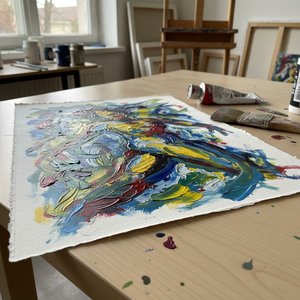
Acrylic on Paper: A Modern Canvas for Contemporary Expression
Explore the versatility of acrylic painting on paper! Discover expert techniques, artist insights & archival practices for creating stunning contemporary art. Learn more at OriginalUniqueArt.
