

 Megtekintés
 Küldés
 Megosztás
 Részletek

 Letöltés
 Hasonló darabok
 X-ray felvétel
 Diavetítés
Girl Reading


 Összes részlet megjelenítése
Vásároljon nagy felbontású, javított digitális képet, amely minőségében messze felülmúlja az online előnézetet.
Minden fájlt szakembereink a legmodernebb eszközök és precíz, kézi retusálás segítségével készítenek el aprólékosan. Gondoskodunk arról, hogy minden kép kivételes tisztasággal, pontos színhelyességgel és részletgazdag finomsággal rendelkezzen.
A végleges fájl 72 órán belül e-mailben megérkezik, professzionális, szerkesztői és nyomtatási környezetbe optimalizálva az azonnali használathoz. Ez ugyanaz a minőség, amelyben a legmeghatározóbb tervezőstúdiók, kiadók és galériák is megbízhatnak.
Digitális kép
Töltsön le nagy felbontású fájlt személyes kiállításokhoz, nyomtatáshoz és kreatív projektekhez. ( Nyomat rendelése Kézzel festett másolat rendelése)
Minden digitális kép rendeléséhez tartozó extrák
Szakértői digitális kézbesítés, garantáltan
Amikor a OriginalUniqueArt.com szolgáltatást választja, nem csupán egy képet kap – professzionálisan felmagasított digitális műalkotást kap, amely precizitással készült, és amelyet megelégsedési gwarancia tesz biztoslássá. Az alábbiakban automatikusan minden benne 】

Gyors e-mail teslimítés
A nagy felbontású digitális képmásolatát a megrendelést követő 72 órán belül e-mailben elküldjük Önnek – azonnal használható formátumban.

MI-alapú digitális fejlesztésű fájl
Műve professzionális módon kerül optimalizálásra fejlett mesterséges intelligencia eszközök és manuális szerkesztés segítségével, biztosítva a maximális részletességet, tisztaságot és színpontosságot.

Örök életű ingyenes újradelivery
Véletlenül törölted vagy elvesztetted a fájlodat? Ne aggódj – bármikor ingyen újra megküldjük neked.

Nincs importköltség – soha
Élvezze műalkotásait azonnal, vám, illeték vagy szállítási költség nélkül – a digitális letöltések mindig adamentesek.

Színpontosság garantálása
Professzionális eszközök és színkezelés segítségével garantáljuk, hogy digitális képe a lehető legpontosabban tükrözze az eredeti színeket.

60 napos elégedettségi garancia
Ha nemມີ elégedett a digitális képpel, 60 napon belül átmunkáljuk azt, vagy 100% visszatérítjük az amountot – kérdés nélkül.

100% Pénzvisszatérítési garancia
Nem érheted el a teljes elégedettséget? 60 napon belül teljes visszatérítést kapsz a digitális fájlod megérkezése után – kérdés nélkül.

Tömegrendelési kedvezmények
Vásároljon 3 képet, spóroljon 10%-et - Vásároljon 5-öt, spóroljon 15%-et - Vásároljon 10+ képet, spóroljon 20%-at. Kiváló kreatív projektekhez, galériákhoz és ügynökségekhez.
A gyűjtemény részletei
A Moment of Quiet Reflection: Frank Duveneck’s “Girl Reading”
Frank Duveneck's "Girl Reading," painted in 1876, isn’t merely a portrait; it’s a carefully constructed tableau of domesticity and intellectual pursuit. The painting immediately draws the viewer into a scene of serene contemplation – a young woman lost within the pages of her book, bathed in a soft, diffused light that speaks to both intimacy and a certain melancholy. Duveneck, a remarkably prolific artist whose life was tragically cut short at the age of 71, masterfully captures this quiet moment, imbuing it with an emotional resonance that transcends its simple subject matter.
The composition is deceptively straightforward. The girl, dressed in a vibrant crimson gown – a bold and striking color choice for the era – sits poised on what appears to be a small stool or bench. Her posture suggests both comfort and concentration; her hand rests lightly upon the book, while her gaze is utterly absorbed by its contents. The dark shawl draped across her shoulders and the matching hat contribute to a sense of understated elegance and perhaps a touch of reserve. The background, rendered in muted browns and greens, serves as a subtle counterpoint to the girl’s vivid attire, directing the eye back to her central figure.
Impressionistic Realism: A Delicate Balance
Duveneck's style is often described as “impressionistic realism,” a term that perfectly encapsulates his approach. He skillfully blends elements of both movements – the loose brushstrokes and emphasis on capturing fleeting moments characteristic of Impressionism, with the meticulous detail and accurate representation favored by Realists. Notice how he uses broken color to create an atmospheric effect, particularly in the dappled light filtering through an unseen window. The paint isn’t blended smoothly; instead, it's applied in short, visible strokes that give the scene a sense of immediacy and vitality. This technique allows him to convey not just what he *sees*, but also how he *feels* about what he sees – a subtle emotional layering that elevates the painting beyond a simple likeness.
The artist’s use of light is particularly noteworthy. It's not harsh or dramatic, but rather soft and diffused, creating a sense of warmth and intimacy. This gentle illumination highlights the girl’s face and hands, drawing attention to her engagement with the book. The shadows are equally deliberate, adding depth and dimension to the scene and subtly hinting at the quiet solitude of the moment.
A Window into 19th-Century Life
"Girl Reading" offers a poignant glimpse into the domestic life of mid-19th century America. The painting reflects a time when education, particularly for women, was increasingly valued, though still often limited. The girl’s act of reading represents a burgeoning intellectual curiosity and a desire for knowledge – a subtle assertion of agency within a society that frequently confined women to traditional roles. Furthermore, the setting itself—a simple interior space—suggests a life centered around family and home, values deeply rooted in the era.
Considering Duveneck’s own biography adds another layer of meaning. His early life was marked by profound loss – the death of his father at a young age and the subsequent remarriage of his mother. These experiences undoubtedly shaped his artistic vision, imbuing his work with a sense of melancholy and perhaps a yearning for stability and connection. “Girl Reading,” therefore, can be interpreted as an exploration of these themes—a quiet meditation on loss, memory, and the solace found in intellectual pursuits.
Symbolism and Emotional Resonance
Beyond its historical context, "Girl Reading" is rich with symbolic meaning. The book itself represents knowledge, wisdom, and escape – a portal to other worlds and ideas. The girl’s posture suggests introspection and a desire for self-discovery. The crimson dress, while vibrant, also carries connotations of passion and perhaps even vulnerability. Duveneck masterfully uses color and composition to create an atmosphere of quiet contemplation, inviting the viewer to share in the girl's moment of solitude.
Ultimately, “Girl Reading” is a remarkably evocative work that transcends its simple subject matter. It’s a testament to Duveneck’s artistic skill and his ability to capture not just the physical appearance of his subjects, but also their inner lives. It remains a powerful reminder of the enduring appeal of quiet moments, intellectual pursuits, and the beauty found in the everyday.
A művész életrajza
A Life Forged in Tragedy and Realism
Frank Duveneck, born Frank Decker in 1848 amidst the burgeoning river town of Covington, Kentucky, was an artist whose life story is as compelling as his powerfully rendered canvases. His early years were shadowed by loss; the death of his father to cholera when he was barely a year old indelibly marked his trajectory. This formative tragedy, coupled with his mother’s subsequent marriage to Joseph Duveneck – from whom he adopted his enduring name – instilled within him a sense of resilience and perhaps, a heightened sensitivity that would later permeate his art. The blending of German heritage through his stepfather and the distinctly American landscape of his upbringing created a unique cultural foundation for the artist. Even as a young boy, an aptitude for drawing blossomed, leading to studies under local painter Johann Schmitt and an apprenticeship with a firm specializing in church decoration—a crucial period where he honed technical skills and absorbed the narrative power of visual imagery. This wasn’t merely about mastering technique; it was about understanding how art could evoke emotion and tell stories, lessons that would resonate throughout his career.The Munich Crucible: Embracing Dark Realism
In 1869, Duveneck embarked on a transformative journey to Munich, Germany, seeking advanced artistic training at the Royal Academy. This move proved pivotal. The prevailing aesthetic in Munich was a stark realism—a deliberate rejection of academic idealism in favor of direct observation and unflinching honesty. It resonated deeply with Duveneck, who embraced a darker palette and a more vigorous, expressive brushstroke. He became captivated by the work of 17th-century Dutch master Frans Hals, whose lively portraits and masterful handling of light profoundly influenced his style. This influence is strikingly evident in paintings like Lady with Fan (1873), where slashing brushwork and a somber tonality echo Hals’s spirit while simultaneously establishing Duveneck's own distinctive voice. It was during these formative years that he began to develop the signature style for which he would become celebrated: a powerful realism imbued with psychological depth and emotional intensity, a departure from the polished surfaces favored by many of his contemporaries. Whistling Boy (1872) exemplifies this early expressive power, capturing a fleeting moment of youthful exuberance with remarkable immediacy and a palpable sense of life. The painting’s raw emotion and dynamic composition immediately signaled Duveneck's unique approach to portraiture.A Mentor’s Influence: The “Duveneck Boys” and Beyond
By 1878, Duveneck had established himself as a significant figure in the art world, not only as a painter but also as an educator. He opened his own school in Munich, attracting a cohort of ambitious American artists who became known as the “Duveneck Boys.” Among them were John Twachtman, Otto Henry Bacher, Julius Rolshoven, and John White Alexander—artists who would themselves become prominent figures in American Impressionism and Realism. Duveneck’s teaching philosophy emphasized direct observation, bold brushwork, and a rejection of conventional academic constraints. He encouraged his students to forge their own artistic paths while grounding them in the principles of sound draftsmanship and expressive color. His influence extended back to America when he accepted a position at the Art Academy of Cincinnati, where he mentored another generation of artists including Ida Holterhoff Holloway, John Christen Johansen, and Russel Wright. He fostered a spirit of innovation and independence that helped shape the course of American art, leaving an indelible mark on those who studied under his guidance. The “Duveneck Boys” carried forward his emphasis on capturing fleeting moments and conveying intense emotion through their work, contributing significantly to the development of American modernism.Evolving Visions and Lasting Legacy
Duveneck’s artistic journey continued to evolve after his return to America. While he remained committed to realism, his palette began to lighten, influenced by Impressionism and his frequent travels to Italy and France. He explored landscape painting with increasing frequency, capturing the sun-drenched scenes of Venice and the rugged beauty of coastal Massachusetts. Despite these stylistic shifts, his work always retained a distinctive character—a blend of technical mastery, emotional depth, and psychological insight. The personal tragedy of losing his wife, Elizabeth Boott Duveneck, in 1888 cast a long shadow over his later years, perhaps contributing to the introspective quality of some of his subsequent works. Frank Duveneck passed away in Covington, Kentucky, in 1919, leaving behind a rich artistic legacy. His paintings are now held in prestigious collections such as the Metropolitan Museum of Art in New York City, the National Gallery of Art in Washington, D.C., and the Cincinnati Art Museum—testaments to his enduring contribution to American art. He remains a pivotal figure in the transition from academic tradition to modern realism, an artist who dared to challenge conventions and forge his own path with unwavering conviction.A Lasting Impact
- Pioneering Realism: Duveneck’s commitment to portraying life as it was, without idealization, paved the way for future generations of American realist painters.
- Influential Educator: His mentorship of the “Duveneck Boys” and subsequent students at the Cincinnati Art Academy had a profound impact on the development of American Impressionism and Realism.
- Technical Mastery: Duveneck’s skillful handling of brushwork, color, and composition continues to inspire artists today.
- Psychological Depth: His ability to capture the inner lives of his subjects adds a layer of complexity and emotional resonance to his work.
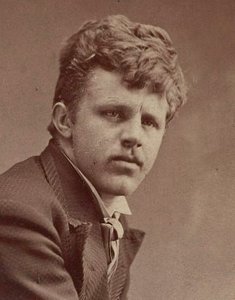
Duveneck Ferenc
1848 - 1919 , Egyesült Államok
Érdekességek
- Artistic Movement Or Style: Realista
- Artists Or Movements Influenced By This Artist: ['Amerikai impresszionizmus']
- Artists Who Influenced This Artist: ['Frans Hals']
- Date Of Birth: 1848. okt. 9.
- Date Of Death: 1919. jan. 3.
- Full Name: Frank Duveneck
- Nationality: Amerikai
- Notable Artworks:
- Lady with Fan
- Whistling Boy
- Place Of Birth: Covington, USA

