A szöveg mérete

() ·

Egy Önnek készült, kézzel festett alkotás

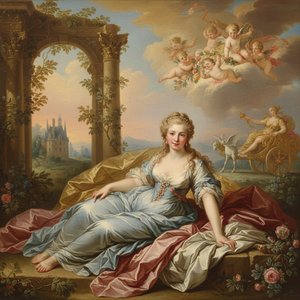
Madame de Pompadour

Kézzel készített olajfestmény reprodukció

Kézzel festett olajvastú vászon, az Ön által választott méretben és keretben, művészeink készítik meglévőre. ( Váltás nyomtatványra Áttérés digitális képre)

A gyűjtemény leírása

Admire François Boucher's 'Madame de Pompadour,' a stunning Rococo portrait capturing the elegance and influence of France’s iconic mistress. Explore its rich symbolism & artistic details.

A művész életrajza

Fedezd fel François Boucher (1703-1770) rokokó mestert! Élvezd a szenzualitást, mitológiai képeket, portrékat és idilli tájakat – a 18. századi francia művészetet definiálja!

előbb ·

1. fejezet

Mekkora méretű legyen?

Húzza a csúszkát a méret megváltoztatásához; a bal oldali kép a keret valós szélességét mutatja. Az eredeti arányok megmaradnak.

Standard méret
egyedi méretű
CM
INCH

Válasszon előre meghatározott méreteink közül, amelyek megfelelnek a műalkotás eredeti arányainak.

szélesség
magasság

Írja be a kívánt szélességet és magasságot, hogy illeszkedjen a keretéhez vagy a falához. Mivel ez kézzel festett alkotás, egy eltérő formájú méret esetén a művész akár festhet is valamivel többet a kép körül, vagy korolathat is belőle — az Ön döntésének megfelelően. A festés megkezdése előtt küldünk egy digitális tervezetet jóváhagyásra. Az oldalon látható kép nem tartalmazza a végeredményt — csak a tervezet mutatja meg a valódi eredményt.

2. fejezet

Hogyan érkezzen meg?

Válaszd ki a feszített vászon széleit

Válassza ki a keretet

Corner sample of the WhiteWrap canvas edge finish, stretched on tömörfa bars
Fehér Ft1
Corner sample of the BlurSideWrap canvas edge finish, stretched on tömörfa bars
Elmosódott szélek Ft1
Corner sample of the ExtendedWrap canvas edge finish, stretched on tömörfa bars
Kiterjesztett Ft1
Corner sample of the P118B picture frame: formázott polisztirol, 5 cm wide and 3 cm thick
P118B Ft10
Corner sample of the P118H picture frame: formázott polisztirol, 5 cm wide and 3 cm thick
P118H Ft10
Corner sample of the P118W picture frame: formázott polisztirol, 5 cm wide and 3 cm thick
P118W Ft10
Corner sample of the P438Z picture frame: formázott polisztirol, 5.5 cm wide and 3.5 cm thick
P438Z Ft10
Corner sample of the P508JH picture frame: formázott polisztirol, 7 cm wide and 3.5 cm thick
P508JH Ft12
Corner sample of the P508YH picture frame: formázott polisztirol, 7 cm wide and 3.5 cm thick
P508YH Ft12
Corner sample of the P805H picture frame: formázott polisztirol, 5 cm wide and 3.5 cm thick
P805H Ft10
Corner sample of the P805Z picture frame: formázott polisztirol, 5 cm wide and 3.5 cm thick
P805Z Ft10
Corner sample of the P919BZ picture frame: formázott polisztirol, 7 cm wide and 3.5 cm thick
P919BZ Ft10
Corner sample of the P919G picture frame: formázott polisztirol, 7 cm wide and 3.5 cm thick
P919G Ft10
Corner sample of the P919XJ picture frame: formázott polisztirol, 7 cm wide and 3.5 cm thick
P919XJ Ft10
Corner sample of the P959ZH picture frame: formázott polisztirol, 5 cm wide and 3 cm thick
P959ZH Ft10
Corner sample of the P968JZ picture frame: formázott polisztirol, 6 cm wide and 4 cm thick
P968JZ Ft12
Corner sample of the W106C picture frame: tömörfa, 5 cm wide and 3 cm thick
W106C Ft8
Corner sample of the W218G picture frame: tömörfa, 5 cm wide and 3 cm thick
W218G Ft10
Corner sample of the W218JH picture frame: tömörfa, 5 cm wide and 3 cm thick
W218JH Ft8
Corner sample of the W218Y picture frame: tömörfa, 5 cm wide and 3 cm thick
W218Y Ft10
Corner sample of the W307PJ picture frame: tömörfa, 6 cm wide and 3 cm thick
W307PJ Ft10
Corner sample of the W316G picture frame: tömörfa, 6 cm wide and 3 cm thick
W316G Ft10
Corner sample of the W316PJ picture frame: tömörfa, 6 cm wide and 3 cm thick
W316PJ Ft8
Corner sample of the W316Y picture frame: tömörfa, 6 cm wide and 3 cm thick
W316Y Ft10
Corner sample of the W398PJ picture frame: tömörfa, 5 cm wide and 3 cm thick
W398PJ Ft8
Corner sample of the W4111J picture frame: tömörfa, 6.5 cm wide and 3.5 cm thick
W4111J Ft10
Corner sample of the W500HY picture frame: tömörfa, 7 cm wide and 5 cm thick
W500HY Ft15
Corner sample of the W500JH picture frame: tömörfa, 7 cm wide and 5 cm thick
W500JH Ft15
Corner sample of the W692G picture frame: tömörfa, 8 cm wide and 4 cm thick
W692G Ft12
Corner sample of the W849H picture frame: tömörfa, 5 cm wide and 3 cm thick
W849H Ft8
Corner sample of the W940BG picture frame: tömörfa, 7.5 cm wide and 4.5 cm thick
W940BG Ft15
Corner sample of the W953PJ picture frame: tömörfa, 6 cm wide and 3.5 cm thick
W953PJ Ft8
Corner sample of the H24-GOLD picture frame: faragott fa gesszóval, 10 cm wide and 6 cm thick
H24-GOLD Ft30
Corner sample of the H24-SILVER picture frame: faragott fa gesszóval, 10 cm wide and 6 cm thick
H24-SILVER Ft30
Corner sample of the H36-GOLD picture frame: faragott fa gesszóval, 15 cm wide and 6.5 cm thick
H36-GOLD Ft45
Corner sample of the H36-SILVER picture frame: faragott fa gesszóval, 15 cm wide and 6.5 cm thick
H36-SILVER Ft45

Keretprofil: . A kerettel együtt vett teljes méret: .

3. fejezet

Ki festi, és változtatni kellene-e bármit?

Példák a módosíthatóságra: Az arc kicserélése a vásárló fotójára; háziállat hozzáadása (pl. macska kicserélése kutyára); rejtett üzenet elhelyezése a háttérben; a háttér tájéképének vagy elemeinek megváltoztatása.
A megrendelést követően a OriginalUniqueArt.com csapat e-mailt küld a vásárlónak az instrukciókkal, és biztosítja a tervezeti előnézetet

Világszerte elérhető szállítás () 3-4 hét alatt a szokásos 5 hét helyett. (9 november). A minőség nem kérdőjelezhető.

4. fejezet

Az utolsó finomhangolás

Egy felirat, mint egy múzeumban?

A gravírozott bronztábla részletei

This elegant plaque features the artist's name and the title of the artwork, finely engraved for a timeless presentation.

It is made from bronze with a refined, elegant finish. The text is precisely laser-engraved for a sharp and permanent result. Measuring 9x2 cm, the plaque is compact yet easy to read. It's built to be durable and scratch-resistant, offering a professional, museum-quality look. Mounting is simple thanks to the included adhesive backing.

Átlátszó akril tábla részletei

The plaque includes essential engraved details such as the artist's name, the title of the artwork, the date it was created, the type of media used-like oil on canvas or watercolor-a brief description of the piece, and a QR code that links to the complete artwork information.

It is crafted from clear acrylic, offering a sleek, modern appearance. The text is UV-engraved in black to ensure strong visual contrast. With a size of 10x15 cm, it ensures optimal readability. It comes equipped with two metal hooks for secure wall mounting. The plaque is designed to be weather-resistant, making it suitable for various environments, and it includes interactive features that work seamlessly with smartphone scanning.

Fekete akril tábla részletei

This elegant plaque includes engraved information such as the artist's name, the title of the artwork, the date it was created, the type of media used (like oil on canvas or watercolor), a short description of the artwork, and a QR code for quick access to more information.

The plaque itself is made from refined black acrylic with a premium finish. The text is laser-engraved in white for high contrast and readability. Its size is 10x15 cm, designed to be easy to read. It comes with two metal hooks for professional mounting. The design is sleek and fits any interior style. It is also weather-resistant and durable, with built-in digital integration for mobile compatibility.

Egy védőréteg?

Mikor lenne szüksége rá?

5. fejezet

Az Ön által megrendelt festmény

Madame de Pompadour

Reprodukciós technika

Reprodukció mérete

-

Kiváló mesterművész

Nagyobb részletesség, finomság és bővített gyártási idő

-

Reprodukció keretezése

-

-

A bármely oldalsó méretét túlszálaló 105 cm (kb. 41 hüvelyk) meghaladó műalkotások vagy reprodukciók esetében a keret összeszerelhető készletként, szétszerelve kerül szállításra. Ez a módszer biztosítja a biztonságos szállítást, és megakadályozza a szállítás során fellépő sérüléseket.

Szakmész összeszerelést igényel – ez nem DIY (önösszeszerelhető) termék.
A készletet egy tapasztalt keretező szakembernek kell összeszerelnie és a vásznat feszítenie kell, fa ragasztó (nem tartalmazza a csomag), vásznfeszítő fogó és szorítók használatával, amelyek a ragasztó száradásáig a keretrészeket egymáshoz vuôngjba tartják. A helytelen összeszerelés vagy a nem egyenletes vásznfeszítés maradandó károsíthatja a műalkotást, és ez nem része a garanciánknak.

  • A készlet tartalmazza az összes tömörfa rudat, pontosan méretre vágva.

  • A mellékelt csavarokkal, valamint a sarokszerekhez szükséges faütő ragasztóval kell összeszerelnie (ez nem tartalmazható a csomagban), így a keretrendezőnek külön kell beszereznie.

  • A csomag nem tartalmazza a szükséges professzionális eszközöket: egy vászonfeszítőt és klipseket a rácsok vízszintes tartásához a ragasztó megszáradásáig.

Fontos:
A sarokcsatlakozásokhoz fánylagra van szükség, a keretrudakat szorítókapcsokkal kell rögzíteni, amíg a rag teljesen meg nem szárad, a kész keretre feszített vászonhoz pedig vászonfeszítő fogat szükséges. Ezek egyike sem található meg a készletben. Kérjük, rendelés előtt győződjön meg róla, hogy rendelkezik tapasztalt keretező szakemberrel.

Névtábla

-

-

Védőréteg (Lakk)

Fényes lakk (intenzívabb színek, védelem a fény és a nedvesség hatása ellen)

-

Műalkotásom egyedi igényre szabása

Példák a módosíthatóságra: az arc kicserélése az ügyfél fotójára; háziállat hozzáadása (pl. macska helyett kutya); rejtett üzenet elhelyezése a háttérben; a háttér tájainak vagy elemeinek megváltoztatása.

-

Sürgős

Világszerte szóló szállítás () mindössze 3-4 hét alatt, a szokásos 5 hét helyett. (9 november). A minőség nem kérdőjelezhető.

-

Express szállítás

Világszerte elérhető szállítás területre 5 héten belül. (16 november).

A szállítás díja tartalmazza

Összesített ár

Ft 97767

Összesített ár Ft 97767

Az üvegkeretes opció csak 110 cm alatti méretben érhető el

Minden rendelés mellé tartalmazva

  • Ingyenes globális expressz szállítás
  • Prémium minőségű len vászon
  • Teljes körű szállítási biztosítás
  • Vámvisszatérítési Garancia
  • Hiteles színarányosság garancia
  • 100 napos visszaküldési lehetőség (csak hibás termékek esetén)
  • 100% pénzvisszatérítési garancia
  • Több darab vásárlásakor kedvezmény

A Portrait of Patronage: Madame de Pompadour by François Boucher

  • Subject: This exquisite hand-painted reproduction captures the essence of Madame de Pompadour, Jeanne-Antoinette Poisson, a figure who epitomized the opulent and influential court of Louis XV. Commissioned in 1754 by her brother, the Marquis de Marigny, this portrait transcends a simple likeness; it’s a celebration of her patronage of the arts and a testament to the flourishing Rococo style.
  • Artist: François Boucher (1703-1770), a luminary of the French Rococo movement, masterfully renders Madame de Pompadour's grace and sophistication. Boucher’s career was defined by his ability to infuse classical ideals with a distinctly playful and sensual aesthetic, making him one of the most sought-after artists of his time.

Rococo Elegance: Style and Technique

  • Style: The painting is a quintessential example of Rococo art – characterized by its delicate ornamentation, asymmetrical compositions, and emphasis on light, airy colors. Boucher’s work exemplifies the movement's embrace of elegance, charm, and a sense of playful fantasy.
  • Technique: Boucher employs meticulous draughtsmanship and a refined understanding of color theory to create a scene brimming with visual richness. Note the subtle gradations in tone, the delicate rendering of fabrics, and the masterful use of light to highlight Madame de Pompadour’s features and the surrounding decorative elements. The composition is carefully balanced, drawing the eye through layers of detail – from the swirling garland of flowers to the attentive expressions of the putti.

Symbolism and Narrative: A Tapestry of Artistic Interests

  • Composition: The painting’s composition is rich with symbolic meaning. Madame de Pompadour, seated at the heart of the scene, is surrounded by a profusion of flowers – a direct reference to her title as “Madame la Marquise de Pompadour,” and a symbol of beauty and abundance.
  • Attributes: Scattered around her are the emblems of the arts she championed: brushes, palettes, musical instruments, books, and architectural models. These objects aren’t merely decorative; they represent the diverse range of artistic disciplines that flourished under her patronage – painting, sculpture, music, literature, and architecture. The presence of putti, cherubic figures representing innocence and creativity, further reinforces this theme.
  • The Marquis de Marigny's Role: The inclusion of the Marquis de Marigny, Director-General of the King’s Buildings, highlights his crucial role in facilitating Madame de Pompadour’s artistic endeavors, underscoring the collaborative nature of patronage during this era.

A Timeless Masterpiece: Reproduction Details

  • Size: 36 x 28 cm – a perfectly sized piece for display in a variety of settings, from a private study to an elegant salon.
  • Hand-Painted Reproduction: This is not merely a print; it’s a meticulously hand-painted reproduction, created by skilled artisans who have painstakingly recreated Boucher's original techniques and color palette. The result is a piece that captures the depth, texture, and emotional resonance of the original painting.
  • Perfect for Collectors & Interior Design: This artwork offers an exceptional opportunity to own a fragment of 18th-century French history and artistic brilliance. Its elegant style will complement a wide range of interior design schemes, adding a touch of sophistication and timeless beauty to any space.

Kérdések és válaszok

Hogyan találhatok olyan műalkotásokat, amelyek stílusában hasonlítanak a(z) „Madame de Pompadour”, François Boucher alkotása alkotásra?

A "Madame de Pompadour" alkotással hasonló művek a festmény Hasonló alkotások oldalán találhatók.

Milyen szín vezeti a „Madame de Pompadour”, François Boucher alkotása kompozícióját?

A(z) "Madame de Pompadour" alkotásban leginkább a Gray (#948770) szín tűnik ki. A domináns szín hasznos, amikor egy műalkotást össze kell egyeztetni egy belső térrel.

Mit ábrázol a "Madame de Pompadour"?

„Madame de Pompadour”, François Boucher alkotása a következőket ábrázolja: pompadour portrait, françois boucher, rococo art, allegorical scene, arts patronage, marie antoinette, symbolic attributes.

Több információ erről a festményről

Megtekintés AR előnézet Váltás nyomtatványra Áttérés digitális képre Küldés
Részletek Útmutató Kedvencekhez ad Letöltés Hasonló darabok X-ray felvétel Diavetítés Kérdések és válaszok Statisztika

Számokban kifejezve

  • 1754a festés éve
  • 29választható keretek
  • standard méretek, saját arányokkal
  • 5hetek a festésre és a kézbesítésre
François Boucher

François Boucher

1703 - 1770, Francia

Gyors információk François Boucher művészről

  • Artistic Movement Or Style: Rokokó
  • Artists Or Movements Influenced By This Artist:
    • Fragonard
    • Neoklasszicizmus
  • Artists Who Influenced This Artist:
    • François Lemoyne
    • Jean-François Cars
  • Date Of Birth: 1703. szeptember 29.
  • Date Of Death: 1770. május 30.
  • Full Name: François Boucher
  • Nationality: Francia
  • Notable Artworks:
    • Rinaldo és Armida
    • Főszezon
    • Vénusz trionfa
    • Naplemente táj
  • Place Of Birth: Párizs, Franciaország

A művész életrajza

François Boucher: A Master of Rococo Grace

François Boucher (1703-1770) stands as a towering figure in the history of French art, indelibly linked to the opulent and sensual world of the Rococo. More than just a painter, he was a designer, decorator, and a key architect of the aesthetic sensibilities that defined 18th-century France – an era synonymous with elegance, pleasure, and refined beauty. His work isn’t merely decorative; it's a carefully constructed exploration of mythology, love, and aristocratic life, imbued with a captivating charm that continues to resonate today.

Early Years and Artistic Foundations

Born on September 29th, 1703, in the heart of Paris, François Boucher’s artistic journey began within a family already steeped in creative pursuits. His father, Nicolas Boucher, was himself a skilled embroiderer and designer – a profession that instilled in young François an appreciation for intricate detail and decorative artistry. Initially, he received his foundational training from his father, learning the fundamentals of design and color. However, at the age of seventeen, a pivotal encounter occurred: he caught the eye of François Lemoyne, the leading painter of the day and a master of the Rococo style. This apprenticeship provided Boucher with invaluable experience in mastering the techniques of composition, brushwork, and the delicate balance between form and color.

Further refining his skills, Boucher briefly studied under Jean-François Cars, a renowned engraver, gaining expertise in printmaking – a skill that would later prove crucial to his artistic development. But it was his victory at the Grand Prix de Rome in 1720 that truly launched him onto the path to greatness. This prestigious competition, established by King Louis XIV, offered a royal scholarship and residency in Rome—a golden opportunity for young artists to study the masterpieces of the Renaissance and Baroque periods.

Rome and the Influence of Masters

Boucher’s time in Italy was transformative. He immersed himself in the works of titans like Tiziano, Veronese, and Tintoretto – absorbing their dramatic compositions, vibrant colors, and masterful use of light and shadow. Crucially, he also studied the work of Giovanni Domenico Tiepolo, Luca Giordano, and Sebastiano Ricci—artists known for their dynamic movement and theatrical flair. These encounters profoundly shaped Boucher’s artistic vision, influencing his approach to color, composition, and the portrayal of emotion.

Upon returning to France in 1724, Boucher embarked on a remarkable project: he meticulously copied over 120 paintings by Watteau, the master of the *rocaille* style. This painstaking effort allowed him to deeply understand Watteau’s techniques and his innovative approach to depicting intimate scenes and fleeting moments of beauty. It was a deliberate act of homage and a strategic move to establish himself within the established artistic circles.

The Rise to Royal Favor and Artistic Maturity

Boucher's return to France coincided with a period of immense opportunity. He was quickly admitted to the Académie Royale de Peinture et de Sculpture in 1731, marking his official entry into the Parisian art world. His debut work, “Rinaldo and Armida” (1734), immediately captivated audiences and established him as a rising star. The painting showcased his burgeoning talent for creating dynamic compositions filled with mythological drama and exquisite detail.

Boucher’s career truly took off when he was commissioned to paint portraits of Madame de Pompadour, the influential mistress of King Louis XV. These portraits—particularly “Madame Boucher” (1756)—became iconic symbols of aristocratic elegance and sophistication. His ability to capture the sitter's personality and grace while adhering to the conventions of courtly portraiture solidified his position as the most sought-after painter in France.

Themes, Techniques, and Lasting Legacy

Boucher’s oeuvre is remarkably diverse, encompassing a wide range of subjects—from mythological scenes and pastoral landscapes to intimate domestic moments and grand historical narratives. His paintings are characterized by their delicate brushwork, pastel palettes, and an emphasis on creating a sense of idyllic beauty and sensual pleasure. Recurring themes include love, beauty, leisure, and the idealized world of mythology.

Beyond painting, Boucher made significant contributions to the decorative arts. He designed costumes and sets for the theater, created tapestries for the Beauvais workshops, and collaborated with the Gobelins Manufactory—a testament to his versatility and influence as a designer. His appointment as *Premier Peintre du Roi* (First Painter of the King) in 1765 cemented his status as the leading artist of the French Rococo.

Despite facing criticism later in his career for perceived superficiality, François Boucher’s impact on subsequent generations of artists is undeniable. He influenced figures like Jean-Honoré Fragonard and contributed significantly to the development of Neoclassicism through his students. His work continues to be celebrated for its technical skill, artistic innovation, and enduring contribution to the Rococo style—a testament to a life dedicated to capturing the beauty and grace of 18th-century France.

Gyors információk

  • Artist: François Boucher
  • Notable elements: Putti, flowers, symbols
  • Artistic style: Elegant, sensuality
  • Dimensions: 36 x 28 cm
  • Medium: Painting
  • Subject or theme: Patronage, arts
Fedezze fel a műalkotásokat témák, stílusok és jellemzők szerint csoportosítva.