 Megtekintés
 Küldés
 Megosztás
 Részletek
 Útmutató

 Letöltés
 Hasonló darabok
 X-ray felvétel
 Diavetítés
 Q&A
Q&A Statisztika
Untitled

 Összes részlet megjelenítése
Szerezzen be nyomtatásra kész fájlt, amely messze túlmutat a webes előnézeten. Minden általunk értékesített digitális kép az adatbázisunkban található nagy felbontású mesterfájlból származik – általában 5 000 és 15 000 pixel szélességű –, így magabiztosan nyomtathat nagy méretben, sokat vághat a képen, vagy reprodukálhatja a legfinomabb részleteket is.
Stúdiómból egyetlen fájl sem távozik feltartózkodás nélkül. Egy digitális szakértő az eredeti festménnyel összehasonlítja a színeket, és szükség esetén korrigálja azokat, majd professzionális retusználó eszközökkel javítja a tisztaságot és a részletgazdagságot — miközben mindig hű marad a művész vonalvezetéséhez és stílusához. Az eredmény egy olyan kép, amely úgy néz ki, mint egy festmény, és nem úgy, mint egy szűrőzött szkenn.
A végső munka befejezése előtt jóvá kell hagynia a képet: szakértőnk 72 órán belül elküldi azt e-mailben ellenőrzésre. Nem tetszett? Kérhet javításokat vagy korrekciókat, illetve visszatérítést kérhet, amennyiben a minőség nem felel meg az elvárásoknak.
Ez az a minőség, amelyre a kiadók, a design stúdiók, a galériák és a nyomdaték megbízhatnak.
Digitális kép
Töltsön le nagy felbontású fájlt személyes kiállításokhoz, nyomtatáshoz és kreatív projektekhez. ( Váltás nyomtatványra Kézzel festett másolat rendelése)
Minden digitális kép rendeléséhez tartozó extrák
Szakértői digitális kézbesítés, garantáltan
Amikor a OriginalUniqueArt.com szolgáltatást választja, nem csupán egy képet kap – professzionálisan felmagasított digitális műalkotást kap, amely precizitással készült, és amelyet megelégsedési gwarancia tesz biztoslássá. Az alábbiakban automatikusan minden benne 】

Gyors e-mail teslimítés
A nagy felbontású digitális képmásolatát a megrendelést követő 72 órán belül e-mailben elküldjük Önnek – azonnal használható formátumban.

MI-alapú digitális fájljavítás
Műve professzionális módon kerül optimalizálásra fejlett mesterséges intelligencia eszközök és manuális szerkesztés segítségével, biztosítva a maximális részletességet, tisztaságot és színpontosságot.

Örök életű ingyenes újradelivery
Véletlenül törölted vagy elvesztetted a fájlodat? Ne aggódj – bármikor ingyen újra megküldjük neked.

Nincs importköltség – soha
Élvezze műalkotásait azonnal, vám, illeték vagy szállítási költség nélkül – a digitális letöltések mindig adamentesek.

Színpontosság garantálása
Professzionális eszközök és színkezelés segítségével garantáljuk, hogy digitális képe a lehető legpontosabban tükrözze az eredeti színeket.

100 napos elégedettségi garancia
Ha nemມີ elégedett a digitális képével, 100 napon belül felülvizsgáljuk vagy 100% visszatérítjük az amountot – kérdés बिना.

100% Pénzvisszatérítési garancia
Nem tetszett a vásárlás? 100 napon belül teljes visszatérítést garantálunk a digitális fájl megvételétől számítva – kérdés nélkül.

Tömegrendelési kedvezmények
Vásároljon 3 képet, spóroljon 10%-et - Vásároljon 5-öt, spóroljon 15%-et - Vásároljon 10+ képet, spóroljon 20%-at. Kiváló kreatív projektekhez, galériákhoz és ügynökségekhez.
Subject & Composition
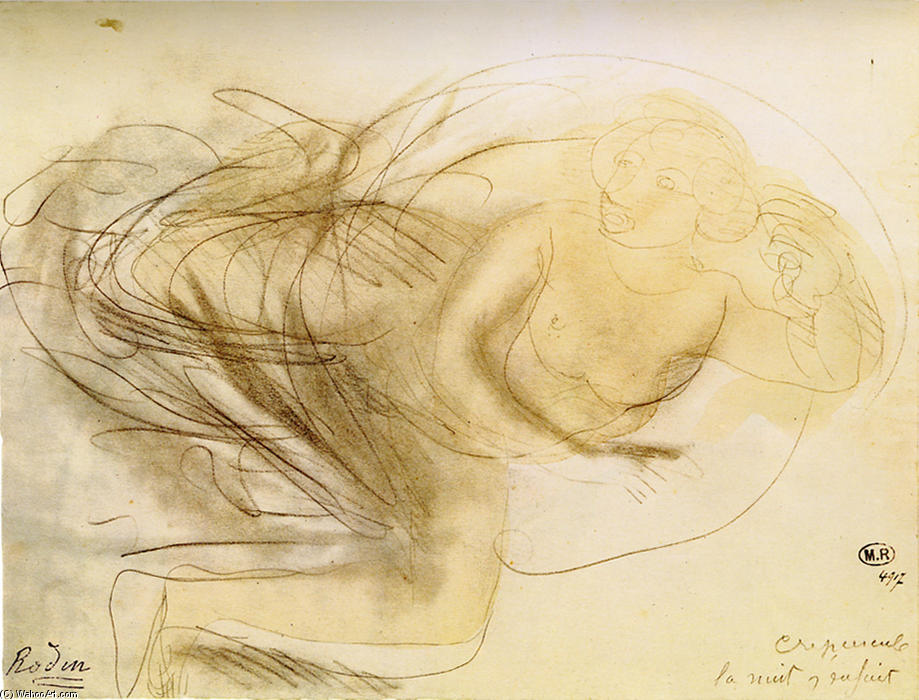
This captivating black and white photograph presents an intimate study of a reclining female figure, likely derived from one of François Auguste René Rodin's sculptural explorations. The subject lies gracefully on her side, exuding an aura of tranquility and repose. Her arm is elegantly raised above her head, creating a dynamic curve that contrasts with the stillness of her body. While other figures are subtly present in the background, they remain secondary to the primary focus – the solitary woman and her evocative posture. The composition itself is intricate, demonstrating Rodin's masterful understanding of line, shape, and form, even when captured through photography.
Rodin’s Style & Technique
The photograph offers a glimpse into Rodin's distinctive artistic style – one that prioritized capturing the raw emotion and physicality of the human body. Rodin was a revolutionary figure in sculpture, moving away from traditional academic constraints to embrace a more expressive and subjective approach. He famously used clay as his primary medium, allowing him to model complex surfaces with remarkable fluidity. This photograph likely depicts a study or preparatory work for one of Rodin’s larger sculptures, showcasing the artist's exploration of form and movement before its final realization in bronze or marble.
Historical Context & Symbolism
Created during Rodin's prolific career (1840-1917), this image reflects a period of significant artistic change. The late 19th century witnessed a shift away from Neoclassical ideals towards more modern and subjective forms of expression. Rodin’s work, though initially controversial for its departure from traditional figurative sculpture, ultimately paved the way for many subsequent generations of artists. While the specific symbolism within this particular image remains open to interpretation, reclining female figures often evoke themes of rest, contemplation, and sensuality – concepts frequently explored in Rodin's oeuvre. The black and white medium further enhances a sense of timelessness and introspection.
Emotional Impact & Artistic Legacy
The photograph possesses a quiet emotional power. The woman’s relaxed posture and the soft lighting create an atmosphere of serenity, inviting viewers to contemplate her inner world. Despite being captured in monochrome, the image retains a remarkable sense of depth and texture, highlighting Rodin's skill in rendering human form. This piece serves as a testament to Rodin's enduring legacy as a pioneer of modern sculpture, demonstrating his ability to capture not just physical likeness but also the profound complexities of human emotion.
Why Acquire a Reproduction?
- A Touch of Masterful Artistry: Bring the iconic style of Rodin into your home or office.
- Conversation Starter: This piece is sure to spark interest and admiration from guests.
- Timeless Appeal: The black and white aesthetic ensures enduring relevance across various interior design styles.
- High-Quality Reproduction: Our hand-painted reproductions capture the essence of Rodin's original work with exceptional detail and fidelity.
Kérdések és válaszok
Van-e rozšíngtott valóság (AR) előnézete a(z) "Untitled" alkotásnak?
A „Untitled”, Rodin Ferenc alkotása mű kiterjesztett valóság technológiával, egy kompatibilis eszközön keresztül, a mű Kiterjesztett valóság előnézet oldalán megtekinthető a saját falán is.
Mely művészeti irányba tartozik a „Untitled”, Rodin Ferenc alkotása?
A „Untitled”, Rodin Ferenc alkotása a Other irányzat része. Ez az irányzat adja a mű stilisztikai kontextusát.
Vannak a „Untitled” alkotáshoz hasonló művek?
A „Untitled”, Rodin Ferenc alkotása alkotással hasonló műalkotások a(z) Hasonló alkotások oldalon találhatók.
Művész életrajza
François Auguste René Rodin: A Sculptor of Souls
François Auguste René Rodin, a name forever intertwined with the very essence of modern sculpture, emerged from 19th-century France as a revolutionary force—a sculptor who dared to breathe life and emotion into stone. Born in Paris on November 12, 1840, into modest beginnings, his artistic journey wasn’t initially paved with grand expectations; rather, it began with a series of humbling rejections from the prestigious École des Beaux-Arts. Yet, this early struggle proved to be a crucible, forging within him an unwavering determination and a unique vision that would ultimately reshape the landscape of sculpture. His formative years were spent honing his craft as a decorative stonemason, a practical apprenticeship that instilled in him a profound understanding of materials and form—a foundation upon which he would later build his groundbreaking innovations. A deeply personal tragedy – the untimely death of his beloved sister Marie – profoundly impacted Rodin’s artistic trajectory, leading to a period of introspection and ultimately fueling an intense desire to capture the raw, unfiltered emotions of the human experience. This emotional depth became a defining characteristic of his work, imbuing it with a palpable sense of vulnerability and authenticity rarely seen in previous generations of sculptors.Breaking with Tradition: A New Language in Stone
Rodin’s artistic philosophy represented a radical departure from the prevailing academic standards that dominated sculpture during his time. While formally trained in classical techniques—a necessary step for any aspiring artist—he resolutely rejected the idealized forms and narrative rigidity that characterized much of the art produced by the École des Beaux-Arts. Instead, he sought to capture the fleeting nuances of human emotion, the weight of thought, and the intricate complexities of the inner life. His early works, such as *The Age of Bronze* (1877), initially provoked considerable controversy among critics who found his figures too realistic, too devoid of the polished perfection expected in traditional sculpture. However, Rodin remained steadfastly committed to his artistic vision, driven by an unshakeable belief in the power of his own unique approach. He began to experiment with fragmented forms, rough surfaces, and dynamic compositions—elements that conveyed a sense of movement, psychological intensity, and profound emotional resonance. This innovative strategy challenged conventional notions of beauty and paved the way for a new era in sculptural expression, one where the human experience itself became the primary subject matter. His ability to model complex, turbulent surfaces with remarkable sensitivity allowed him to capture the play of light and shadow, creating sculptures that seemed to pulsate with life.Iconic Forms: The Thinker, The Kiss, and Beyond
Rodin’s legacy is indelibly marked by a series of iconic sculptures—works that continue to captivate audiences worldwide and serve as enduring symbols of human emotion and experience. *The Thinker* (1880-1882), originally conceived as part of the monumental *Gates of Hell*, quickly became an emblem of philosophical contemplation, its powerfully rendered form embodying the weight of human thought and existential questioning. The figure’s posture—a slumped shoulder, a furrowed brow, a hand resting thoughtfully on his chin—evokes a sense of profound introspection and intellectual struggle. *The Kiss* (1886-1898), a celebration of passionate love, is renowned for its sensual beauty and emotional intimacy—a depiction of two figures entwined in an embrace that seems to radiate with warmth and tenderness. And *The Burghers of Calais* (1884-1895), a monumental tribute to courage and sacrifice, stands as a testament to Rodin’s ability to convey profound human drama through sculptural form—a powerful depiction of six citizens of Calais who bravely faced certain death during the Hundred Years' War. These works weren’t merely representations of physical bodies; they were explorations of the human condition, imbued with psychological depth and emotional resonance. Notably, Rodin deliberately eschewed smooth surfaces and polished finishes, opting instead to leave visible traces of his hand—a conscious decision to emphasize the creative process itself and to acknowledge the artist's role in shaping the sculpture.The Influence of Paris and Beyond
Rodin’s artistic development was inextricably linked to the vibrant cultural landscape of 19th-century Paris. The city’s burgeoning artistic scene, fueled by innovation and a spirit of experimentation, provided fertile ground for Rodin’s creative explorations. He drew inspiration from a diverse range of sources—from classical sculpture and Renaissance art to Impressionist painting and Symbolist literature. His travels to Italy in 1876 proved particularly transformative, exposing him to the works of Michelangelo and other masters of the High Renaissance, whose dynamic compositions and expressive figures profoundly influenced his own artistic style. Back in Paris, Rodin’s work began to gain recognition, attracting both critical acclaim and public admiration. He was commissioned to create numerous sculptures for private patrons and public monuments—including *The Thinker*, which initially served as a central figure within the *Gates of Hell*—and his reputation steadily grew throughout Europe.A Lasting Legacy: Rodin’s Place in Art History
By the turn of the 20th century, Auguste Rodin had firmly established himself as one of the most celebrated sculptors of his time—a figure whose work profoundly influenced generations of artists to come. His sculptures are now housed in museums around the world, including the Musée Rodin in Paris—a dedicated space that celebrates his life’s work and provides a comprehensive overview of his artistic journey. Beyond his individual achievements, Rodin played a pivotal role in shaping the trajectory of modern sculpture, challenging traditional conventions and paving the way for new forms of expression. His emphasis on emotional intensity, psychological depth, and innovative use of form laid the groundwork for movements such as Expressionism and Cubism—demonstrating the enduring impact of his artistic vision. Rodin’s legacy is not merely one of artistic innovation; it's a testament to the power of art to connect us to our shared humanity—a reminder that even in the face of adversity, beauty and emotion can endure.
Rodin Ferenc
1840 - 1917 , Franciaország
Érmeradatok
- Artistic Movement Or Style: Modern szobrászat
- Artists Or Movements Influenced By This Artist:
- Impressionizmus
- Modern szobrászat
- Artists Who Influenced This Artist:
- Michelangelo
- Caravaggio
- Date Of Birth: November 12, 1840
- Date Of Death: November 17, 1917
- Full Name: François Auguste René Rodin
- Nationality: Francia
- Notable Artworks:
- A Gondolat
- Az Ölelések
- Calais Városa
- Place Of Birth: Párizs, Franciaország