Text size

() ·

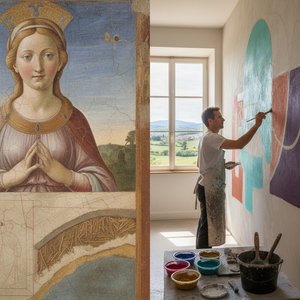
A painting made for you, by hand

The Nativity

Kézzel készített olajfestmény reprodukció

Kézzel festett olajvastú vászon, az Ön által választott méretben és keretben, művészeink készítik meglévőre. ( Váltás nyomtatványra Áttérés digitális képre)

A gyűjtemény leírása

Experience Fra Diamante's 'The Nativity' (1465), a stunning Renaissance masterpiece depicting the birth of Christ. Explore its rich symbolism and artistic details within the Louvre.

A művész életrajza

Explore the Renaissance art of Fra Diamante, a Florentine painter known for his frescoes & religious works. Discover his legacy at Cortona's Diocesan Museum.

from ·

Chapter 1

How large should it be?

Slide to change the size; the picture on the left shows the frame at its real width. The proportions of the original are kept.

Standard méret
egyedi méretű
CM
INCH

Válasszon előre meghatározott méreteink közül, amelyek megfelelnek a műalkotás eredeti arányainak.

szélesség
magasság

Írja be a kívánt szélességet és magasságot, hogy illeszkedjen a keretéhez vagy a falához. Mivel ez kézzel festett alkotás, egy eltérő formájú méret esetén a művész akár festhet is valamivel többet a kép körül, vagy korolathat is belőle — az Ön döntésének megfelelően. A festés megkezdése előtt küldünk egy digitális tervezetet jóváhagyásra. Az oldalon látható kép nem tartalmazza a végeredményt — csak a tervezet mutatja meg a valódi eredményt.

Chapter 2

How should it arrive?

Choose the edges of the stretched canvas

Choose your frame

Corner sample of the WhiteWrap canvas edge finish, stretched on tömörfa bars
White Ft1
Corner sample of the BlurSideWrap canvas edge finish, stretched on tömörfa bars
Blurside Ft1
Corner sample of the ExtendedWrap canvas edge finish, stretched on tömörfa bars
Extended Ft1
Corner sample of the P118B picture frame: formázott polisztirol, 5 cm wide and 3 cm thick
P118B Ft10
Corner sample of the P118H picture frame: formázott polisztirol, 5 cm wide and 3 cm thick
P118H Ft10
Corner sample of the P118W picture frame: formázott polisztirol, 5 cm wide and 3 cm thick
P118W Ft10
Corner sample of the P438Z picture frame: formázott polisztirol, 5.5 cm wide and 3.5 cm thick
P438Z Ft10
Corner sample of the P508JH picture frame: formázott polisztirol, 7 cm wide and 3.5 cm thick
P508JH Ft12
Corner sample of the P508YH picture frame: formázott polisztirol, 7 cm wide and 3.5 cm thick
P508YH Ft12
Corner sample of the P805H picture frame: formázott polisztirol, 5 cm wide and 3.5 cm thick
P805H Ft10
Corner sample of the P805Z picture frame: formázott polisztirol, 5 cm wide and 3.5 cm thick
P805Z Ft10
Corner sample of the P919BZ picture frame: formázott polisztirol, 7 cm wide and 3.5 cm thick
P919BZ Ft10
Corner sample of the P919G picture frame: formázott polisztirol, 7 cm wide and 3.5 cm thick
P919G Ft10
Corner sample of the P919XJ picture frame: formázott polisztirol, 7 cm wide and 3.5 cm thick
P919XJ Ft10
Corner sample of the P959ZH picture frame: formázott polisztirol, 5 cm wide and 3 cm thick
P959ZH Ft10
Corner sample of the P968JZ picture frame: formázott polisztirol, 6 cm wide and 4 cm thick
P968JZ Ft12
Corner sample of the W106C picture frame: tömörfa, 5 cm wide and 3 cm thick
W106C Ft8
Corner sample of the W218G picture frame: tömörfa, 5 cm wide and 3 cm thick
W218G Ft10
Corner sample of the W218JH picture frame: tömörfa, 5 cm wide and 3 cm thick
W218JH Ft8
Corner sample of the W218Y picture frame: tömörfa, 5 cm wide and 3 cm thick
W218Y Ft10
Corner sample of the W307PJ picture frame: tömörfa, 6 cm wide and 3 cm thick
W307PJ Ft10
Corner sample of the W316G picture frame: tömörfa, 6 cm wide and 3 cm thick
W316G Ft10
Corner sample of the W316PJ picture frame: tömörfa, 6 cm wide and 3 cm thick
W316PJ Ft8
Corner sample of the W316Y picture frame: tömörfa, 6 cm wide and 3 cm thick
W316Y Ft10
Corner sample of the W398PJ picture frame: tömörfa, 5 cm wide and 3 cm thick
W398PJ Ft8
Corner sample of the W4111J picture frame: tömörfa, 6.5 cm wide and 3.5 cm thick
W4111J Ft10
Corner sample of the W500HY picture frame: tömörfa, 7 cm wide and 5 cm thick
W500HY Ft15
Corner sample of the W500JH picture frame: tömörfa, 7 cm wide and 5 cm thick
W500JH Ft15
Corner sample of the W692G picture frame: tömörfa, 8 cm wide and 4 cm thick
W692G Ft12
Corner sample of the W849H picture frame: tömörfa, 5 cm wide and 3 cm thick
W849H Ft8
Corner sample of the W940BG picture frame: tömörfa, 7.5 cm wide and 4.5 cm thick
W940BG Ft15
Corner sample of the W953PJ picture frame: tömörfa, 6 cm wide and 3.5 cm thick
W953PJ Ft8
Corner sample of the H24-GOLD picture frame: faragott fa gesszóval, 10 cm wide and 6 cm thick
H24-GOLD Ft30
Corner sample of the H24-SILVER picture frame: faragott fa gesszóval, 10 cm wide and 6 cm thick
H24-SILVER Ft30
Corner sample of the H36-GOLD picture frame: faragott fa gesszóval, 15 cm wide and 6.5 cm thick
H36-GOLD Ft45
Corner sample of the H36-SILVER picture frame: faragott fa gesszóval, 15 cm wide and 6.5 cm thick
H36-SILVER Ft45

Moulding: . Overall size with the frame: .

Chapter 3

Who paints it, and should anything change?

Examples of what can be changed: Replace face with customer photo; Add pet (e.g., replace cat with dog); Include hidden message in background; Change background landscape or elements.
After order, OriginalUniqueArt.com team will email client for instructions and provide a mockup preview

Világszerte elérhető szállítás () 3-4 hét alatt a szokásos 5 hét helyett. (2 november). A minőség nem kérdőjelezhető.

Chapter 4

The finishing touches

A nameplate, as in a museum?

A gravírozott bronztábla részletei

This elegant plaque features the artist's name and the title of the artwork, finely engraved for a timeless presentation.

It is made from bronze with a refined, elegant finish. The text is precisely laser-engraved for a sharp and permanent result. Measuring 9x2 cm, the plaque is compact yet easy to read. It's built to be durable and scratch-resistant, offering a professional, museum-quality look. Mounting is simple thanks to the included adhesive backing.

Átlátszó akril tábla részletei

The plaque includes essential engraved details such as the artist's name, the title of the artwork, the date it was created, the type of media used-like oil on canvas or watercolor-a brief description of the piece, and a QR code that links to the complete artwork information.

It is crafted from clear acrylic, offering a sleek, modern appearance. The text is UV-engraved in black to ensure strong visual contrast. With a size of 10x15 cm, it ensures optimal readability. It comes equipped with two metal hooks for secure wall mounting. The plaque is designed to be weather-resistant, making it suitable for various environments, and it includes interactive features that work seamlessly with smartphone scanning.

Fekete akril tábla részletei

This elegant plaque includes engraved information such as the artist's name, the title of the artwork, the date it was created, the type of media used (like oil on canvas or watercolor), a short description of the artwork, and a QR code for quick access to more information.

The plaque itself is made from refined black acrylic with a premium finish. The text is laser-engraved in white for high contrast and readability. Its size is 10x15 cm, designed to be easy to read. It comes with two metal hooks for professional mounting. The design is sleek and fits any interior style. It is also weather-resistant and durable, with built-in digital integration for mobile compatibility.

A protective varnish?

When do you need it?

Chapter 5

Your painting, as you ordered it

The Nativity

Reprodukciós technika

Reprodukció mérete

-

Kiváló mesterművész

Nagyobb részletesség, finomság és bővített gyártási idő

-

Reprodukció keretezése

-

-

A bármely oldalsó méretét túlszálaló 105 cm (kb. 41 hüvelyk) meghaladó műalkotások vagy reprodukciók esetében a keret összeszerelhető készletként, szétszerelve kerül szállításra. Ez a módszer biztosítja a biztonságos szállítást, és megakadályozza a szállítás során fellépő sérüléseket.

Szakmész összeszerelést igényel – ez nem DIY (önösszeszerelhető) termék.
A készletet egy tapasztalt keretező szakembernek kell összeszerelnie és a vásznat feszítenie kell, fa ragasztó (nem tartalmazza a csomag), vásznfeszítő fogó és szorítók használatával, amelyek a ragasztó száradásáig a keretrészeket egymáshoz vuôngjba tartják. A helytelen összeszerelés vagy a nem egyenletes vásznfeszítés maradandó károsíthatja a műalkotást, és ez nem része a garanciánknak.

  • A készlet tartalmazza az összes tömörfa rudat, pontosan méretre vágva.

  • A mellékelt csavarokkal, valamint a sarokszerekhez szükséges faütő ragasztóval kell összeszerelnie (ez nem tartalmazható a csomagban), így a keretrendezőnek külön kell beszereznie.

  • A csomag nem tartalmazza a szükséges professzionális eszközöket: egy vászonfeszítőt és klipseket a rácsok vízszintes tartásához a ragasztó megszáradásáig.

Fontos:
A sarokcsatlakozásokhoz fánylagra van szükség, a keretrudakat szorítókapcsokkal kell rögzíteni, amíg a rag teljesen meg nem szárad, a kész keretre feszített vászonhoz pedig vászonfeszítő fogat szükséges. Ezek egyike sem található meg a készletben. Kérjük, rendelés előtt győződjön meg róla, hogy rendelkezik tapasztalt keretező szakemberrel.

Névtábla

-

-

Védőréteg (Lakk)

Fényes lakk (intenzívabb színek, védelem a fény és a nedvesség hatása ellen)

-

Műalkotásom egyedi igényre szabása

Példák a módosíthatóságra: az arc kicserélése az ügyfél fotójára; háziállat hozzáadása (pl. macska helyett kutya); rejtett üzenet elhelyezése a háttérben; a háttér tájainak vagy elemeinek megváltoztatása.

-

Sürgős

Világszerte szóló szállítás () mindössze 3-4 hét alatt, a szokásos 5 hét helyett. (2 november). A minőség nem kérdőjelezhető.

-

Express szállítás

Világszerte elérhető szállítás területre 5 héten belül. (9 november).

A szállítás díja tartalmazza

Összesített ár

Ft 98255

Összesített ár Ft 98255

Az üvegkeretes opció csak 110 cm alatti méretben érhető el

Included with every order

  • Ingyenes globális expressz szállítás
  • Prémium minőségű len vászon
  • Teljes körű szállítási biztosítás
  • Vámvisszatérítési Garancia
  • Hiteles színarányosság garancia
  • 100 napos visszaküldési lehetőség (csak hibás termékek esetén)
  • 100% pénzvisszatérítési garancia
  • Több darab vásárlásakor kedvezmény

The Silent Witness: Fra Diamante’s “The Nativity”

Fra Diamante's "The Nativity," painted in 1465-1470, isn’t merely a depiction of a biblical scene; it’s a poignant window into the burgeoning artistic spirit of Renaissance Florence and a testament to a tragically obscured master. Often overshadowed by his more celebrated collaborator, Filippo Lippi, Diamante's work possesses a quiet intensity and a remarkable sensitivity that deserves far greater recognition. This panel painting, now residing within the hallowed halls of the Louvre, offers a glimpse into a world where faith, artistry, and personal circumstance intertwined in complex ways.

The scene unfolds with a restrained elegance – Mary, draped in flowing robes of deep blue, cradles the infant Jesus amidst the humble surroundings of a stable. Joseph stands protectively nearby, his gaze filled with a mixture of tenderness and solemnity. The composition isn’t overtly dramatic; instead, it radiates a profound sense of intimacy and reverence. Angels, rendered with delicate features and ethereal grace, observe from above, their presence signifying divine approval and the fulfillment of prophecy. A donkey and an ox, symbols of earthly simplicity and service, complete the tableau, grounding the miraculous event in the realities of everyday life.

A Master Forged by Circumstance

Diamante’s story is one of remarkable talent overshadowed by unfortunate circumstances. Born in Prato, Tuscany, he entered the Carmelite order at a young age and quickly established himself as Lippi's trusted assistant. Their collaborative work on the east end of Prato Cathedral – particularly Diamante’s depiction of the Nativity and St. Jerome – is considered one of Lippi’s finest achievements, showcasing a masterful blend of Byzantine influence and Florentine naturalism. However, tragedy struck when Lippi died, leaving Diamante to care for his young son, Filippino. The Carmelite order, recognizing Diamante's dedication, recalled him to Florence, effectively severing his connection to the monumental project and plunging his career into a period of obscurity.

This relocation, coupled with accusations of financial impropriety (likely stemming from the circumstances surrounding Lippi’s guardianship), led to a life largely removed from the artistic spotlight. Despite his talent, Diamante remained a “silent witness” to the flourishing Renaissance, his contributions often relegated to the shadows. His brief but impactful work on the Spoleto Cathedral frescoes – completed just before his death – stands as a poignant reminder of his artistic capabilities and the unfortunate fate that befell him.

Technique and Symbolism: A Delicate Balance

Diamante’s technique is characterized by a remarkable restraint and an exquisite attention to detail. He skillfully employs oil paint on wood, a relatively new medium in Italy at the time, allowing for subtle gradations of color and a nuanced rendering of textures – from the folds of Mary's robes to the rough-hewn timbers of the stable. The use of light is particularly effective, casting a soft glow upon the figures and creating a sense of depth and atmosphere. The composition itself is carefully balanced, with the central focus firmly placed on the infant Jesus, while the surrounding elements contribute to a harmonious whole.

Beyond its technical merits, “The Nativity” is rich in symbolism. The stable represents humility and vulnerability, highlighting the unexpected nature of divine intervention. The angels symbolize God’s grace and protection. The donkey and ox represent earthly service and loyalty. Mary's posture – a gentle embrace of her child – embodies maternal love and devotion. Even the muted color palette contributes to the painting’s overall mood of quiet contemplation and spiritual reverence.

An Echo of Faith and Emotion

“The Nativity” transcends its religious subject matter to offer a profound meditation on human experience. It speaks to themes of faith, hope, and love – emotions that resonate deeply across cultures and generations. Diamante’s ability to capture the tenderness of the mother-child bond, combined with his masterful use of light and color, creates an image that is both visually stunning and emotionally moving. This painting isn't just a representation of a biblical story; it’s a testament to the enduring power of art to inspire awe, wonder, and a sense of connection to something greater than ourselves. It remains a poignant reminder of a forgotten genius – a silent witness to the beauty and complexity of the Renaissance.

Kérdések és válaszok

Megtekinthető „The Nativity”, Fra Diamante alkotása a saját falamon vásárlás előtt?

A(z) "The Nativity" kiterjesztett valóság (AR) előnézettel rendelkezik: a mű Kiterjesztett valóság előnézet oldalán kompatibilis eszközön megtekinthető saját környezetében.

Milyen hangulat és érzelem ötvöződik a "The Nativity" alkotásban?

A "The Nativity" alkotásban egy Calm hangulat kíséri egy Reflective érzelmet.

Hol tudok nyomtatványt vásárolni a(z) „The Nativity”, Fra Diamante alkotása alkotásból?

A „The Nativity”, Fra Diamante alkotása nyomtatott példányát egyszerűen megrendelheti a következő oldalon: minőségi giclée nyomat pamutvászonon vagy archiváló vászonpapíron, a Művészeti nyomtatvány kautta.

More about this painting

Megtekintés AR előnézet Váltás nyomtatványra Áttérés digitális képre Küldés
Részletek Útmutató Kedvencekhez ad Letöltés Hasonló darabok X-ray felvétel Diavetítés Q&A Statisztika

In numbers

  • 1465the year it was painted
  • 29frames to choose from
  • standard sizes, in its own proportions
  • 5weeks to paint and deliver it
Fra Diamante

Fra Diamante

1455 - 1492, Italy

Quick facts about Fra Diamante

  • Full Name: Fra Diamante
  • Nationality: Italian
  • Date Of Birth: 1455
  • Date Of Death: 1492
  • Place Of Birth: Terranova, Italy
  • Notable Artworks:
    • The Nativity
    • Santa Margherita Predella
  • Artistic Movement Or Style: Renaissance Painting
  • Artists Who Influenced This Artist: ['Fra Filippo Lippi']
  • Artists Or Movements Influenced By This Artist: ['Giorgio Vasari']

A művész életrajza

A Silent Witness to Florentine Renaissance Splendor

The history of the Italian Renaissance is often told through the luminous triumphs of its most celebrated masters, yet within the shadows of these giants lie figures whose contributions are as profound as they are enigmatic. Fra Diamante, a Carmelite friar hailing from the Tuscan town of Prato, stands as one such figure—a painter whose life and legacy were inextricably woven into the fabric of the Quattrocento. Born around 1430, Diamante’s early years were defined by monastic devotion within the Carmelite convent, an environment that would later provide both the spiritual subject matter for his art and the professional connections that shaped his career. He emerged not merely as a monk, but as a skilled garzone and eventually a trusted protégé of the legendary Fra Filippo Lippi, forming a partnership that would leave an indelible mark on the religious landscapes of Tuscany.

The collaboration between Diamante and Lippi was more than a simple master-apprentice relationship; it was a dynamic artistic synergy that fueled some of the era's most significant fresco cycles. Together, they undertook the monumental task of decorating the east end of the Prato Cathedral, a project where Diamante’s hand helped translate Byzantine-inspired reverence into the burgeoning naturalism of the Florentine style. His contributions to works such as the depictions of the Nativity and St. Jerome showcase a remarkable sensitivity to light and human emotion. In these sacred scenes, one can observe a quiet intensity—a mastery of atmosphere that allowed the divine to feel intimately present within the earthly realm. Even when his individual hand is difficult to distinguish from Lippi’s, the spiritual weight of the compositions speaks to a shared vision of grace and devotion.

Resilience Amidst Shadow and Change

The trajectory of Diamante’s life was marked by dramatic shifts in fortune and sudden departures. His career was not without its tribulations; historical records suggest a period of imprisonment in Florence in 1463, an event that briefly halted the progress of the great fresco projects in Prato. Yet, his importance to the artistic community was such that the commune of Prato actively petitioned for his release, recognizing that his absence threatened the very continuity of Lippi’s work. This period of upheaval only served to highlight his indispensability to the Florentine school. Following the death of Lippi in 1469, Diamante found himself at a pivotal crossroads, assuming the heavy responsibility of caring for Lippi’s young son, Filippino. This act of guardianship linked him forever to the lineage of one of Italy's greatest artistic families.

As his career progressed into the later decades of the fifteenth century, Diamante demonstrated an impressive ability to navigate the shifting political and religious landscapes of Italy. He moved beyond the confines of Prato to contribute to the magnificent frescoes of the Spoleto Cathedral, completing works that had been left unfinished by his late master. This transition from a collaborative assistant to a lead executor of major commissions illustrates a growing artistic independence and resilience. While much of his early work in the Carmelite convent was lost to time due to the suppression of religious buildings and subsequent architectural alterations, the surviving fragments and documented achievements allow us to glimpse a painter who possessed a unique ability to blend the solemnity of his monastic roots with the evolving elegance of Renaissance humanism.

Today, the legacy of Fra Diamante serves as a poignant reminder of the collaborative nature of Renaissance art. His life was a tapestry of devotion, partnership, and survival, contributing to a period where the boundaries between the sacred and the aesthetic were beautifully blurred. Through his work, we encounter a silent witness to the splendor of Florence—a painter whose quiet strength helped sustain the flame of one of history's most transformative artistic eras.

Gyors információk

  • Title: The Nativity
  • Artistic style: Early Renaissance
  • Medium: Oil on wood
  • Location: Louvre, Paris
  • Dimensions: 166 x 166 cm

Művészeti kvíz

Minden kérdésre csak egy helyes válasz létezik.

Kérdés 1:
What is the primary subject depicted in Fra Diamante’s ‘The Nativity’?
Kérdés 2:
In what city is Fra Diamante’s ‘The Nativity’ currently housed?
Kérdés 3:
According to the provided text, what artistic influence is evident in Fra Diamante’s work?
Kérdés 4:
What year was ‘The Nativity’ painted, as indicated in the text?
Kérdés 5:
The text mentions that Fra Diamante collaborated with which prominent artist?