- Főoldal

- Olajfestmény reprodukció
- Léger Ferenc
- The album ''Circus''

 Előnézet
 Megosztás
 Megosztás
 Részletek

 Letöltés
 Hasonló alkotások
 X-ray felvétel
 Diavetítés
The album ''Circus''
 Acrylic On Canvas
- WallArt
- Cubism
 1950
1950- Modern
 42.0 x 32.0 cm
 Tovább olvasom
Kézzel készített olajfestmény reprodukció
Kézzel festett olajvastú vászon, az Ön által választott méretben és keretben, művészeink készítik meglévőre. ( Váltás nyomtatványra Képváltás)




P118B $10

P118H $10

P118W $10

P438Z $10

P508JH $12

P508YH $12

P805H $10

P805Z $10

P919BZ $10

P919G $10

P919XJ $10

P959ZH $10

P968JZ $12

W106C $8

W218G $10

W218JH $8

W218Y $10

W307PJ $10

W316G $10

W316PJ $8

W316Y $10

W398PJ $8

W4111J $10

W500HY $15

W500JH $15

W692G $12

W849H $8

W940BG $15

W953PJ $8




Válasszon előre meghatározott méreteink közül, amelyek megfelelnek a műalkotás eredeti arányainak.

Ön megadhat saját méreteket egy adott kerethez vagy térhez igazításhoz. Ha a kiválasztott méret nem egyezik az eredeti kép arányával, akkor a műalkotást levágjuk, vagy további kézzel festett elemekkel meghosszabbítjuk a festményt. A gyártás megkezdése előtt küldünk Önnek egy digitális előnézetet jóváhagyásra.
Kérjük, vegye figyelembe, hogy a képernyőn megjelenő előnézet nem tükrözi a tényleges vágást vagy kiterjesztést. Csak az előnézet fog pontosan mutatni a végső kompozíciót.
Bár egyedi méretek állnak rendelkezésre, javasoljuk, hogy válasszon egy méretet az előre meghatározott listából az eredeti arányok megőrzése érdekében.
A rendelést követően a OriginalUniqueArt.com csapata e-mailt küld az ügyfélnek az instrukciókért, és biztosít egy előnézeti képet (mockup).
Világszerte elérhető szállítás () 3-4 hét alatt a szokásos 5 hét helyett. (2 augusztus). A minőség nem kérdőjelezhető.

Ingyenes globális expressz szállítás

Prémium minőségű len vászon

Teljes szállítási biztosítás

Vámvisszatérítési Garancia

Tökéletes színpontosság garancia

60 napos visszaküldési lehetőség (csak gyártási hibák esetén)

100%-os pénzvisszatérítési garancia

Kedvezmény több termény esetén
 Az üvegkeretes opció csak 110 cm alatti méretben érhető el

The album ''Circus''
Reprodukciós technika
A reprodukció mérete
-


Összesített ár
$ 300
A műalkotás leírása
A Captivating Glimpse into Léger’s ‘Circus’
Fernand Léger's *The album ''Circus''* (1950) is a striking example of the artist’s mature style, showcasing his enduring fascination with modern life and bold graphic forms. This black and white illustration, measuring 42 x 32 cm, isn’t simply a depiction of a clown; it's a powerful distillation of spectacle, vulnerability, and the energy of the post-war era.Stylistic Innovation: Beyond Cubism
While Léger initially rose to prominence as a key figure in Cubism – developing his signature “Tubism” characterized by cylindrical forms – *The album ''Circus''* demonstrates an evolution beyond those early explorations. The work retains the geometric precision of Cubism, evident in the circular eyes and simplified facial features, but embraces a more streamlined, graphic aesthetic. It anticipates elements of Art Deco, with its emphasis on bold lines and dynamic composition. This piece is part of a larger album series, suggesting Léger’s exploration of narrative illustration and sequential imagery – a departure from his earlier purely painterly endeavors.Technique & Materials: The Power of Line
Executed primarily in pen and ink, *The album ''Circus''* reveals Léger's mastery of line weight and hatching to create texture and depth. The swirling background elements, resembling clouds or perhaps the dynamic movement within a circus tent, are rendered with energetic lines that contrast beautifully with the starkness of the clown’s face. This technique lends the work a hand-drawn quality, emphasizing the artist’s direct engagement with the material and imbuing it with a sense of immediacy. The absence of strong light sources contributes to a flattened perspective, focusing attention on the composition's formal elements.Symbolism & Emotional Resonance
The clown, as a subject, is inherently complex. Traditionally associated with joy and entertainment, the clown also carries undertones of melancholy and social commentary. Léger’s depiction, with its exaggerated expression of surprise or shock, amplifies this duality. The clown's features aren’t merely comical; they hint at an underlying vulnerability, perhaps reflecting the anxieties and uncertainties of the post-war world. The integration of “Cirque” into the composition isn’t just a title but becomes part of the visual language, grounding the fantastical image in reality.Historical Context & Léger's Legacy
Born in 1881, Fernand Léger witnessed and responded to some of the most significant artistic and social shifts of the 20th century. From his early Impressionistic leanings to his pivotal role in Cubism and beyond, he consistently sought new ways to represent modern life. *The album ''Circus''*, created in 1950, reflects Léger’s continued engagement with popular culture and his belief in art's ability to reflect the dynamism of the machine age. His work continues to inspire artists and designers today, celebrated for its bold aesthetic and enduring relevance.For Collectors & Interior Designers
- A Statement Piece: *The album ''Circus''* is a compelling focal point for any collection of modern art.
- Versatile Aesthetic: Its black and white palette makes it incredibly versatile, complementing a wide range of interior design schemes – from minimalist to eclectic.
- Conversation Starter: The intriguing subject matter and Léger’s distinctive style are sure to spark conversation and admiration.
- High-Quality Reproductions: Available in various formats, a reproduction of *The album ''Circus''* offers an accessible way to bring the artist's vision into your home or office.
A művész életrajza
A Life Forged in Form: The World of Fernand Léger
Fernand Léger, born Joseph Fernand Henri Léger in 1881 amidst the rural landscapes of Argentan, Normandy, stands as a pivotal figure in the evolution of modern art. His journey from the farmlands of his youth to the forefront of Parisian avant-garde circles is a testament to an unwavering artistic vision and a relentless pursuit of capturing the spirit of the machine age. Unlike many of his contemporaries who embraced abstraction as a retreat from representation, Léger sought to *integrate* modernity – its dynamism, its mechanical forms, its very essence – into a new visual language that was both powerfully abstract and deeply rooted in the observable world. His early life, steeped in the physicality of agricultural labor, provided a grounding contrast to the industrialized future he would so passionately depict. Initially destined for architecture, Léger’s path shifted towards painting after arriving in Paris around 1900, supporting himself through drafting work while honing his artistic skills. This period was marked by traditional academic training, but it wasn't until encountering the groundbreaking work of Paul Cézanne that a true transformation began to unfold.The Birth of ‘Tubism’ and the Section d’Or
Cézanne’s retrospective in 1907 acted as a catalyst, liberating Léger from conventional representation and propelling him towards a more geometric and structural approach. He began dismantling forms, analyzing their underlying structures, and rebuilding them on canvas with a newfound emphasis on solidity and volume. This exploration quickly led him into the orbit of Cubism, but Léger wasn’t content to simply replicate the styles of Picasso or Braque. Instead, he developed his own distinct idiom – a personal form of Cubism that critics playfully dubbed “Tubism.” Characterized by cylindrical forms, flattened planes, and bold color contrasts, Tubism celebrated the machine aesthetic long before it became a widespread artistic preoccupation. It was an art born from observing the burgeoning industrial world, recognizing beauty in its functional shapes and mechanical rhythms. Léger’s approach differed significantly; he wasn't interested in dissecting objects into fragmented geometric pieces as Picasso and Braque did. Instead, he sought to capture their essence – their inherent stability and movement – through simplified, almost monumental forms. This resulted in a style that felt both dynamic and strangely static, capturing the feeling of machinery in motion while simultaneously presenting it as a solid, enduring presence. The group *Section d’Or* (The Golden Section), formed with artists like Jean Metzinger, Henri Le Fauconnier, Francis Picabia, and Marcel Duchamp, further nurtured this exploration. This collective sought to apply mathematical principles – particularly the golden ratio – to their art, believing that these proportions held a key to achieving harmony and visual balance. Léger’s work became deeply intertwined with the Section d'Or’s investigations, reflecting a desire for order and rationality within the increasingly chaotic world of modern life.War, Mechanization, and a New Aesthetic
The outbreak of World War I profoundly impacted Léger’s life and work. Serving at the front from 1914 to 1916 exposed him to the brutal realities of modern warfare – artillery barrages, aerial combat, and the dehumanizing effects of mechanized conflict. This experience didn't lead to disillusionment or a rejection of modernity; rather, it solidified his fascination with machines and their power. Sketches made during his service documented the stark beauty of military technology, transforming instruments of destruction into subjects of artistic contemplation. The repetitive patterns of trenches, the gleaming metal of tanks, and the angular forms of aircraft became sources of inspiration for Léger’s evolving style. Upon returning to civilian life, Léger’s aesthetic underwent a further evolution. His paintings began to reflect a more streamlined, mechanistic sensibility, celebrating the dynamism and efficiency of the industrial world. *Soldier with a Pipe* (1916) exemplifies this shift, showcasing simplified forms and bold colors that evoke the feeling of mechanical precision. This wasn't merely an aesthetic choice; it was a philosophical statement – an affirmation of modernity’s potential for progress and renewal, even in the wake of devastating conflict. He began to incorporate industrial materials into his work, experimenting with metal and other unconventional media alongside traditional paint.Legacy and Lasting Influence
In his post-war years, Léger continued to explore the intersection of art and industry, creating works that celebrated modern life with a unique blend of abstraction and figuration. His *Paysages animés* (Animated Landscapes) series from 1921 showcased figures and animals seamlessly integrated into streamlined compositions, blurring the boundaries between organic and inorganic forms. He also experimented with sculpture and filmmaking, expanding his artistic practice beyond the confines of traditional painting. Léger’s influence on subsequent generations of artists is undeniable. His bold simplification of form, his embrace of industrial imagery, and his celebration of popular culture anticipated the emergence of Pop Art decades later. Artists like Roy Lichtenstein and Andy Warhol owe a clear debt to Léger's pioneering work. He bridged the gap between abstract art and figurative representation, demonstrating that it was possible to create works that were both intellectually rigorous and visually engaging. Léger’s legacy is not merely as a painter, but as a prophet of modernity – a visionary who dared to find beauty in the machine age and to translate its energy onto canvas with unparalleled boldness and originality. A true pioneer whose work continues to resonate with audiences today.Useful Information
- Born: Argentan, France (1881)
- Died: Gif-sur-Yvette, France (1955)
- Key Works: *The Sitted Woman*, *Machine Element*, *The Great Parade*, *The City*
- Movement(s): Cubism, Tubism, Modernist Art

Léger Ferenc
1881 - 1955 , Franciaország
Rövid tények
- Artistic Movement Or Style: Kubizmus, Tubizmus
- Artists Or Movements Influenced By This Artist: ['Pop Art']
- Artists Who Influenced This Artist: ['Paul Cézanne']
- Date Of Birth: 1881. Feb 4.
- Date Of Death: 1955. Aug 17.
- Full Name: Fernand Léger
- Nationality: Francia
- Notable Artworks:
- A ülő nő
- Gépi elem
- A nagy menet
- Az animált táj
- Place Of Birth: Argentan, Francia
Kapcsolódó cikkek
A Monokrómia Rejtélye: Fekete, Fehér és Szürke Absztrakciók a Modern Belsőépítészetben – A Világítás, Textúra és Építészeti Elevek Harmonikus Egysége
Fedezze fel a monokróm belsőépítészet rejtélyeit! Szakértői útmutató a fekete, fehér és szürke harmonikus egységéhez. Inspiráció hotelprojektekhez és elegáns otthonokhoz. Tippek a textúráktól a világításig!
A fekete művészete: 10 ikonikus festmény, melyek elbűvölnek – OriginalUniqueArt.com
Merüljön el a fekete művészet lenyűgöző világában! Fedezze fel 10 ikonikus festményt Rembrandttól Goyáig, melyek elbűvölnek sötét hangulatukkal és mély érzelmeikkel. Műalkotások online – OriginalUniqueArt.com
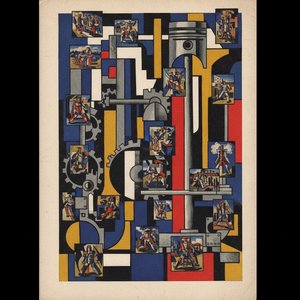
Fernand Léger Mesterművei: A 25 Legikonikusabb Kép a Modern Művészetben | OriginalUniqueArt
Fedezze fel Fernand Léger 25 legikonikusabb műalkotását! Ismerje meg a kubizmus, a tubizmus mesterét és a gépi kor lenyűgöző festményeit. Múzeumi minőségű vászonképek és poszterek a OriginalUniqueArt-on. Explore the full collection online!
A sötét szépség: 10 híres festmény a 'Mars Black' árnyalataiban | OriginalUniqueArt
Fedezze fel a 10 leghíresebb festményt, melyeket a 'Mars Black' mély árnyalatai dominálnak! Rembrandt, Goya és Picasso remekművei – történetük, technikájuk és időtlenségük. Múzeumi minőségű művészeti reprodukciók otthonába. Fedezze fel a teljes gyűjteményt a OriginalUniqueArt.com-on!

Monochrome Visions: Exploring the Aesthetic & Historical Significance of Black & White Photography
Explore the rich history & artistic power of black and white photography. From early techniques to iconic masters like Ansel Adams, discover why monochrome continues to captivate art lovers today. Expert insights for collectors.