Előnézet
 Megosztás
 Megosztás
 Részletek
 Útmutató

 Letöltés
 Hasonló darabok
 X-ray felvétel
 Diavetítés
 Statisztika
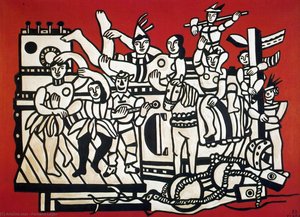
Nude on a Red Background
 Oil On Canvas
- WallArt
- Geometric Abstraction
 1927
1927- Modern
 130.0 x 81.0 cm
 Tovább olvasom
Kézzel készített olajfestmény reprodukció
Kézzel festett olajvastú vászon, az Ön által választott méretben és keretben, művészeink készítik meglévőre. ( Váltás nyomtatványra Áttérés digitális képre)




P118B Ft10

P118H Ft10

P118W Ft10

P438Z Ft10

P508JH Ft12

P508YH Ft12

P805H Ft10

P805Z Ft10

P919BZ Ft10

P919G Ft10

P919XJ Ft10

P959ZH Ft10

P968JZ Ft12

W106C Ft8

W218G Ft10

W218JH Ft8

W218Y Ft10

W307PJ Ft10

W316G Ft10

W316PJ Ft8

W316Y Ft10

W398PJ Ft8

W4111J Ft10

W500HY Ft15

W500JH Ft15

W692G Ft12

W849H Ft8

W940BG Ft15

W953PJ Ft8




Válasszon előre meghatározott méreteink közül, amelyek megfelelnek a műalkotás eredeti arányainak.

Írja be a kívánt szélességet és magasságot, hogy illeszkedjen a keretéhez vagy a falához. Mivel ez kézzel festett alkotás, egy eltérő formájú méret esetén a művész akár festhet is valamivel többet a kép körül, vagy korolathat is belőle — az Ön döntésének megfelelően. A festés megkezdése előtt küldünk egy digitális tervezetet jóváhagyásra. Az oldalon látható kép nem tartalmazza a végeredményt — csak a tervezet mutatja meg a valódi eredményt.
A rendelést követően a OriginalUniqueArt.com csapata e-mailt küld az ügyfélnek az instrukciókért, és biztosít egy előnézeti képet (mockup).
Világszerte elérhető szállítás () 3-4 hét alatt a szokásos 5 hét helyett. (22 október). A minőség nem kérdőjelezhető.

Ingyenes globális expressz szállítás

Prémium minőségű len vászon

Teljes körű szállítási biztosítás

Vámvisszatérítési Garancia

Tökéletes színarányosság garancia

100 napos visszaküldési garancia (csak gyártási hibás termékek esetén)

100% pénzvisszatérítési garancia

Több darab vásárlásakor kedvezmény
 Az üvegkeretes opció csak 110 cm alatti méretben érhető el

Nude on a Red Background
Reprodukciós technika
Reprodukció méretei
-


Összesített ár
Ft 95869
A Vision of Intimacy Amidst Modernity
In the profound stillness of Fernand Léger’s 1927 masterpiece, "Nude on a Red Background," we encounter a moment of quiet vulnerability set against a landscape of striking intensity. The painting presents a solitary female figure seated upon the ground, her hands delicately obscuring her face in a gesture that oscillates between deep contemplation and a shielding of the self. This simple yet evocative composition immediately captures the viewer's gaze, drawing them into an intimate encounter with a subject lost in thought. There is a haunting beauty in this isolation; the figure becomes a vessel for human emotion, standing as a soft, organic presence within a world that is increasingly defined by sharp edges and bold, unapologetic color.
Léger’s mastery lies in his ability to marry the human form with the burgeoning aesthetic of Geometric Abstraction. As a pioneer of this movement, Léger did not merely seek to distort reality but to reinvent it through the language of shapes and lines. In this work, the traditional boundaries of portraiture are eschewed in favor of a more structural approach. The figure is rendered with a deliberate clarity that echoes the artist's fascination with the Machine Age—an era defined by industrial progress and mechanical precision. Even within the softness of the woman’s white attire, one can sense the influence of the tubular, rhythmic forms that would become Léger's signature, creating a visual dialogue between the organic warmth of the human spirit and the structured dynamism of the modern world.
The Alchemy of Color and Technique
The technical execution of this piece is nothing short of mesmerizing, showcasing Léger’s sophisticated use of oil on canvas. The artist employs a meticulous layering technique that lends a palpable texture to the surface, inviting the eye to wander over the subtle transitions of light and shadow. The most arresting element, however, is the chromatic tension created by the vibrant, crimson backdrop. This expansive field of red does not merely serve as a background; it acts as an emotional force, pressing against the central figure and heightening the sense of drama. The stark contrast between the luminous white of the woman's dress and the saturated depth of the red creates a visual vibration that is both energizing and deeply immersive.
For the discerning collector or interior designer, this painting offers a unique opportunity to introduce a piece of art history that balances bold modernity with timeless emotional resonance. The work serves as a sophisticated focal point, capable of anchoring a room with its powerful color palette while providing a window into the soul of the early 20th-century avant-garde. Whether placed in a contemporary gallery setting or a classic study, "Nude on a Red Background" remains a testament to Léger's ability to capture the pulse of an era—a seamless blend of the mechanical and the mortal, the structured and the sublime.
Gyakran Ismételt Kérdések
A „Nude on a Red Background”, Léger Ferenc alkotása a keresett Geometric Abstraction művészeti alkotások közé tartozik?
A Geometric Abstraction irányzaton belül a "Nude on a Red Background" alkotásnak Iconic népszerűségi szintje van.
Hány éves volt Léger Ferenc, amikor megalkotta a "Nude on a Red Background" című alkotást?
Amikor a "Nude on a Red Background" alkotása 1927-ben készült, Léger Ferenc – aki 1881-ben született – 46 éves volt.
Mikor és milyen anyagokból készült a "Nude on a Red Background"?
A "Nude on a Red Background" 1927-ben készült, a Oil On Canvas technikáját alkalmazva. Az anyag és a dátum leírja, hogy az eredeti mű hogyan és mikor készült.
A művész életrajza
A Life Forged in Form: The World of Fernand Léger
Fernand Léger, born Joseph Fernand Henri Léger in 1881 amidst the rural landscapes of Argentan, Normandy, stands as a pivotal figure in the evolution of modern art. His journey from the farmlands of his youth to the forefront of Parisian avant-garde circles is a testament to an unwavering artistic vision and a relentless pursuit of capturing the spirit of the machine age. Unlike many of his contemporaries who embraced abstraction as a retreat from representation, Léger sought to *integrate* modernity – its dynamism, its mechanical forms, its very essence – into a new visual language that was both powerfully abstract and deeply rooted in the observable world. His early life, steeped in the physicality of agricultural labor, provided a grounding contrast to the industrialized future he would so passionately depict. Initially destined for architecture, Léger’s path shifted towards painting after arriving in Paris around 1900, supporting himself through drafting work while honing his artistic skills. This period was marked by traditional academic training, but it wasn't until encountering the groundbreaking work of Paul Cézanne that a true transformation began to unfold.The Birth of ‘Tubism’ and the Section d’Or
Cézanne’s retrospective in 1907 acted as a catalyst, liberating Léger from conventional representation and propelling him towards a more geometric and structural approach. He began dismantling forms, analyzing their underlying structures, and rebuilding them on canvas with a newfound emphasis on solidity and volume. This exploration quickly led him into the orbit of Cubism, but Léger wasn’t content to simply replicate the styles of Picasso or Braque. Instead, he developed his own distinct idiom – a personal form of Cubism that critics playfully dubbed “Tubism.” Characterized by cylindrical forms, flattened planes, and bold color contrasts, Tubism celebrated the machine aesthetic long before it became a widespread artistic preoccupation. It was an art born from observing the burgeoning industrial world, recognizing beauty in its functional shapes and mechanical rhythms. Léger’s approach differed significantly; he wasn't interested in dissecting objects into fragmented geometric pieces as Picasso and Braque did. Instead, he sought to capture their essence – their inherent stability and movement – through simplified, almost monumental forms. This resulted in a style that felt both dynamic and strangely static, capturing the feeling of machinery in motion while simultaneously presenting it as a solid, enduring presence. The group *Section d’Or* (The Golden Section), formed with artists like Jean Metzinger, Henri Le Fauconnier, Francis Picabia, and Marcel Duchamp, further nurtured this exploration. This collective sought to apply mathematical principles – particularly the golden ratio – to their art, believing that these proportions held a key to achieving harmony and visual balance. Léger’s work became deeply intertwined with the Section d'Or’s investigations, reflecting a desire for order and rationality within the increasingly chaotic world of modern life.War, Mechanization, and a New Aesthetic
The outbreak of World War I profoundly impacted Léger’s life and work. Serving at the front from 1914 to 1916 exposed him to the brutal realities of modern warfare – artillery barrages, aerial combat, and the dehumanizing effects of mechanized conflict. This experience didn't lead to disillusionment or a rejection of modernity; rather, it solidified his fascination with machines and their power. Sketches made during his service documented the stark beauty of military technology, transforming instruments of destruction into subjects of artistic contemplation. The repetitive patterns of trenches, the gleaming metal of tanks, and the angular forms of aircraft became sources of inspiration for Léger’s evolving style. Upon returning to civilian life, Léger’s aesthetic underwent a further evolution. His paintings began to reflect a more streamlined, mechanistic sensibility, celebrating the dynamism and efficiency of the industrial world. *Soldier with a Pipe* (1916) exemplifies this shift, showcasing simplified forms and bold colors that evoke the feeling of mechanical precision. This wasn't merely an aesthetic choice; it was a philosophical statement – an affirmation of modernity’s potential for progress and renewal, even in the wake of devastating conflict. He began to incorporate industrial materials into his work, experimenting with metal and other unconventional media alongside traditional paint.Legacy and Lasting Influence
In his post-war years, Léger continued to explore the intersection of art and industry, creating works that celebrated modern life with a unique blend of abstraction and figuration. His *Paysages animés* (Animated Landscapes) series from 1921 showcased figures and animals seamlessly integrated into streamlined compositions, blurring the boundaries between organic and inorganic forms. He also experimented with sculpture and filmmaking, expanding his artistic practice beyond the confines of traditional painting. Léger’s influence on subsequent generations of artists is undeniable. His bold simplification of form, his embrace of industrial imagery, and his celebration of popular culture anticipated the emergence of Pop Art decades later. Artists like Roy Lichtenstein and Andy Warhol owe a clear debt to Léger's pioneering work. He bridged the gap between abstract art and figurative representation, demonstrating that it was possible to create works that were both intellectually rigorous and visually engaging. Léger’s legacy is not merely as a painter, but as a prophet of modernity – a visionary who dared to find beauty in the machine age and to translate its energy onto canvas with unparalleled boldness and originality. A true pioneer whose work continues to resonate with audiences today.Useful Information
- Born: Argentan, France (1881)
- Died: Gif-sur-Yvette, France (1955)
- Key Works: *The Sitted Woman*, *Machine Element*, *The Great Parade*, *The City*
- Movement(s): Cubism, Tubism, Modernist Art

Léger Ferenc
1881 - 1955 , Franciaország
Gyors információk
- Artistic Movement Or Style: Kubizmus, Tubizmus
- Artists Or Movements Influenced By This Artist: ['Pop Art']
- Artists Who Influenced This Artist: ['Paul Cézanne']
- Date Of Birth: 1881. Feb 4.
- Date Of Death: 1955. Aug 17.
- Full Name: Fernand Léger
- Nationality: Francia
- Notable Artworks:
- A ülő nő
- Gépi elem
- A nagy menet
- Az animált táj
- Place Of Birth: Argentan, Francia
Kapcsolódó cikkek

Geometrikus Absztrakció Mesterei: 10 Alapvető Műalkotás a Lakberendezéshez
Fedezze fel a geometrikus absztrakció 10 legikonikusabb műalkotását! Kandinsky, Mondrian és más mesterek festményeinek története inspirálja otthona dekorációját. Múzeumi minőségű reprodukciók a OriginalUniqueArt.com-on – fedezze fel online!

Kandinsky Mesterművei: 25 Lenyűgöző Festmény a Modern Művészet Gyöngyszemeiből | OriginalUniqueArt
Fedezze fel Wassily Kandinsky 25 legikonikusabb művét! Merüljön el az absztrakt művészet világában, ismerje meg a színek és formák lenyűgöző történetét. Prémium minőségű reprodukciók és inspiráló dekorötletek a OriginalUniqueArt.com-on.
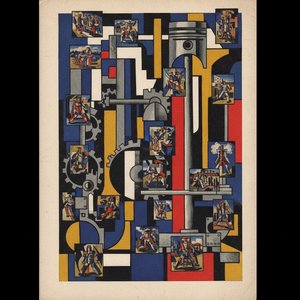
Fernand Léger Mesterművei: A 25 Legikonikusabb Kép a Modern Művészetben | OriginalUniqueArt
Fedezze fel Fernand Léger 25 legikonikusabb műalkotását! Ismerje meg a kubizmus, a tubizmus mesterét és a gépi kor lenyűgöző festményeit. Múzeumi minőségű vászonképek és poszterek a OriginalUniqueArt-on. Explore the full collection online!

Beyond Form & Color: Geometric Abstraction's Evolution in 20th/21st Century Art
Explore the evolution of geometric abstraction from Cubism to contemporary art. Discover key artists like Malevich & Mondrian, investment insights, and expert collecting advice at OriginalUniqueArt.

Neo-Abstract Art: The High-Impact Evolution of Modern Visual Energy and Geometric Sophistication
Discover the power of Neo-Abstract art. Explore how bold geometric forms and high-impact visual energy are redefining modern design. Learn to curate sophisticated, high-energy spaces with the latest trends in contemporary abstraction and structural color.