Cubist Style
Mechanical Elements (Fernand Léger)
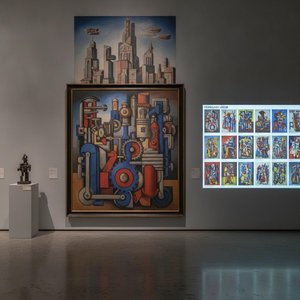
Fernand Léger (1881–1955) megalkotta: Mechanical Elements. A Cubist Style irányzathoz tartozik. Oil On Canvas anyagból készült. A műtárgyat a New York, Amerikai Egyesült Államok-i Metropolitan Művészeti Múzeum-ben őrzik.
- Oil On Canvas
- Metropolitan Művészeti Múzeum, New York

 Megtekintés

 Kézzel festett olajfestmény
 Küldés
 Megosztás
 Információs lap


 Letöltés
 Hasonló darabok
 X-ray felvétel
 Diavetítés
 Kérdések és válaszok

 Statisztika
Mechanical Elements röviden
- Cím
- Mechanical Elements
- Művész
- Fernand Léger (1881–1955)
- A művész születési helye
- Argentan, Franciaország
- Műszaki adatok
- Oil On Canvas
- Megtekinthető helyszín
- Metropolitan Művészeti Múzeum, New York, Amerikai Egyesült Államok
- Mozgalom
- Cubist Style
- Időszak
- Modern
- Téma
- mechanical elements, cubism, geometry, industrial design, abstraction, assemblage
Mit ábrázol a Mechanical Elements?
A Vision of Industrial Harmony
Fernand Léger’s “Mechanical Elements,” painted in 1924, stands as a striking testament to the burgeoning fascination with technology during the interwar period. More than just a depiction of gears and pipes—though undeniably prominent—the artwork embodies Léger's ambitious goal: to synthesize Cubist fragmentation with the dynamism of the machine age, creating an aesthetic that simultaneously challenged artistic conventions and reflected the transformative realities of modern life.
Born Joseph Fernand Henri Léger in Argentan, Normandy, 1881, Léger embarked on a journey from rural landscapes to the epicenter of Parisian avant-garde. Initially drawn to architecture, his artistic path swiftly pivoted toward painting after arriving in Paris around 1900, fueled by an unwavering conviction that art could engage with the complexities of its time.
Cubism Revisited: Geometric Precision
Léger’s stylistic evolution is inextricably linked to Cubism. Influenced profoundly by Picasso and Braque, he adopted the fractured perspective and simultaneous viewpoints characteristic of this revolutionary movement—a deliberate rejection of traditional representation in favor of exploring spatial relationships through geometric forms. However, Léger didn't simply replicate Cubist principles; he pushed them further, distilling them into a simplified vocabulary of circles, squares, and lines.
“Mechanical Elements” exemplifies this approach brilliantly. The canvas is dominated by interlocking geometric shapes—primarily circles and squares—arranged in a rhythmic pattern that evokes the precision and repetition found in industrial machinery. These forms aren’t merely decorative; they actively contribute to conveying a sense of movement and energy, mirroring the ceaseless pace of urban life.
Symbolism Beyond Mechanism
While the artwork's visual language speaks directly to the influence of technology, Léger imbued “Mechanical Elements” with deeper symbolic resonance. The repetition of geometric shapes isn’t merely a stylistic device; it represents an attempt to capture the impersonal logic and order inherent in industrial processes—a deliberate contrast to the organic forms favored by Impressionism and Post-Impressionism.
Furthermore, Léger's use of color – predominantly shades of gray punctuated by vibrant accents – underscores this thematic preoccupation. Gray symbolizes the materiality of metal and concrete, while bursts of color represent human vitality and creativity—a harmonious blend reflecting Léger’s belief that art could coexist with technological advancement without sacrificing beauty or emotional depth.
A Legacy of Innovation
"Mechanical Elements" cemented Léger's position as a pioneer of Tubism – a variant of Cubism developed by Léger himself—characterized by the use of tubular forms to represent objects and figures. This innovative technique anticipated developments in Pop Art decades later, demonstrating Léger’s enduring influence on subsequent generations of artists.
Today, reproductions of “Mechanical Elements” continue to captivate audiences with their bold aesthetic and intellectual ambition. They serve as a powerful reminder that art can not only reflect the spirit of its time but also actively shape our understanding of it—a timeless masterpiece celebrating both geometric precision and human resilience.
Melyik múzeumban található meg a Mechanical Elements?
Metropolitan Művészeti Múzeum
New York, Amerikai Egyesült Államok
A Metropolitan Művészeti Múzeum: Az Emberi Kreativitás Örökké Tartó Taposztatja New York City szívében, a Central Park keleti széle mentén magasodik a Metropolitan Művészeti Múzeum, vagy röviden "The Met", nem csupán egy gyűjteményes tárlat, hanem az emberi kreativitás és kifejezés ezeréves történetének lenyűgöző narrációja. 1870-ben a város látnokai alapították, akik meggyőződése szerint a művészet mindenki számára elérhetőnek kell lennie – egy merész gondolat az akkori kor szellemében –, és mára a világ egyik legnagyobb és legátfogóbb múzeuma lett. Az elegáns Fifth Avenue-i homlokzat meghívja a látogatót öt évmilliónyi időutazásra, ahol az ókori civilizációk visszhangjai találkoznak a modern művészet merész újításával.


Mechanical Elements nagy felbontású képei

Felfüggesztett szerzői jogok: a művész 1955-ben halt meg.
Egyéb méretek, kivágások és idézetforrás →Fernand Léger, Mechanical Elements, Metropolitan Művészeti Múzeum. Felfüggeszthető jogforrás
A színeket egy digitális szakértő az eredetivel megegyezővé állította, a fájlt finom retusáláson segítve, hűen visszaadva a művész ecsettöredékét.
Töltse le a nagy felbontású fájltMechanical Elements kapcsán felmerülő kérdések megválaszolva
Mely múzeum őrzi az eredeti "Mechanical Elements" című alkotást?
A „Mechanical Elements”, Fernand Léger alkotása eredeti darabja a Metropolitan Művészeti Múzeum, New York, Amerikai Egyesült Államok gyűjteményében található. A reprodukció lehetővé teszi, hogy a mű otthonában is megjelenjen.
Milyen technikával készült a „Mechanical Elements”, Fernand Léger alkotása?
A „Mechanical Elements”, Fernand Léger alkotása technikája Oil On Canvas. A reprodukciók célja ezen technika megjelenítésének hiteles återadása.
Milyen témák jelennek meg a(z) „Mechanical Elements”, Fernand Léger alkotása alkotásban?
„Mechanical Elements”, Fernand Léger alkotása a következőket ábrázolja: mechanical elements, cubism, geometry, industrial design, abstraction, assemblage, modern art.
Szabadon reprodukálható-e a/az „Mechanical Elements”, Fernand Léger alkotása képe?
A „Mechanical Elements”, Fernand Léger alkotása szerzői jogi státusza: a mű közösségi tulajdon – a szerzői jog lejártt. Ez határozza meg, hogy a kép másolatai szabadon készíthetők-e.
Ki a "Mechanical Elements" mögött álló művész?
A "Mechanical Elements" alkotását Fernand Léger készítette. Az ezen az oldalon található információk Fernand Léger eredeti művészetét mutatják be.
Mely művészeti irány része a „Mechanical Elements”, Fernand Léger alkotása?
A „Mechanical Elements”, Fernand Léger alkotása a Cubist Style irányzat része. Ez az irányzat adja a mű stilisztikai kontextusát.
A „Mechanical Elements” Fernand Léger pályájának mely szakaszát képviseli?
A "Mechanical Elements" Fernand Léger alkotói pályájának Mechanical Period szakaszát képviseli.
Mi magyarázza a „Mechanical Elements”, Fernand Léger alkotása szerzői jogi helyzetét?
A "Mechanical Elements" szerzői jogi státusza – közösségi tulajdon – a szerzői jog lejártt – a művész 1955 évi halálából adódik.
Maradt-e a "Mechanical Elements" mű a művész hon országában?
Nem – a műtárgy külföldön található. Fernand Léger Franciaország-ban született, a „Mechanical Elements” eredeti darabja pedig Amerikai Egyesült Államok-ban található múzeum gyűjteményében található.
A művészről: Fernand Léger

1881–1955, Franciaország
Fernand Léger
Fernand Léger életútja Fernand Léger története Argentan falujában kezdődik, amely az Alsó-Normandia Orne megyéjében található. 1881. február 4-én érkezett el erre a világra, egykori egykori egyke aszally. Korai éveket a francia vidék csendje és anyja, Marie-Adèle Daunou jelenléte formált, aki egy szentelett, s magvátozó természetű nő volt.
Fernand Léger részletesen Fernand Léger legkiemelkedőbb művei
Fernand Léger további művei
 A Város1919
 A Mechanikus1920
 Három nő1921
 Nők erdőben1910

Esszék a Mechanical Elements körül
 Cubism Unveiled: How Picasso and Braque Redefined Modern Art through Geometric RevolutionExplore the revolutionary world of Cubism. Discover how Pablo Picasso and Georges Braque dismantled perspective to redefine modern art thro…
 Mastering the Machine Age: The 25 Best Artworks by Fernand LégerImmerse yourself in the vibrant world of Fernand Léger. Explore 25 iconic masterpieces of Cubism and Tubism, from bold geometric forms to m…
 Ipari hangulatú művészet: A 10 legikonikusabb alkotás a faladra | OriginalUniqueArtFedezze fel a 10 legikonikusabb ipari hangulatú műalkotást! Kandinsky, Léger és más mesterek festményeinek története. Szürke árnyalatok, gy…