Előnézet
 Megosztás
 Megosztás
 Részletek
 Útmutató

 Letöltés
 Hasonló darabok
 X-ray felvétel
 Diavetítés
 Statisztika
Holy Hour
 Acrylic On Canvas
- WallArt
 1913
1913 182.0 x 223.0 cm
 Kunsthaus Zürich
 Tovább olvasom
Giclée / Műnyomat
Múzeumi minőségű giclée vagy vászonnyomat, gyors gyártással és rugalmas finomítási lehetőségekkel. ( Kézzel festett másolat vásárlása Áttérés digitális képre)




P118B Ft10

P118H Ft10

P118W Ft10

P438Z Ft10

P508JH Ft12

P508YH Ft12

P805H Ft10

P805Z Ft10

P919BZ Ft10

P919G Ft10

P919XJ Ft10

P959ZH Ft10

P968JZ Ft12

W106C Ft8

W218G Ft10

W218JH Ft8

W218Y Ft10

W307PJ Ft10

W316G Ft10

W316PJ Ft8

W316Y Ft10

W398PJ Ft8

W4111J Ft10

W500HY Ft15

W500JH Ft15

W692G Ft12

W849H Ft8

W940BG Ft15

W953PJ Ft8




Válasszon előre meghatározott méreteink közül, amelyek megfelelnek a műalkotás eredeti arányainak.

Megadhat saját méreteket is egy konkrét kerethez vagy helyszínhez igazítva. Amennyiben a kiválasztott méret nem egyezik az eredeti kép arányokkal, a műalkotást le fogjuk vágni, vagy kiegészítjük a képet tükrözött vagy egyszínű szélekkel. A gyártás megkezdése előtt egy digitális tervezetet küldünk jóváhagyásra.
Kérjük, vegye figyelembe, hogy a képernyőn látható előnézet nem tükrözi a tényleges levágást vagy kiegészítést. Csak a tervezet mutatja pontosan a végső kompozíciót.
Bár az egyedi méretek is elérhetőek, az eredeti arányok megőrzése érdekében azt javasoljuk, hogy válasszon a előre meghatározott listából származó méretet.
Világszerte történő kiszállítás területére mindössze 2 hét alatt, a szokásos 4-5 hét helyett. (10 október)

Ingyenes globális expressz szállítás

Prémium minőségű len vászon

Teljes körű szállítási biztosítás

Vámvisszatérítési Garancia

Tökéletes színarányosság garancia

100 napos visszaküldési garancia (csak gyártási hibás termékek esetén)

100% pénzvisszatérítési garancia

Több darab vásárlásakor kedvezmény
 Az üvegkeretes opció csak 110 cm alatti méretben érhető el

Holy Hour
Giclée / Műnyomat
Reprodukció méretei
-


Összesített ár
Ft 25071
The Genesis of a Moment: Ferdinand Hodler’s “Holy Hour”
Ferdinand Hodler's "Holy Hour," painted in 1913, isn’t merely a portrait; it’s a carefully constructed tableau of serenity and shared contemplation. The canvas unfolds with an almost dreamlike quality, capturing three women seated on the verdant grass of a garden – a scene radiating quiet intimacy and a profound sense of connection. The photograph preserved from 1911 reveals Hodler's deliberate retouching of the figures on either side, particularly the woman on the right, who was modeled by his wife, Bertha Stucki, imbuing the work with a deeply personal narrative. This subtle intervention speaks volumes about the artist’s process and his desire to imbue the scene with a tangible emotional resonance.
Hodler's artistic journey, shaped profoundly by early loss – the untimely deaths of his father and brothers – instilled within him a sensitivity to mortality and the ephemeral nature of existence. This experience isn’t overtly displayed in “Holy Hour,” but it subtly informs the painting’s atmosphere; there’s an awareness of time passing, of moments held dear, and perhaps even a gentle melancholy that underlies the scene's peacefulness. The composition itself—the figures arranged with a deliberate symmetry reminiscent of religious iconography—suggests a ritualistic quality, elevating this simple garden gathering to something akin to a sacred space.
Symbolism and the Language of Parallelism
Hodler’s artistic style is often categorized as Symbolist, yet he developed his own distinctive approach known as “parallelism.” This technique involved arranging figures in parallel lines, creating a sense of rhythm and harmony that mirrored the underlying order of the universe. In "Holy Hour," this principle manifests subtly through the arrangement of the women – their postures mirroring one another, their gazes directed towards an unseen point beyond the frame. The use of muted colors—primarily blues, whites, and greens—further contributes to the painting’s tranquil mood, creating a visual space that feels both grounded and ethereal.
Beyond the formal elements, the scene is rich in symbolic potential. The garden itself represents paradise, a place of respite and communion with nature. The flowers scattered throughout the composition add to this sense of abundance and beauty, while the women’s relaxed postures suggest a shared joy and contentment. It's important to note that Hodler was deeply interested in exploring themes of spirituality and human connection, often drawing inspiration from religious iconography—a clear influence evident in the painting’s overall structure and mood.
Technique and the Impressionistic Touch
Hodler’s technique is characterized by a delicate balance between realism and abstraction. He employed loose brushstrokes and a muted color palette, creating an impressionistic effect that softens the forms of the figures and imbues the scene with a sense of atmosphere. The lighting is particularly noteworthy—a diffused light washes over the garden, casting long shadows and lending the painting a dreamlike quality. Hodler’s masterful use of color and light contributes significantly to the work's emotional impact, evoking feelings of peace, serenity, and quiet contemplation.
The reproduction offered by OriginalUniqueArt.com captures these nuances with exceptional fidelity, allowing viewers to appreciate the subtle details and atmospheric effects that define Hodler’s masterpiece. The hand-painted process ensures a level of texture and depth that is impossible to replicate digitally, bringing this evocative scene to life in a truly immersive way.
A Timeless Reflection on Connection
"Holy Hour" transcends its simple subject matter to offer a profound meditation on human connection, faith, and the beauty of shared moments. It’s a painting that invites viewers to pause, reflect, and consider the importance of finding solace and companionship in the everyday rituals of life. Whether displayed as a centerpiece in a living room or a contemplative addition to a gallery wall, this reproduction serves as a constant reminder of the power of simple beauty and the enduring appeal of shared moments of peace.
Gyakran Ismételt Kérdések
Hogyan javasolt a(z) "Holy Hour" kinyomtatása – milyen méretben, milyen elrendezésben?
Large méret, Landscape elrendezés: ez a javasolt nyomtatási beállítás a(z) „Holy Hour”, Ferdinand Hodler alkotása alkotáshoz.
Hol vásárolhatok egy nyomtatványt a(z) „Holy Hour”, Ferdinand Hodler alkotása alkotásból?
A „Holy Hour”, Ferdinand Hodler alkotása nyomata közvetlenül megrendelhető a(z) ez az oldal oldalon: minőségi giclée nyomat pamutvászonon vagy archiváló vászonpapíron.
A "Holy Hour" Ferdinand Hodler egyik legnépszerűbb műve?
A „Holy Hour”, Ferdinand Hodler alkotása népszerűségi szintje: Recognized.
Mikor készült a "Holy Hour"?
A „Holy Hour”, Ferdinand Hodler alkotása alkotása 1913-ben készült.
Milyen technikával készült és milyen méretű „Holy Hour”, Ferdinand Hodler alkotása?
A "Holy Hour" alkotás Acrylic On Canvas technikával készült, eredeti mérete pedig 182 x 223 cm.
Hány éves volt Ferdinand Hodler, amikor megalkotta a "Holy Hour" című alkotást?
Ferdinand Hodler 60 éves korában festette a „Holy Hour” című művét. A művész 1853 született, a alkotás dátuma pedig 1913.
Ki a "Holy Hour" alkotója?
A „Holy Hour” műtémét Ferdinand Hodler alkotójának tulajdonítják.
A művész életrajza
A Life Etched in Symbolism: The World of Ferdinand Hodler
Ferdinand Hodler, a name inextricably linked to the landscape of Swiss painting and the evocative language of symbolism, emerged from modest beginnings to become one of the most significant artists of the late 19th and early 20th centuries. Born in Bern, Switzerland, in 1853, his life was profoundly shaped by early loss – a recurring theme that would deeply inform his artistic vision. The untimely deaths of his father and two younger brothers before he reached adolescence cast a long shadow, instilling within him a contemplative awareness of mortality and the fleeting nature of existence. These experiences, interwoven with an acute sensitivity to the beauty and power of the natural world, became central tenets of his evolving oeuvre. Initially apprenticed to decorative painters, Hodler’s innate talent quickly transcended mere craftsmanship; he yearned for formal training and artistic exploration beyond the constraints of commercial work. This ambition led him to Geneva in 1871, where he immersed himself in study, attending science lectures alongside diligently copying masterpieces at the city's museum – a rigorous education that laid the foundation for his future innovations.From Realism to ‘Parallelism’: Forging a Unique Vision
Hodler’s artistic journey was characterized by constant evolution and an unwavering pursuit of expressive power. His early works reflected the prevailing realist style of the time – portraits, landscapes, and genre scenes executed with meticulous detail. However, he soon found himself constrained by these conventions, seeking a means to convey deeper emotional truths and philosophical ideas. This quest led him towards Symbolism, a movement that rejected naturalistic representation in favor of subjective experience and evocative imagery. Yet Hodler didn’t simply adopt the tenets of Symbolism; instead, he forged his own unique path, developing what he termed “parallelism.” This distinctive style involved arranging figures and forms in rhythmic, almost geometric patterns, creating a sense of both harmony and tension – a visual representation of interconnectedness. It was an attempt to depict not just *what* he saw, but *how* he felt – the underlying emotional currents that connected all things. The Night, completed in 1890, proved to be a pivotal work, marking his definitive turn towards symbolist imagery and sparking considerable controversy with its depiction of recumbent figures suggestive of death and repose. Despite initial criticism, the painting garnered attention in Paris, establishing Hodler’s reputation beyond Switzerland's borders and signaling the arrival of a truly original voice.Landmarks in Paint: Key Works and Their Significance
Throughout his prolific career, Hodler produced a remarkable body of work that continues to resonate with audiences today. The Day, completed in 1893, stands as one of his most ambitious and celebrated achievements – a monumental historical painting showcasing his mastery of composition and symbolism. Housed at the Kunsthaus Zürich, this artwork is a powerful meditation on life, death, and renewal, rendered with an arresting blend of realism and visionary intensity. The sheer scale and emotional weight of The Day cemented Hodler’s position as a leading figure in European art. Other notable works include numerous depictions of the Swiss Alps, imbued with a sense of awe-inspiring grandeur, and portraits that reveal his profound understanding of human psychology. He frequently revisited themes of loss and mourning, perhaps reflecting his own childhood traumas, but always infused them with a sense of dignity and resilience. His paintings weren’t merely representations; they were emotional landscapes, inviting viewers to contemplate the fundamental questions of existence. Works like Truth II (1897) demonstrate Hodler's ability to blend classical forms with modern sensibilities, creating images that are both timeless and strikingly contemporary – a testament to his innovative spirit.Influences and Historical Context
Hodler’s artistic development was shaped by a confluence of influences. His early training under Ferdinand Sommer instilled in him the fundamentals of landscape painting, while his study of works by Holbein, Titian, and Velázquez exposed him to classical techniques and compositional principles. However, it was his encounter with Symbolism that truly liberated his imagination. He drew inspiration from poets like Stéphane Mallarmé and Arthur Rimbaud, embracing their exploration of dreams, myths, and the subconscious. Hodler’s work also resonated with broader cultural currents of the late 19th and early 20th centuries – a period marked by rapid social change, scientific advancements, and a growing sense of existential anxiety. His paintings offered a visual language for grappling with these complex issues, providing solace and insight in an increasingly uncertain world. The rise of Expressionism in the early 20th century can be seen as a direct consequence of Hodler’s pioneering work in exploring subjective emotion and distorted forms.A Lasting Legacy
Ferdinand Hodler's influence extended far beyond the borders of Switzerland. His innovative use of symbolism and his development of “parallelism” paved the way for Expressionism, with its emphasis on subjective emotion and distorted forms. Artists who followed in his footsteps recognized him as a precursor to their own explorations of inner experience. Hodler’s work also resonated with broader cultural currents of the late 19th and early 20th centuries – a period marked by rapid social change, scientific advancements, and a growing sense of existential anxiety. His paintings offered a visual language for grappling with these complex issues, providing solace and insight in an increasingly uncertain world. Today, Hodler’s works are held in major museums across Europe and beyond, ensuring that his artistic vision continues to inspire and challenge generations of viewers. He remains a towering figure in Swiss art history, celebrated not only for his technical skill but also for his profound emotional depth and unwavering commitment to exploring the mysteries of the human condition.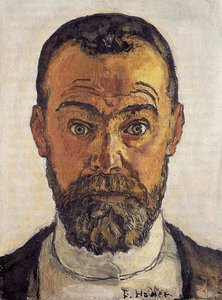
Ferdinand Hodler
1853 - 1918 , Svájc
Gyors információk
- Artistic Movement Or Style: Szimbolizmus, Parallélizmusa
- Artists Or Movements Influenced By This Artist: ['Expressionizmus']
- Artists Who Influenced This Artist:
- Courbet
- Gauguin
- Date Of Birth: 1853. március 14.
- Date Of Death: 1918. május 19.
- Full Name: Ferdinand Hodler
- Nationality: Svajci
- Notable Artworks:
- A Éjjel
- A Nap
- Igazság II
- Place Of Birth: Bern, Svájc
Kapcsolódó cikkek
Portrayals of Power & Perception: A Historical Survey of Women in Art
Explore the rich history of women in art – from iconic muses to groundbreaking artists. Discover feminist movements & reclaim female narratives with OriginalUniqueArt. Expert insights for discerning collectors.

The Enduring Muse: Women as Subject & Symbol in Art History
Explore the rich history of women in art – from iconic muses to groundbreaking artists. Discover feminist movements, global perspectives & reclaim female narratives with OriginalUniqueArt.

Ferdinand Hodler: Symbolism, Parallelism & the Quest for Universal Harmony
Explore the captivating world of Ferdinand Hodler, Swiss Symbolist painter renowned for his evocative landscapes & pioneering 'parallelism'. Discover his life, key works, and lasting influence on art history. Own a hand-painted reproduction today!
The Enduring Muse: Women as Subject & Symbol in Art History
Explore the rich history of women in art – from archetypal representations to contemporary voices challenging norms. Discover iconic artists & movements, and learn about reclaiming female narratives through painting and beyond.
Cultivating Paradise: A Historical & Artistic Exploration of Gardens in Painting
Explore the rich history of gardens in painting! Discover masterpieces from Renaissance to Impressionism & beyond. Learn about symbolism, artists like Monet & Klimt, and find your perfect artwork at OriginalUniqueArt.