

 Előnézet
 Megosztás
 Megosztás
 Részletek
 Útmutató

 Letöltés
 Hasonló darabok
 X-ray felvétel
 Diavetítés
 Statisztika
Still Life


 Tovább olvasom
Giclée / Műnyomat
Múzeumi minőségű giclée vagy vászonnyomat, gyors gyártással és rugalmas finomítási lehetőségekkel. ( Kézzel festett másolat vásárlása Áttérés digitális képre)




P118B Ft10

P118H Ft10

P118W Ft10

P438Z Ft10

P508JH Ft12

P508YH Ft12

P805H Ft10

P805Z Ft10

P919BZ Ft10

P919G Ft10

P919XJ Ft10

P959ZH Ft10

P968JZ Ft12

W106C Ft8

W218G Ft10

W218JH Ft8

W218Y Ft10

W307PJ Ft10

W316G Ft10

W316PJ Ft8

W316Y Ft10

W398PJ Ft8

W4111J Ft10

W500HY Ft15

W500JH Ft15

W692G Ft12

W849H Ft8

W940BG Ft15

W953PJ Ft8




Válasszon előre meghatározott méreteink közül, amelyek megfelelnek a műalkotás eredeti arányainak.

Írja be a keretének vagy a falának megfelelő szélességet és magasságot. A nyomatot csak le lehet vágni, soha nem tehető nagyobbá, mint az eredeti kép, így egy eltérő alakú méretnél a kép egy része elveszik. Mielőtt bármit kinyatintanánk, küldünk egy digitális próbamodellt jóváhagyásra. Az oldalon látható kép nem tartalmazza a valós levágást — ezt csak a próbamodell mutatja meg.
Világszerte történő kiszállítás területére mindössze 2 hét alatt, a szokásos 4-5 hét helyett. (22 október)

Ingyenes globális expressz szállítás

Prémium minőségű len vászon

Teljes körű szállítási biztosítás

Vámvisszatérítési Garancia

Tökéletes színarányosság garancia

100 napos visszaküldési garancia (csak gyártási hibás termékek esetén)

100% pénzvisszatérítési garancia

Több darab vásárlásakor kedvezmény
 Az üvegkeretes opció csak 110 cm alatti méretben érhető el

Still Life
Giclée / Műnyomat
Reprodukció méretei
-


Összesített ár
Ft 25565
A Moment Frozen in Time: Ferdinand Guillaimin’s “Still Life”
Ferdinand Guillaimin's "Still Life," painted in 1872, isn’t merely a depiction of objects arranged on a table; it’s a carefully constructed tableau brimming with quiet observation and subtle symbolism. This work, rendered in the heart of the Impressionist movement, captures a fleeting moment of domestic tranquility – a scene both familiar and imbued with an understated elegance. The painting immediately draws the eye to the central arrangement: a vase overflowing with vibrant red and yellow flowers, their petals seemingly caught mid-bloom, radiating warmth against the cooler tones that dominate the rest of the composition. Beside them rests a worn book, its pages hinting at untold stories and intellectual pursuits, while a simple bowl holds what appears to be fruit – perhaps apples or pears – adding another layer of earthly abundance.
Guillaimin’s technique is distinctly Impressionistic, prioritizing capturing the *impression* of light and color rather than precise detail. Loose brushstrokes dance across the canvas, creating an atmospheric haze that softens the edges of each object. He masterfully employs broken color – applying small dabs of paint side-by-side to build up hues and create a shimmering effect, particularly noticeable in the reflections on the table’s surface. The dark background serves not as mere backdrop but as a crucial element, intensifying the luminosity of the floral arrangement and lending the scene a sense of intimacy and depth. The artist's focus is less on photographic realism and more on conveying the *feeling* of being present within this quiet space.
The Context of Parisian Impressionism
To fully appreciate “Still Life,” it’s essential to understand the artistic climate in which Guillaimin was working. The 1870s were a period of profound change and experimentation for French art, marked by the rise of Impressionism. Artists like Monet, Renoir, and Pissarro sought to break free from the rigid conventions of academic painting, embracing plein air (outdoor) painting and capturing the ephemeral qualities of light and atmosphere. Guillaimin’s work reflects this spirit of innovation, moving away from traditional subject matter and exploring new ways of representing the world around him.
Guillaimin's connection to Pissarro is particularly noteworthy. The artist spent a significant period painting alongside Pissarro in Pontoise, a suburb of Paris, where he found inspiration in the everyday life of the region. This proximity fostered a collaborative environment, allowing Guillaimin to refine his style and develop his unique approach to capturing light and color. The Impressionists were not simply interested in depicting what they *saw*; they were driven by a desire to express their subjective experience of the world.
Symbolism and the Language of Objects
Beyond its aesthetic qualities, “Still Life” is rich with symbolic meaning. The flowers themselves represent beauty, fragility, and the fleeting nature of life – themes frequently explored in Impressionist art. The book suggests knowledge, contemplation, and a connection to the past. The bowl of fruit symbolizes abundance, nourishment, and the pleasures of earthly existence. Even the dark background can be interpreted as representing mortality or the unknown.
Guillaimin’s use of these objects is deliberate and carefully considered, inviting the viewer to engage in a process of interpretation. He doesn't offer explicit explanations; instead, he presents a series of interconnected symbols that resonate with universal themes of beauty, life, and death. The arrangement feels deliberately balanced, creating a harmonious composition that evokes a sense of peace and serenity.
A Legacy of Delicate Beauty
Ferdinand Guillaimin’s “Still Life” stands as a testament to the power of observation and the enduring appeal of simple subjects rendered with exquisite sensitivity. It's a painting that rewards close attention, revealing layers of meaning and emotional depth with each viewing. Reproductions capture much of the original atmosphere, but nothing quite replicates the subtle nuances of light and color that define Guillaimin’s masterful technique.
Today, this work is celebrated for its evocative beauty and its contribution to the development of Impressionism. It remains a poignant reminder of the quiet moments of everyday life – a timeless meditation on beauty, mortality, and the enduring power of art.
Gyakran Ismételt Kérdések
Milyen színeket használ a "Still Life"?
A „Still Life”, Ferdinand Guillaumin alkotása egy Earthy színpalettát használ. A paletta összefoglalja a mű egészében megnyilvánuló színes karaktert.
Vannak a „Still Life” alkotáshoz hasonló művek?
A „Still Life”, Ferdinand Guillaumin alkotása Hasonló műalkotások oldala kapcsolódó műalkotásokat mutat be.
Ki készítette a(t) "Still Life"-t, és mikor?
A "Still Life" alkotója Ferdinand Guillaumin, a művészeti alkotás dátuma pedig 1872.
A művész életrajza
early life and career
Jean Baptiste Armand Guillaumin, a french impressionist painter and lithographer, was born on february 16, 1841 in paris, the grandson of jean joseph guillaumin who was a notary by trade. Sent to school early, he demonstrated an aptitude for drawing from a young age, nurturing his artistic inclinations throughout his formative years. His initial training focused on traditional academic techniques, yet Guillaumin swiftly embraced the burgeoning impressionist movement, captivated by its revolutionary approach to capturing fleeting moments of light and color.contribution to impressionism
Guillaumin’s involvement with impressionism wasn't merely stylistic; it represented a profound shift in artistic philosophy. He actively participated in Salon exhibitions alongside fellow luminaries like Claude Monet and Camille Pissarro, showcasing his distinctive vision – landscapes imbued with ethereal beauty and bathed in vibrant hues. His brushstrokes were loose and expressive, prioritizing spontaneity over meticulous detail—a hallmark of the movement’s ethos. Guillaumin's canvases often depicted serene scenes of rural France, rendered with a sensitivity to atmospheric conditions and subtle tonal variations. He skillfully blended pigments to achieve luminous effects, mirroring Monet’s pioneering explorations into optical perception.notable works and associations
Guillaumin’s artistic legacy rests upon a collection of remarkable paintings that continue to inspire admiration. Among his most celebrated compositions are “Garden in Janville in June,” a masterpiece capturing the tranquil splendor of a summer afternoon; “River Scene,” which exemplifies his masterful depiction of water reflections and tonal harmonies; and “View of Puy de Dôme,” showcasing an ambitious attempt to convey the grandeur of volcanic landscapes. His artistic collaborations extended beyond exhibitions, fostering connections with fellow artists who shared similar aesthetic sensibilities. Notably, he maintained close ties with Claude Monet, whose influence can be discerned in Guillaumin’s palette and compositional choices.style and influences
Guillaumin's style is characterized by a harmonious blend of impressionistic techniques and symbolic elements—a testament to his intellectual curiosity and artistic versatility. Like Vincent van Gogh, he experimented with bold colors and expressive brushwork, pushing the boundaries of conventional representation. However, unlike Monet’s predominantly optical explorations, Guillaumin infused his paintings with evocative imagery rooted in mythology and folklore, reflecting a fascination with the subconscious realm.legacy and remembrance
Ferdinand Guillaumin passed away on june 26, 1927, leaving behind an enduring contribution to french art history. His works are housed in prestigious institutions such as the Musée d’Orsay and Tiroler Landesmuseum Ferdinandeum, ensuring that his artistic vision continues to resonate with audiences worldwide. Explore more of Guillaumin's captivating oeuvre on OriginalUniqueArt: ferdinand guillaumin | 3 artworks impressionism art movement
Ferdinand Guillaumin
1841 - 1927 , Franciaország
Gyors információk
- Artistic Movement Or Style: Impressionizmus
- Artists Or Movements Influenced By This Artist: ['Symbolizmus']
- Artists Who Influenced This Artist:
- Claude Monet
- Vincent van Gogh
- Paul Cézanne
- Date Of Birth: Feb 16, 1841
- Date Of Death: Jun 26, 1927
- Full Name: Jean Baptiste Armand Guillaumin
- Nationality: Francia
- Notable Artworks:
- Garden in Janville
- River Scene
- View of Puy de Dôme
- Place Of Birth: Paris, Francia
Kapcsolódó cikkek

Blossoms of Time: A Historical Journey Through Flower Painting
Explore the captivating history of flower painting! Discover Dutch masters, symbolic meanings, & botanical art. Expert insights & high-quality reproductions at OriginalUniqueArt.
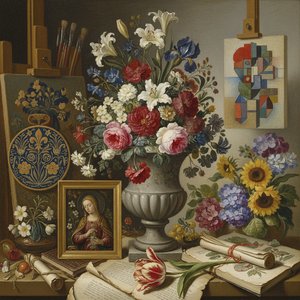
Blossoming Symbolism: A Historical Journey Through Flowers in Western Painting
Explore the rich history of flower symbolism in Western painting! Discover how artists from the Renaissance to Modernism used blossoms to convey meaning, emotion & beauty. Learn about iconic artworks and movements.

A benyomásosok mesterművei: 10 ikonikus festmény a művészetben és otthonában
Fedezze fel a 10 legikonikusabb impresszionista festményt! Monet, Renoir és más mesterek művészete életre kel OriginalUniqueArt.com-on. Vászonképek, faliképek – inspirálja otthonát a benyomásosok színeivel és hangulatával! Explore the full collection online.

Silent Narratives: Exploring the Enduring Appeal of Still Life Painting Across Centuries
Explore the rich history of still life painting with OriginalUniqueArt. Discover Dutch Masters, decode vanitas symbolism & learn about collecting timeless art. Expert insights and museum-quality reproductions.

Paul Cézanne 25 Mesterműve: A Modern Művészet Úttörői | OriginalUniqueArt
Fedezze fel Paul Cézanne 25 legikonikusabb művét! Ismerje meg a posztimpresszionizmus úttörőjének festményeit, technikáját és inspirációit. Vászonképek, portrék, tájképfestmények – minden otthonba. Böngéssze gyűjteményünket a OriginalUniqueArt-on!