

 Előnézet
 Megosztás
 Megosztás
 Részletek
 Útmutató

 Letöltés
 Hasonló darabok
 X-ray felvétel
 Diavetítés
 Statisztika
Olympic Theater


 Tovább olvasom
Kézzel készített olajfestmény reprodukció
Kézzel festett olajvastú vászon, az Ön által választott méretben és keretben, művészeink készítik meglévőre. ( Váltás nyomtatványra Áttérés digitális képre)




P118B Ft10

P118H Ft10

P118W Ft10

P438Z Ft10

P508JH Ft12

P508YH Ft12

P805H Ft10

P805Z Ft10

P919BZ Ft10

P919G Ft10

P919XJ Ft10

P959ZH Ft10

P968JZ Ft12

W106C Ft8

W218G Ft10

W218JH Ft8

W218Y Ft10

W307PJ Ft10

W316G Ft10

W316PJ Ft8

W316Y Ft10

W398PJ Ft8

W4111J Ft10

W500HY Ft15

W500JH Ft15

W692G Ft12

W849H Ft8

W940BG Ft15

W953PJ Ft8




Válasszon előre meghatározott méreteink közül, amelyek megfelelnek a műalkotás eredeti arányainak.

Ön megadhat saját méreteket egy adott kerethez vagy térhez igazításhoz. Ha a kiválasztott méret nem egyezik az eredeti kép arányával, akkor a műalkotást levágjuk, vagy további kézzel festett elemekkel meghosszabbítjuk a festményt. A gyártás megkezdése előtt küldünk Önnek egy digitális előnézetet jóváhagyásra.
Kérjük, vegye figyelembe, hogy a képernyőn megjelenő előnézet nem tükrözi a tényleges vágást vagy kiterjesztést. Csak az előnézet fog pontosan mutatni a végső kompozíciót.
Bár egyedi méretek állnak rendelkezésre, javasoljuk, hogy válasszon egy méretet az előre meghatározott listából az eredeti arányok megőrzése érdekében.
A rendelést követően a OriginalUniqueArt.com csapata e-mailt küld az ügyfélnek az instrukciókért, és biztosít egy előnézeti képet (mockup).
Világszerte elérhető szállítás () 3-4 hét alatt a szokásos 5 hét helyett. (13 október). A minőség nem kérdőjelezhető.

Ingyenes globális expressz szállítás

Prémium minőségű len vászon

Teljes körű szállítási biztosítás

Vámvisszatérítési Garancia

Tökéletes színarányosság garancia

100 napos visszaküldési garancia (csak gyártási hibás termékek esetén)

100% pénzvisszatérítési garancia

Több darab vásárlásakor kedvezmény
 Az üvegkeretes opció csak 110 cm alatti méretben érhető el

Olympic Theater
Reprodukciós technika
Reprodukció méretei
-


Összesített ár
Ft 94012
A Glimpse Into the Glittering Past
In the heart of the early twentieth century, the pulse of urban life beat strongest within the velvet-draped confines of the theater, and no artist captured this electric atmosphere quite like Everett Shinn. His 1907 masterpiece, Olympic Theater, serves as a luminous window into a bygone era of spectacle and stagecraft. Through the delicate medium of watercolour, Shinn invites us to step away from the grit of the city streets and into the warmth of a live performance. The scene is centered upon a man on stage, poised with a hat in hand, embodying the formal elegance and theatrical flair of the period. As he presents himself to the crowd, the viewer is not merely an observer but a participant, caught in the flickering light and the shared breath of an audience held in suspense.
The technique employed in this work reveals Shinn’s profound mastery over the fluidity of watercolour. Rather than relying on heavy, opaque layers, he utilizes the transparency of the medium to create a sense of movement and ephemeral light. This allows the colors to bleed and blend with a rhythmic energy that mirrors the very essence of a theatrical production. The composition is expertly balanced, guiding the eye from the central performer toward the surrounding figures—fellow actors and captivated spectators—creating a layered depth that suggests a much larger, bustling world just beyond the frame. Every brushstroke contributes to a sense of spontaneity, as if the artist were sketching the scene in real-time, capturing the fleeting magic of a moment that would otherwise vanish into history.
The Soul of the Ashcan School
To understand Olympic Theater, one must understand Shinn’s place within the legendary Ashcan School. While many of his contemporaries focused on the darker, more somber realities of urban poverty, Shinn—often referred to as "the dandy of the realists"—found beauty in the dazzling lights of nightlife and the vibrant energy of entertainment. This painting represents a sophisticated intersection of realism and romanticism. There is an undeniable truth to the depiction of the clothing, the stage setting, and the social etiquette of 1907, yet there is also a poetic idealization of the theater as a sanctuary of joy and human connection.
For the discerning collector or interior designer, this piece offers more than just historical interest; it provides a profound emotional resonance. The artwork possesses a unique ability to breathe life into a room, injecting a sense of sophisticated nostalgia and cultural richness. Whether placed in a contemporary gallery setting or a classic study, the painting acts as a conversation piece that celebrates the enduring human desire for storytelling and spectacle. It is an invitation to appreciate the artistry of the past and to bring a fragment of the world's most enchanting stages into the modern home.
Gyakran Ismételt Kérdések
Milyen technika és stílus jellemzi „Olympic Theater”, Everett Shinn alkotása alkotást?
A "Olympic Theater" alkotás Watercolor technikával készült, a Ashcan School stílusban.
Milyen hangulatot áraszt a "Olympic Theater"?
„Olympic Theater”, Everett Shinn alkotása művészeti alkotásának összhangulata Dramatic. Ez az érzet írja le a mű általános atmoszféráját.
Hol javasolt a(z) "Olympic Theater" Landscape formátumú alkotás kihelyezését?
A formátum (Landscape) és a javasolt helyiség (Restaurant) az a két elhelyezési adat, amely a „Olympic Theater”, Everett Shinn alkotása alkotáshoz tartozik.
Milyen tónus felé hajlik a "Olympic Theater"?
A „Olympic Theater” egy Golden Yellow Range tónus felé hajlik.
Milyen érzést közvetít a „Olympic Theater”, Everett Shinn alkotása?
A "Olympic Theater" alkotásban egy Dramatic hangulat kíséri egy Energetic érzelmet.
Melyik szakaszába tartozik Everett Shinn pályájának a "Olympic Theater" (1907)?
A "Olympic Theater", amely 1907 évben készült, Everett Shinn pályájának Early Period szakaszába tartozik.
What other names is Everett Shinn known by?
Other names recorded for Everett Shinn, creator of "Olympic Theater", include Woodstowni Everett Shinn, November 6-i Everett Shinn.
Hol javasolt a(z) "Olympic Theater" kihelyezését a színei alapján?
A „Olympic Theater”, Everett Shinn alkotása Earthy színei tökéletesen illeszkednek a javasolt helyiséghez: egy Restaurant.
A művész életrajza
A Chronicler of Urban Life: The World of Everett Shinn
Everett Shinn, born in Woodstown, New Jersey, in 1876, wasn’t simply a painter; he was a visual poet of the burgeoning metropolis. He captured the raw energy, the vibrant spectacle, and often, the underlying grit of early 20th-century America with an immediacy that set him apart. From his beginnings as a newspaper illustrator to his prominence within the Ashcan School, Shinn’s artistic journey reflects a commitment to portraying life as it was lived – unvarnished, compellingly real. Art historian Sam Hunter affectionately dubbed him “the dandy of the realists,” a moniker reflecting both his refined aesthetic and his embrace of the city's pleasures. His early training at the Spring Garden Institute and later, the Pennsylvania Academy of the Fine Arts in Philadelphia, provided a solid foundation, but it was his work as an artist-reporter for Philadelphia newspapers – the *Press*, the *Inquirer*, and the *Ledger* – that truly honed his observational skills. This experience instilled in him a fascination with urban life and a knack for capturing fleeting moments before they vanished.From Philadelphia Streets to New York Stages
The move to New York City in 1897 marked a turning point. Shinn quickly found work as an illustrator, contributing to publications like *Harper’s Weekly*, but it was his burgeoning friendships with fellow artists – George Luks, John Sloan, William J. Glackens, and Robert Henri – that truly shaped his artistic direction. These connections led him to the heart of the Ashcan School, a group dedicated to depicting the everyday realities of urban existence, often focusing on scenes overlooked by more traditional art circles. While many of his peers embraced oil paints, Shinn distinguished himself through his masterful use of pastels, a medium that allowed for a unique blend of spontaneity and delicate detail. He found particular inspiration in the city’s theaters, captivated by their dazzling displays of light, color, and performance. Works like “Olympic Theater” and “Revue” are not simply depictions of entertainment; they are vibrant studies of human interaction, capturing the energy and excitement of a night out in the city. The theatrical world offered Shinn a stage for exploring themes of illusion, spectacle, and the complex relationship between performer and audience. He wasn’t merely recording what he saw; he was interpreting it through a lens of dramatic flair and psychological insight.The Ashcan School and Beyond
Shinn's association with the Ashcan School was crucial to his artistic development, challenging academic conventions and rejecting idealized representations in favor of honest portrayals of urban life – its poverty, its vibrancy, its struggles, and its joys. Their work often focused on working-class neighborhoods, saloons, and dance halls, subjects previously considered unworthy of serious artistic attention. Shinn’s participation in the landmark exhibition “The Eight” in 1908 solidified his position within this movement, though he always maintained a slightly more refined aesthetic than some of his colleagues. He wasn't solely focused on social commentary; he was equally interested in capturing the spectacle and allure of modern life. His versatility extended beyond painting, as demonstrated by his murals for private homes and public spaces, including those at the Stuyvesant Theatre and the Plaza Hotel. Even as his work evolved beyond the strict tenets of the Ashcan School, a commitment to realism and an acute observation of human behavior remained central to his artistic vision. He continued to explore themes of urban life, but with an increasing emphasis on its glamour and theatricality.A Life Marked by Passion and Turmoil
Everett Shinn’s personal life was as dynamic and complex as the scenes he depicted in his art. He experienced multiple marriages – four in total – and a reputation for enjoying the pleasures of city life, contributing to his “dandy” persona. These personal challenges often intersected with his artistic pursuits, influencing his subject matter and adding layers of emotional depth to his work. Despite periods of financial hardship, particularly during the Depression, Shinn continued to paint and exhibit, receiving recognition from institutions like the National Academy of Design and the American Academy of Arts and Letters later in his career. He passed away in 1953, leaving behind a legacy that continues to resonate with audiences today. His life was a testament to the power of artistic vision and the enduring appeal of capturing life as it truly is, even amidst personal struggles and societal changes.Enduring Legacy
Everett Shinn’s influence on American art remains significant.- Influence on American Realism: Shinn’s work significantly contributed to the development of American realism, paving the way for future generations of artists who sought to depict everyday life with honesty and authenticity.
- Capturing a Moment in Time: His paintings and pastels offer invaluable insights into the social and cultural landscape of early 20th-century America, providing a visual record of a rapidly changing world.
- Masterful Technique: Shinn’s innovative use of pastel as a fine art medium expanded the possibilities of this often-underappreciated technique.
- Theatricality and Spectacle: His depictions of theater scenes are not merely representations of entertainment; they are explorations of human psychology, social dynamics, and the allure of illusion.

Everett Shinn
1876 - 1953 , Egyesült Államok
Gyors információk
- Artistic Movement Or Style: Ashcan School, Realizmus
- Artists Or Movements Influenced By This Artist: ['American Realism']
- Date Of Birth: 1876
- Date Of Death: 1953
- Full Name: Everett Shinn
- Nationality: Amerikai
- Notable Artworks:
- Olympic Theater
- Revue
- Place Of Birth: Woodstown, USA
Kapcsolódó cikkek

The Ashcan School: Capturing the Raw Spirit and Urban Realism of New York City Life
Explore the raw, evocative beauty of the Ashcan School. Discover how masters like Bellows and Glackens captured New York's urban soul through American Realism, and learn to bring this gritty, historical elegance into your modern art collection.
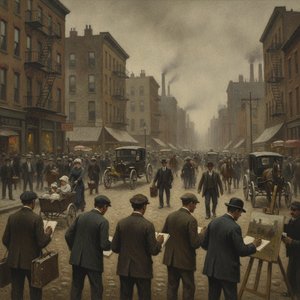
The Ashcan School: Capturing the Raw, Unfiltered Soul of Urban Life through American Realism
Discover the raw beauty of the Ashcan School. Explore how masters like Bellows and Henri captured the gritty, vibrant soul of early 20th-century New York through profound American Realism and evocative urban landscapes.
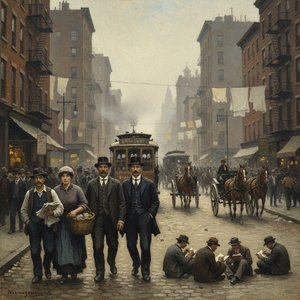
The Ashcan School: Realism, Urban Life & the Democratization of American Art
Explore the revolutionary Ashcan School! Discover how artists like Henri & Sloan challenged tradition with gritty realism, capturing urban life in early 20th-century America. Learn about their impact on American art history.

A Hudson River Iskola 10 Mesterműve: Tájképfestészet és Amerika Lelke – OriginalUniqueArt
Fedezze fel a Hudson River Iskola 10 legikonikusabb műalkotását! Frederic Church, Thomas Cole és más amerikai festők romantikus tájképei. Vászonkép másolatok, faliképek otthonába – OriginalUniqueArt.com kínálatából. Explore the full collection online!

The Hague School: Realism, Atmosphere & the Dawn of Dutch Impressionism
Explore the Hague School's pivotal role in Dutch art history. Discover realism, atmospheric landscapes & its influence on Impressionism. Learn about key artists like Mauve & Maris with OriginalUniqueArt.