() ·

A painting made for you, by hand

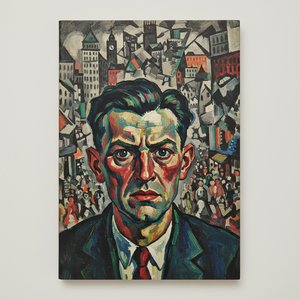
Street Scene

Kézzel készített olajfestmény reprodukció

Kézzel festett olajvastú vászon, az Ön által választott méretben és keretben, művészeink készítik meglévőre. ( Váltás nyomtatványra Áttérés digitális képre)

A gyűjtemény leírása

This striking black and white drawing captures the energy of urban life with twelve figures engaged in conversation amidst a crowded street scene, reflecting Kirchner's Expressionist style and fascination with social commentary.

A művész életrajza

Ernst Ludwig Kirchner (1880-1938): A vezető német expresszionista, a Die Brücke alapító tagja. Fedezd fel lenyűgöző, érzelemre hangolt alkotásait a modern városokról, nők frånkójáról és tájakról – egy korai 20. századi művészet erőteljes hangszórója.

from ·

Chapter 1

How large should it be?

Slide to change the size; the picture on the left shows the frame at its real width. The proportions of the original are kept.

Standard méret
egyedi méretű
CM
INCH

Válasszon előre meghatározott méreteink közül, amelyek megfelelnek a műalkotás eredeti arányainak.

szélesség
magasság

Írja be a kívánt szélességet és magasságot, hogy illeszkedjen a keretéhez vagy a falához. Mivel ez kézzel festett alkotás, egy eltérő formájú méret esetén a művész akár festhet is valamivel többet a kép körül, vagy korolathat is belőle — az Ön döntésének megfelelően. A festés megkezdése előtt küldünk egy digitális tervezetet jóváhagyásra. Az oldalon látható kép nem tartalmazza a végeredményt — csak a tervezet mutatja meg a valódi eredményt.

Chapter 2

How should it arrive?

Choose the edges of the stretched canvas

Choose your frame

Corner sample of the WhiteWrap canvas edge finish, stretched on tömörfa bars
White Ft1
Corner sample of the BlurSideWrap canvas edge finish, stretched on tömörfa bars
Blurside Ft1
Corner sample of the ExtendedWrap canvas edge finish, stretched on tömörfa bars
Extended Ft1
Corner sample of the P118B picture frame: formázott polisztirol, 5 cm wide and 3 cm thick
P118B Ft10
Corner sample of the P118H picture frame: formázott polisztirol, 5 cm wide and 3 cm thick
P118H Ft10
Corner sample of the P118W picture frame: formázott polisztirol, 5 cm wide and 3 cm thick
P118W Ft10
Corner sample of the P438Z picture frame: formázott polisztirol, 5.5 cm wide and 3.5 cm thick
P438Z Ft10
Corner sample of the P508JH picture frame: formázott polisztirol, 7 cm wide and 3.5 cm thick
P508JH Ft12
Corner sample of the P508YH picture frame: formázott polisztirol, 7 cm wide and 3.5 cm thick
P508YH Ft12
Corner sample of the P805H picture frame: formázott polisztirol, 5 cm wide and 3.5 cm thick
P805H Ft10
Corner sample of the P805Z picture frame: formázott polisztirol, 5 cm wide and 3.5 cm thick
P805Z Ft10
Corner sample of the P919BZ picture frame: formázott polisztirol, 7 cm wide and 3.5 cm thick
P919BZ Ft10
Corner sample of the P919G picture frame: formázott polisztirol, 7 cm wide and 3.5 cm thick
P919G Ft10
Corner sample of the P919XJ picture frame: formázott polisztirol, 7 cm wide and 3.5 cm thick
P919XJ Ft10
Corner sample of the P959ZH picture frame: formázott polisztirol, 5 cm wide and 3 cm thick
P959ZH Ft10
Corner sample of the P968JZ picture frame: formázott polisztirol, 6 cm wide and 4 cm thick
P968JZ Ft12
Corner sample of the W106C picture frame: tömörfa, 5 cm wide and 3 cm thick
W106C Ft8
Corner sample of the W218G picture frame: tömörfa, 5 cm wide and 3 cm thick
W218G Ft10
Corner sample of the W218JH picture frame: tömörfa, 5 cm wide and 3 cm thick
W218JH Ft8
Corner sample of the W218Y picture frame: tömörfa, 5 cm wide and 3 cm thick
W218Y Ft10
Corner sample of the W307PJ picture frame: tömörfa, 6 cm wide and 3 cm thick
W307PJ Ft10
Corner sample of the W316G picture frame: tömörfa, 6 cm wide and 3 cm thick
W316G Ft10
Corner sample of the W316PJ picture frame: tömörfa, 6 cm wide and 3 cm thick
W316PJ Ft8
Corner sample of the W316Y picture frame: tömörfa, 6 cm wide and 3 cm thick
W316Y Ft10
Corner sample of the W398PJ picture frame: tömörfa, 5 cm wide and 3 cm thick
W398PJ Ft8
Corner sample of the W4111J picture frame: tömörfa, 6.5 cm wide and 3.5 cm thick
W4111J Ft10
Corner sample of the W500HY picture frame: tömörfa, 7 cm wide and 5 cm thick
W500HY Ft15
Corner sample of the W500JH picture frame: tömörfa, 7 cm wide and 5 cm thick
W500JH Ft15
Corner sample of the W692G picture frame: tömörfa, 8 cm wide and 4 cm thick
W692G Ft12
Corner sample of the W849H picture frame: tömörfa, 5 cm wide and 3 cm thick
W849H Ft8
Corner sample of the W940BG picture frame: tömörfa, 7.5 cm wide and 4.5 cm thick
W940BG Ft15
Corner sample of the W953PJ picture frame: tömörfa, 6 cm wide and 3.5 cm thick
W953PJ Ft8
Corner sample of the H24-GOLD picture frame: faragott fa gesszóval, 10 cm wide and 6 cm thick
H24-GOLD Ft30
Corner sample of the H24-SILVER picture frame: faragott fa gesszóval, 10 cm wide and 6 cm thick
H24-SILVER Ft30
Corner sample of the H36-GOLD picture frame: faragott fa gesszóval, 15 cm wide and 6.5 cm thick
H36-GOLD Ft45
Corner sample of the H36-SILVER picture frame: faragott fa gesszóval, 15 cm wide and 6.5 cm thick
H36-SILVER Ft45

Moulding: . Overall size with the frame: .

Chapter 3

Who paints it, and should anything change?

Examples of what can be changed: Replace face with customer photo; Add pet (e.g., replace cat with dog); Include hidden message in background; Change background landscape or elements.
After order, OriginalUniqueArt.com team will email client for instructions and provide a mockup preview

Világszerte elérhető szállítás () 3-4 hét alatt a szokásos 5 hét helyett. (1 november). A minőség nem kérdőjelezhető.

Chapter 4

The finishing touches

A nameplate, as in a museum?

A gravírozott bronztábla részletei

This elegant plaque features the artist's name and the title of the artwork, finely engraved for a timeless presentation.

It is made from bronze with a refined, elegant finish. The text is precisely laser-engraved for a sharp and permanent result. Measuring 9x2 cm, the plaque is compact yet easy to read. It's built to be durable and scratch-resistant, offering a professional, museum-quality look. Mounting is simple thanks to the included adhesive backing.

Átlátszó akril tábla részletei

The plaque includes essential engraved details such as the artist's name, the title of the artwork, the date it was created, the type of media used-like oil on canvas or watercolor-a brief description of the piece, and a QR code that links to the complete artwork information.

It is crafted from clear acrylic, offering a sleek, modern appearance. The text is UV-engraved in black to ensure strong visual contrast. With a size of 10x15 cm, it ensures optimal readability. It comes equipped with two metal hooks for secure wall mounting. The plaque is designed to be weather-resistant, making it suitable for various environments, and it includes interactive features that work seamlessly with smartphone scanning.

Fekete akril tábla részletei

This elegant plaque includes engraved information such as the artist's name, the title of the artwork, the date it was created, the type of media used (like oil on canvas or watercolor), a short description of the artwork, and a QR code for quick access to more information.

The plaque itself is made from refined black acrylic with a premium finish. The text is laser-engraved in white for high contrast and readability. Its size is 10x15 cm, designed to be easy to read. It comes with two metal hooks for professional mounting. The design is sleek and fits any interior style. It is also weather-resistant and durable, with built-in digital integration for mobile compatibility.

A protective varnish?

When do you need it?

Chapter 5

Your painting, as you ordered it

Street Scene

Reprodukciós technika

Reprodukció mérete

-

Kiváló mesterművész

Nagyobb részletesség, finomság és bővített gyártási idő

-

Reprodukció keretezése

-

-

A bármely oldalsó méretét túlszálaló 105 cm (kb. 41 hüvelyk) meghaladó műalkotások vagy reprodukciók esetében a keret összeszerelhető készletként, szétszerelve kerül szállításra. Ez a módszer biztosítja a biztonságos szállítást, és megakadályozza a szállítás során fellépő sérüléseket.

Szakmész összeszerelést igényel – ez nem DIY (önösszeszerelhető) termék.
A készletet egy tapasztalt keretező szakembernek kell összeszerelnie és a vásznat feszítenie kell, fa ragasztó (nem tartalmazza a csomag), vásznfeszítő fogó és szorítók használatával, amelyek a ragasztó száradásáig a keretrészeket egymáshoz vuôngjba tartják. A helytelen összeszerelés vagy a nem egyenletes vásznfeszítés maradandó károsíthatja a műalkotást, és ez nem része a garanciánknak.

  • A készlet tartalmazza az összes tömörfa rudat, pontosan méretre vágva.

  • A mellékelt csavarokkal, valamint a sarokszerekhez szükséges faütő ragasztóval kell összeszerelnie (ez nem tartalmazható a csomagban), így a keretrendezőnek külön kell beszereznie.

  • A csomag nem tartalmazza a szükséges professzionális eszközöket: egy vászonfeszítőt és klipseket a rácsok vízszintes tartásához a ragasztó megszáradásáig.

Fontos:
A sarokcsatlakozásokhoz fánylagra van szükség, a keretrudakat szorítókapcsokkal kell rögzíteni, amíg a rag teljesen meg nem szárad, a kész keretre feszített vászonhoz pedig vászonfeszítő fogat szükséges. Ezek egyike sem található meg a készletben. Kérjük, rendelés előtt győződjön meg róla, hogy rendelkezik tapasztalt keretező szakemberrel.

Névtábla

-

-

Védőréteg (Lakk)

Fényes lakk (intenzívabb színek, védelem a fény és a nedvesség hatása ellen)

-

Műalkotásom egyedi igényre szabása

Példák a módosíthatóságra: az arc kicserélése az ügyfél fotójára; háziállat hozzáadása (pl. macska helyett kutya); rejtett üzenet elhelyezése a háttérben; a háttér tájainak vagy elemeinek megváltoztatása.

-

Sürgős

Világszerte szóló szállítás () mindössze 3-4 hét alatt, a szokásos 5 hét helyett. (1 november). A minőség nem kérdőjelezhető.

-

Express szállítás

Világszerte elérhető szállítás területre 5 héten belül. (8 november).

A szállítás díja tartalmazza

Összesített ár

Ft 98243

Összesített ár Ft 98243

Az üvegkeretes opció csak 110 cm alatti méretben érhető el

Included with every order

  • Ingyenes globális expressz szállítás
  • Prémium minőségű len vászon
  • Teljes körű szállítási biztosítás
  • Vámvisszatérítési Garancia
  • Hiteles színarányosság garancia
  • 100 napos visszaküldési lehetőség (csak hibás termékek esetén)
  • 100% pénzvisszatérítési garancia
  • Több darab vásárlásakor kedvezmény

The Pulse of Urban Anxiety: Revisiting Kirchner’s Street Scene

In the heart of 1914, as the world stood on the precipice of monumental change, Ernst Ludwig Kirchner captured a moment that would become a definitive emblem of German Expressionism. His work, Street Scene, is far more than a mere observation of a Berlin street corner; it is a profound psychological landscape. Through his eyes, the bustling metropolis is transformed into a stage of intense emotional resonance, where the frantic energy of modern life meets a deep-seated sense of isolation. To gaze upon this piece is to step into a whirlwind of raw, unshielded emotion, feeling the very heartbeat of an era caught between the stability of the past and the jarring uncertainty of the twentieth century.

The composition itself serves as a masterclass in creating tension. Kirchner populates the scene with approximately twelve figures, yet despite their physical proximity, there is a palpable sense of disconnection. Individuals are caught in mid-conversation or lost in solitary observation, their placement deliberately asymmetrical to evoke a feeling of disorientation and movement. This technique pulls the viewer into the urban sprawl, mirroring the dizzying experience of navigating a crowded cityscape. For the collector or designer, this piece offers a captivating focal point that commands attention through its complex layers of human interaction and spatial depth.

A Symphony of Jagged Lines and Dissonant Color

Technically, Street Scene is a triumph of Expressionist boldness. Kirchner eschews the polished, academic realism of his predecessors in favor of a more visceral language. He employs jagged, agitated lines to delineate both the human figures and the architectural elements of the city. These strokes are not merely descriptive; they vibrate with an inherent energy, acting as visual metaphors for the psychological pressures of urban existence. The very texture of the work suggests a world in flux, where the boundaries between the internal psyche and the external environment begin to dissolve.

The artist’s use of color is equally provocative. By utilizing bold, clashing hues—primarily striking scarlets and yellows set against more muted, somber tones—Kirchner creates a deliberate chromatic dissonance. This contrast does not seek to harmonize but rather to amplify the artwork's expressive power, symbolizing the social discord and the frantic pace of modern life. The flattened perspective further strips away the comfort of traditional realism, prioritizing emotional impact over accurate spatial representation. It is this uncompromising commitment to truth over beauty that makes a high-quality reproduction of this work such a powerful addition to any curated collection.

The Legacy of a Modern Vision

Understanding Street Scene requires an appreciation for the historical weight it carries. Created during the height of the Die Brücke movement, the work embodies the rebellion against bourgeois conventions that defined Kirchner's career. As a founder of this influential group, Kirchner sought to bridge the gap between tradition and the visceral truths of modern existence. This piece stands as a testament to his ability to capture the "electric" pulse of the city—a pulse that is both exhilarating and deeply unsettling.

For those looking to bring a sense of historical depth and intellectual intrigue into an interior space, this artwork provides unparalleled inspiration. Whether placed in a contemporary gallery setting or integrated into a sophisticated residential design, Kirchner’s vision continues to resonate. It invites the viewer to contemplate the complexities of the human condition, making it not just a decorative element, but a profound conversation piece that celebrates the enduring power of the Expressionist spirit.

Kérdések és válaszok

A "Street Scene" egy híres German Expressionism művészeti alkotás?

A German Expressionism irányzatban a "Street Scene" alkotásnak Iconic népszerűségi szintje van.

Milyen témát és hangulatot ötvöz a „Street Scene”, Ernst Ludwig Kirchner alkotása?

A „Street Scene”, Ernst Ludwig Kirchner alkotása urban landscape, crowd, figures, pastel painting, expressionism, berlin street scene, nostalgia, isolation-t ábrázolja, Dramatic hangulatban. A tárgy és a légkör együtt határozza meg a művet.

Milyen viszonyban áll egymáshoz a "Street Scene" színei?

A „Street Scene”, Ernst Ludwig Kirchner alkotása egy Balanced Harmony színharmóniát mutat be.

More about this painting

Megtekintés AR előnézet Váltás nyomtatványra Áttérés digitális képre Küldés
Részletek Útmutató Kedvencekhez ad Letöltés Hasonló darabok X-ray felvétel Diavetítés Q&A Statisztika

In numbers

  • 1914the year it was painted
  • 29frames to choose from
  • standard sizes, in its own proportions
  • 5weeks to paint and deliver it
Ernst Ludwig Kirchner

Ernst Ludwig Kirchner

1880 - 1938, Németország

Quick facts about Ernst Ludwig Kirchner

  • Artistic Movement Or Style: Expressionizmus
  • Artists Or Movements Influenced By This Artist:
    • Die Brücke
    • Modern művészet
  • Artists Who Influenced This Artist:
    • Albrecht Dürer
    • Van Gogh
    • Munch
  • Date Of Birth: 1880. május 6.
  • Date Of Death: 1938. június 15.
  • Full Name: Ernst Ludwig Kirchner
  • Nationality: Német
  • Notable Artworks:
    • A utca (1908)
    • Szárazföldi táncos (1912)
    • Önismeret (1910)
  • Place Of Birth: Aschaffenburg, Németország

A művész életrajza

A Life Forged in Expression: The World of Ernst Ludwig Kirchner

Ernst Ludwig Kirchner, a name inextricably linked to the raw emotional core of German Expressionism, emerged from a Germany poised on the cusp of profound transformation. His birth in Aschaffenburg, Bavaria, in 1880, wasn’t merely an arrival into the world; it was the beginning of a life deeply intertwined with artistic rebellion and personal struggle. The fragmented landscapes that shaped his early years – dictated by his father's profession as a paper scientist – instilled within him a persistent sense of displacement, a feeling that would become a recurring theme in his art. From Frankfurt to Perlen, and finally settling in Chemnitz, young Kirchner absorbed the anxieties simmering beneath the surface of a rapidly modernizing nation. Initially guided towards architecture at the Königliche Technische Hochschule in Dresden, it was the magnetic pull of painting – fueled by an admiration for masters like Albrecht Dürer and a growing disillusionment with academic conventions – that ultimately defined his artistic destiny. He found kinship with fellow revolutionaries – Fritz Bleyl, Karl Schmidt-Rottluff, and Erich Heckel – forging bonds that would irrevocably alter the course of 20th-century art.

The Bridge Between Worlds: Die Brücke and Artistic Revolution

In 1905, Kirchner became a founding member of *Die Brücke* (“The Bridge”), an artistic collective dedicated to dismantling traditional aesthetic boundaries and forging a new path toward a more visceral, emotionally charged form of expression. This wasn’t simply a stylistic choice; it represented a fundamental philosophical stance. The group sought inspiration from sources often dismissed by the established art world – the primal artistry of Africa and Oceania, the intensely colored visions of Vincent van Gogh, and the haunting psychological depths explored by Edvard Munch. Rejecting the idealized beauty championed by academic painting, *Die Brücke* embraced distortion, jarring color palettes, and expressive brushwork to convey the anxieties and alienation inherent in modern life. Kirchner’s early works, born from this collaborative spirit, pulsed with a restless energy, reflecting the group's shared desire to break free from artistic constraints. The studio became a crucible for experimentation, a space where social norms were challenged alongside artistic conventions. The exploration of the human form, particularly the female nude, within both urban and natural settings, became a recurring motif, allowing Kirchner to investigate movement, emotion, and the complexities of modern existence.

Defining a Style: Urban Anxieties and Bold Visions

Kirchner’s artistic style is immediately recognizable for its distinctive characteristics. He didn't treat color as a mere tool for accurate representation; instead, he wielded it with deliberate intensity to evoke powerful emotional responses – vibrant, often non-naturalistic hues that heightened the sense of unease or urgency within his compositions. His brushstrokes were energetic and visible, contributing to the overall feeling of immediacy and raw emotion. Figures and objects were frequently distorted or elongated, reflecting a subjective rather than objective reality. Kirchner’s paintings weren't simply depictions of scenes; they were profound explorations of the human psyche, capturing the psychological impact of modern urban life in early 20th-century Germany. Paintings like *The Street* (1908) are not merely representations of cityscapes; they are portraits of alienation, capturing the frenetic energy and emotional detachment experienced by individuals navigating a rapidly changing world. He didn’t shy away from portraying the darker aspects of modernity – the loneliness, the anonymity, the overwhelming sense of being swallowed by the sheer scale of urban existence. This unflinching gaze established him as a chronicler of his time, an artist who dared to confront the anxieties simmering beneath the surface of societal progress.

Influences and Development: A Synthesis of Traditions

Kirchner’s artistic development was shaped by a complex interplay of influences. He initially admired the precision and clarity of Albrecht Dürer's work, seeking a connection to Germany’s rich artistic heritage. However, he quickly moved beyond academic conventions, embracing the bold color palettes and expressive distortions of Vincent van Gogh and the psychologically charged landscapes of Edvard Munch. Crucially, Kirchner found inspiration in non-European art – particularly the primitive sculptures of Africa and Oceania – which offered him a direct connection to primal emotions and spiritual energies. This fascination with “primitive” forms led him to experiment with woodcut printing, developing a distinctive technique characterized by bold lines and stark contrasts. The influence of *Die Brücke* itself was paramount; the group’s shared commitment to emotional expression and their rejection of traditional aesthetics fostered a dynamic creative environment where Kirchner's style continued to evolve.

Tragedy and Legacy: A Lasting Impact

Kirchner’s life was tragically marked by personal struggles, culminating in his untimely death in 1938. The horrors of World War I triggered a severe mental breakdown, forcing him to retreat to Switzerland in search of solace. However, even in exile, he continued to create, his work reflecting the lingering trauma and isolation he experienced. The rise of Nazism brought further hardship; over 600 of his works were confiscated and branded as “degenerate” art – a devastating blow that underscored the political climate’s hostility towards modern artistic expression. Facing persecution and declining health, Kirchner tragically took his own life in Davos, Switzerland, in 1938. Despite this heartbreaking end, Ernst Ludwig Kirchner's legacy remains profoundly influential. He stands as a central figure of German Expressionism, inspiring generations of artists with his bold style, emotionally resonant depictions of modern life, and unwavering commitment to artistic truth. His work continues to be exhibited in major museums worldwide, serving as a powerful reminder of the enduring power of art to confront, challenge, and ultimately illuminate the human condition.
  • Influenced By: Albrecht Dürer, Vincent van Gogh, Edvard Munch, Primitive Art (African & Oceanic)
  • Influenced: Kirchner’s work profoundly impacted subsequent generations of Expressionist and Modern artists. His exploration of psychological themes and his innovative use of color and form continue to inspire contemporary art practices.

Gyors információk

  • Subject or theme: Social commentary
  • Title: Street hooker in red.
  • Medium: Pastel
  • Notable elements or techniques: Jagged lines, bold colors
  • Artist: Ernst Ludwig Kirchner
  • Location: Neue Sammlung München