

 Előnézet
 Megosztás
 Megosztás
 Részletek
 Útmutató

 Letöltés
 Hasonló darabok
 X-ray felvétel
 Diavetítés
 Statisztika
Remote Girls

 Tovább olvasom
Giclée / Műnyomat
Múzeumi minőségű giclée vagy vászonnyomat, gyors gyártással és rugalmas finomítási lehetőségekkel. ( Kézzel festett másolat vásárlása Áttérés digitális képre)




































Válasszon előre meghatározott méreteink közül, amelyek megfelelnek a műalkotás eredeti arányainak.

Írja be a keretének vagy a falának megfelelő szélességet és magasságot. A nyomatot csak le lehet vágni, soha nem tehető nagyobbá, mint az eredeti kép, így egy eltérő alakú méretnél a kép egy része elveszik. Mielőtt bármit kinyatintanánk, küldünk egy digitális próbamodellt jóváhagyásra. Az oldalon látható kép nem tartalmazza a valós levágást — ezt csak a próbamodell mutatja meg.
Világszerte történő kiszállítás területére mindössze 2 hét alatt, a szokásos 4-5 hét helyett. (22 október)

Ingyenes globális expressz szállítás

Prémium minőségű len vászon

Teljes körű szállítási biztosítás

Vámvisszatérítési Garancia

Tökéletes színarányosság garancia

100 napos visszaküldési garancia (csak gyártási hibás termékek esetén)

100% pénzvisszatérítési garancia

Több darab vásárlásakor kedvezmény
 Az üvegkeretes opció csak 110 cm alatti méretben érhető el

Remote Girls
Giclée / Műnyomat
Reprodukció méretei
-


Összesített ár
Ft 25277
A Glimpse into Connection: Emil Nolde's "Remote Girls"
This evocative artwork, titled “Remote Girls,” offers a compelling glimpse into the expressive world of German Expressionist painter Emil Nolde. The piece depicts two figures in profile against a vibrant, textured backdrop, inviting viewers to contemplate themes of connection, duality, and perhaps even longing. While seemingly simple in subject matter, "Remote Girls" is rich with artistic nuance and emotional depth, characteristic of Nolde’s unique style.Style and Technique: Expressionism's Bold Embrace
Nolde was a pivotal figure within the German Expressionist movement, particularly associated with the group *Die Brücke* (The Bridge). This artwork exemplifies the core tenets of Expressionism – prioritizing emotional impact over realistic representation. The style leans heavily towards Fauvism as well, evident in the bold and non-naturalistic use of color. Notice how Nolde employs a warm palette dominated by reds, oranges, and yellows, creating an atmosphere of intensity and passion. The technique is characterized by loose, gestural brushstrokes applied with what appears to be watercolor or gouache on paper or canvas. This spontaneous application contributes to the dynamic feel of the piece, suggesting movement and energy within the composition. The visible texture created through layering and blending adds a tactile quality, almost resembling an impasto effect despite the medium used.Historical Context: A Time of Transformation
Created during a period of significant social and political upheaval in Germany (likely between 1910-1930 based on Nolde's typical output), "Remote Girls" reflects the anxieties and emotional turbulence of the era. Expressionism arose as a reaction against the perceived materialism and complacency of bourgeois society, seeking to express inner feelings and experiences rather than simply depicting external reality. Nolde’s work often explored themes of spirituality, nature, and humanity's relationship with the world – all filtered through his intensely personal lens. His later years were marked by controversy due to his involvement with Nazi organizations, a complex chapter in his biography that continues to be studied and debated within art historical circles.Symbolism and Emotional Impact
While not overtly narrative, "Remote Girls" resonates with profound emotional power. The obscured faces of the figures suggest a sense of mystery or introspection. Their proximity yet separation hints at complex relationships – perhaps representing connection amidst isolation, or duality within a single entity. The warm color palette amplifies these feelings, evoking sensations of passion, intensity, and even a touch of melancholy. The flattened perspective further draws attention to the emotional core of the work, prioritizing feeling over spatial accuracy. Ultimately, "Remote Girls" invites viewers to project their own interpretations onto the scene, fostering a deeply personal connection with the artwork's evocative atmosphere.Gyakran Ismételt Kérdések
Hányan tekintik meg a(t): "Remote Girls"?
A „Remote Girls”, Nolde Emil alkotása statisztikái a mű Statisztika oldalán érhetőek el: a mű havi látogatottsága, a művész alkotásainak megtekintése, valamint az utóbbi időszaki látogatók országos és nyelvi lebontása.
Mennyire intenzívek a „Remote Girls”, Nolde Emil alkotása színei?
A „Remote Girls”, Nolde Emil alkotása Vivid szín intenzitást mutat be.
Elérhető diaporáma „Remote Girls”, Nolde Emil alkotása alkotáshoz?
A "Remote Girls" diaporámája megtekinthető a mű Diaváltás oldalán.
A művész életrajza
Early Life and Artistic Beginnings
Emil Nolde, a name synonymous with vibrant expressionism, was born Hans Emil Hansen on August 7, 1867, in the small village of Nolde, nestled within the Schleswig-Holstein region of Germany. His origins were deeply rooted in rural life—a landscape dominated by agriculture and imbued with strong religious traditions. This formative environment would profoundly shape his artistic sensibilities, imbuing his work with a potent blend of earthy realism and fervent spirituality. Initially, his parents envisioned a more conventional path for their son, hoping he’d pursue a career as a woodcarver or furniture maker—a practical trade suited to the region's economy. However, from a young age, Nolde harbored an unyielding passion for art, a desire that stubbornly resisted societal expectations. He began experimenting with drawing and painting in his late teens, honing his skills through self-study and tireless practice. This early dedication laid the groundwork for his future as one of Germany’s most significant artistic figures.Artistic Development and Influences
Nolde's artistic journey was characterized by a relentless pursuit of knowledge and a willingness to absorb influences from diverse sources. He wasn’t confined to a single style or technique; instead, he actively sought out inspiration from various cultures and art movements. Early in his career, Nolde was deeply affected by the works of Vincent van Gogh and Paul Gauguin—artists known for their bold colors, expressive brushwork, and emotional intensity. He also developed a fascination with traditional folk art, particularly the powerful symbolism and raw emotion conveyed through primitive masks and carvings. These encounters ignited within him a desire to break free from academic conventions and explore new ways of representing the world – a drive that would ultimately lead him to co-found Die Brücke. His travels throughout Europe further broadened his artistic horizons, exposing him to different techniques and perspectives. He spent time in Paris, immersing himself in the Impressionist movement, before returning to Germany with a renewed sense of purpose and a desire to forge his own unique style.Die Brücke and Expressionist Breakthrough
In 1905, Nolde played a pivotal role in establishing Die Brücke (The Bridge), a groundbreaking group of German Expressionist artists. This collective sought to challenge the established norms of the art world and express inner emotions through radical experimentation. The members of Die Brücke—including Ernst Ludwig Kirchner, Erich Heckel, and Karl Schmidt-Rottluff—were united by a shared desire to depict the anxieties and alienation of modern life. Nolde’s contribution to Die Brücke was particularly significant; his intense use of color, distorted forms, and emotionally charged subject matter pushed the boundaries of representation. However, despite his close association with the group, Nolde maintained a somewhat independent path within Die Brücke, often diverging in subject matter and stylistic approach. He frequently focused on religious themes—particularly scenes from the Old Testament—while other members explored urban landscapes and portraits. This divergence ultimately led to his departure from Die Brücke in 1908, but it also allowed him to develop a distinctive artistic voice.Key Themes and Artistic Style
Nolde’s oeuvre is characterized by a remarkable consistency of themes and stylistic elements. Recurring motifs include religious scenes—often imbued with a sense of drama and foreboding—landscapes dominated by turbulent seas and brooding skies, and portraits that capture the essence of his subjects' personalities. A particularly striking aspect of Nolde’s work is his fascination with masks—both as physical objects and symbolic representations of primal emotions. He frequently depicted masks in his paintings, using them to evoke a sense of mystery, power, and vulnerability. His artistic style is defined by several key features: bold, vibrant colors used to convey emotional intensity; distorted forms that emphasize expression over realistic representation; and an innovative use of impasto—a technique involving the thick application of paint to create texture and depth. Nolde’s work is not simply a depiction of reality; it's an exploration of the inner world, a powerful expression of his own emotions and experiences.Notable Works and Historical Significance
Throughout his prolific career, Emil Nolde created a vast body of work that continues to captivate audiences today. Some of his most celebrated paintings include *Masks* (1906-1907), a series of haunting images that explore the power of primitive art; *The Mocking of Christ* (1909), a dramatic depiction of the biblical scene that is both emotionally charged and visually arresting; *Autumn Sea* (1908) - demonstrating his expressive landscape painting. His later works, particularly those created during the 1930s and 40s, are characterized by a somber intensity and a profound sense of isolation. Despite facing criticism and censorship during the Nazi regime—his work was deemed “degenerate” and removed from museums—Nolde continued to paint in secret, producing a remarkable body of watercolor paintings that offer a glimpse into his inner world. Emil Nolde’s legacy as one of Germany's most important Expressionist painters is secure. His innovative use of color, expressive brushwork, and emotionally charged subject matter continue to inspire artists and art lovers around the world.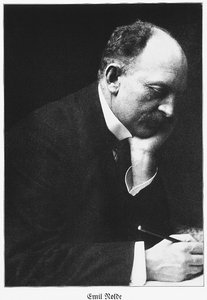
Nolde Emil
1867 - 1956 , Németország
Gyors információk
- Artistic Movement Or Style: Északi expresszionizmus, Die Brücke
- Artists Or Movements Influenced By This Artist: ['Rothko']
- Artists Who Influenced This Artist:
- Van Gogh
- Gauguin
- Date Of Birth: 1867. augusztus 7.
- Date Of Death: 1956. április 15.
- Full Name: Emil Nolde / Hans Emil Hansen
- Nationality: német-dán
- Notable Artworks:
- A Krisztus gúnyolása
- Virágkert
- Tengerpart
- Place Of Birth: Nolde, Schleswig-Holstein
Kapcsolódó cikkek
Beyond Representation: Exploring the Emotional Landscape of Abstract Expressionism
Explore the profound emotional world of Abstract Expressionism with OriginalUniqueArt. Discover key artists like Pollock & Rothko, learn about collecting, and find museum-quality reproductions to inspire your space.
Lyrical Abstraction: The Emotional Power of Color and Form in Modern Art History
Explore the profound emotional depth of Lyrical Abstraction. Discover how masters like Raymond Parker used color and form to bridge Impressionism and Abstract Expressionism. Learn about this pivotal movement through our expert-led art history guide.

A Német Expresszionizmus 10 Mesterműve: Érzelmek és Forradalom a Falakon
Fedezze fel a Német Expresszionizmus 10 legikonikusabb műalkotását! Kirchner, Munch és más német mesterek érzelmi festményeinek történetét bemutatva. Vászonképek, faliképek otthonába – OriginalUniqueArt.com kínálata.

Absztrakt Expresszionizmus Mesterei: 10 alkotás, ami meghatározta a művészetet | OriginalUniqueArt.com
Fedezze fel a 10 legikonikusabb absztrakt expresszionista alkotást! Ismerje meg Jackson Pollock, Mark Rothko és más mesterek történetét. Művészeti reprodukciók prémium minőségben – OriginalUniqueArt.com.

Kandinsky Mesterművei: 25 Lenyűgöző Festmény a Modern Művészet Gyöngyszemeiből | OriginalUniqueArt
Fedezze fel Wassily Kandinsky 25 legikonikusabb művét! Merüljön el az absztrakt művészet világában, ismerje meg a színek és formák lenyűgöző történetét. Prémium minőségű reprodukciók és inspiráló dekorötletek a OriginalUniqueArt.com-on.

