Expressionism
Prophet (Emil Nolde)
Emil Nolde (1867–1956) megalkotta: Prophet. A Expressionism irányzathoz tartozik. Woodcut anyagból készült.
- Woodcut

 Megtekintés

 Kézzel festett olajfestmény
 Küldés
 Megosztás
 Információs lap


 Letöltés
 Hasonló darabok
 X-ray felvétel
 Diavetítés
 Kérdések és válaszok

 Statisztika
Prophet röviden
- Cím
- Prophet
- Művész
- Emil Nolde (1867–1956)
- A művész születési helye
- Nolde, Dánia
- Műszaki adatok
- Woodcut
- Mozgalom
- Expressionism
- Időszak
- Modern
- Téma
- man, face, beard, black and white, portrait, eyes
Mit ábrázol a Prophet?
The Portrait of Prophet by Emil Nolde
In Prophet, the German Expressionist painter Emil Nolde captures a man who exists between the physical and the divine. The subject is a portrait of a man likely intended to represent a prophet, a figure carved from shadow and light. His beard and hairstyle suggest a man from a distant past or a religious leader, a person shaped by the weight of revelation. The face is a landscape of heavy lines and stark contrasts.
The man’s intense gaze pierces through the grain of the medium. A furrowed brow carries the imprint of deep emotion, perhaps a mixture of sadness, concern, or a singular, driving determination. This is not a likeness of a person in repose, but a study of a soul under pressure. The features are simplified, stripped of unnecessary detail to reveal the raw essence of the subject's internal state.
Emil Nolde uses the starkness of the form to emphasize this spiritual tension. Every line serves the gravity of the man's expression. The eyes do not merely look; they witness. The stillness of the portrait holds a quiet, heavy ache.
Composition and Visual Elements
The man's face occupies the center, a heavy presence that fills most of the frame. His head tilts slightly, caught in a moment of quiet anguish or deep contemplation. Around him, the background remains largely empty, a void that forces the eye back to the subject's features. There is no horizon, only the weight of the gaze.
Bold, thick lines carve the anatomy of the man. They define the coarse texture of his beard, the sharp ridge of his nose, and the deep-set hollows of his eyes. These lines are not smooth; they are angular and sharp, cutting through the space to shape his hair and facial structure. The geometry is simplified, reducing the man to essential, striking forms.
The color palette is stripped of all distraction. It exists in a narrow world of black and white, bridged only by subtle shades of grey. This lack of color heightens the dramatic tension, turning the portrait into a study of light and shadow. The starkness leaves no room for anything but the raw emotion of the expression.
Technique and Artistic Medium
The work emerges from the physical resistance of wood. This woodcut print relies on the deliberate act of carving lines into a solid block to define its form. Each stroke is a subtraction, a removal of material that leaves behind a sharp, angular topography. The artist works with wood, ink, and paper to translate a vision into a permanent, tactile presence.
Ink meets the paper through the pressure of the press. This contact creates a grainy texture across the surface, a subtle roughness that speaks of the material's origin. The depth of the shadows and the brightness of the highlights depend entirely on the variation of the lines. Thicker cuts hold more ink to create heavy shadows, while thinner, delicate lines allow the paper to breathe through the composition. The result is a stark, high-contrast landscape of light and dark.
The medium demands a directness of hand. There is no blending here, only the immediate impact of the carved edge. The grain of the wood and the weight of the ink settle into the fibers of the paper, creating a surface that feels both raw and finished. It is a quiet collision of tool and grain.
Prophet nagy felbontású képei
Felfüggesztett szerzői jogok: a művész 1956-ben halt meg.
Emil Nolde, Prophet. Felfüggeszthető jogforrás
A színeket egy digitális szakértő az eredetivel megegyezővé állította, a fájlt finom retusáláson segítve, hűen visszaadva a művész ecsettöredékét.
Töltse le a nagy felbontású fájltProphet kapcsán felmerülő kérdések megválaszolva
Milyen technikával készült a „Prophet”, Emil Nolde alkotása?
Emil Nolde a Woodcut technikát alkalmazta a "Prophet" alkotáshoz. A technika határozza meg az eredeti mű anyagösszetételt.
Mit ábrázol a "Prophet"?
A "Prophet" alkotás tárgyai: man, face, beard, black and white, portrait, eyes.
A „Prophet” művészeti alkotás mentes a szerzői jogoktól?
A „Prophet”, Emil Nolde alkotása közösségi tulajdon – a szerzői jog lejártt státuszú mű. Ez a jogi státusz határozza meg, hogy a mű képmásolata hogyan reproduzható.
Ki készítette a(t): "Prophet"?
A "Prophet" alkotását Emil Nolde készítette. Az ezen az oldalon található információk Emil Nolde eredeti művészetét mutatják be.
Mely művészeti irányba tartozik a „Prophet”, Emil Nolde alkotása?
A „Prophet”, Emil Nolde alkotása a Expressionism irányzat része. Ez az irányzat adja a mű stilisztikai kontextusát.
Miért van az, hogy a "Prophet" szerzői jogi állapota ilyen?
Emil Nolde alkotása, a "Prophet", közösségi tulajdon – a szerzői jog lejártt státuszban van. A szerzői jogi védelem a művész halálától számítod, Emil Nolde pedig 1956 évben hunyt meg.
Milyen közös tulajdonságokat oszt meg a "Prophet" Emil Nolde további alkotásaival?
Emil Nolde munkásságán belül a "Prophet" a Expressionism stílus képét képviseli, a post-impressionism, die brücke, religious themes, expressionist style témakörével összefüggésben.
Hová sorolható a "Prophet" Emil Nolde ismétlődő témái közé?
Emil Nolde dokumentált témái – post-impressionism, die brücke, religious themes, expressionist style – között a „Prophet” különös hangsúlyt fektet man, face, beard, black and white, portrait, eyes-ra.
A művészről: Emil Nolde
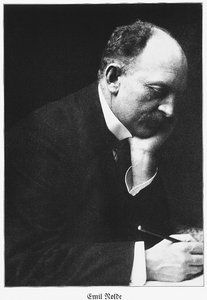
1867–1956, Dánia
Emil Nolde
Emil Nolde életútja és identitása Hans Emil Hansen néven született 1867. augusztus 7-én, s a később Emil Nolde néven világhírűvé váló művész a Schleswig hercegség Nolde nevű kis falas közelében ragadt el. Korai éveket családja vidéki, mezőgazdasági életmódja határozta meg, egy olyan környezetben, ahol a föld munkája és a hagyományos értékek domináltak. Végül azonban elszakadt ezen az útvonalon, és inkább fafaragóként, valamint bútorok díszítőjeként vállalta a munkát.
Emil Nolde további művei
 Sunset
 Sea with Red Sky
 Couple on the beach1903
 Masks1911
Esszék a Prophet körül
 Stone and Sinew: The Sculptural Foundations of Modigliani’s PortraitsExplore the sculptural roots and structural mastery of Modigliani's portraits. Discover the secrets behind his iconic, carved style now.
 Expressionism vs. New Objectivity: Emotion vs. Precision in German ArtMaster the tension between Expressionist emotion and New Objectivity precision. Explore the soul of German modern art now.
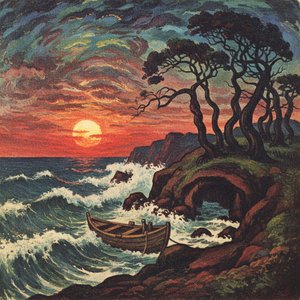 Emile Nolde: A Journey into Expressionist Nature & the Primal SelfExplore the powerful Expressionism of Emile Nolde – a pioneer of emotive landscapes & spiritual themes. Discover his journey, influences, a…