

 Előnézet
 Megosztás
 Megosztás
 Részletek
 Útmutató

 Letöltés
 Hasonló darabok
 X-ray felvétel
 Diavetítés
 Statisztika
Dance around the golden calf


 Tovább olvasom
Giclée / Műnyomat
Múzeumi minőségű giclée vagy vászonnyomat, gyors gyártással és rugalmas finomítási lehetőségekkel. ( Kézzel festett másolat vásárlása Áttérés digitális képre)




P118B $10

P118H $10

P118W $10

P438Z $10

P508JH $12

P508YH $12

P805H $10

P805Z $10

P919BZ $10

P919G $10

P919XJ $10

P959ZH $10

P968JZ $12

W106C $8

W218G $10

W218JH $8

W218Y $10

W307PJ $10

W316G $10

W316PJ $8

W316Y $10

W398PJ $8

W4111J $10

W500HY $15

W500JH $15

W692G $12

W849H $8

W940BG $15

W953PJ $8




Válasszon előre meghatározott méreteink közül, amelyek megfelelnek a műalkotás eredeti arányainak.

Megadhat saját méreteket is egy konkrét kerethez vagy helyszínhez igazítva. Amennyiben a kiválasztott méret nem egyezik az eredeti kép arányokkal, a műalkotást le fogjuk vágni, vagy kiegészítjük a képet tükrözött vagy egyszínű szélekkel. A gyártás megkezdése előtt egy digitális tervezetet küldünk jóváhagyásra.
Kérjük, vegye figyelembe, hogy a képernyőn látható előnézet nem tükrözi a tényleges levágást vagy kiegészítést. Csak a tervezet mutatja pontosan a végső kompozíciót.
Bár az egyedi méretek is elérhetőek, az eredeti arányok megőrzése érdekében azt javasoljuk, hogy válasszon a előre meghatározott listából származó méretet.
Világszerte történő kiszállítás területére mindössze 2 hét alatt, a szokásos 4-5 hét helyett. (26 szeptember)

Ingyenes globális expressz szállítás

Prémium minőségű len vászon

Teljes körű szállítási biztosítás

Vámvisszatérítési Garancia

Tökéletes színarányosság garancia

100 napos visszaküldési garancia (csak gyártási hibás termékek esetén)

100% pénzvisszatérítési garancia

Több darab vásárlásakor kedvezmény
 Az üvegkeretes opció csak 110 cm alatti méretben érhető el

Dance around the golden calf
Giclée / Műnyomat
Reprodukció méretei
-


Összesített ár
$ 80
A Primal Rhythm: The Visceral Energy of Nolde’s Vision
In the heart of the Expressionist movement, few works pulse with as much raw, unbridled vitality as Emil Nolde’s 1910 masterpiece, Dance Around the Golden Calf. This monumental canvas is not merely a depiction of a ritual; it is an immersive experience that pulls the viewer into a swirling vortex of human emotion and movement. At first glance, the eye is captured by the striking, rhythmic arrangement of figures locked in a circular dance, their bodies intertwined in a celebration that feels both ancient and urgently modern. Nolde, a master of capturing the primal essence of life, utilizes a palette dominated by deep, nocturnal blues that contrast sharply against earthy ochres and fiery reds, creating a visual tension that mirrors the spiritual fervor of the scene itself.
The subject matter captures a vibrant, almost hypnotic scene of women dancing before an audience, centered around the imposing presence of a golden calf statue. This composition captures a moment of joyous celebration and communal ritual, yet beneath the surface lies a complex layer of meaning. The golden calf serves as a potent symbol of idolatry—a rejection of monotheistic faith in favor of pagan worship—yet the dancing women represent vitality, fertility, and the celebration of life’s pleasures amidst uncertainty. For the discerning collector, this piece offers a profound sense of depth, inviting a contemplation of the eternal struggle between instinctual joy and societal or religious restraint.
Mastery of Expressionist Technique
Nolde’s distinctive style aligns perfectly with the core tenets of Expressionism, characterized by bold colors, simplified forms, and emotionally charged brushstrokes that represent a deliberate departure from academic realism. Eschewing the polished, restrained finishes of traditional painting, Nolde embraced a thick impasto method, applying oil paint with an energetic, almost aggressive brushstroke. This tactile quality gives the surface of the painting a sculptural dimension, where the texture of the paint itself mimics the muscularity and kinetic energy of the dancers. The technique prioritizes expressive color palettes and textural surfaces, ensuring that every movement on the canvas feels heavy with significance.
The historical context of this work is equally compelling. Created during a period of profound societal anxiety following the shifts in European thought leading into the early 20th century, the painting reflects a broader yearning for primal spirituality and an escape from rational thought. Nolde’s ability to translate these complex historical tensions into a visual language of color and form makes this artwork a cornerstone of modern art history. For interior designers and art lovers alike, a high-quality reproduction of this piece brings a commanding presence to any space, offering a focal point that is both intellectually stimulating and visually arresting.
An Emotional Resonance for the Modern Space
The emotional impact of Dance Around the Golden Calf is nothing short of transformative. Nolde's masterful use of color—particularly the interplay of reds, yellows, and blues—creates a palpable atmosphere of excitement and fervor. The painting evokes feelings of liberation, passion, and even a touch of the uncanny, inviting viewers to immerse themselves in the scene’s emotional core. It is an artwork that demands attention, making it an ideal selection for those seeking to infuse a room with energy, drama, and a sense of historical weight.
Whether placed in a contemporary gallery setting or a sophisticated private study, this reproduction serves as a window into the soul of Expressionism. It provides more than just decoration; it offers a piece of history that continues to resonate with the human desire for connection, rhythm, and the celebration of life's most primal instincts.
A művész életrajza
Early Life and Artistic Beginnings
Emil Nolde, a name synonymous with vibrant expressionism, was born Hans Emil Hansen on August 7, 1867, in the small village of Nolde, nestled within the Schleswig-Holstein region of Germany. His origins were deeply rooted in rural life—a landscape dominated by agriculture and imbued with strong religious traditions. This formative environment would profoundly shape his artistic sensibilities, imbuing his work with a potent blend of earthy realism and fervent spirituality. Initially, his parents envisioned a more conventional path for their son, hoping he’d pursue a career as a woodcarver or furniture maker—a practical trade suited to the region's economy. However, from a young age, Nolde harbored an unyielding passion for art, a desire that stubbornly resisted societal expectations. He began experimenting with drawing and painting in his late teens, honing his skills through self-study and tireless practice. This early dedication laid the groundwork for his future as one of Germany’s most significant artistic figures.Artistic Development and Influences
Nolde's artistic journey was characterized by a relentless pursuit of knowledge and a willingness to absorb influences from diverse sources. He wasn’t confined to a single style or technique; instead, he actively sought out inspiration from various cultures and art movements. Early in his career, Nolde was deeply affected by the works of Vincent van Gogh and Paul Gauguin—artists known for their bold colors, expressive brushwork, and emotional intensity. He also developed a fascination with traditional folk art, particularly the powerful symbolism and raw emotion conveyed through primitive masks and carvings. These encounters ignited within him a desire to break free from academic conventions and explore new ways of representing the world – a drive that would ultimately lead him to co-found Die Brücke. His travels throughout Europe further broadened his artistic horizons, exposing him to different techniques and perspectives. He spent time in Paris, immersing himself in the Impressionist movement, before returning to Germany with a renewed sense of purpose and a desire to forge his own unique style.Die Brücke and Expressionist Breakthrough
In 1905, Nolde played a pivotal role in establishing Die Brücke (The Bridge), a groundbreaking group of German Expressionist artists. This collective sought to challenge the established norms of the art world and express inner emotions through radical experimentation. The members of Die Brücke—including Ernst Ludwig Kirchner, Erich Heckel, and Karl Schmidt-Rottluff—were united by a shared desire to depict the anxieties and alienation of modern life. Nolde’s contribution to Die Brücke was particularly significant; his intense use of color, distorted forms, and emotionally charged subject matter pushed the boundaries of representation. However, despite his close association with the group, Nolde maintained a somewhat independent path within Die Brücke, often diverging in subject matter and stylistic approach. He frequently focused on religious themes—particularly scenes from the Old Testament—while other members explored urban landscapes and portraits. This divergence ultimately led to his departure from Die Brücke in 1908, but it also allowed him to develop a distinctive artistic voice.Key Themes and Artistic Style
Nolde’s oeuvre is characterized by a remarkable consistency of themes and stylistic elements. Recurring motifs include religious scenes—often imbued with a sense of drama and foreboding—landscapes dominated by turbulent seas and brooding skies, and portraits that capture the essence of his subjects' personalities. A particularly striking aspect of Nolde’s work is his fascination with masks—both as physical objects and symbolic representations of primal emotions. He frequently depicted masks in his paintings, using them to evoke a sense of mystery, power, and vulnerability. His artistic style is defined by several key features: bold, vibrant colors used to convey emotional intensity; distorted forms that emphasize expression over realistic representation; and an innovative use of impasto—a technique involving the thick application of paint to create texture and depth. Nolde’s work is not simply a depiction of reality; it's an exploration of the inner world, a powerful expression of his own emotions and experiences.Notable Works and Historical Significance
Throughout his prolific career, Emil Nolde created a vast body of work that continues to captivate audiences today. Some of his most celebrated paintings include *Masks* (1906-1907), a series of haunting images that explore the power of primitive art; *The Mocking of Christ* (1909), a dramatic depiction of the biblical scene that is both emotionally charged and visually arresting; *Autumn Sea* (1908) - demonstrating his expressive landscape painting. His later works, particularly those created during the 1930s and 40s, are characterized by a somber intensity and a profound sense of isolation. Despite facing criticism and censorship during the Nazi regime—his work was deemed “degenerate” and removed from museums—Nolde continued to paint in secret, producing a remarkable body of watercolor paintings that offer a glimpse into his inner world. Emil Nolde’s legacy as one of Germany's most important Expressionist painters is secure. His innovative use of color, expressive brushwork, and emotionally charged subject matter continue to inspire artists and art lovers around the world.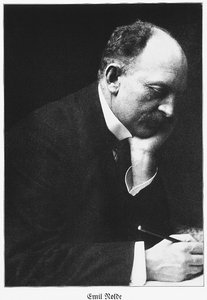
Nolde Emil
1867 - 1956 , Németország
Gyors információk
- Artistic Movement Or Style: Északi expresszionizmus, Die Brücke
- Artists Or Movements Influenced By This Artist: ['Rothko']
- Artists Who Influenced This Artist:
- Van Gogh
- Gauguin
- Date Of Birth: 1867. augusztus 7.
- Date Of Death: 1956. április 15.
- Full Name: Emil Nolde / Hans Emil Hansen
- Nationality: német-dán
- Notable Artworks:
- A Krisztus gúnyolása
- Virágkert
- Tengerpart
- Place Of Birth: Nolde, Schleswig-Holstein
Kapcsolódó cikkek

Oil on Canvas: A Historical & Technical Exploration of a Timeless Artistic Medium
Explore the rich history & enduring techniques of oil painting on canvas. Discover the science behind its longevity, conservation practices, and contemporary relevance. Expert insights for art enthusiasts.

The Enduring Power of Painting: A Historical & Contemporary Exploration of Form and Emotion
Explore the rich history & enduring techniques of oil painting with OriginalUniqueArt. Discover masterpieces, learn about art collecting, and find authentic handmade reproductions crafted by skilled artists.

The Enduring Legacy of Oil on Canvas: Technique, History & Aesthetic Impact
Explore the rich history & techniques of oil painting – from Renaissance masters to Impressionism. Discover pigments, layering methods, and why this timeless medium endures. Expert insights for artists & art enthusiasts.

The Enduring Muse: Women as Subject & Symbol in Art History
Explore the rich history of women in art – from iconic muses to groundbreaking artists. Discover feminist movements, global perspectives & reclaim female narratives with OriginalUniqueArt.

The Soul of Impressionism: Why Oil on Canvas Captures Eternal Light and Timeless Emotion
Discover the enchanting alchemy of Impressionism. Explore how the mastery of oil on canvas, through glazing and impasto, captures eternal light and emotion. Perfect for lovers of Monet and Van Gogh seeking the profound depth of hand-painted fine art.

