

 Megtekintés
 Küldés
 Megosztás
 Részletek

 Letöltés
 Hasonló darabok
 X-ray felvétel
 Diavetítés
 Statisztika
Anna Wieds Garden

 Összes részlet megjelenítése
Vásároljon nagy felbontású, javított digitális képet, amely minőségében messze felülmúlja az online előnézetet.
Minden fájlt szakembereink a legmodernebb eszközök és precíz, kézi retusálás segítségével készítenek el aprólékosan. Gondoskodunk arról, hogy minden kép kivételes tisztasággal, pontos színhelyességgel és részletgazdag finomsággal rendelkezzen.
A végleges fájl 72 órán belül e-mailben megérkezik, professzionális, szerkesztői és nyomtatási környezetbe optimalizálva az azonnali használathoz. Ez ugyanaz a minőség, amelyben a legmeghatározóbb tervezőstúdiók, kiadók és galériák is megbízhatnak.
Digitális kép
Töltsön le nagy felbontású fájlt személyes kiállításokhoz, nyomtatáshoz és kreatív projektekhez. ( Áttérés Nyomtatványra Kézzel festett másolat rendelése)
Minden digitális kép rendeléséhez tartozó extrák
Szakértői digitális kézbesítés, garantáltan
Amikor a OriginalUniqueArt.com szolgáltatást választja, nem csupán egy képet kap – professzionálisan felmagasított digitális műalkotást kap, amely precizitással készült, és amelyet megelégsedési gwarancia tesz biztoslássá. Az alábbiakban automatikusan minden benne 】

Gyors e-mail teslimítés
A nagy felbontású digitális képmásolatát a megrendelést követő 72 órán belül e-mailben elküldjük Önnek – azonnal használható formátumban.

MI-alapú digitális fejlesztésű fájl
Műve professzionális módon kerül optimalizálásra fejlett mesterséges intelligencia eszközök és manuális szerkesztés segítségével, biztosítva a maximális részletességet, tisztaságot és színpontosságot.

Örök életű ingyenes újradelivery
Véletlenül törölted vagy elvesztetted a fájlodat? Ne aggódj – bármikor ingyen újra megküldjük neked.

Nincs importköltség – soha
Élvezze műalkotásait azonnal, vám, illeték vagy szállítási költség nélkül – a digitális letöltések mindig adamentesek.

Színpontosság garantálása
Professzionális eszközök és színkezelés segítségével garantáljuk, hogy digitális képe a lehető legpontosabban tükrözze az eredeti színeket.

100 napos elégedettségi garancia
Ha nemມີ elégedett a digitális képével, 100 napon belül felülvizsgáljuk vagy 100% visszatérítjük az amountot – kérdés बिना.

100% Pénzvisszatérítési garancia
Nem tetszett a vásárlás? 100 napon belül teljes visszatérítést garantálunk a digitális fájl megvételétől számítva – kérdés बिना.

Tömegrendelési kedvezmények
Vásároljon 3 képet, spóroljon 10%-et - Vásároljon 5-öt, spóroljon 15%-et - Vásároljon 10+ képet, spóroljon 20%-at. Kiváló kreatív projektekhez, galériákhoz és ügynökségekhez.
The Expressionist Style
Expressionism, as described by art critic and historian Wilhelm Worringer in 1911, emphasizes the artist's inner emotions and experiences over realistic depictions. This movement is characterized by bold colors, distorted forms, and exaggerated expressions. Nolde's Anna Wieds Garden embodies these principles, creating a visually striking and emotionally charged garden scene.Detailed Description of the Garden Scene
The painting features a colorful garden with various flowers in different hues. The main focus is on the pink flowers, which are scattered throughout the picture. Yellow flowers also add to the vibrant palette, while trees and bushes provide depth and dimension to the image. A bird flying above the garden enhances the natural atmosphere of the painting. The overall composition is visually appealing and captures the beauty of a lush garden setting.Key Elements
- Color Palette: Vibrant colors such as pink, yellow, and green dominate the scene. - Floral Focus: Pink flowers are the central element, with yellow flowers adding contrast. - Natural Elements: Trees, bushes, and a bird contribute to the natural ambiance. - Composition: The arrangement of elements creates a visually appealing and balanced image.Conclusion
Anna Wieds Garden by Emile Nolde is a quintessential example of Expressionist art, showcasing the artist's ability to capture the essence of nature through bold colors and distorted forms. This painting is a testament to Nolde's unique style and his contribution to the Expressionist movement. For more information on Expressionism and Emile Nolde's works, visit The Expressionism Art Movement at OriginalUniqueArt. To explore other paintings by Emile Nolde, see Painting by 'Emile Nolde' | Emile Nolde: Anna Wieds Garden and Painting by 'Emile Nolde' | Emile Nolde: Flower Garden (Girl and Washing).A művész életrajza
Early Life and Artistic Beginnings
Emil Nolde, a name synonymous with vibrant expressionism, was born Hans Emil Hansen on August 7, 1867, in the small village of Nolde, nestled within the Schleswig-Holstein region of Germany. His origins were deeply rooted in rural life—a landscape dominated by agriculture and imbued with strong religious traditions. This formative environment would profoundly shape his artistic sensibilities, imbuing his work with a potent blend of earthy realism and fervent spirituality. Initially, his parents envisioned a more conventional path for their son, hoping he’d pursue a career as a woodcarver or furniture maker—a practical trade suited to the region's economy. However, from a young age, Nolde harbored an unyielding passion for art, a desire that stubbornly resisted societal expectations. He began experimenting with drawing and painting in his late teens, honing his skills through self-study and tireless practice. This early dedication laid the groundwork for his future as one of Germany’s most significant artistic figures.Artistic Development and Influences
Nolde's artistic journey was characterized by a relentless pursuit of knowledge and a willingness to absorb influences from diverse sources. He wasn’t confined to a single style or technique; instead, he actively sought out inspiration from various cultures and art movements. Early in his career, Nolde was deeply affected by the works of Vincent van Gogh and Paul Gauguin—artists known for their bold colors, expressive brushwork, and emotional intensity. He also developed a fascination with traditional folk art, particularly the powerful symbolism and raw emotion conveyed through primitive masks and carvings. These encounters ignited within him a desire to break free from academic conventions and explore new ways of representing the world – a drive that would ultimately lead him to co-found Die Brücke. His travels throughout Europe further broadened his artistic horizons, exposing him to different techniques and perspectives. He spent time in Paris, immersing himself in the Impressionist movement, before returning to Germany with a renewed sense of purpose and a desire to forge his own unique style.Die Brücke and Expressionist Breakthrough
In 1905, Nolde played a pivotal role in establishing Die Brücke (The Bridge), a groundbreaking group of German Expressionist artists. This collective sought to challenge the established norms of the art world and express inner emotions through radical experimentation. The members of Die Brücke—including Ernst Ludwig Kirchner, Erich Heckel, and Karl Schmidt-Rottluff—were united by a shared desire to depict the anxieties and alienation of modern life. Nolde’s contribution to Die Brücke was particularly significant; his intense use of color, distorted forms, and emotionally charged subject matter pushed the boundaries of representation. However, despite his close association with the group, Nolde maintained a somewhat independent path within Die Brücke, often diverging in subject matter and stylistic approach. He frequently focused on religious themes—particularly scenes from the Old Testament—while other members explored urban landscapes and portraits. This divergence ultimately led to his departure from Die Brücke in 1908, but it also allowed him to develop a distinctive artistic voice.Key Themes and Artistic Style
Nolde’s oeuvre is characterized by a remarkable consistency of themes and stylistic elements. Recurring motifs include religious scenes—often imbued with a sense of drama and foreboding—landscapes dominated by turbulent seas and brooding skies, and portraits that capture the essence of his subjects' personalities. A particularly striking aspect of Nolde’s work is his fascination with masks—both as physical objects and symbolic representations of primal emotions. He frequently depicted masks in his paintings, using them to evoke a sense of mystery, power, and vulnerability. His artistic style is defined by several key features: bold, vibrant colors used to convey emotional intensity; distorted forms that emphasize expression over realistic representation; and an innovative use of impasto—a technique involving the thick application of paint to create texture and depth. Nolde’s work is not simply a depiction of reality; it's an exploration of the inner world, a powerful expression of his own emotions and experiences.Notable Works and Historical Significance
Throughout his prolific career, Emil Nolde created a vast body of work that continues to captivate audiences today. Some of his most celebrated paintings include *Masks* (1906-1907), a series of haunting images that explore the power of primitive art; *The Mocking of Christ* (1909), a dramatic depiction of the biblical scene that is both emotionally charged and visually arresting; *Autumn Sea* (1908) - demonstrating his expressive landscape painting. His later works, particularly those created during the 1930s and 40s, are characterized by a somber intensity and a profound sense of isolation. Despite facing criticism and censorship during the Nazi regime—his work was deemed “degenerate” and removed from museums—Nolde continued to paint in secret, producing a remarkable body of watercolor paintings that offer a glimpse into his inner world. Emil Nolde’s legacy as one of Germany's most important Expressionist painters is secure. His innovative use of color, expressive brushwork, and emotionally charged subject matter continue to inspire artists and art lovers around the world.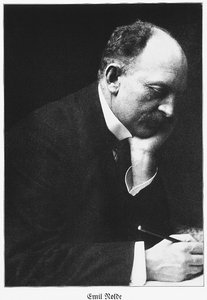
Nolde Emil
1867 - 1956 , Németország
Érdekességek
- Artistic Movement Or Style: Északi expresszionizmus, Die Brücke
- Artists Or Movements Influenced By This Artist: ['Rothko']
- Artists Who Influenced This Artist:
- Van Gogh
- Gauguin
- Date Of Birth: 1867. augusztus 7.
- Date Of Death: 1956. április 15.
- Full Name: Emil Nolde / Hans Emil Hansen
- Nationality: német-dán
- Notable Artworks:
- A Krisztus gúnyolása
- Virágkert
- Tengerpart
- Place Of Birth: Nolde, Schleswig-Holstein