Előnézet
 Megosztás
 Megosztás
 Részletek
 Útmutató

 Letöltés
 Hasonló darabok
 X-ray felvétel
 Diavetítés
 Statisztika
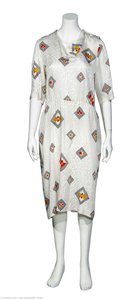
Evening ensemble


 Tovább olvasom
Az ezen az oldalon megjelenített műalkotások szerzői jogi védelem alatt állnak, ami azt jelenti, hogy törvényileg nem készíthetünk és nem adhatunk el belőlük pontos másolatokat. Ez a védelem olyan nemzetközi megállapodások alapján érvényesül, mint például a Berni Egyezmény és a nemzeti törvények által, beleértve azokat is, amelyeket meghatározott Az USA szerzői jogi törvénye – 17. cím.
Mint tiszteletes és törvényes alternatívát, olyan egyedi, kézzel festett alkotásokat kínálunk, amelyek az eredetiből merítnek inspirációt. Tapasztalt és professzionális művészeink alaposan tanulmányozzák az eredeti stílusát, hangulatát és művészeti esszenciáját, hogy egy olyan új, egyedi alkotást hozzunk létre, amely ugyanazt az érzést kelti – miközben önálló, eredeti alkotásként létezik.
Ez a módszer teljes mértékben megfelel a szerzői jogi szabályozásnak, mivel nem tartalmazza a védett műalkotás másolását vagy duplikálását. Ehelyett ez egy kreatív újinterpretáció – egy új festmény, amely az eredetivel való összefüggései miatt hatással van rá, de nem az az.
Kézzel készített olajfestmény reprodukció
Kézzel festett olajvastú vászon, az Ön által választott méretben és keretben, művészeink készítik meglévőre. ( Váltás nyomtatványra Áttérés digitális képre)




P118B Ft10

P118H Ft10

P118W Ft10

P438Z Ft10

P508JH Ft12

P508YH Ft12

P805H Ft10

P805Z Ft10

P919BZ Ft10

P919G Ft10

P919XJ Ft10

P959ZH Ft10

P968JZ Ft12

W106C Ft8

W218G Ft10

W218JH Ft8

W218Y Ft10

W307PJ Ft10

W316G Ft10

W316PJ Ft8

W316Y Ft10

W398PJ Ft8

W4111J Ft10

W500HY Ft15

W500JH Ft15

W692G Ft12

W849H Ft8

W940BG Ft15

W953PJ Ft8




Válasszon előre meghatározott méreteink közül, amelyek megfelelnek a műalkotás eredeti arányainak.

Írja be a kívánt szélességet és magasságot, hogy illeszkedjen a keretéhez vagy a falához. Mivel ez kézzel festett alkotás, egy eltérő formájú méret esetén a művész akár festhet is valamivel többet a kép körül, vagy korolathat is belőle — az Ön döntésének megfelelően. A festés megkezdése előtt küldünk egy digitális tervezetet jóváhagyásra. Az oldalon látható kép nem tartalmazza a végeredményt — csak a tervezet mutatja meg a valódi eredményt.
A rendelést követően a OriginalUniqueArt.com csapata e-mailt küld az ügyfélnek az instrukciókért, és biztosít egy előnézeti képet (mockup).
Világszerte elérhető szállítás () 3-4 hét alatt a szokásos 5 hét helyett. (21 október). A minőség nem kérdőjelezhető.

Ingyenes globális expressz szállítás

Prémium minőségű len vászon

Teljes körű szállítási biztosítás

Vámvisszatérítési Garancia

Tökéletes színarányosság garancia

100 napos visszaküldési garancia (csak gyártási hibás termékek esetén)

100% pénzvisszatérítési garancia

Több darab vásárlásakor kedvezmény
 Az üvegkeretes opció csak 110 cm alatti méretben érhető el

Evening ensemble
Reprodukciós technika
Reprodukció méretei
-


Összesített ár
Ft 94790
A Surrealist Echo: Elsa Schiaparelli’s “Evening Ensemble”
Elsa Schiaparelli wasn't merely a fashion designer; she was a provocateur, a visual poet, and a key figure in the burgeoning world of surrealism. Her 1937 creation, "Evening Ensemble," embodies this spirit with audacious elegance and a deliberate rejection of conventional beauty standards. This isn’t simply a gown and jacket; it's a carefully constructed dialogue between art, fashion, and the subconscious – a testament to Schiaparelli’s radical vision that continues to resonate today.
The piece immediately commands attention with its dramatic contrast. A sumptuous, deep purple velvet dress, exquisitely draped and skimming the figure, provides a foundation of luxurious formality. Yet, this richness is dramatically offset by the jacket – a flamboyant explosion of pink foil embroidery, padded and oversized, creating an almost cartoonish effect. The embroidery itself isn’t merely decorative; it's a deliberate distortion of traditional motifs, featuring stylized flowers, geometric shapes, and even a playful nod to the human form with exaggerated sleeves. The choice of pink foil is particularly striking – a vibrant, artificial hue that feels both celebratory and slightly unsettling, perfectly aligning with Schiaparelli’s surrealist aesthetic.
Craftsmanship and Materials: A Symphony of Texture
The execution of “Evening Ensemble” speaks volumes about Schiaparelli's meticulous approach to design. The velvet itself is a testament to the finest craftsmanship, its deep purple hue achieved through careful dyeing techniques – a rarity in the 1930s. Beyond the velvet, the jacket showcases an extraordinary level of detail. The foil embroidery isn’t simply applied; it’s painstakingly stitched by hand, creating a tactile and visually arresting surface. Notice the subtle variations in texture—the raised relief of the padded elements, the delicate sheen of the foil, and the precise placement of each individual stitch. The buttons, crafted from polished metal and shaped like stylized black swans, are another example of Schiaparelli’s attention to detail – a small but significant element that elevates the entire garment.
- Velvet: Deep purple, high-quality fabric demonstrating exceptional drape and texture.
- Foil Embroidery: Hand-stitched pink foil creating an exaggerated, almost sculptural effect.
- Buttons: Polished metal shaped like stylized black swans – a subtle yet impactful detail.
Historical Context & Surrealist Influence
To fully appreciate “Evening Ensemble,” it’s crucial to understand the context in which it was created. The 1930s were a period of significant social and artistic upheaval, marked by the rise of surrealism – a movement that sought to liberate art from the constraints of reason and logic. Schiaparelli embraced this spirit wholeheartedly, collaborating with artists like Salvador Dalí and Jean Cocteau on projects that blurred the boundaries between fashion, art, and design. “Evening Ensemble” is a direct product of this collaboration, reflecting the influence of surrealist principles such as juxtaposition, irony, and the exploration of the subconscious.
The piece can be seen as a deliberate challenge to traditional notions of femininity and elegance. The oversized jacket, the unconventional color palette, and the playful distortions of form all contribute to a sense of irreverence and rebellion. It’s a statement that prioritizes artistic expression over conventional beauty standards – a radical concept for the time.
Symbolism & Emotional Resonance
Beyond its aesthetic qualities, “Evening Ensemble” is rich in symbolism. The pink foil embroidery can be interpreted as a celebration of joy and extravagance, while the oversized form suggests a desire to break free from societal constraints. The black swan buttons, with their elegant yet slightly unsettling appearance, represent both beauty and danger – a potent symbol of Schiaparelli’s complex and multifaceted personality.
Ultimately, “Evening Ensemble” evokes a sense of wonder and intrigue. It's a garment that invites the viewer to engage in a dialogue—to question assumptions, explore hidden meanings, and embrace the power of imagination. It remains a powerful reminder of Elsa Schiaparelli’s legacy as one of the most innovative and influential designers of the 20th century – a true visionary who dared to challenge convention and redefine the boundaries of fashion.
Gyakran Ismételt Kérdések
Milyen technikával és milyen stílusban készült a "Evening ensemble"?
A "Evening ensemble" alkotásban a Acrylic On Canvas technika találkozik a Surrealism irányzattal.
Milyen méretet és vízszintes/függőleges elrendezést javasolnak a „Evening ensemble”, Schiaparelli alkotása nyomtatványához?
A „Evening ensemble”, Schiaparelli alkotása egyik nyomatásához a Large méretű, Portrait elrendezésű nyomtatást javasoljuk.
Mely művész és mely stílus áll a "Evening ensemble" mögött?
Schiaparelli a Surrealism irányzatban alkototta meg a "Evening ensemble" című művét.
A művész életrajza
A Rebel Spirit in Haute Couture: The World of Elsa Schiaparelli
Elsa Luisa Maria Schiaparelli, a name that will forever be linked to audacious style and surrealist innovation, fundamentally reshaped the landscape of 20th-century fashion. Born into an aristocratic Roman family in 1890, her life was anything but conventional—a deliberate departure from the expected paths laid out for women of her social standing. Unlike many of her contemporaries who embraced established societal norms and sought acceptance within traditional structures, Schiaparelli possessed a fiercely independent spirit, fueled by intellectual curiosity and an unyielding desire to challenge conventions. Her father, Celestino Schiaparelli, a distinguished scholar specializing in Islamic studies and Sanskrit, cultivated an environment rich with learning and philosophical inquiry—a stark contrast to the often restrictive atmosphere of aristocratic life. Equally significant was her uncle, Giovanni Schiaparelli – a renowned astronomer celebrated for his groundbreaking observations of Martian “canals” – whose fascination with the cosmos and the unknown ignited within Elsa a lifelong curiosity about the unconventional and the extraordinary. This unique upbringing, steeped in both intellectual rigor and cosmic wonder, instilled in her a profound love for art, mythology, and esoteric thought—elements that would profoundly shape her distinctive aesthetic vision and inform her revolutionary approach to fashion design. Early rebellious tendencies manifested not only in defying societal expectations but also in a series of personal challenges, including a tumultuous marriage to the enigmatic Wilhelm de Kerlor, a self-proclaimed psychic whose influence further propelled her into a world of spiritualism and occult practices—themes that subtly yet powerfully permeated her later designs.From Knitwear to Surrealist Statements: The Rise of a Fashion House
Schiaparelli’s initial foray into the world of fashion was driven by a pragmatic desire for creative expression, born from a dissatisfaction with the prevailing styles of the era. She began her career in the late 1920s experimenting primarily with knitwear—a field she recognized as underserved by designers seeking comfortable yet sophisticated clothing. Recognizing a gap in the market, Schiaparelli established her own fashion house in Paris in 1927, quickly expanding beyond simple knitwear to encompass a full range of haute couture designs. However, it was during the 1930s that Schiaparelli truly came into her own, forging groundbreaking collaborations with leading artists of the Surrealist movement—a pivotal moment that would define her legacy and set her apart from her contemporaries. This period marked a radical departure from the prevailing elegance of Parisian fashion, characterized by flowing silhouettes and understated glamour. The Surrealists, fascinated by dreams, irrationality, and the subconscious, offered Schiaparelli a fertile ground for experimentation. Her designs were deliberately provocative, playful, and often unsettling—challenging conventional notions of beauty and embracing the absurd. She didn’t simply create clothes; she crafted visual narratives that invited interpretation and sparked conversation. Her partnerships with artists like Salvador Dalí and Jean Cocteau proved particularly fruitful, resulting in iconic creations that continue to captivate audiences today.Shocking Pink and Trompe-l'œil: Defining a Unique Aesthetic
Schiaparelli’s designs were instantly recognizable for their bold use of color, most notably her signature “shocking pink”—a vibrant, almost aggressive hue that defied the muted palettes favored by many of her contemporaries. This audacious choice became emblematic of her rebellious spirit and her determination to challenge established norms—a statement of individuality in a world increasingly dominated by conformity. Beyond color, Schiaparelli masterfully employed *trompe-l'œil* effects—creating illusions that blurred the boundaries between art and fashion. She incorporated unexpected materials into her designs – leather, metal, even newspaper print – pushing the limits of textile innovation and demonstrating a willingness to experiment with unconventional forms. Her collections often drew inspiration from mythology, nature, and everyday objects, transforming them into wearable works of art. The Circus Collection of 1938 stands as a particularly striking example of this playful approach, featuring theatrical costumes adorned with whimsical motifs and exaggerated silhouettes—a celebration of fantasy and spectacle. The use of *trompe-l'œil* wasn’t merely decorative; it was integral to her artistic vision, adding layers of meaning and complexity to each garment. An Evening Coat from 1936 showcased her daring use of leather in high fashion, demonstrating her ability to seamlessly blend traditional couture techniques with avant-garde concepts.Key Collaborations and Lasting Influence
Schiaparelli’s most celebrated collaborations cemented her place as a true visionary. Her partnership with Salvador Dalí produced some of the most iconic images in fashion history, including the Lobster Dress (1937), featuring a vibrant lobster painted onto silk—a surrealist masterpiece that continues to fascinate and inspire. The Shoe Hat (1938)—a headpiece shaped like a high-heeled shoe—is another testament to their creative synergy, demonstrating a playful subversion of traditional fashion norms. Jean Cocteau’s contributions, particularly his intricate embroidery designs, added further depth and artistry to Schiaparelli's collections. Beyond these specific collaborations, Schiaparelli’s influence extended throughout the fashion industry. She challenged conventional notions of beauty, embraced experimentation, and paved the way for future designers to incorporate artistic elements into their work. Her legacy is evident in the continued appreciation of her designs and the enduring fascination with her unique aesthetic—a testament to her pioneering spirit and her unwavering commitment to creative expression. Despite facing financial difficulties and a decline in popularity after World War II, Schiaparelli’s influence remains undeniable, solidifying her place as one of the most revolutionary figures in fashion history.Major Achievements
- 1927: Establishes her own fashion house in Paris.
- 1930s: Forges groundbreaking collaborations with Surrealist artists like Salvador Dalí and Jean Cocteau.
- 1937: Creates the iconic Lobster Dress, a collaboration with Salvador Dalí.
- 1938: Designs the Shoe Hat, another iconic creation by Schiaparelli and Dalí.
- 1954: Closes her fashion house after decades of success.

Schiaparelli
1890 - 1973 , Olaszország
Gyors információk
- Artistic Movement Or Style: Surrealista divat
- Artists Or Movements Influenced By This Artist: ['Korszerű tervezők']
- Date Of Birth: 1890
- Date Of Death: 1973
- Full Name: Elsa Luisa Maria Schiaparelli
- Nationality: Olasz
- Notable Artworks:
- Lobster ruházat
- Búbomszínű kalap
- Este kabát
- Place Of Birth: Róma, Olaszország
Kapcsolódó cikkek

Cristóbal Balenciaga: Deconstructing Haute Couture's Architectural Legacy
Explore the revolutionary world of Cristóbal Balenciaga, the 'couturier's couturier'. Discover his architectural designs, lasting influence on haute couture, and guide to collecting rare pieces. A connoisseur’s resource.
Gianfranco Ferré: Deconstructing Haute Couture – A Legacy of Architectural Form
Explore the revolutionary world of Gianfranco Ferré, 'the architect of fashion.' Discover his architectural approach to haute couture, iconic Dior designs, and lasting influence on luxury style. A deep dive for collectors & enthusiasts.
Style on Canvas: The Timeless Allure of Fashion Illustration Artworks
Discover the exquisite world of fashion illustration art. From Art Deco elegance to bespoke oil reproductions, explore how timeless sartorial beauty transforms luxury interiors through masterfully crafted canvas works and curated historical masterpieces.
Draped Narratives: Fashion as Symbol & Subject in Historical Art
Explore the fascinating history of fashion as a symbol of power & status in art! Discover masterpieces from Gainsborough to Tissot and learn how clothing shaped societal narratives. Find museum-quality reproductions at OriginalUniqueArt.
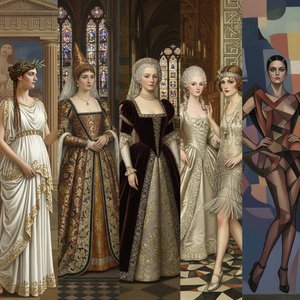
Style Through the Ages: Iconic Artworks That Defined the Evolution of Fashion Design
Explore the breathtaking intersection of fine art and high fashion. Discover how iconic masterpieces from Art Deco to Impressionism have shaped the world of luxury couture and timeless design in this curated visual journey.