 Megtekintés
 Küldés
 Megosztás
 Részletek
 Útmutató

 Letöltés
 Hasonló darabok
 X-ray felvétel
 Diavetítés
 Kérdések és válaszok
 Statisztika
Peaceable Kingdom (22)


 Összes részlet megjelenítése
Giclée / Műnyomat
Múzeumi minőségű giclée vagy vászonnyomat, gyors gyártással és rugalmas finomítási lehetőségekkel. ( Kézzel festett másolat rendelése Áttérés digitális képre)




P118B Ft10

P118H Ft10

P118W Ft10

P438Z Ft10

P508JH Ft12

P508YH Ft12

P805H Ft10

P805Z Ft10

P919BZ Ft10

P919G Ft10

P919XJ Ft10

P959ZH Ft10

P968JZ Ft12

W106C Ft8

W218G Ft10

W218JH Ft8

W218Y Ft10

W307PJ Ft10

W316G Ft10

W316PJ Ft8

W316Y Ft10

W398PJ Ft8

W4111J Ft10

W500HY Ft15

W500JH Ft15

W692G Ft12

W849H Ft8

W940BG Ft15

W953PJ Ft8




Válasszon előre meghatározott méreteink közül, amelyek megfelelnek a műalkotás eredeti arányainak.

Írja be a keretének vagy a falának megfelelő szélességet és magasságot. A nyomatot csak le lehet vágni, soha nem tehető nagyobbá, mint az eredeti kép, így egy eltérő alakú méretnél a kép egy része elveszik. Mielőtt bármit kinyatintanánk, küldünk egy digitális próbamodellt jóváhagyásra. Az oldalon látható kép nem tartalmazza a valós levágást — ezt csak a próbamodell mutatja meg.
Világszerte történő kiszállítás területére mindössze 2 hét alatt, a szokásos 4-5 hét helyett. (11 november)

Ingyenes globális expressz szállítás

Prémium minőségű len vászon

Teljes körű szállítási biztosítás

Vámvisszatérítési Garancia

Hiteles színarányosság garancia

100 napos visszaküldési lehetőség (csak hibás termékek esetén)

100% pénzvisszatérítési garancia

Több darab vásárlásakor kedvezmény
 Az üvegkeretes opció csak 110 cm alatti méretben érhető el

Peaceable Kingdom (22)
Giclée / Műnyomat
Reprodukció mérete
-


Összesített ár
Ft 26473
Peaceable Kingdom (22): A Quaker Vision of Harmony
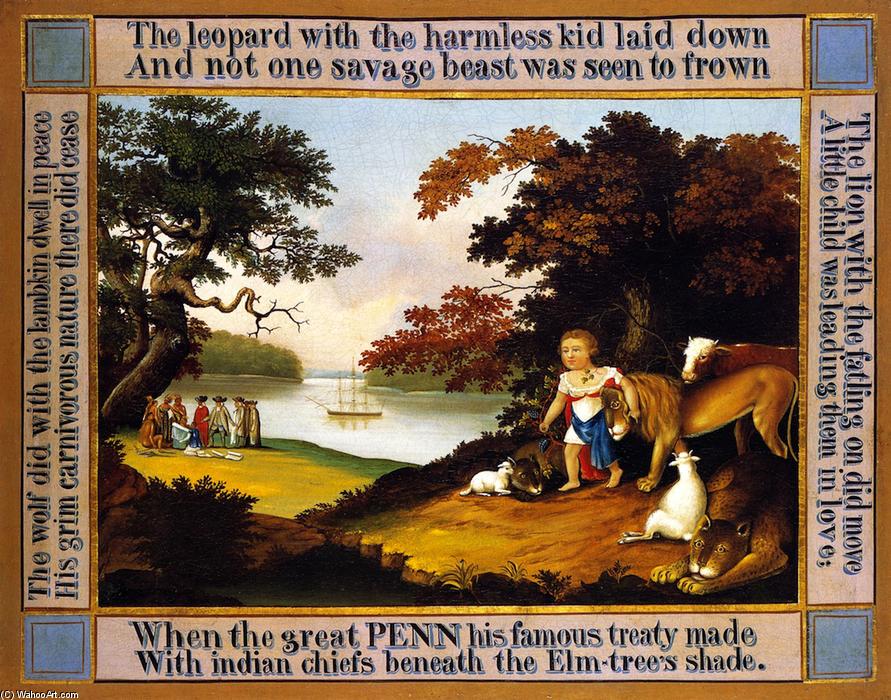
Edward Hicks’ “Peaceable Kingdom (22)” transcends mere visual beauty; it embodies a profound philosophical statement rooted in the Quaker faith and meticulously executed with masterful artistic technique. Created in 1826, this monumental oil painting resides at the Philadelphia Museum of Art, serving as an enduring emblem of American folk art and its contribution to shaping national identity.The Artist and His Vision
Edward Hicks (1780-1849), born in Attleboro, Pennsylvania, was a self-taught Quaker minister whose unwavering belief in “the inner light” profoundly influenced his artistic endeavors. Initially apprenticed as a coach maker, Hicks honed his decorative painting skills—a craft considered somewhat unconventional for the time—allowing him to express his spiritual convictions through captivating imagery. His Quaker faith instilled within him a deep appreciation for simplicity and peace, values that permeate every brushstroke of his celebrated “Peaceable Kingdom” series. This particular canvas captures Hicks’s distinctive style: a blend of realism infused with symbolic representation intended to convey moral lessons about coexistence.A Detailed Examination of Composition and Technique
The painting depicts a serene tableau featuring a young boy standing before two lions and a tiger, accompanied by numerous figures engaged in various activities—a meeting place for Native Americans and settlers—and culminating in a sailboat gliding across the horizon beneath a dominant elm tree. Hicks’s meticulous attention to detail is evident throughout; the artist skillfully employs oil paint on canvas, layering glazes to achieve rich textures that bring forth an astonishing level of realism. Lighting is soft and diffused, guiding the viewer's eye through the complex spatial relationships established within the scene. Perspective leans toward a flattened style characteristic of the Dutch Golden Age, prioritizing clarity and conveying a sense of grandeur. The color palette—dominated by warm earth tones—accentuates blues and greens in the landscape, creating an atmosphere of tranquility and unity. Precise lines delineate forms, fostering order amidst the multitude of elements depicted. Organic shapes reflect the natural world at the heart of Hicks’s artistic vision.Symbolism: Lions, Tigers, and Quaker Beliefs
“Peaceable Kingdom (22)” is laden with symbolism reflecting Hicks's core Quaker convictions. The lions and tigers—typically symbols of predatory aggression—are portrayed as gentle creatures coexisting peacefully with humans, mirroring Isaiah 11:6’s prophetic vision of harmony between animals and humankind. This deliberate juxtaposition underscores the artist’s desire for universal reconciliation and embodies the Quaker belief in divine compassion. Furthermore, the inclusion of Native Americans negotiating treaties symbolizes a commitment to justice and understanding across cultures—a crucial element within Hicks's broader philosophical framework. The elm tree represents steadfastness and spiritual resilience, anchoring the scene in a landscape imbued with symbolic significance.Legacy and Enduring Inspiration
“Peaceable Kingdom (22)” continues to inspire audiences worldwide with its timeless message of peace and unity. As a handmade oil painting reproduction, it offers an opportunity to experience this iconic artwork firsthand—a testament to Edward Hicks’s artistic genius and his enduring contribution to American art history. Its serene beauty and profound symbolism resonate deeply within the viewer, prompting contemplation on themes of compassion, harmony, and the importance of fostering dialogue between diverse perspectives.Kérdések és válaszok
A "Peaceable Kingdom (22)" egy híres Folk Art művészeti alkotás?
A Folk Art irányzatban a "Peaceable Kingdom (22)" alkotásnak Iconic népszerűségi szintje van.
Milyen nyomtatási méretet és vízszességet javasol a „Peaceable Kingdom (22)”, Edward Hicks alkotása?
Large méret, Landscape elrendezés: ez a(z) „Peaceable Kingdom (22)”, Edward Hicks alkotása alkotáshoz javasolt nyomtatási beállítás.
Hogyan találkoznak a korszak és a mű stílusa „Peaceable Kingdom (22)”, Edward Hicks alkotása alkotásban?
A „Peaceable Kingdom (22)”, Edward Hicks alkotása a Folk Art irányzat alkotása, mely alkotójának 19. század korszakából származik.
A művész életrajza
A Life Rooted in Faith and Vision
Edward Hicks, born April 4th, 1780, in the tranquil landscape of Attleboro (now Langhorne), Bucks County, Pennsylvania, was a figure uniquely positioned at the intersection of religious conviction and artistic expression. His story is not simply that of a self-taught painter, but of a dedicated Quaker minister whose spiritual journey profoundly shaped his distinctive visual language. Though born to Anglican parents, young Edward’s life took a pivotal turn when he came under the care of Matron Elizabeth Twining, a devout Quaker who instilled in him the core tenets of this faith – simplicity, peace, and an unwavering belief in the “inner light.” This early exposure would become the bedrock upon which his artistic vision was built. From the age of thirteen, Hicks apprenticed with coach makers William and Henry Tomlinson, mastering the techniques of decorative painting that would initially sustain him. However, even as he honed his skills in rendering ornate designs on carriages, a deeper calling resonated within him, one that would ultimately lead him down a path less traveled – a path where faith and artistry converged. By 1803, Hicks had fully embraced the Society of Friends, marrying Sarah Worstall and embarking on a life of itinerant preaching throughout Philadelphia, all while continuing to support his growing family through his painting skills.The Evolving Canvas: From Coachwork to Spiritual Landscapes
Hicks’s artistic development was far from conventional. He wasn't formally trained in the academic traditions of the time; instead, he cultivated a distinctly American folk art style born from observation, necessity, and deeply held beliefs. Initially, his paintings served practical purposes – house painting, coach decoration, tavern signs, and even decorative work on furniture and farm equipment. These early commissions provided financial stability but often conflicted with the Quaker emphasis on plainness and eschewal of worldly vanities. A period of hardship in 1815 saw Hicks briefly abandon ornamental painting for farming, a venture that proved unsuccessful. It was through encouragement from friends that he returned to his brushes in 1816, a turning point that allowed him to reconcile his artistic talents with his spiritual calling. He began to imbue his paintings with symbolic meaning, reflecting his Quaker worldview and personal interpretations of scripture. His canvases became vehicles for conveying messages of peace, harmony, and the promise of a divinely ordained order.The Peaceable Kingdom: A Vision of Harmony
Edward Hicks is most celebrated today for his series of paintings known collectively as *The Peaceable Kingdom*. Comprising over sixty variations created throughout his life, these works are arguably the most iconic examples of American folk art. Inspired by Isaiah 11:6-9 – a passage foretelling a time when natural predators would coexist peacefully – Hicks depicted scenes of wild animals and children living in idyllic harmony. The paintings often feature figures from colonial Pennsylvania history, such as William Penn negotiating treaties with Native Americans, further grounding the biblical vision within an American context. *The Peaceable Kingdom* is not simply a charming depiction of animal life; it’s a powerful statement about Hicks's belief that Pennsylvania represented a fulfillment of this prophetic ideal – a place where peace and justice could prevail. Each version of *The Peaceable Kingdom* possesses subtle variations in composition, color palette, and detail, reflecting Hicks’s evolving artistic sensibilities and deepening spiritual understanding. Notable examples include *Peaceable Kingdom (31)* housed at Yale University Art Gallery, and *Peaceable Kingdom (34)* which portrays Noah's Ark amidst a serene landscape.Beyond the Kingdom: A Broader Artistic Scope
While *The Peaceable Kingdom* remains his signature achievement, Edward Hicks’s artistic output extended beyond this celebrated series. He painted landscapes, portraits, and historical scenes, each imbued with his characteristic folk art style and Quaker sensibility. His *Falls of Niagara*, now at the Abby Aldrich Rockefeller Folk Art Center, demonstrates his ability to capture the grandeur of nature while maintaining a sense of simplicity and reverence. Similarly, his depiction of *George Washington crossing...* – also held at the Abby Aldrich Rockefeller Folk Art Center – offers a unique folk perspective on this iconic moment in American history. Even seemingly mundane subjects like *Grave of William Penn at Jordans in England*, reveal Hicks’s deep connection to Quaker heritage and his ability to find spiritual significance in everyday scenes. These works, taken together, demonstrate the breadth of Hicks's artistic vision and his commitment to using art as a means of expressing his faith and values.A Lasting Legacy: The Folk Art Icon
Edward Hicks passed away on August 23rd, 1849, in Newtown, Pennsylvania, leaving behind a body of work that continues to resonate with audiences today. He is now recognized as a pivotal figure in American folk art, celebrated for his distinctive style, recurring themes, and profound spiritual depth. His paintings offer invaluable insights into the beliefs and values of the Society of Friends during the 19th century, providing a visual record of their commitment to peace, simplicity, and social justice. Hicks’s unique ability to blend religious faith with artistic expression created a body of work that is both visually compelling and spiritually meaningful. His legacy extends beyond the museums and collections where his paintings are displayed; it lives on in the continued appreciation for his art and the enduring power of his vision – a vision of a “peaceable kingdom” where harmony reigns between humanity, nature, and the divine. He remains a testament to the power of self-taught artistry and the profound impact that faith can have on creative expression.
Edward Hicks
1780 - 1849 , Egyesült Államok
Rövid információk
- Artistic Movement Or Style: Folk Art
- Artists Who Influenced This Artist: ['William Tomlinson']
- Date Of Birth: Április 4., 1780.
- Date Of Death: Augusztus 23., 1849.
- Full Name: Edward Hicks
- Nationality: Amerikai
- Notable Artworks:
- A Tizenhárom Óriási Vízfestménye
- Niagarávi Fälle
- George Washington átkelése...
- A Tizenhárom Óriási Vízfestménye (34)
- Place Of Birth: Langhorne, USA
Kapcsolódó cikkek
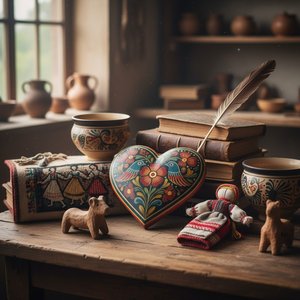
The Heart of Folk Art: Discover the Beauty of Tradition and Storytelling
Explore the profound beauty of folk art through its rich history and storytelling traditions. Discover how Naive Art and cultural heritage preserve ancestral narratives through vibrant color and symbolism for the modern collector.

Edward Hopper 25 Mesterműve: A Modern Magány és a Fény Játékai – OriginalUniqueArt
Fedezze fel Edward Hopper 25 legikonikusabb művét! Ismerje meg a modern magány, a fény és árnyék mesterét. Vászonképek, nyomatok – magas minőségben a OriginalUniqueArt.com-on. Inspirálódjon otthoni dekorációjához!
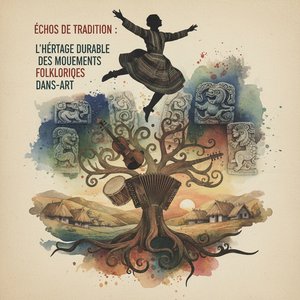
Echoes of Tradition: Exploring the Enduring Legacy of Folk Art Movements
Explore the rich history of folk art movements worldwide! Discover definitions, notable artists, and the enduring legacy of this captivating tradition. Expert insights & high-quality reproductions at OriginalUniqueArt.

Edward Hicks’ ‘Peaceable Kingdom’: American Folk Art & the Shaping of a National Identity
Explore the profound symbolism & historical context of Edward Hicks’ ‘Peaceable Kingdom.’ Discover how this iconic American folk art masterpiece reflects Quaker values and shaped a nation's identity. Learn more at OriginalUniqueArt.
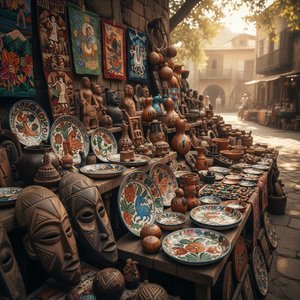
The Soul of Tradition: Exploring the Vibrant Heritage and Naive Mastery of Global Folk Art
Discover the profound beauty of folk art through a cultural lens. Explore how naive masterpieces and vibrant global traditions preserve heritage, offering timeless inspiration for collectors and art enthusiasts seeking authenticity and soul in every brushstroke.