Megtekintés
 Küldés
 Megosztás
 Részletek
 Útmutató

 Letöltés
 Hasonló darabok
 X-ray felvétel
 Diavetítés
 Q&A
Q&A Statisztika
Night

- 79.0 x 56.0 cm


 Összes részlet megjelenítése
Giclée / Műnyomat
Múzeumi minőségű giclée vagy vászonnyomat, gyors gyártással és rugalmas finomítási lehetőségekkel. ( Kézzel festett másolat rendelése Áttérés digitális képre)




P118B Ft10

P118H Ft10

P118W Ft10

P438Z Ft10

P508JH Ft12

P508YH Ft12

P805H Ft10

P805Z Ft10

P919BZ Ft10

P919G Ft10

P919XJ Ft10

P959ZH Ft10

P968JZ Ft12

W106C Ft8

W218G Ft10

W218JH Ft8

W218Y Ft10

W307PJ Ft10

W316G Ft10

W316PJ Ft8

W316Y Ft10

W398PJ Ft8

W4111J Ft10

W500HY Ft15

W500JH Ft15

W692G Ft12

W849H Ft8

W940BG Ft15

W953PJ Ft8




Válasszon előre meghatározott méreteink közül, amelyek megfelelnek a műalkotás eredeti arányainak.

Írja be a keretének vagy a falának megfelelő szélességet és magasságot. A nyomatot csak le lehet vágni, soha nem tehető nagyobbá, mint az eredeti kép, így egy eltérő alakú méretnél a kép egy része elveszik. Mielőtt bármit kinyatintanánk, küldünk egy digitális próbamodellt jóváhagyásra. Az oldalon látható kép nem tartalmazza a valós levágást — ezt csak a próbamodell mutatja meg.
Világszerte történő kiszállítás területére mindössze 2 hét alatt, a szokásos 4-5 hét helyett. (2 november)

Ingyenes globális expressz szállítás

Prémium minőségű len vászon

Teljes körű szállítási biztosítás

Vámvisszatérítési Garancia

Hiteles színarányosság garancia

100 napos visszaküldési lehetőség (csak hibás termékek esetén)

100% pénzvisszatérítési garancia

Több darab vásárlásakor kedvezmény
 Az üvegkeretes opció csak 110 cm alatti méretben érhető el

Night
Giclée / Műnyomat
Reprodukció mérete
-


Összesített ár
Ft 26201
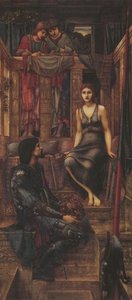
A Celestial Ascent: The Ethereal Vision of Burne-Jones’s Night
In the quietude of the late Victorian era, few works capture the intersection of myth and mysticism as profoundly as Edward Coley Burne-Jones’s Night. Completed in 1870, this watercolor masterpiece serves as a breathtaking window into the Pre-Raphaelite soul, where the boundaries between the earthly and the divine begin to dissolve. The painting presents us with a moment of pure, celestial grace: Lady Psyche, soaring through a star-studded firmament. As she ascends, her form is caught in a state of weightless transition, embodying the very essence of a dream realized. For the discerning collector or interior designer, this piece offers more than mere decoration; it provides an atmospheric anchor, a portal to a realm of infinite peace and spiritual aspiration.
The narrative depth of the work is rooted in the classical beauty of Apuleius’s Metamorphoses. Here, we witness Psyche, the personification of the soul, navigating the luminous expanse of the heavens. Her outstretched arms are not merely a gesture of flight but a profound symbol of surrender to the divine and the eternal cycle of rebirth. Burne-Jones meticulously weaves this mythological thread into the fabric of the painting, using the figure of Psyche to mirror the human longing for transcendence. The way her flowing drapery catches the unseen currents of the night sky creates a sense of rhythmic movement that guides the viewer’s eye upward, mirroring the character's own spiritual journey toward the light.
A Symphony of Luminous Technique and Color
Technically, Night is a triumph of watercolor mastery. Burne-Jones employs a sophisticated layering of delicate washes to achieve a depth that belies the medium’s transparency. The palette is a hauntingly beautiful arrangement of cool blues, deep violets, and midnight indigos, punctuated by the shimmering brilliance of distant stars. This careful gradation of color creates an atmospheric perspective that pulls the viewer into the vastness of the cosmos. There is a palpable luminosity to the sky, as if the light itself is emanating from within the paper, casting a soft, otherworldly glow upon Psyche’s form.
The artist’s attention to detail provides a tactile richness to the ethereal scene. One can almost feel the weightless texture of the gown and the crispness of the nocturnal air. This precision, combined with the dreamlike subject matter, allows the painting to function as a centerpiece of profound emotional impact. Whether placed in a contemplative study, a grand salon, or a modern living space, a high-quality reproduction of this work brings an air of sophisticated mystery and timeless elegance. It is a piece that invites long periods of reflection, rewarding the observer with new layers of beauty and meaning upon every encounter.
Kérdések és válaszok
Hol vásárolhatom meg „Night”, Burne-Jones alkotása digitális képét?
A "Night" elérhető magas felbontású digitális kép letöltése formátumban, amelyet közvetlenül a Digitális alkotás oldalon vásárolhat meg.
Milyen érzéssel párosítható a "Night"?
A "Night" egy Mysterious érzetet kelt. Az érzelmi hangulat azt az impressziót írja le, amelyet a mű közvetít.
Hogyan egyensúlyozza a fényt és a sötétséget a "Night"?
A „Night”, Burne-Jones alkotása fényerősége deep_shadow, luminanciája pedig Dark.
A művész életrajza
A Dream Woven in Color: The Life and Art of Edward Burne-Jones
Born in the burgeoning industrial heartland of Birmingham in 1833, Sir Edward Coley Burne-Jones emerged as a pivotal figure bridging the romantic currents of the Pre-Raphaelite Brotherhood with the aesthetic sensibilities of the late Victorian era. His life, marked by both profound artistic vision and personal complexities, unfolded against a backdrop of societal change and a fervent rediscovery of medieval ideals. The early loss of his mother cast a long shadow, shaping a childhood nurtured by his father and the steadfast housekeeper Ann Sampson – an upbringing that fostered a contemplative nature and a deep immersion in imaginative worlds. His formal education at King Edward VI Grammar School and later the Birmingham School of Art laid the foundation for his technical skill, but it was his time at Exeter College, Oxford, that truly ignited his artistic destiny. There, he forged an enduring friendship with William Morris, a bond built on shared intellectual passions and a mutual yearning for beauty in a rapidly modernizing world. This connection would prove instrumental, not only in shaping Burne-Jones’s artistic trajectory but also in establishing the influential firm of Morris & Co., dedicated to reviving traditional craftsmanship.The Brotherhood and the Birth of a Unique Vision
Oxford became a crucible for artistic experimentation, as Burne-Jones and Morris, alongside their circle of friends – “the Birmingham Set” – immersed themselves in the writings of John Ruskin and Alfred Tennyson, finding inspiration in the art and ethos of the Middle Ages. This fervent embrace of medievalism wasn't merely nostalgic; it was a rejection of what they perceived as the ugliness and materialism of contemporary society. The formation of "The Brotherhood" solidified their commitment to artistic ideals, fostering an environment where poetry, literature, and visual arts intertwined. A pivotal moment arrived with his introduction to Dante Gabriel Rossetti, whose work profoundly impacted Burne-Jones’s early style. However, he quickly transcended imitation, developing a distinctive aesthetic characterized by ethereal beauty, melancholic grace, and a meticulous attention to detail. His paintings weren't simply illustrations of medieval tales; they were evocative dreamscapes imbued with symbolism and psychological depth. The influence of Botticelli and Filippo Lippi became apparent in his attenuated figures and delicate compositions, yet Burne-Jones infused these influences with a uniquely British sensibility. He sought not to replicate the past but to distill its essence, creating works that felt both ancient and utterly new. His early paintings, such as *Merlin and Nimue* (1877) and *King Cophetua and the Beggar Maid* (1884), showcased this ability to transform historical narratives into emotionally resonant experiences.From Painting to Tapestry: A Renaissance of Craft
Burne-Jones’s artistic output extended far beyond the canvas. His collaboration with William Morris led to the founding of Morris & Co., a firm that revolutionized decorative arts in England. He wasn't merely designing patterns; he was reimagining the very concept of artistry, advocating for a holistic approach where art permeated every aspect of life. The firm produced exquisite textiles, wallpapers, furniture, and stained glass – all bearing the hallmark of Burne-Jones’s refined aesthetic. His designs for stained glass are particularly noteworthy, transforming churches and cathedrals into luminous realms of color and narrative. The medium allowed him to explore his fascination with light and symbolism in a new dimension, creating windows that served as both devotional objects and works of art. This commitment to craftsmanship wasn't simply about reviving traditional techniques; it was a deliberate attempt to elevate the status of decorative arts, challenging the prevailing hierarchy that placed painting and sculpture at the pinnacle of artistic achievement. The intricate details and rich symbolism in these windows reflect Burne-Jones’s deep understanding of medieval iconography and his desire to create works of enduring beauty.Personal Shadows and Enduring Legacy
Burne-Jones's personal life was not without its complexities. His marriage to Georgiana MacDonald, though enduring, was shadowed by a passionate affair with his Greek model, Maria Zambaco, which culminated in a dramatic crisis. Despite these emotional upheavals, he continued to produce an astonishing body of work, exploring themes of love, loss, and the search for spiritual meaning. His later paintings became increasingly introspective, characterized by a heightened sense of melancholy and a more abstract approach to form. He received a baronetcy in 1895, recognizing his significant contributions to British art and culture. Upon his death in 1898, Burne-Jones left behind a legacy that continues to resonate today. His influence can be seen in the work of countless artists who followed, and his designs continue to inspire contemporary craftspeople and designers. He remains a testament to the power of art to transcend time and touch the deepest recesses of the human soul. Burne-Jones’s enduring appeal lies in his ability to evoke a sense of longing for a lost paradise, a world where beauty and spirituality reign supreme.A Lasting Influence
- Burne-Jones’s work embodies the Pre-Raphaelite ideals of beauty, detail, and symbolism, yet he developed a unique style that set him apart from his contemporaries.
- His contributions to decorative arts through Morris & Co. revitalized traditional crafts and elevated the status of design.
- His stained glass windows remain iconic examples of Victorian artistry, transforming sacred spaces with their luminous beauty.
- He profoundly influenced subsequent generations of artists, inspiring a renewed appreciation for craftsmanship and aesthetic values.
- Burne-Jones’s exploration of myth, legend, and psychological themes continues to captivate audiences today, solidifying his place as one of the most important British artists of the 19th century.

Burne-Jones
1833 - 1898 , Egyesült Királyföld
Rövid információk
- Artistic Movement Or Style: Prerafaeli, Esztétika
- Artists Or Movements Influenced By This Artist:
- Angol festők
- Művészeti kézművesek
- Artists Who Influenced This Artist:
- Rossetti
- Botticelli
- Lippi
- Date Of Birth: 1833. augusztus 28.
- Date Of Death: 1898. június 17.
- Full Name: Edward Coley Burne-Jones
- Nationality: Angol
- Notable Artworks:
- Merlin és Vivian
- Sisyfusz
- Tengerüllő
- Place Of Birth: Birmingham, Anglia
Kapcsolódó cikkek

Dante Gabriel Rossetti 25 Mesterműve: Szépség és Lelkiség a Vásznon – OriginalUniqueArt
Fedezze fel Dante Gabriel Rossetti 25 legszebb művészeti alkotását! Ismerje meg a prerafaeliták titkait, a viktoriánus festészet szépségét és a romantikus szimbolizmus mélységeit. Prémium minőségű art reprodukciók a OriginalUniqueArt-on – inspiráció otthonába!
Edward Burne-Jones: A Pre-Raphaelite Vision of Myth, Symbolism & Aesthetic Idealism
Discover the enchanting world of Edward Burne-Jones and the Pre-Raphaelite Brotherhood. Explore his mythical paintings, distinctive style, and lasting influence on Victorian art & the Aesthetic Movement. Expert analysis & high-quality reproductions at OriginalUniqueArt.

Edward Hopper 25 Mesterműve: A Modern Magány és a Fény Játékai – OriginalUniqueArt
Fedezze fel Edward Hopper 25 legikonikusabb művét! Ismerje meg a modern magány, a fény és árnyék mesterét. Vászonképek, nyomatok – magas minőségben a OriginalUniqueArt.com-on. Inspirálódjon otthoni dekorációjához!

A festészet forradalma: 10 ikonikus akvarellművészeti remekmű, melyek örökre megváltoztatták a művészetet
Fedezze fel a 10 legikonikusabb akvarell festményt, melyek megváltoztatták a művészetet! Ismerje meg Turner, Monet és más mesterek történetét. Vásároljon prémium minőségű reprodukciókat a OriginalUniqueArt.com-on – inspiráló faliképek otthonába!

Ephemeral Visions: Exploring the Artistic Legacy & Contemporary Practice of Watercolor Painting
Explore the captivating world of watercolor painting! Discover its rich history, essential techniques, influential artists & collecting tips. A comprehensive guide for art enthusiasts from OriginalUniqueArt.