Váltás nyomtatványra
 Összes részlet megjelenítése







































 A bármely oldalsó méretét túlszálaló 105 cm (kb. 41 hüvelyk) meghaladó műalkotások vagy reprodukciók esetében a keret összeszerelhető készletként, szétszerelve kerül szállításra. Ez a módszer biztosítja a biztonságos szállítást, és megakadályozza a szállítás során fellépő sérüléseket.


Garden with Red House – Edvard Munch’s Early Symbolism
Edvard Munch, a Norwegian artist celebrated for his iconic “The Scream,” possessed an equally profound artistic vision in “Garden with Red House.” Created in 1882, this painting exemplifies Munch’s early foray into Symbolism—a movement that would solidify his reputation as one of the foremost innovators of modern art. More than just a depiction of a tranquil landscape, it's a carefully constructed meditation on themes of solitude, memory, and the unsettling beauty of nature. The artwork reflects the artistic currents of its time, drawing inspiration from both Impressionism and Realism. However, unlike many artists of the era focused on objective observation, Munch prioritized subjective experience—a hallmark of Symbolism’s core tenets. He skillfully blended realistic details—the textures of foliage and wood—with expressive brushstrokes that convey a palpable emotional atmosphere. This technique distinguishes him from his contemporaries, establishing him as a pioneer in exploring the complexities of human psychology through visual art.Symbolic Elements: A Landscape Steeped in Emotion
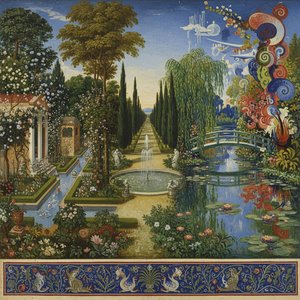
Munch’s genius lay not merely in capturing visual reality but in imbuing it with psychological resonance. The red house dominates the background, encircled by lush greenery—a deliberate choice that speaks volumes about Munch's preoccupation with warmth and comfort amidst a pervasive sense of melancholy. Surrounding the house is a wooden bench resting on a fence, adding a touch of rustic simplicity to the scene. Scattered figures within the garden represent fleeting moments of human connection, yet they simultaneously underscore the painting’s overarching theme of isolation. The vibrant reds and greens aren't merely colors; they are conduits for emotion—representing passion alongside tranquility. Munch’s use of color is masterful, mirroring his inner turmoil while simultaneously conveying a sense of serene contemplation. He deliberately contrasts the fiery hues of the house with the muted tones of the surrounding vegetation, creating a visual tension that reflects the emotional complexities inherent in the scene.Artistic Influences: Bridging Impressionism and Realism
“Garden with Red House” bridges the gap between Impressionist luminosity and Realistic detail. Munch absorbed influences from artists like Claude Monet and Vincent van Gogh, particularly their exploration of light and color—though he rejected their objective approach to representation. Instead, he sought to capture not merely what he saw but how it *felt*. This stylistic fusion is evident in his meticulous rendering of the foliage, achieved with delicate brushstrokes that mimic the dappled sunlight filtering through the trees. Simultaneously, Munch employs bold strokes and expressive color palettes to convey a sense of unease and psychological depth—a characteristic distinguishing him from many Impressionists who aimed for optical accuracy above all else.Historical Context: The Dawn of Modern Anxiety
The late 19th century witnessed significant transformations within the artistic landscape, fueled by intellectual debates surrounding Darwinian evolution and Nietzsche’s proclamation that “God is dead.” Artists responded to these seismic shifts with a renewed interest in delving into the subconscious mind—a preoccupation evident in Symbolism's exploration of dreams, myths, and folklore. Munch’s “Garden with Red House” captures this zeitgeist perfectly, reflecting anxieties about mortality and the fragility of human existence—themes that would become central to his oeuvre and resonate powerfully with audiences today. It stands as a poignant reminder that art can illuminate not only what we see but also what lies beneath the surface of our emotions. The painting’s mood is one of quiet contemplation tinged with melancholy, mirroring the broader cultural anxieties of its time.Relevance Today: An Enduring Image of Beauty and Sorrow
“Garden with Red House” continues to captivate viewers worldwide, serving as an enduring testament to Munch’s artistic brilliance. Its melancholic beauty—the juxtaposition of vibrant color against a backdrop of quiet solitude—invites contemplation on themes of memory, loss, and the inescapable presence of emotion. Reproductions offer a chance to experience this masterpiece firsthand, allowing its evocative imagery and profound psychological depth to inspire and move those who encounter it. The painting’s enduring appeal lies in its ability to communicate universal human emotions—fear, longing, and tenderness—without resorting to explicit narrative or didactic pronouncements. It remains a powerful symbol of the artist's exploration of inner turmoil and his masterful rendering of emotional landscapes.Kérdések és válaszok
Mennyire ismert a Edvard Munch "Garden with Red House" című alkotása?
A „Garden with Red House”, Edvard Munch alkotása népszerűségi szintje Ikonikus. Ez a besorolás azt tükrözi, mennyire ismert és elismert ez a mű.
Milyen elhelyezés és milyen térhelyiség ajánlott a(z) „Garden with Red House”, Edvard Munch alkotása számára?
A "Garden with Red House" művet Akcentus célokra javasoljuk, a legalkalmasabb helyszín pedig egy Nappali.
Mely korszakból származik a "Garden with Red House"?
A „Garden with Red House”, Edvard Munch alkotása a Modern kor korszakból származik. Ez az időszak adja meg a mű történelmi kontextusát.
Több információ erről a festményről
 Megtekintés
 Küldés
 Megosztás
 Részletek
 Útmutató

 Letöltés
 Hasonló darabok
 X-ray felvétel
 Diavetítés
 Kérdések és válaszok
 Statisztika