Előnézet
 Megosztás
 Megosztás
 Részletek
 Útmutató

 Letöltés
 Hasonló darabok
 X-ray felvétel
 Diavetítés
 Statisztika
Lovak egy réten


 Tovább olvasom
Kézzel készített olajfestmény reprodukció
Kézzel festett olajvastú vászon, az Ön által választott méretben és keretben, művészeink készítik meglévőre. ( Váltás nyomtatványra Áttérés digitális képre)




P118B Ft10

P118H Ft10

P118W Ft10

P438Z Ft10

P508JH Ft12

P508YH Ft12

P805H Ft10

P805Z Ft10

P919BZ Ft10

P919G Ft10

P919XJ Ft10

P959ZH Ft10

P968JZ Ft12

W106C Ft8

W218G Ft10

W218JH Ft8

W218Y Ft10

W307PJ Ft10

W316G Ft10

W316PJ Ft8

W316Y Ft10

W398PJ Ft8

W4111J Ft10

W500HY Ft15

W500JH Ft15

W692G Ft12

W849H Ft8

W940BG Ft15

W953PJ Ft8




Válasszon előre meghatározott méreteink közül, amelyek megfelelnek a műalkotás eredeti arányainak.

Ön megadhat saját méreteket egy adott kerethez vagy térhez igazításhoz. Ha a kiválasztott méret nem egyezik az eredeti kép arányával, akkor a műalkotást levágjuk, vagy további kézzel festett elemekkel meghosszabbítjuk a festményt. A gyártás megkezdése előtt küldünk Önnek egy digitális előnézetet jóváhagyásra.
Kérjük, vegye figyelembe, hogy a képernyőn megjelenő előnézet nem tükrözi a tényleges vágást vagy kiterjesztést. Csak az előnézet fog pontosan mutatni a végső kompozíciót.
Bár egyedi méretek állnak rendelkezésre, javasoljuk, hogy válasszon egy méretet az előre meghatározott listából az eredeti arányok megőrzése érdekében.
A rendelést követően a OriginalUniqueArt.com csapata e-mailt küld az ügyfélnek az instrukciókért, és biztosít egy előnézeti képet (mockup).
Világszerte elérhető szállítás () 3-4 hét alatt a szokásos 5 hét helyett. (11 október). A minőség nem kérdőjelezhető.

Ingyenes globális expressz szállítás

Prémium minőségű len vászon

Teljes körű szállítási biztosítás

Vámvisszatérítési Garancia

Tökéletes színarányosság garancia

100 napos visszaküldési garancia (csak gyártási hibás termékek esetén)

100% pénzvisszatérítési garancia

Több darab vásárlásakor kedvezmény
 Az üvegkeretes opció csak 110 cm alatti méretben érhető el

Lovak egy réten
Reprodukciós technika
Reprodukció méretei
-


Összesített ár
Ft 94057
The Painting "Horses in a Meadow"
Edgar Degas, one of the most renowned artists of the Impressionist movement, is celebrated for his captivating depictions of everyday life. Among his notable works is the painting Horses in a Meadow, which exemplifies his unique ability to blend movement and serenity. Located at the National Gallery of Art in Washington, D.C., this 1871 oil on canvas masterpiece showcases two horses grazing peacefully in a lush meadow. The serene atmosphere is enhanced by the warm tones of the setting sun, casting a golden glow over the scene. In the background, trees stand tall, while several figures are scattered throughout the landscape, adding depth and context to the painting. Degas's innovative approach to capturing movement is evident in this work. Unlike traditional depictions of horses, which often portrayed them in static poses, Degas chose to show his subjects in a more naturalistic manner. The horses appear relaxed, their bodies subtly angled as they graze, conveying a sense of tranquility and harmony with their surroundings. The Impressionist style is characterized by its emphasis on light and color. In Horses in a Meadow, Degas skillfully employs these elements to create a vivid and immersive experience. The warm sunlight casts long shadows across the meadow, highlighting the textures of the grass and the horses' coats. This attention to detail underscores Degas's commitment to capturing the fleeting moments of everyday life. For those interested in exploring more of Degas's works, Horses in a Meadow is just one example of his impressive oeuvre. Other notable pieces include Edmondo and Therese Morbilli, Madame Rene De Gas, and Four Dancers, all available for viewing at the National Gallery of Art. The significance of light in painting, as seen in Degas's work, is a topic of great interest. For more information on this subject, refer to the article on Light in Painting from Wikipedia. In conclusion, Horses in a Meadow by Edgar Degas is a testament to his artistic genius and his ability to capture the essence of movement and serenity. This painting, along with other works by Degas, continues to inspire art lovers and scholars alike, offering a glimpse into the beauty and tranquility of everyday life.- Horses in a Meadow by Edgar Degas
- Light in Painting
- Edmondo and Therese Morbilli by Edgar Degas
- Madame Rene De Gas by Edgar Degas
- Four Dancers by Edgar Degas
Gyakran Ismételt Kérdések
Mely művészhez köthető a "Lovak egy réten"?
A "Lovak egy réten" alkotását Hilaire-Germain-Edgar Degas készítette. Az ezen az oldalon található információk Hilaire-Germain-Edgar Degas eredeti művészetét mutatják be.
Milyen érzelmet közvetít a „Lovak egy réten”, Hilaire-Germain-Edgar Degas alkotása?
A "Lovak egy réten" egy Békés érzetet kelt. Az érzelmi hangulat azt az impressziót írja le, amelyet a mű közvetít.
Ki árul „Lovak egy réten”, Hilaire-Germain-Edgar Degas alkotása kézzel festett másolatait?
A „Lovak egy réten”, Hilaire-Germain-Edgar Degas alkotása kézzel festett másolataival a ez a weboldal oldalon találkozhat: kézzel festett olajfesték reprodukció lino vászonon, megrendelve a ez az oldal felületén.
Megtekinthetném „Lovak egy réten”, Hilaire-Germain-Edgar Degas alkotása alkotást más megvilágítás mellett is?
A „Lovak egy réten”, Hilaire-Germain-Edgar Degas alkotása X-Ray felvétel oldala egy interaktív nézegető, amely lehetővé teszi a mű alkotásának eleven optikai rétegei közötti görgetést, beleértve az röntgenszerű felvételt is.
Hány éves volt Hilaire-Germain-Edgar Degas, amikor megalkotta a "Lovak egy réten" című alkotást?
Hilaire-Germain-Edgar Degas 37 éves volt, amikor 1871 évben megalkotta a "Lovak egy réten" alkotást. A korúsítás az alkotó születési évéből, 1834 fel основании került kiszámítva.
Milyen módon kapcsolódik a "Lovak egy réten" stílusa alkotójának korához?
A „Lovak egy réten” a Impresszionizmus irányzat alkotása, készítője pedig a 19. század korszakban tevékenykedett.
Mikor készült a(z) „Lovak egy réten”, Hilaire-Germain-Edgar Degas alkotása?
A „Lovak egy réten”, Hilaire-Germain-Edgar Degas alkotása alkotásának éve 1871.
A művész életrajza
A Life Immersed in Movement
Edgar Degas, born Hilaire-Germain-De Gas in Paris on July 19, 1834, remains one of the most intriguing and complex figures in French art history. Often associated with Impressionism, a label he actively resisted, Degas was fundamentally a realist—a meticulous observer of the world around him, dedicated to portraying it with startling honesty and a unique visual language. His early life, comfortably bourgeois thanks to his banker father’s wealth and his mother's Creole background, provided him with access to education and artistic training, though he often felt constrained by academic expectations. Initially enrolled at the Lycée Louis-le-Grand, Degas’s true education began in the Louvre, where he spent countless hours copying works by masters like Raphael and Rembrandt, honing his skills and developing a deep appreciation for classical form. However, this wasn't simply imitation; it was a process of intense study and critical engagement with artistic tradition—a foundation upon which he would later build his own distinctive style. His father’s encouragement, recognizing his son’s innate talent, allowed him to establish a studio within their grand home, providing a space for experimentation and self-discovery.Beyond Impressionism: A Unique Artistic Vision
While many of his contemporaries, including Monet and Renoir, sought to capture the fleeting effects of light outdoors, Degas largely worked within the confines of his Parisian studio. His subject matter was decidedly modern—a departure from the historical or mythological scenes favored by traditional academic painters. He found inspiration in the vibrant, often overlooked details of everyday Parisian life: the bustling activity of laundresses at the Seine, the alluring figures of cabaret singers and dancers, the quiet elegance of milliners crafting their creations. It is this fascination with ballet that defines much of his oeuvre—a world of grueling rehearsals, physical strain, and fleeting moments of grace amidst a demanding profession. Degas didn’t simply paint beautiful ballerinas; he captured the *reality* of their lives, revealing both their beauty and their hardship. His compositions are often unconventional, cropping figures in unexpected ways, utilizing asymmetrical arrangements, and employing a dynamic sense of movement that draws the viewer into the scene. He was particularly adept at capturing the subtle nuances of gesture and expression, conveying not just what he saw but also *how* it felt to be present in those moments. His work is characterized by an intimate, almost voyeuristic perspective, as if he were a silent observer privy to private dramas unfolding before him.Influences and Artistic Development
Degas’s artistic journey was shaped by a remarkably diverse range of influences. His early training emphasized classical principles, particularly the meticulous draftsmanship championed by Jean-Auguste-Dominique Ingres, whose emphasis on precise form and idealized beauty left an indelible mark on his work. However, he also admired the Realist movement, spearheaded by artists like Gustave Courbet, who challenged academic conventions and sought to depict contemporary life with unflinching honesty. A pivotal moment in his development came through his association with Camille Pissarro, a leading Impressionist who encouraged him to experiment with new techniques and broadened his artistic horizons. Degas was deeply captivated by Japanese prints—Ukiyo-e—which exerted a profound influence on his compositions, color palettes, and use of asymmetrical arrangements. He studied the bold lines, flattened perspectives, and decorative patterns of these woodblock prints, incorporating them into his own work to create a sense of dynamism and visual interest. Furthermore, Degas embraced photography as a tool for studying movement and capturing fleeting moments in time—a technique he skillfully integrated into his paintings, particularly his depictions of dancers. He wasn’t simply copying what he saw; he was actively synthesizing diverse influences into something entirely new and uniquely his own.Major Works and Techniques
Degas's artistic output spanned a remarkable range of subjects and media. His paintings of ballet dancers—such as *The Dance Class*, *Little Dancer on the Bar* (bronze sculpture), and *L’Étoile*—are arguably his most famous works, capturing the intensity of rehearsals and the fleeting beauty of performance with unparalleled skill. He also produced a significant body of pastel drawings, often depicting scenes from Parisian life—laundresses at work, milliners displaying their wares, and street vendors hawking their goods. His use of pastels was particularly innovative, employing a loose, expressive technique that captured the immediacy of observation. Beyond painting and sculpture, Degas also experimented with monotypes (unique prints) and drypoint etchings, further expanding his artistic repertoire. His ability to capture movement—not through blurred lines or hazy effects, but through precise observation and careful rendering of form—is a hallmark of his work.Legacy and Lasting Impact
Edgar Degas died in Paris on September 27, 1917, leaving behind a vast and influential body of work that continues to captivate audiences today. He paved the way for future generations of artists who sought to break free from traditional conventions and explore new ways of representing the world around them. His innovative approach to composition, his masterful draftsmanship, and his unflinching portrayal of modern life have had a profound impact on the course of art history. He wasn’t merely a painter of dancers or racehorses; he was a keen observer of human nature, a master of form and movement, and a true innovator who redefined the possibilities of art. His influence can be seen in the work of Pablo Picasso and Henri Matisse, among others, solidifying his place as one of the most important figures in modern art.- Innovative Composition: Degas frequently employed unconventional cropping and asymmetrical arrangements.
- Capturing Movement: He masterfully depicted movement through precise observation and rendering.
- Diverse Subject Matter: His work encompassed ballet, Parisian life, and horse racing.
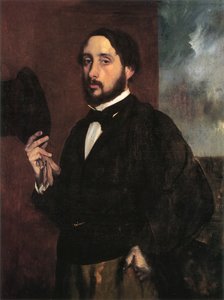
Hilaire-Germain-Edgar Degas
1834 - 1917 , Franciaország
Gyors információk
- Artistic Movement Or Style: Impressionizmus, Realizmus
- Artists Or Movements Influenced By This Artist:
- Picasso
- Matisse
- Artists Who Influenced This Artist:
- Ingres
- Courbet
- Pissarro
- Date Of Birth: 1834. július 19.
- Date Of Death: 1917. szeptember 27.
- Full Name: Hilaire-Germain-Edgar De Gas
- Nationality: Francia
- Notable Artworks:
- Táncosok csoportja
- A táncmester
- Kávéházi jelenet
- Place Of Birth: Párizs, Franciaország
Kapcsolódó cikkek

Paul Cézanne 25 Mesterműve: A Modern Művészet Úttörői | OriginalUniqueArt
Fedezze fel Paul Cézanne 25 legikonikusabb művét! Ismerje meg a posztimpresszionizmus úttörőjének festményeit, technikáját és inspirációit. Vászonképek, portrék, tájképfestmények – minden otthonba. Böngéssze gyűjteményünket a OriginalUniqueArt-on!

Evocations of Place: A Historical Journey Through Landscape Art
Explore the rich history of landscape art with OriginalUniqueArt. Discover renowned artists, movements like Impressionism & Romanticism, and expert guidance for collecting timeless pieces. Find your perfect serene escape today!

Evocations of Place: A Historical Journey Through Landscape Art
Explore the rich history of landscape art with OriginalUniqueArt. Discover renowned artists, movements like Impressionism & tonalism, and expert guidance for collecting timeless pieces. Find your perfect serene escape today!

A 10 legikonikus impresszionista tájkép: művészeti remekművek otthonába | OriginalUniqueArt.com
Fedezze fel a 10 legikonikus impresszionista tájkép festményt! Monet, Renoir, Degas és más művészek remekművei. Vászonképek, faliképek otthonába – inspirálódjon OriginalUniqueArt.com-on! Explore the full collection online.

John Constable 25 Mesterműve: A Természet Lényege Vászonon – OriginalUniqueArt.com
Fedezze fel John Constable 25 legszebb művészeti alkotását! Ismerje meg a romantika ikonikus tájképeit, Dedham Vale szépségét és a természet lenyűgöző ábrázolásait. Vászonkép reprodukcióinkkal eleganciát csempészhet otthonába – OriginalUniqueArt.com