Text size

() ·

A painting made for you, by hand

Chief David Shoppenegons

Kézzel készített olajfestmény reprodukció

Kézzel festett olajvastú vászon, az Ön által választott méretben és keretben, művészeink készítik meglévőre. ( Váltás nyomtatványra Áttérés digitális képre)

A gyűjtemény leírása

Discover "Chief David Shoppenegons" by Eanger Irving Couse – a captivating 1911 painting of a Native American leader, showcasing the artist's unique blend of European and Southwestern styles.

A művész életrajza

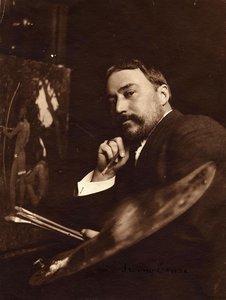
Couse Eanger Irving (1866-1936): amerikai festő, a DNy nyugati tájainak és az indiánok életének gazdag ábrázolásával, a Taos Society of Artists alapító elnöke. Életműve a kulturális tisztelet jelképe.

from ·

Chapter 1

How large should it be?

Slide to change the size; the picture on the left shows the frame at its real width. The proportions of the original are kept.

Standard méret
egyedi méretű
CM
INCH

Válasszon előre meghatározott méreteink közül, amelyek megfelelnek a műalkotás eredeti arányainak.

szélesség
magasság

Írja be a kívánt szélességet és magasságot, hogy illeszkedjen a keretéhez vagy a falához. Mivel ez kézzel festett alkotás, egy eltérő formájú méret esetén a művész akár festhet is valamivel többet a kép körül, vagy korolathat is belőle — az Ön döntésének megfelelően. A festés megkezdése előtt küldünk egy digitális tervezetet jóváhagyásra. Az oldalon látható kép nem tartalmazza a végeredményt — csak a tervezet mutatja meg a valódi eredményt.

Chapter 2

How should it arrive?

Choose the edges of the stretched canvas

Choose your frame

Corner sample of the WhiteWrap canvas edge finish, stretched on tömörfa bars
White Ft1
Corner sample of the BlurSideWrap canvas edge finish, stretched on tömörfa bars
Blurside Ft1
Corner sample of the ExtendedWrap canvas edge finish, stretched on tömörfa bars
Extended Ft1
Corner sample of the P118B picture frame: formázott polisztirol, 5 cm wide and 3 cm thick
P118B Ft10
Corner sample of the P118H picture frame: formázott polisztirol, 5 cm wide and 3 cm thick
P118H Ft10
Corner sample of the P118W picture frame: formázott polisztirol, 5 cm wide and 3 cm thick
P118W Ft10
Corner sample of the P438Z picture frame: formázott polisztirol, 5.5 cm wide and 3.5 cm thick
P438Z Ft10
Corner sample of the P508JH picture frame: formázott polisztirol, 7 cm wide and 3.5 cm thick
P508JH Ft12
Corner sample of the P508YH picture frame: formázott polisztirol, 7 cm wide and 3.5 cm thick
P508YH Ft12
Corner sample of the P805H picture frame: formázott polisztirol, 5 cm wide and 3.5 cm thick
P805H Ft10
Corner sample of the P805Z picture frame: formázott polisztirol, 5 cm wide and 3.5 cm thick
P805Z Ft10
Corner sample of the P919BZ picture frame: formázott polisztirol, 7 cm wide and 3.5 cm thick
P919BZ Ft10
Corner sample of the P919G picture frame: formázott polisztirol, 7 cm wide and 3.5 cm thick
P919G Ft10
Corner sample of the P919XJ picture frame: formázott polisztirol, 7 cm wide and 3.5 cm thick
P919XJ Ft10
Corner sample of the P959ZH picture frame: formázott polisztirol, 5 cm wide and 3 cm thick
P959ZH Ft10
Corner sample of the P968JZ picture frame: formázott polisztirol, 6 cm wide and 4 cm thick
P968JZ Ft12
Corner sample of the W106C picture frame: tömörfa, 5 cm wide and 3 cm thick
W106C Ft8
Corner sample of the W218G picture frame: tömörfa, 5 cm wide and 3 cm thick
W218G Ft10
Corner sample of the W218JH picture frame: tömörfa, 5 cm wide and 3 cm thick
W218JH Ft8
Corner sample of the W218Y picture frame: tömörfa, 5 cm wide and 3 cm thick
W218Y Ft10
Corner sample of the W307PJ picture frame: tömörfa, 6 cm wide and 3 cm thick
W307PJ Ft10
Corner sample of the W316G picture frame: tömörfa, 6 cm wide and 3 cm thick
W316G Ft10
Corner sample of the W316PJ picture frame: tömörfa, 6 cm wide and 3 cm thick
W316PJ Ft8
Corner sample of the W316Y picture frame: tömörfa, 6 cm wide and 3 cm thick
W316Y Ft10
Corner sample of the W398PJ picture frame: tömörfa, 5 cm wide and 3 cm thick
W398PJ Ft8
Corner sample of the W4111J picture frame: tömörfa, 6.5 cm wide and 3.5 cm thick
W4111J Ft10
Corner sample of the W500HY picture frame: tömörfa, 7 cm wide and 5 cm thick
W500HY Ft15
Corner sample of the W500JH picture frame: tömörfa, 7 cm wide and 5 cm thick
W500JH Ft15
Corner sample of the W692G picture frame: tömörfa, 8 cm wide and 4 cm thick
W692G Ft12
Corner sample of the W849H picture frame: tömörfa, 5 cm wide and 3 cm thick
W849H Ft8
Corner sample of the W940BG picture frame: tömörfa, 7.5 cm wide and 4.5 cm thick
W940BG Ft15
Corner sample of the W953PJ picture frame: tömörfa, 6 cm wide and 3.5 cm thick
W953PJ Ft8
Corner sample of the H24-GOLD picture frame: faragott fa gesszóval, 10 cm wide and 6 cm thick
H24-GOLD Ft30
Corner sample of the H24-SILVER picture frame: faragott fa gesszóval, 10 cm wide and 6 cm thick
H24-SILVER Ft30
Corner sample of the H36-GOLD picture frame: faragott fa gesszóval, 15 cm wide and 6.5 cm thick
H36-GOLD Ft45
Corner sample of the H36-SILVER picture frame: faragott fa gesszóval, 15 cm wide and 6.5 cm thick
H36-SILVER Ft45

Moulding: . Overall size with the frame: .

Chapter 3

Who paints it, and should anything change?

Examples of what can be changed: Replace face with customer photo; Add pet (e.g., replace cat with dog); Include hidden message in background; Change background landscape or elements.
After order, OriginalUniqueArt.com team will email client for instructions and provide a mockup preview

Világszerte elérhető szállítás () 3-4 hét alatt a szokásos 5 hét helyett. (3 november). A minőség nem kérdőjelezhető.

Chapter 4

The finishing touches

A nameplate, as in a museum?

A gravírozott bronztábla részletei

This elegant plaque features the artist's name and the title of the artwork, finely engraved for a timeless presentation.

It is made from bronze with a refined, elegant finish. The text is precisely laser-engraved for a sharp and permanent result. Measuring 9x2 cm, the plaque is compact yet easy to read. It's built to be durable and scratch-resistant, offering a professional, museum-quality look. Mounting is simple thanks to the included adhesive backing.

Átlátszó akril tábla részletei

The plaque includes essential engraved details such as the artist's name, the title of the artwork, the date it was created, the type of media used-like oil on canvas or watercolor-a brief description of the piece, and a QR code that links to the complete artwork information.

It is crafted from clear acrylic, offering a sleek, modern appearance. The text is UV-engraved in black to ensure strong visual contrast. With a size of 10x15 cm, it ensures optimal readability. It comes equipped with two metal hooks for secure wall mounting. The plaque is designed to be weather-resistant, making it suitable for various environments, and it includes interactive features that work seamlessly with smartphone scanning.

Fekete akril tábla részletei

This elegant plaque includes engraved information such as the artist's name, the title of the artwork, the date it was created, the type of media used (like oil on canvas or watercolor), a short description of the artwork, and a QR code for quick access to more information.

The plaque itself is made from refined black acrylic with a premium finish. The text is laser-engraved in white for high contrast and readability. Its size is 10x15 cm, designed to be easy to read. It comes with two metal hooks for professional mounting. The design is sleek and fits any interior style. It is also weather-resistant and durable, with built-in digital integration for mobile compatibility.

A protective varnish?

When do you need it?

Chapter 5

Your painting, as you ordered it

Chief David Shoppenegons

Reprodukciós technika

Reprodukció mérete

-

Kiváló mesterművész

Nagyobb részletesség, finomság és bővített gyártási idő

-

Reprodukció keretezése

-

-

A bármely oldalsó méretét túlszálaló 105 cm (kb. 41 hüvelyk) meghaladó műalkotások vagy reprodukciók esetében a keret összeszerelhető készletként, szétszerelve kerül szállításra. Ez a módszer biztosítja a biztonságos szállítást, és megakadályozza a szállítás során fellépő sérüléseket.

Szakmész összeszerelést igényel – ez nem DIY (önösszeszerelhető) termék.
A készletet egy tapasztalt keretező szakembernek kell összeszerelnie és a vásznat feszítenie kell, fa ragasztó (nem tartalmazza a csomag), vásznfeszítő fogó és szorítók használatával, amelyek a ragasztó száradásáig a keretrészeket egymáshoz vuôngjba tartják. A helytelen összeszerelés vagy a nem egyenletes vásznfeszítés maradandó károsíthatja a műalkotást, és ez nem része a garanciánknak.

  • A készlet tartalmazza az összes tömörfa rudat, pontosan méretre vágva.

  • A mellékelt csavarokkal, valamint a sarokszerekhez szükséges faütő ragasztóval kell összeszerelnie (ez nem tartalmazható a csomagban), így a keretrendezőnek külön kell beszereznie.

  • A csomag nem tartalmazza a szükséges professzionális eszközöket: egy vászonfeszítőt és klipseket a rácsok vízszintes tartásához a ragasztó megszáradásáig.

Fontos:
A sarokcsatlakozásokhoz fánylagra van szükség, a keretrudakat szorítókapcsokkal kell rögzíteni, amíg a rag teljesen meg nem szárad, a kész keretre feszített vászonhoz pedig vászonfeszítő fogat szükséges. Ezek egyike sem található meg a készletben. Kérjük, rendelés előtt győződjön meg róla, hogy rendelkezik tapasztalt keretező szakemberrel.

Névtábla

-

-

Védőréteg (Lakk)

Fényes lakk (intenzívabb színek, védelem a fény és a nedvesség hatása ellen)

-

Műalkotásom egyedi igényre szabása

Példák a módosíthatóságra: az arc kicserélése az ügyfél fotójára; háziállat hozzáadása (pl. macska helyett kutya); rejtett üzenet elhelyezése a háttérben; a háttér tájainak vagy elemeinek megváltoztatása.

-

Sürgős

Világszerte szóló szállítás () mindössze 3-4 hét alatt, a szokásos 5 hét helyett. (3 november). A minőség nem kérdőjelezhető.

-

Express szállítás

Világszerte elérhető szállítás területre 5 héten belül. (10 november).

A szállítás díja tartalmazza

Összesített ár

Ft 98255

Összesített ár Ft 98255

Az üvegkeretes opció csak 110 cm alatti méretben érhető el

Included with every order

  • Ingyenes globális expressz szállítás
  • Prémium minőségű len vászon
  • Teljes körű szállítási biztosítás
  • Vámvisszatérítési Garancia
  • Hiteles színarányosság garancia
  • 100 napos visszaküldési lehetőség (csak hibás termékek esetén)
  • 100% pénzvisszatérítési garancia
  • Több darab vásárlásakor kedvezmény

The Soul of the Southwest: Eanger Irving Couse’s “Chief David Shoppenegons”

Eanger Irving Couse's "Chief David Shoppenegons," painted in 1911, is more than just a portrait; it’s a profound meditation on cultural encounter and the enduring spirit of the American West. This arresting canvas, currently residing within the Detroit Institute of Arts, captures not merely a likeness but an essence—the quiet dignity and inherent wisdom of Chief David Shoppenegons, a prominent figure in the Chippewa tribe of Michigan. Couse’s decision to focus on this Native American subject was revolutionary for his time, reflecting a genuine desire to move beyond stereotypical depictions and instead offer a respectful portrayal rooted in observation and empathy.

Couse's artistic journey is inextricably linked to his fascination with the Chippewa people of Michigan. Born in Saginaw, he spent much of his childhood observing their traditions and customs, fostering a deep respect that profoundly shaped his artistic vision. This early exposure informed his approach to painting Native Americans – he didn’t simply sketch them; he sought to understand their lives, their beliefs, and their connection to the land. His time in Taos, New Mexico, further solidified this commitment, allowing him to immerse himself within a thriving artist community dedicated to capturing the beauty and complexity of Southwestern life.

A Masterclass in Impressionistic Detail

Technically, “Chief David Shoppenegons” exemplifies Couse’s signature style – a harmonious blend of academic training with the vibrant colors and loose brushwork characteristic of Impressionism. The painting is rendered in oil on canvas, utilizing a palette dominated by earthy tones—rich browns, ochres, and deep greens—that evoke the rugged landscape of the American Southwest. Couse masterfully employs broken color techniques, layering thin washes of paint to create a luminous effect, particularly noticeable in the folds of Shoppenegons’ coat and the dappled light filtering through the trees behind him. The brushstrokes are visible yet controlled, contributing to a sense of immediacy and movement.

The composition itself is carefully considered. Shoppenegons stands with a commanding presence, his posture conveying both strength and serenity. His gaze, directed slightly off-canvas, suggests contemplation and an awareness of the world around him. The dark background serves to isolate the figure, drawing attention to his face and emphasizing his connection to the land. Couse’s meticulous attention to detail—the texture of the fabric, the lines etched on Shoppenegons' face—adds a layer of realism that elevates the portrait beyond mere representation.

Symbolism and Cultural Resonance

Beyond its technical brilliance, “Chief David Shoppenegons” is rich in symbolic meaning. The staff or cane he holds represents his authority as a leader and his connection to the traditions of his people. The simple brown coat speaks to practicality and resilience – qualities deeply valued within Native American culture. More subtly, the setting—a sparsely wooded area—suggests a deep respect for nature, reflecting the interconnectedness between humans and the environment that is central to many indigenous belief systems.

It’s important to note that Couse's work was not without its complexities. While his intention was undoubtedly respectful, some critics have questioned whether fully capturing the nuances of Native American culture through a Western lens was truly possible. However, “Chief David Shoppenegons” remains a significant achievement—a testament to Couse’s artistic skill and his pioneering efforts to bridge cultural divides through art.

Bringing "Chief David Shoppenegons" into Your Space

Reproductions of “Chief David Shoppenegons” offer a beautiful way to bring the spirit of the Southwest into your home or office. Whether you choose a hand-painted reproduction or a high-quality print, this iconic image will serve as a constant reminder of the beauty and resilience of Native American culture. Its evocative colors and powerful composition make it an ideal addition to any room—a conversation starter and a source of inspiration. Consider framing it in a natural wood frame to further enhance its connection to the landscape.

For those seeking more information about Eanger Irving Couse and his work, we encourage you to explore the resources listed below:

Kérdések és válaszok

A „Chief David Shoppenegons”, Couse Eanger Irving alkotása portré, tájékép vagy négyzet alakú kompozíció?

A „Chief David Shoppenegons”, Couse Eanger Irving alkotása Tall formátumú alkotás. A formátum a kompozíció arányait határozza meg.

Milyen fényerő ébreszt fel „Chief David Shoppenegons”, Couse Eanger Irving alkotása alkotást?

A megjelenő fényerő tekintetében a „Chief David Shoppenegons”, Couse Eanger Irving alkotása művének deep_shadow.

„Chief David Shoppenegons”, Couse Eanger Irving alkotása festmény, rajz vagy grafika?

A "Chief David Shoppenegons" egy WallArt alkotás.

More about this painting

Megtekintés AR előnézet Váltás nyomtatványra Áttérés digitális képre Küldés
Részletek Útmutató Kedvencekhez ad Letöltés Hasonló darabok X-ray felvétel Diavetítés Q&A Statisztika

In numbers

  • 1911the year it was painted
  • 29frames to choose from
  • standard sizes, in its own proportions
  • 5weeks to paint and deliver it
Couse Eanger Irving

Couse Eanger Irving

1866 - 1936, Egyesült Államok

Quick facts about Couse Eanger Irving

  • Artistic Movement Or Style: Impressionista
  • Artists Or Movements Influenced By This Artist: ['Taos Society']
  • Artists Who Influenced This Artist:
    • Bouguereau
    • Sharp
  • Date Of Birth: 1866. szeptember 3.
  • Date Of Death: 1936. április 26.
  • Full Name: Eanger Irving Couse
  • Nationality: Amerikai
  • Notable Artworks:
    • Faizal
    • Elk-foot
    • The Chief
  • Place Of Birth: Saginaw, USA

A művész életrajza

A Bridge Between Worlds: The Life and Art of Eanger Irving Couse

Eanger Irving Couse, született 1866-ban a fejlődő ipari tájpusztulatás közepén Saginawban, Michigandában, egy olyan művésznek lett szánta az élete, aki kulcsfontosságú szerepet foglal majd el az amerikai művészetben. Az ő története nem csupán a művészi fejlődésről szól, hanem egy vonzó narratíváról is, amely összeköti a korlátozott európai akadémiai festészeti hagyományokat a mély tisztelettel és a szívélyes ábrázolással a vadnyugatban élő őslakosok életéről és a csábító tájakról. Már az első éveiben Couse természetesen vonzódott a Chippewa törzs iránt, akik élték a Saginaw közelében fekvő területeket – ez az vonzalom virágzott ki egy olyan elkötelezettséggé, amely meghatározta művészi útját. Nem csupán megfigyelés volt, hanem mély empátia magjának ösztönzése, ami alapvetően formálta a művészi utat. Hetvenhat évesen elhagyta hagyományos iskoláit, elkötelezett a művészet iránt, eleinte tanulva az Art Institute of Chicagóban és aztán a National Academy of Design-ben New York City-ben, mielőtt tíz évet töltött Parisban.

A Párizsi Szalonoktól a Taos Irigy Vonásaig

Paris valóban átalakító volt. William-Adolphe Bouguereau tanítása az École des Beaux-Arts-ban és az Académie Julian-ban Couse-nak elsajátította a klasszikus technikák mesterségét – precíz rajzolást, finom modellezést és kifinomult kompozícióérzék. A normandiai part mentén töltött éveiben tökéletesítette képességeit a fény és légkör ábrázolásában, de még ezek európai befolyás alatt is erős maradt a vadnyugat felé irányuló vonzás. A szülőjének feleségének gazdasági birtoklásának farmja Oregónban felkeltette az őslakosok témájú érdeklődését, ami végül *A Tévényszegényhez* vezetett, melyet 1892-ben mutattak be a Párizsi Szalonon. Ez jelentős korai műve, mely egy Whitmann pusztulásának jelenetet ábrázolt és modellként használta Virginia feleségét és egy helyi Klikitat indiánt, mindezt mutatva Couse művészi képességeit és felmerülő témáit. Amerikába tértével Couse kiegyezett New Yorkban a művészettel, ugyanakkor egyre gyakoribbabb kiruccanásokat tett a nyugati tájak felé, ami végül Taosba, Mexikó-Nevadaba vezette 1902-ben. Ez volt fordulópont – elvarázsolta a régió egyedi fénye, tája és kultúrája, melyet végül meghatározó otthonává alakított. Nem csupán látogató volt; belemerült a kultúrába, hogy megértse és ábrázolja egy olyan életmódot, amely messze volt az Egyesült Államok nagyvárosainak hangulatától.

A Taos Szelleme: Egy Úgydefiniált Művészi Vizuális Érzelem

Taos több mint egyszerű helyszín lett Couse számára – ez egy bemerülés egy kultúrába. Elkötelezte magát az őslakosok tanulásában és festésében, nem pedig egzotikus alakokként, hanem olyan egyénként, akiknek méltóságuk és szélsőségeik voltak. Ellentétben néhány kortársával, aki a drámai történetekre vagy romantizált ábrázolásokra összpontosított, Couse arra törekedett, hogy csendes élet pillanatokat felsejtsen – kontempláció, kézművesség és családi kötődés jeleneteit. Stílusa egyedülállóan keverte az akadémiai preciziót egy évői fény és színhasználat kifejező használatát, létrehozva olyan festményeket, amelyek technikailag képzettek voltak és érzelmileg is gazdagok. Meleg, földszíneket választott, gyakran ábrázolta témáit a tűzfény vagy a naplemente aranyos fényében, ami egy harmonikus és békés hangulatot teremtett. Gyakran használt két fő modellt, Ben Lujan és Jerry Mirable-t, lehetővé téve számára, hogy az idő múlásának érzését közvetítse a művészetében. Ez az elkötelezettség vezetett ahhoz, hogy 1915-ben tagja lett a Taos Society of Artistsnak, ami megerősítette Taos reputációját mint fontos művészi központként. Művei nem csupán ábrázolások voltak; értelmezések voltak, melyek mély tisztelettel és megértéssel voltak teli – egy bizonyíték Couse elkötelezettségére a tisztességes őslakosok életének ábrázolásában.

Elismerés, örökség és tartós befolyás

Couse tehetsége nem maradt figyelmetlen. Számos kitüntetést kapott karrierje során, beleértve az Altman Díjat a National Academy of Design-től, a Salmagundi Clubtól kapott Isidor Díjat és a Pennsylvania Academy of Fine Arts-tól kapott Lippincott Díjat. Bemutatkozott a Santa Fe Vasúton is 1914 és 1936 között, ahol festményeket készített, melyeket reklámanyagukhoz használtak a turisták vonzásánélküliségére utalva az Egyesült Államokban. *Elk-foot of the Taos Tribe* széles körben tekintik a fő művének, végül megvásárolták az Egyesült Államok nemzeti művészeti gyűjteménye számára, ami megerősítette helyét az amerikai művészetek hagyományában. Ezen túlmenően az elismerések mellett Couse hozzájárulása a vadnyugatban élő őslakosok perceinek formálódásához és egyedülálló művészi identitás megteremtéséhez Taos Society of Artists-nél. Egy perspektívát kínált, ami eltért a korábbi időszakban előbukkanó sztereotipikus ábrázolásoktól, hangsúlyozva a Pueblo kultúra békés együttélést és inherentes szépségét. *Művei nem csupán technikai remekművek, hanem egy olyan üzenet is, amely mélyen megérinti az embert.* A művész otthonának és stúdiójának – Joseph Henry Sharp Studios-nak nevezett helyének megőrzése, mely a Nemzeti Régistrán feltüntetve van, biztosítja, hogy a jövő generációk kapcsolódhassanak művészi látomásához és értékelhessék hatását az amerikai művészeti történelemre.

A Művészetének Kulcsfontosságos Jellemzői

  • Akadémiai Precizitás: Couse akadémiai képzése nyomon követhető a műveiben, ahol a részletesség és a realista ábrázolás a figurákban és tájakban.
  • Érdekes Fényhasználat: Mesterségesen használt fényt és árnyékot, hogy légkört és érzelmi mélységet teremtsen, gyakran ábrázolta jeleneteket a meleg, aranyos fényben.
  • Tiszteletteljes Ábrázolás: Couse ábrázolásai az őslakosokról méltóságot és érzékenységet tükrözték, elkerülve a sztereotipikus vagy romantizált ábrázolásokat.
  • Napi Élet Fókuszáltsága: Elsősorban csendes élet pillanatokat vett fel, nem pedig drámai történeteket, ami betekintést nyújtott a Pueblo kultúra rutinokba és hagyományába.
  • Korlátozott Színek Palettája: Couse meleg, földszíneket választott, melyek tükrözik a vadnyugat táj színzet

Gyors információk

  • Location: Detroit Institute of Arts
  • Title: Chief David Shoppenegons
  • Year: 1911
  • Artist: Eanger Irving Couse
  • Notable elements: Ojibwa subject

Művészeti kvíz

Minden kérdésre csak egy helyes válasz létezik.

Kérdés 1:
What is the primary subject depicted in Eanger Irving Couse’s ‘Chief David Shoppenegons’?
Kérdés 2:
In what year was ‘Chief David Shoppenegons’ created?
Kérdés 3:
Eanger Irving Couse was known for his work in which artistic movement?
Kérdés 4:
The image description mentions a dark background. What effect does this likely create?
Kérdés 5:
According to the provided information, Eanger Irving Couse’s work was influenced by which artistic traditions?