

 Előnézet
 Megosztás
 Megosztás
 Részletek
 Útmutató

 Letöltés
 Hasonló darabok
 X-ray felvétel
 Diavetítés
 Statisztika
Édeselmi nap Janitzióban
 Akril vászonon
- Falfeliratok és faldekoráció
- Mexican Muralism
 1954
1954 26.0 x 38.0 cm
 Museo Dolores Olmedo
 Tovább olvasom
Az ezen az oldalon megjelenített műalkotások szerzői jogi védelem alatt állnak, ami azt jelenti, hogy törvényileg nem készíthetünk és nem adhatunk el belőlük pontos másolatokat. Ez a védelem olyan nemzetközi megállapodások alapján érvényesül, mint például a Berni Egyezmény és a nemzeti törvények által, beleértve azokat is, amelyeket meghatározott Az USA szerzői jogi törvénye – 17. cím.
Ez a módszer teljes mértékben megfelel a szerzői jogi szabályozásnak, mivel nem tartalmazza a védett műalkotás másolását vagy duplikálását. Ehelyett ez egy kreatív újinterpretáció – egy új festmény, amely az eredetivel való összefüggései miatt hatással van rá, de nem az az.
Giclée / Műnyomat
Múzeumi minőségű giclée vagy vászonnyomat, gyors gyártással és rugalmas finomítási lehetőségekkel. ( Kézzel festett másolat vásárlása Áttérés digitális képre)




P118B Ft10

P118H Ft10

P118W Ft10

P438Z Ft10

P508JH Ft12

P508YH Ft12

P805H Ft10

P805Z Ft10

P919BZ Ft10

P919G Ft10

P919XJ Ft10

P959ZH Ft10

P968JZ Ft12

W106C Ft8

W218G Ft10

W218JH Ft8

W218Y Ft10

W307PJ Ft10

W316G Ft10

W316PJ Ft8

W316Y Ft10

W398PJ Ft8

W4111J Ft10

W500HY Ft15

W500JH Ft15

W692G Ft12

W849H Ft8

W940BG Ft15

W953PJ Ft8




Válasszon előre meghatározott méreteink közül, amelyek megfelelnek a műalkotás eredeti arányainak.

Megadhat saját méreteket is egy konkrét kerethez vagy helyszínhez igazítva. Amennyiben a kiválasztott méret nem egyezik az eredeti kép arányokkal, a műalkotást le fogjuk vágni, vagy kiegészítjük a képet tükrözött vagy egyszínű szélekkel. A gyártás megkezdése előtt egy digitális tervezetet küldünk jóváhagyásra.
Kérjük, vegye figyelembe, hogy a képernyőn látható előnézet nem tükrözi a tényleges levágást vagy kiegészítést. Csak a tervezet mutatja pontosan a végső kompozíciót.
Bár az egyedi méretek is elérhetőek, az eredeti arányok megőrzése érdekében azt javasoljuk, hogy válasszon a előre meghatározott listából származó méretet.
Világszerte történő kiszállítás területére mindössze 2 hét alatt, a szokásos 4-5 hét helyett. (13 október)

Ingyenes globális expressz szállítás

Prémium minőségű len vászon

Teljes körű szállítási biztosítás

Vámvisszatérítési Garancia

Tökéletes színarányosság garancia

100 napos visszaküldési garancia (csak gyártási hibás termékek esetén)

100% pénzvisszatérítési garancia

Több darab vásárlásakor kedvezmény
 Az üvegkeretes opció csak 110 cm alatti méretben érhető el

Édeselmi nap Janitzióban
Giclée / Műnyomat
Reprodukció méretei
-


Összesített ár
Ft 25070
Diego Rivera és Frida Kahlo: Egy Éjszakai Szellem Utazásának Megjegyzései
A mexikói művészet egyik legnagyobb alakja, Diego Rivera és világhírű kollégája, Frida Kahlo alkotása, „Día de Muertos en Janitzio” egy különleges időszak dokumentuma. Ez a 1954-ben keletkezett festmény nem csak egy egyszerű tájképet mutat be, hanem mélyült betekintést enged az ősi mexikai hagyományok és keresztény vallás szintézisébe – egy olyan ünnepkörbe, amely alapvető jelentőséget tulajdonít a halottak tisztelődésének. Az alkotó Janitzio szigetére tett látogatását követően figyelte meg ezt az évfordulót, és több képet készített ugyanarra az időszakra. Ez nem véletlen volt, hiszen Rivera művésze tudatosan választotta ezt a témát, melyet egy ősi mexikói vallás és hagyomány tükrözött vissza. A festmény egy nő kétségbeesett tekintettel néző személyét ábrázolja egy virágokkal dísztett asztal előtt. Egy hosszú ruhában tűnik fel, és haja egy ködös anyag alatt rejteződik el. Szemmelében pedig mély szomorúság vagy zavar tükröződik vissza – egy érzés, amely azonnal megérinti az embert. Azasztal számos üvegbe helyezett virággal van tarkítva, melyek szélesen szórázkodnak rajta. Három különálló növény található a tájképen: Egyike bal oldalra helyezkedik el, másik pedig jobb oldalra néző pozícióban áll. Rivera művésze egy nyugodt és kontemplatív pillanatot fogott meg – egy nő közepével körülvéve, virágos környezetében. Ez a kétségbeesett tekintet és az apró mosoly tükrözik vissza az alkotó érzelmét és gondolatát. Együtt érzünk vele az idő múlását és az élet végességét. A festmény egy egyszerű tájképet mutat be Janitzio szigetére néző perspektívából, melyet Diego Rivera készített Frida Kahlo társaságában. Az alkotó célja nem csak dokumentálni az Éjszakai Szellem Ünnepkörének hagyományos jellegét volt, hanem megmutatni azt is, hogy milyen mély érzelmek és gondolatok rejtenek meg ebben a közös emlékhelyben. Rivera művésze egy különleges időszakot szeretett megköszönteni, melyet egy ősi mexikói vallás és hagyomány tükrözött vissza. Együtt érzünk vele az idő múlását és az élet végességét. A festmény színeivel és fényezésével pedig Diego Rivera művésze egy különleges atmoszférát teremti meg – egy olyan helyet, amely képes megköszönteni az embert és átültetni őt egy másik világba. Együtt érzünk vele az idő múlását és az élet végességét. Ez a kétségbeesett tekintet és az apró mosoly tükrözik vissza az alkotó érzelmét és gondolatát. Együtt érzünk vele az idő múlását és az élet végességét. A festmény egy egyszerű tájképet mutat be Janitzio szigetére néző perspektívából, melyet Diego Rivera készített Frida Kahlo társaságában. Az alkotó célja nem csak dokumentálni az Éjszakai Szellem Ünnepkörének hagyományos jellegét volt, hanem megmutatni azt is, hogy milyen mély érzelmek és gondolatok rejtenek meg ebben a közös emlékhelyben. Együtt érzünk vele az idő múlását és az élet végességét. Ez egy különleges időszak dokumentuma – egy ősi mexikói vallás és hagyomány tükrözője. Együtt érzünk vele az idő múlását és az élet végességét.Gyakran Ismételt Kérdések
Hol találhatók statisztikák a(z) „Édeselmi nap Janitzióban”, Diego Rivera alkotása műről?
A „Édeselmi nap Janitzióban”, Diego Rivera alkotása statisztikái a mű Statisztika oldalán érhetőek el: a mű havi látogatottsága, a művész alkotásainak megtekintése, valamint az utóbbi időszaki látogatók országos és nyelvi lebontása.
Milyen technikával készült a(z) „Édeselmi nap Janitzióban”, Diego Rivera alkotása?
A "Édeselmi nap Janitzióban" alkotás Akril vászonon technikával készült.
Melyik tér harmonizál a „Édeselmi nap Janitzióban”, Diego Rivera alkotása színeivel?
A Monokróm színpalettájával „Édeselmi nap Janitzióban”, Diego Rivera alkotása alkotást egy Nappaliba javasoljuk. A színek egy része teszi lehetővé ezt a javaslatot.
„Édeselmi nap Janitzióban”, Diego Rivera alkotása egy világos vagy egy sötét tónusú alkotás?
A „Édeselmi nap Janitzióban”, Diego Rivera alkotása rögzített értékei: ragyogó fényerő, Fényes luminancia.
Milyen technikával készült és mikor született meg „Édeselmi nap Janitzióban”, Diego Rivera alkotása?
A "Édeselmi nap Janitzióban" alkotása 1954-ben készült, Akril vászonon technikával.
Milyen módon kapcsolódik össze a „Édeselmi nap Janitzióban”, Diego Rivera alkotása a Mexican Muralism irányzatot a művész honcountryjához?
A "Édeselmi nap Janitzióban" a alkotó születésihelyén keresztül köti össze a Mexican Muralism irányzatot Mexikó-val.
Ki készítette a "Édeselmi nap Janitzióban" alkotást, és milyen stílusú?
Diego Rivera a Mexican Muralism irányzatban alkototta meg a "Édeselmi nap Janitzióban" című művét.
Milyen reprodukciós méretet javasol a „Édeselmi nap Janitzióban”, Diego Rivera alkotása alkotáshoz?
A "Édeselmi nap Janitzióban" alkotás esetében a Nagy nyomtatási méret javasolt. Ugyanakkor ugyanazon arányokban elérhető egyéb méretű változat is.
A művész életrajza
Early Life and Artistic Awakening
Diego Rivera, born Diego María de la Concepción Juan Nepomuceno Estanislao de la Rivera y Barrientos Acosta y Rodríguez in Guanajuato, Mexico, on December 8, 1886, entered a world already imbued with artistic sensibility. From the tender age of three, an undeniable fascination with art blossomed within him, nurtured by parents who recognized and encouraged his burgeoning talent. His early years were marked by a formal education at the Academy of San Carlos in Mexico City, where he diligently honed his skills in traditional painting and sculpture. A pivotal moment arrived in 1907 when Teodoro A. dehesa Méndez generously sponsored Rivera’s studies abroad, launching him into the heart of Europe's artistic ferment.
His initial sojourn took him to Madrid, Spain, where he studied under Eduardo Chicharro, absorbing the tenets of Realism. The Spanish landscape and classical art profoundly influenced his early work, demonstrating a meticulous attention to detail and a respect for established techniques. However, it was Paris that truly ignited his creative evolution. Immersed in the vibrant Montparnasse community, Rivera encountered a kaleidoscope of artistic perspectives, most notably the revolutionary principles of Cubism after 1912. The influence of Pablo Picasso and Georges Seurat became palpable in his work, as he began to deconstruct forms and explore intersecting planes—a departure from traditional representation that would define a significant phase of his artistic journey. Rivera’s early Parisian paintings reflected this shift, moving away from the rigid realism of his Spanish training towards more fragmented and abstract compositions.
The Return to Mexico and the Mural Renaissance
A profound shift occurred in 1921 when Rivera returned to his homeland, a nation grappling with the aftermath of revolution. This homecoming wasn’t merely a geographical relocation; it was an ideological awakening. He became a central figure in the burgeoning Mexican Mural Movement, a powerful artistic response to the social and political upheaval of the time. The movement aimed to democratize art, bringing it out of elite circles and into public spaces accessible to all citizens. Rivera embraced this mission wholeheartedly, believing that art should serve as a tool for social commentary and education.
Rivera’s murals weren't simply decorative; they were potent narratives of Mexican history, culture, and societal struggles. His early masterpieces, such as “Creation” (1922), showcased his innovative use of encaustic technique—a mixture of wax and pigments that allowed for rich colors and textural effects. The monumental works at the Secretaría de Educación Pública in Mexico City reflected a distinctive style characterized by large, simplified figures and bold colors—a deliberate homage to Aztec art and pre-Columbian aesthetics. These murals weren’t just paintings; they were visual manifestos, proclaiming a new national identity forged from its indigenous roots and revolutionary spirit. Rivera sought to depict the struggles of the common people, celebrating their resilience and highlighting the injustices they faced.
A Style Forged in Social Consciousness
Diego Rivera's artistic style is instantly recognizable—a monumental scale that commands attention, simplified forms that convey powerful messages, vibrant colors that evoke the richness of Mexican culture, and an unwavering focus on social and historical narratives. His work wasn’t confined to aesthetic concerns; it was deeply intertwined with his political beliefs, particularly his Marxist convictions. Rivera believed in using art as a means of social change, advocating for the rights of workers and promoting socialist ideals.
The “Dreams of a Sunday in the Alameda” is perhaps one of his most iconic works, though also controversial for its depiction of atheism. The mural portrays a scene of everyday life in Mexico City, featuring historical figures and allegorical representations of social classes. His Detroit Industry Murals (1933), commissioned for the Detroit Institute of Arts, stand as a testament to his ability to capture the dynamism and complexity of industrial life, portraying both the power of machinery and the dignity of the workers who operated it. Rivera seamlessly blended elements of Mexican folk art with pre-Columbian imagery, creating a visual language that was uniquely his own—a powerful synthesis of tradition and modernity.
Notable Works
- Creation (1922): His first significant mural, utilizing the encaustic technique.
- Dreams of a Sunday in the Alameda: A controversial piece known for its depiction of atheism and historical figures.
- Secretaría de Educación Pública Murals: Showcasing his unique style with large, simplified forms and vibrant colors influenced by Aztec art.
- Detroit Industry Murals (1933): Commissioned for the Detroit Institute of Arts, depicting industrial processes and workers.
Legacy and Enduring Influence
Diego Rivera’s impact on 20th-century art is immeasurable. He isn't merely remembered as one of Mexico’s most important artists, but as a global icon whose work continues to resonate with audiences today. His murals are not just artistic achievements; they are significant examples of social realism and public art—powerful statements about the human condition and the struggle for social justice.
He played a pivotal role in establishing Mexican Muralism as an influential artistic movement, inspiring generations of artists to use their work as a vehicle for social commentary. His personal life, particularly his passionate and often tumultuous relationship with Frida Kahlo, has further cemented his place in popular culture, adding another layer of intrigue to his already captivating legacy.
Rivera’s commitment to portraying the lives and struggles of ordinary people, combined with his innovative artistic techniques, ensures that his work will continue to inspire and provoke thought for generations to come. He left behind a body of work that is not only visually stunning but also deeply meaningful—a testament to the power of art to shape our understanding of history, culture, and ourselves.

Diego Rivera
1886 - 1957 , Mexikó
Gyors információk
- Artistic Movement Or Style: Mexikói Muralizmus
- Artists Or Movements Influenced By This Artist: ['Mexikói Muralizmus']
- Artists Who Influenced This Artist:
- Picasso
- Seurat
- Date Of Birth: 1886. december 8.
- Date Of Death: 1957. november 24.
- Full Name: Diego Rivera
- Nationality: Mexikói
- Notable Artworks:
- Creação
- Sueños de un domingo en la Alameda
- Murais da Indústria Detroit
- Place Of Birth: Guanajuato, Mexikó
Kapcsolódó cikkek
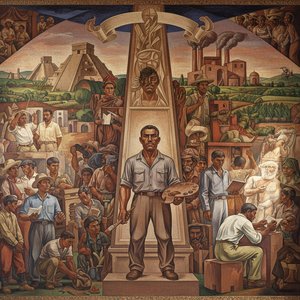
Diego Rivera: A Revolutionary Vision of Mexican Identity Through Muralism
Explore the revolutionary murals of Diego Rivera and his profound impact on Mexican art & identity. Discover his techniques, iconic works like 'Man at the Crossroads,' and lasting legacy with OriginalUniqueArt.

Vibrant Traditions: A Journey Through the Soul of Mexican Art and its Cultural Legacy
Embark on a visual journey through the soul of Mexican art. Explore the profound legacy of muralism, folk traditions, and revolutionary masters like Rivera and Orozco in this deep cultural exploration of color, symbolism, and identity.
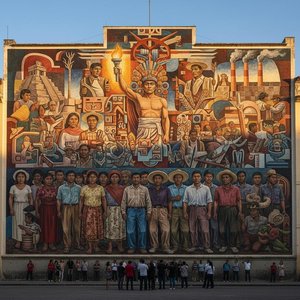
Echoes of Resistance: Unveiling the Grandeur and Social Power of Mexican Muralism
Explore the profound impact of Mexican Muralism, a visual revolution born from social struggle. Delve into the monumental works of Rivera, Orozco, and Siqueiros, uncovering how these powerful frescoes redefined identity and ignited a lasting legacy of resistance in art history.
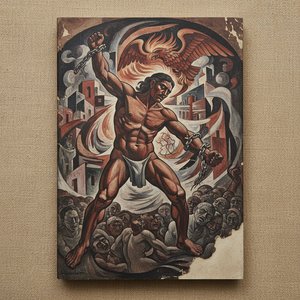
José Clemente Orozco: A Revolutionary Vision of Mexican Muralism & the Human Condition
Explore the powerful world of José Clemente Orozco, a key figure in Mexican Muralism. Discover his revolutionary art, social commentary, and lasting impact on 20th-century painting. Learn about his unique style & legacy.
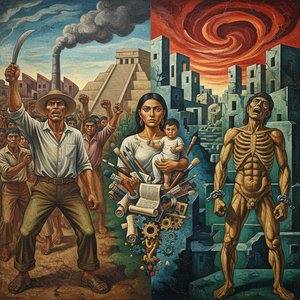
Revolution on Canvas: Exploring the Socio-Political Power & Artistic Legacy of Mexican Muralism
Explore the powerful world of Mexican muralism! Discover Diego Rivera, Frida Kahlo & Orozco's revolutionary art, social impact & lasting legacy. Expert insights & high-quality reproductions at OriginalUniqueArt.


