
 Megtekintés
 Küldés
 Megosztás
 Részletek
 Útmutató

 Letöltés
 Hasonló darabok
 X-ray felvétel
 Diavetítés
 Kérdések és válaszok
 Statisztika
Detroit Industry: East Wall


 Összes részlet megjelenítése
Az ezen az oldalon megjelenített műalkotások szerzői jogi védelem alatt állnak, ami azt jelenti, hogy törvényileg nem készíthetünk és nem adhatunk el belőlük pontos másolatokat. Ez a védelem olyan nemzetközi megállapodások alapján érvényesül, mint például a Berni Egyezmény és a nemzeti jogszabályok által, beleértve azokat is, amelyeket meghatározott Az USA szerzői jogi törvénye – 17. cím.
Ez a módszer teljes mértékben megfelel a szerzői jogi szabályozásnak, mivel nem tartalmazza a védett műalkotás másolását vagy duplikálását. Ehelyett ez egy kreatív újinterpretáció – egy új festmény, amely az eredetivel való összefüggései miatt hatással van rá, de nem az az.
Giclée / Műnyomat
Múzeumi minőségű giclée vagy vászonnyomat, gyors gyártással és rugalmas finomítási lehetőségekkel. ( Kézzel festett másolat rendelése Áttérés digitális képre)




P118B Ft10

P118H Ft10

P118W Ft10

P438Z Ft10

P508JH Ft12

P508YH Ft12

P805H Ft10

P805Z Ft10

P919BZ Ft10

P919G Ft10

P919XJ Ft10

P959ZH Ft10

P968JZ Ft12

W106C Ft8

W218G Ft10

W218JH Ft8

W218Y Ft10

W307PJ Ft10

W316G Ft10

W316PJ Ft8

W316Y Ft10

W398PJ Ft8

W4111J Ft10

W500HY Ft15

W500JH Ft15

W692G Ft12

W849H Ft8

W940BG Ft15

W953PJ Ft8




Válasszon előre meghatározott méreteink közül, amelyek megfelelnek a műalkotás eredeti arányainak.

Írja be a keretének vagy a falának megfelelő szélességet és magasságot. A nyomatot csak le lehet vágni, soha nem tehető nagyobbá, mint az eredeti kép, így egy eltérő alakú méretnél a kép egy része elveszik. Mielőtt bármit kinyatintanánk, küldünk egy digitális próbamodellt jóváhagyásra. Az oldalon látható kép nem tartalmazza a valós levágást — ezt csak a próbamodell mutatja meg.
Világszerte történő kiszállítás területére mindössze 2 hét alatt, a szokásos 4-5 hét helyett. (12 november)

Ingyenes globális expressz szállítás

Prémium minőségű len vászon

Teljes körű szállítási biztosítás

Vámvisszatérítési Garancia

Hiteles színarányosság garancia

100 napos visszaküldési lehetőség (csak hibás termékek esetén)

100% pénzvisszatérítési garancia

Több darab vásárlásakor kedvezmény
 Az üvegkeretes opció csak 110 cm alatti méretben érhető el

Detroit Industry: East Wall
Giclée / Műnyomat
Reprodukció mérete
-


Összesített ár
Ft 26351
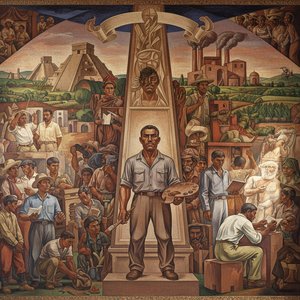
Detroit Industry: East Wall – A Monumental Vision of American Progress
Diego Rivera’s “Detroit Industry: East Wall,” completed in 1932-1933 during the tumultuous years of the Great Depression, stands as a defiant assertion of industrial optimism amidst widespread economic hardship. Commissioned by Henry Ford and executed on a colossal scale – spanning 52 ½ feet by 26 feet 1 ½ inches – this monumental fresco embodies Rivera’s signature style: vibrant muralism infused with socialist ideals and rooted in Mexican folk art traditions. The sheer ambition of the project reflects Ford's determination to revitalize Detroit’s economy and bolster American morale during a period marked by unemployment and despair.- Style & Technique: Rivera employed fresco technique, applying pigment directly onto wet plaster—a method favored for its durability and ability to create rich, luminous colors. The mural's dominant palette is dominated by reds, yellows, and blues – hues deliberately chosen to evoke the fiery energy of industrial furnaces and the expansive skies above Detroit’s factories. Detailed brushstrokes capture the textures of machinery, brickwork, and human figures with remarkable precision.
- Historical Context: The Depression era profoundly shaped Rivera's artistic vision. He sought to portray not merely the mechanics of industry but also its transformative potential for improving the lives of ordinary workers—a message powerfully conveyed through idealized depictions of labor solidarity and collective effort.
Symbolism & Narrative Composition
The fresco’s central figures – a colossal worker and a towering machine – represent the symbiotic relationship between human ingenuity and technological advancement. Rivera skillfully juxtaposes these monumental forms against a backdrop populated by smaller vignettes depicting scenes of Detroit life: miners, steelworkers, and families engaged in everyday activities. These interwoven narratives underscore the mural's overarching theme—the belief that collective action and innovation could overcome adversity and usher in an era of prosperity. Notably, Rivera incorporated elements of Mexican folk art – specifically stylized representations of indigenous motifs – subtly enriching the composition with cultural heritage.- Iconic Figures: The colossal worker embodies strength, resilience, and unwavering dedication to labor—qualities celebrated throughout Mexican culture. Simultaneously, the machine symbolizes progress, efficiency, and the transformative power of technology.
- Social Commentary: Rivera’s deliberate inclusion of vignettes depicting diverse segments of Detroit society serves as a pointed critique of social inequalities prevalent during the Depression. He champions the dignity of manual labor and advocates for collective responsibility in addressing economic challenges.
Emotional Impact & Artistic Legacy
“Detroit Industry: East Wall” transcends mere documentation; it communicates profound emotions—optimism, determination, and a fervent belief in human potential. Rivera’s masterful use of color and composition captivates the viewer's gaze, transporting them into the heart of Detroit’s industrial landscape. The mural continues to inspire artists and designers alike, serving as a testament to Rivera’s enduring artistic legacy—a bold declaration that beauty and social consciousness can coexist harmoniously within monumental art forms. Its influence extends beyond visual arts, shaping perceptions of American industry and fostering dialogues about labor rights and economic justice.A Reproduction Worthy of Celebration
Today, high-quality reproductions of “Detroit Industry: East Wall” offer an unparalleled opportunity to experience the grandeur and emotive power of Rivera’s masterpiece firsthand. Whether adorning a gallery wall or enriching a corporate lobby, these prints capture the essence of this iconic artwork—a symbol of American resilience and a beacon of artistic innovation.Kérdések és válaszok
Mekkora a fényerke „Detroit Industry: East Wall”, Diego Rivera alkotása alkotásnak?
A „Detroit Industry: East Wall”, Diego Rivera alkotása alkotás Soft Shadow fényerőséggel rendelkezik. A fényerő azt mutatja meg, hogy a színek mennyire tűnnek visszafényesnek.
Ki a szerzője és mikor készült a "Detroit Industry: East Wall"?
Diego Rivera a "Detroit Industry: East Wall" című művet 1933-ben készítette.
Mennyire harmonikusak „Detroit Industry: East Wall”, Diego Rivera alkotása színei?
A „Detroit Industry: East Wall”, Diego Rivera alkotása színei Strong Color Unity harmóniát mutatnak be. A harmónia azt írja le, hogyan kapcsolódnak egymáshoz a színek.
Kapcsolódó cikkek

Revolution on Walls: The Bold Power of Mexican Muralism and Street Art
Explore the raw power of Mexican Muralism and its impact on modern street art. Dive into this visual revolution now.

Walls of Revolution: The Powerful Legacy and Social Realism of Mexican Muralism
Explore the profound legacy of Mexican Muralism. Discover how masters like Diego Rivera used social realism to redefine history through powerful, large-scale frescoes and revolutionary iconography.
Diego Rivera: A Revolutionary Vision of Mexican Identity Through Muralism
Explore the revolutionary murals of Diego Rivera and his profound impact on Mexican art & identity. Discover his techniques, iconic works like 'Man at the Crossroads,' and lasting legacy with OriginalUniqueArt.

10 Iconic Masterpieces to Elevate Your Meeting Room Decor
Transform your boardroom with icons from Dürer to Rivera. Elevate your space with curated masterpieces. Explore the full collection online.

Walls of Revolution: The Socio-Political Legacy and Grandeur of Mexican Muralism
Explore the profound history of Mexican Muralism. Discover how 'The Big Three' transformed public walls into powerful narratives of revolution, identity, and social realism through masterworks by Diego Rivera and José Clemente Orozco.


