

 Előnézet
 Megosztás
 Megosztás
 Részletek
 Útmutató

 Letöltés
 Hasonló darabok
 X-ray felvétel
 Diavetítés
 Statisztika
Winter Landscape
 Acrylic On Canvas
- WallArt
- Dutch Baroque Landscape
 1610
1610 36.0 x 47.0 cm
 Louvre
 Tovább olvasom
Giclée / Műnyomat
Múzeumi minőségű giclée vagy vászonnyomat, gyors gyártással és rugalmas finomítási lehetőségekkel. ( Kézzel festett másolat vásárlása Áttérés digitális képre)




P118B Ft10

P118H Ft10

P118W Ft10

P438Z Ft10

P508JH Ft12

P508YH Ft12

P805H Ft10

P805Z Ft10

P919BZ Ft10

P919G Ft10

P919XJ Ft10

P959ZH Ft10

P968JZ Ft12

W106C Ft8

W218G Ft10

W218JH Ft8

W218Y Ft10

W307PJ Ft10

W316G Ft10

W316PJ Ft8

W316Y Ft10

W398PJ Ft8

W4111J Ft10

W500HY Ft15

W500JH Ft15

W692G Ft12

W849H Ft8

W940BG Ft15

W953PJ Ft8




Válasszon előre meghatározott méreteink közül, amelyek megfelelnek a műalkotás eredeti arányainak.

Írja be a keretének vagy a falának megfelelő szélességet és magasságot. A nyomatot csak le lehet vágni, soha nem tehető nagyobbá, mint az eredeti kép, így egy eltérő alakú méretnél a kép egy része elveszik. Mielőtt bármit kinyatintanánk, küldünk egy digitális próbamodellt jóváhagyásra. Az oldalon látható kép nem tartalmazza a valós levágást — ezt csak a próbamodell mutatja meg.
Világszerte történő kiszállítás területére mindössze 2 hét alatt, a szokásos 4-5 hét helyett. (23 október)

Ingyenes globális expressz szállítás

Prémium minőségű len vászon

Teljes körű szállítási biztosítás

Vámvisszatérítési Garancia

Tökéletes színarányosság garancia

100 napos visszaküldési garancia (csak gyártási hibás termékek esetén)

100% pénzvisszatérítési garancia

Több darab vásárlásakor kedvezmény
 Az üvegkeretes opció csak 110 cm alatti méretben érhető el

Winter Landscape
Giclée / Műnyomat
Reprodukció méretei
-


Összesített ár
Ft 25718
A Winter’s Embrace: Denijs van Alsloot's Tranquil Landscape
Denijs van Alsloot stands as a pivotal figure in the burgeoning artistic landscape of the early 17th century, embodying the delicate transition from Mannerist formalism to the radiant optimism of the Dutch Baroque. Born around 1570 – though precise biographical details remain elusive – his formative years were inextricably linked to the craft of tapestry weaving, a profession that instilled within him an inherent understanding of composition and visual storytelling—skills which would prove invaluable in his subsequent artistic endeavors. Entering the Brussels Guild of St Luke in 1599 as a tapestry designer marked not merely a career change but a deliberate embrace of stylistic influences already shaping the era’s artistic sensibilities. Initially focused on textile artistry, Alsloot gradually honed his painting skills, accepting his first pupil and continuing to mentor apprentices until his death in 1626 – demonstrating a sustained commitment to fostering talent and furthering artistic innovation.The Canvas Speaks: Style and Technique
Alsloot’s oeuvre is characterized by a remarkable blend of realism and atmospheric perspective, reflecting the prevailing trends of the Dutch Golden Age. Unlike his predecessors who often prioritized idealized representations, Alsloot meticulously captured the subtle nuances of winter light and shadow, creating landscapes imbued with palpable depth and spatial illusion. His brushstrokes are deliberate yet fluid, conveying texture and movement—particularly evident in the depiction of snowdrifts and tree branches—a technique honed through years of apprenticeship and informed by observations of nature itself. The artist’s masterful use of color contributes significantly to the overall mood, favoring muted tones that evoke a sense of serenity and solitude. This restrained palette contrasts beautifully with the brilliant blues of the sky, emphasizing the grandeur of the natural world.A Scene Frozen in Time: Historical Context
Painted circa 1610, “Winter Landscape” aligns perfectly with the artistic fervor that gripped Holland during this period—a time marked by burgeoning economic prosperity and a fervent desire to express national identity through art. The painting’s subject matter – a solitary winter vista – speaks to the broader humanist concerns of the era, reflecting an interest in portraying the beauty and majesty of God's creation. Furthermore, Alsloot’s work draws inspiration from the artistic innovations originating in Italy—specifically the atmospheric perspective championed by artists like Jan van Goyen and Cornelis van Poelenburch—demonstrating a willingness to engage with international stylistic currents. The Louvre Museum houses this masterpiece, ensuring its enduring legacy for generations of art enthusiasts.Symbolism Beneath the Surface
Beyond its aesthetic merits, “Winter Landscape” carries subtle symbolic resonances. The barren trees represent mortality and resilience—a poignant reminder that even in dormancy, life persists beneath the frozen surface. The snow symbolizes purity and tranquility, mirroring the spiritual contemplation fostered by the contemplative gaze of the viewer. The distant village offers a glimpse into human habitation amidst the vastness of nature, highlighting the harmonious relationship between humankind and the environment – a theme central to Baroque artistic thought.Emotional Resonance: Capturing Tranquility
Ultimately, “Winter Landscape” succeeds in conveying an unparalleled sense of peace and contemplation. Alsloot’s meticulous attention to detail—from the delicate rendering of snow crystals to the subtle gradations of color—creates a visual experience that transcends mere representation; it invites viewers into a moment of profound stillness. This artwork embodies the spirit of its time, capturing not only the beauty of winter but also the enduring human desire for solace and connection with the natural world. Its timeless appeal continues to inspire collectors and interior designers alike who seek to infuse their spaces with elegance and serenity.Gyakran Ismételt Kérdések
Milyen módon kapcsolódik a "Winter Landscape" stílusa alkotójának korához?
A „Winter Landscape”, Denis Van Alsloot alkotása a Dutch Baroque Landscape irányzat pripad, alkotójának Korai modern kor korszakából származva.
Milyen technikával készült a „Winter Landscape”, Denis Van Alsloot alkotása?
A "Winter Landscape" alkotás Acrylic On Canvas technikával készült.
Milyen nyomtatási beállításokat javasol a „Winter Landscape”, Denis Van Alsloot alkotása?
A "Winter Landscape" alkotás esetében a javasolt nyomtatási beállítás a Large méret és a Landscape orientáció.
A művész életrajza
A Life Woven in Landscape: The World of Denijs van Alsloot
Denijs van Alsloot, a name resonating softly through the annals of Flemish art, occupies a fascinating transitional space between the established traditions of the 16th century and the burgeoning Baroque dynamism of the 17th. Born around 1570 in either Mechelen or Brussels, Belgium, his origins were steeped in the craft of tapestry – his father’s profession providing an early immersion into design and visual composition. Though details surrounding his formal artistic training remain elusive, it's clear that this familial connection to textile arts laid a foundational aesthetic sensibility for the young Alsloot. He entered the Brussels Guild of St Luke in 1599 as a tapestry designer, initially focusing on this craft before gradually shifting towards painting, taking on his first pupil the same year and continuing to mentor apprentices until 1625. This period suggests a deliberate evolution, a honing of skills that would eventually blossom into a distinctive landscape style.Early Life and Artistic Beginnings
Information about Denijs van Alsloot’s formative years is scarce, reflecting the limitations of archival records from the period. He was born in Mechelen or Brussels—precise documentation remains elusive—and his father practiced tapestry weaving, an occupation that instilled within him a profound understanding of pattern, color, and compositional balance – elements crucial to both textile design and subsequent painting endeavors. Unlike many artists of his time who benefited from privileged educations, Alsloot’s artistic development appears to have been largely self-directed, fueled by observation and experimentation. His entry into the Brussels Guild of St Luke in 1599 marks a pivotal moment, establishing him within the framework of Flemish artistic practice and signaling his commitment to mastering established techniques. Simultaneously, he took on his first pupil that same year, demonstrating an early inclination for mentorship and fostering the transmission of artistic knowledge—a characteristic that would define his career trajectory.Court Painter and Patronage
A transformative juncture arrived around 1606 when Denijs van Alsloot ascended to the role of court painter to Albert VII., Archduke of Austria, and Isabella Clara Eugenia, the Habsburg ruler of the Spanish Netherlands. This prestigious appointment wasn’t merely a matter of prestige; it constituted a significant catalyst for his artistic advancement, securing him access to influential patrons—nobles and dignitaries—who commissioned elaborate landscapes and genre scenes reflecting the grandeur and daily life of their courts. He excelled at capturing ceremonial processions, festive celebrations, and architectural vistas—images that served as visual records of Habsburg rule in Brussels and its environs. Notably, Isabella herself entrusted him with the monumental task of depicting eight panels commemorating the Ommegang procession of 1615—a commission that yielded one of his most celebrated works now housed in London’s Victoria and Albert Museum. This undertaking underscored the Archduchess’s appreciation for Alsloot's artistic prowess and cemented his reputation as a master of historical painting, skillfully blending topographical accuracy with dramatic narrative elements.The Sonian Forest School: Style and Technique
Denijs van Alsloot is considered to be a cornerstone figure within the Sonian Forest school of landscape painters—a movement characterized by its preference for depicting scenes from the expansive woodlands surrounding Brussels. This stylistic inclination wasn’t merely dictated by geographical proximity; it reflected a shared aesthetic sensibility rooted in meticulous observation and an unwavering commitment to capturing atmospheric conditions—misty mornings, dappled sunlight, and autumnal hues—with remarkable realism. His landscapes frequently employed techniques reminiscent of earlier masters, notably Gillis van Coninxloo, yet Alsloot's work distinguishes itself through a calmer palette, greater compositional restraint, and heightened attention to detail—a stylistic hallmark that positioned him between the expressive fervor of Coninxloo and the monumental grandeur of Jan Brueghel the Elder. He skillfully utilized *dolci*, or soft brushstrokes, creating luminous surfaces and subtly modulating tonal values—techniques that conveyed a profound sense of depth and spatial illusion.Legacy and Artistic Influence
Despite his untimely demise around 1626—likely preceding 1628—Denijs van Alsloot’s artistic legacy persists as evidenced by the enduring presence of his paintings in prominent museums across Europe, including the Museo Nacional del Prado in Madrid and the Victoria and Albert Museum in London. He is remembered not only for his technical virtuosity—his mastery of perspective, color theory, and topographical representation—but also for his contribution to documenting 17th-century Brussels society through evocative landscapes and genre scenes. His depictions of festivals, processions, and architectural vistas offer invaluable insights into the cultural milieu of Habsburg rule—a testament to his enduring influence on Flemish art history. As a pivotal representative of the Sonian Forest school and a transitional figure bridging earlier landscape traditions with the burgeoning Baroque style, Van Alsloot remains a subject of scholarly fascination—a symbol of artistic innovation and a conduit for conveying the spirit of an era.
Denis Van Alsloot
1570 - 1626 , Belgium
Gyors információk
- Artistic Movement Or Style: Sonian Forest school
- Artists Or Movements Influenced By This Artist: ['Hendrick de Clerck']
- Artists Who Influenced This Artist:
- Gillis van Coninxloo
- Jan Brueghel the Elder
- Date Of Birth: c. 1570
- Date Of Death: c. 1626
- Full Name: Denijs van Alsloot
- Nationality: Flemish
- Notable Artworks:
- Tervuren tervuren
- Landscape with Tobias...
- The Flight into Egypt
- Place Of Birth: Mechelen, Belgium
Kapcsolódó cikkek
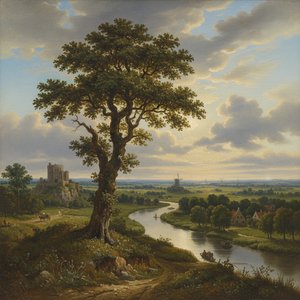
Jacob van Ruisdael: Master of Dutch Landscape & the Evocation of National Identity
Explore the life & work of Jacob van Ruisdael, the preeminent Dutch landscape painter. Discover his technical brilliance, symbolic depth, and lasting influence on art history. Learn about collecting Ruisdael's masterpieces.

Jan van Goyen: Master of Dutch Landscape & Atmospheric Perspective
Discover Jan van Goyen, the master of Dutch landscape painting. Explore his subtle technique, atmospheric realism & lasting influence on art history. Learn about this 17th-century pioneer at OriginalUniqueArt.
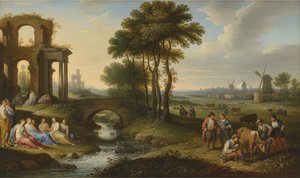
Cornelis van Poelenburch: Bridging Mannerism & the Dutch Baroque Landscape
Discover Cornelis van Poelenburch, a pivotal Dutch Baroque landscape painter bridging Mannerism & Italianate styles. Explore his life, key works, and lasting influence on 17th-century art with OriginalUniqueArt.

A Hollandi Barokk 10 Mesterműve: Festmények, Amelyek Megváltoztatták a Világot | OriginalUniqueArt
Fedezze fel a holland barokk 10 legikonikusabb műalkotását! Rembrandt, Vermeer és más mesterek festményeinek története, technikája és időtálló szépsége. Művészeti reprodukciók prémium minőségben – OriginalUniqueArt.com.

Rembrandt legikonikusabb művei: 25 mestermű a vászonon – OriginalUniqueArt
Fedezze fel Rembrandt van Rijn 25 legikonikusabb művét! Barokk portrék, bibliai jelenetek és önarcképek a Holland aranykorból. Művészeti reprodukciók prémium minőségben – OriginalUniqueArt. Explore the full collection online!