

 Előnézet
 Megosztás
 Megosztás
 Részletek
 Útmutató

 Letöltés
 Hasonló darabok
 X-ray felvétel
 Diavetítés
 Statisztika
Mont St Michel


 Tovább olvasom
Giclée / Műnyomat
Múzeumi minőségű giclée vagy vászonnyomat, gyors gyártással és rugalmas finomítási lehetőségekkel. ( Kézzel festett másolat vásárlása Áttérés digitális képre)




P118B Ft10

P118H Ft10

P118W Ft10

P438Z Ft10

P508JH Ft12

P508YH Ft12

P805H Ft10

P805Z Ft10

P919BZ Ft10

P919G Ft10

P919XJ Ft10

P959ZH Ft10

P968JZ Ft12

W106C Ft8

W218G Ft10

W218JH Ft8

W218Y Ft10

W307PJ Ft10

W316G Ft10

W316PJ Ft8

W316Y Ft10

W398PJ Ft8

W4111J Ft10

W500HY Ft15

W500JH Ft15

W692G Ft12

W849H Ft8

W940BG Ft15

W953PJ Ft8




Válasszon előre meghatározott méreteink közül, amelyek megfelelnek a műalkotás eredeti arányainak.

Írja be a keretének vagy a falának megfelelő szélességet és magasságot. A nyomatot csak le lehet vágni, soha nem tehető nagyobbá, mint az eredeti kép, így egy eltérő alakú méretnél a kép egy része elveszik. Mielőtt bármit kinyatintanánk, küldünk egy digitális próbamodellt jóváhagyásra. Az oldalon látható kép nem tartalmazza a valós levágást — ezt csak a próbamodell mutatja meg.
Világszerte történő kiszállítás területére mindössze 2 hét alatt, a szokásos 4-5 hét helyett. (24 október)

Ingyenes globális expressz szállítás

Prémium minőségű len vászon

Teljes körű szállítási biztosítás

Vámvisszatérítési Garancia

Tökéletes színarányosság garancia

100 napos visszaküldési garancia (csak gyártási hibás termékek esetén)

100% pénzvisszatérítési garancia

Több darab vásárlásakor kedvezmény
 Az üvegkeretes opció csak 110 cm alatti méretben érhető el

Mont St Michel
Giclée / Műnyomat
Reprodukció méretei
-


Összesített ár
Ft 25718
The Sublime Majesty of Mont St Michel
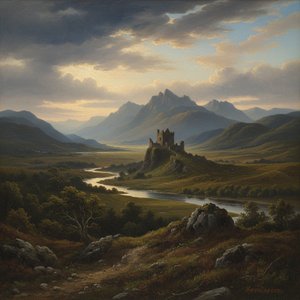
To gaze upon this depiction of Mont St Michel is to be transported across centuries and continents, standing at the precipice where human ambition meets the raw, untamed power of nature. The scene unfolds with an almost breathtaking grandeur, capturing not merely a location, but a profound state of being—a confluence of spiritual devotion and geological permanence. The imposing silhouette of the abbey rises from the tidal island like a monumental prayer etched against the vast expanse of sky. It speaks immediately to the Romantic yearning for the sublime; that feeling of awe mixed with slight terror before something overwhelmingly beautiful.
A Masterclass in 19th-Century Landscape Technique
The artist, working within the tradition of grand 19th-century landscape painting, demonstrates a remarkable command over atmosphere and light. Observe how the palette is dominated by muted earth tones—the warm tans of the sand meeting the cool grays of ancient stone. The technique suggests an oil on canvas execution, characterized by loose, visible brushstrokes that lend an immediacy to the scene, as if the artist captured this moment before the tide shifted or the clouds parted. While the vertical thrust of the abbey’s towers provides rigid structure, these strong lines are beautifully counterbalanced by the soft blending used in the sky and the gentle sweep of the foreground beach. This interplay between sharp architectural geometry and ethereal atmospheric softness is what gives the piece its enduring vitality.
Symbolism and the Human Element
Mont St Michel itself has always been more than just stone; it is a potent symbol of pilgrimage, resilience, and the enduring spirit of faith. The composition masterfully guides the viewer's eye from the inviting foreground—the sandy beach dotted with figures on horseback and in carriages—directly toward the monumental structure. These scattered human elements are crucial; they do not diminish the scale of the abbey but rather serve to measure it, reminding us that this colossal achievement has been witnessed, traversed, and revered by countless generations. It is a dialogue between humanity’s journey and history’s immovable monument.
Creating an Atmosphere for Your Space
For the collector or designer seeking to infuse a room with depth, narrative weight, and historical resonance, this reproduction offers unparalleled emotional texture. The diffused lighting, suggesting either the quiet hush of dawn or the contemplative glow of late afternoon, imbues any space it graces with a sense of timeless tranquility. It is not merely decoration; it is an anchor for contemplation. Imagine this piece anchoring a library, a grand hall, or a study—a visual portal that whispers tales of medieval devotion and the enduring power of human endeavor against the backdrop of nature’s magnificent indifference.
Gyakran Ismételt Kérdések
Milyen hangulatot és érzelmet közvetít „Mont St Michel”, David Roberts (festő) alkotása?
A "Mont St Michel" alkotásban egy Romantic hangulat kíséri egy Melancholic érzelmet.
Milyen színpaletta jellemzi a(z) „Mont St Michel”, David Roberts (festő) alkotása alkotást?
A "Mont St Michel" színei egy Neutrals palettát alkotnak. Ez a besorolás a domináns színek családjait írja le.
Milyen érzelmet közvetít a Romanticism korszakból származó "Mont St Michel" című alkotás?
A Romanticism irányzaton belül, a "Mont St Michel" egy Melancholic hangulatban készült.
A művész életrajza
David Roberts: A Life in Art
David Roberts (1796-1864) was a Scottish painter celebrated for his detailed Orientalist scenes and meticulous lithographs. His work provides invaluable visual documentation of the Middle East during the 19th century, bridging artistic representation with historical record. He remains an influential figure in Victorian art history, embodying both technical prowess and a profound engagement with distant cultures.Early Life and Career
Born on October 24, 1796, in Stockbridge near Edinburgh, Roberts’s formative years instilled within him a dedication to craftsmanship. At the age of ten, he commenced an apprenticeship under Gavin Beugo, honing his skills as a house painter and decorator – experience that would prove invaluable later in his artistic endeavors. This practical grounding complemented his evening art studies, fostering a balanced approach to artistic development. His initial professional commissions included redecorating Scone Palace in 1815, demonstrating early aptitude for transforming spaces through visual artistry. Subsequently, he transitioned into scene painting for James Bannister’s circus, refining his ability to create immersive environments and capturing the dynamism of theatrical productions. These formative experiences established a solid foundation for his burgeoning career as a respected Orientalist painter.Artistic Journey and Influences
Roberts' artistic trajectory was propelled by an expanding curiosity about diverse cultures and landscapes. While initially focused on theatrical scenery – a skill honed during his circus work – he gradually pursued independent artistic explorations, driven by a desire to transcend conventional boundaries. His voyage to Spain in 1832 served as a catalyst for heightened attention to architectural detail and exotic locales, shaping his visual sensibilities. However, it was his extensive expeditions into Egypt and the Near East (1838-1840) that truly cemented his artistic legacy. These journeys yielded a wealth of sketches and observations – meticulously documented – which he subsequently translated into his most celebrated works. Notably, Roberts wasn’t significantly influenced by any singular artist; rather, his style emerged from careful observation and unwavering technical mastery—a testament to his dedication to capturing the essence of his subjects with unparalleled accuracy.Notable Works and Achievements
Roberts achieved lasting renown primarily through The Holy Land, Syria, Idumea, Arabia, Egypt, and Nubia – a series of breathtaking lithograph prints that captivated audiences across Europe. These images powerfully conveyed the grandeur of ancient sites—Jerusalem, Damascus, Petra—and the vibrant tapestry of daily life in the region. The meticulous detail with which Roberts rendered architectural facades, costumes, and landscapes established him as a pioneer in documenting historical environments. Furthermore, he was elected as a Royal Academician in 1841 – an honor reflecting his profound contribution to British art and scholarship. His lithographs stand as enduring records of a bygone era, continuing to inspire admiration for their artistic merit and historical significance.Artistic Style and Characteristics
Roberts’s distinctive artistic style is characterized by several key elements:- Orientalism: He embraced the Romantic movement's fascination with “the Orient,” portraying scenes from Egypt and Persia with remarkable sensitivity and precision.
- Technical Mastery: Roberts possessed exceptional skill in rendering textures, light, and perspective—techniques honed through years of experience as a painter and decorator.
- Landscape Painting: His canvases frequently depicted expansive vistas—mountains, deserts, rivers—infused with atmospheric effects that conveyed both beauty and grandeur.

David Roberts (festő)
1796 - 1864 , Egyesült Királyság
Gyors információk
- Artistic Movement Or Style: Orientalism
- Artists Who Influenced This Artist:
- Jenaro Pérez Villaamil
- Alexander Nasmyth
- Country: United Kingdom
- Date Of Birth: October 24, 1796
- Date Of Death: 1864
- Full Name: David Roberts
- Nationality: Scottish
- Notable Artworks: ['The Holy Land, Syria, Idumea, Arabia, Egypt, and Nubia']
- Place Of Birth: Stockbridge
Kapcsolódó cikkek

Evocations of Place: A Historical Journey Through Landscape Art
Explore the rich history of landscape art with OriginalUniqueArt. Discover renowned artists, movements like Impressionism & Romanticism, and expert guidance for collecting timeless pieces. Find your perfect serene escape today!

A Romantikus Tájképfestészet 10 Legikonikusabb Műalkotása – OriginalUniqueArt.com
Fedezze fel a romantikus tájképfestészet 10 legikonikusabb műalkotását! Caspar David Friedrich, J.M.W. Turner és más mesterek festményeinek története – inspiráló olajfestmények otthonába. OriginalUniqueArt.com: múzeumi minőségű reprodukciók és egyedi dekorációk online.

David Roberts: A Scottish Pioneer of Topographical Art & Orientalist Vision
Explore the captivating world of David Roberts, a pioneering Scottish painter renowned for his detailed Orientalist scenes & stunning Egyptian landscapes. Discover his legacy and find museum-quality reproductions at OriginalUniqueArt.
Alexander Nasmyth: Picturing Scotland's Romantic Landscape – Innovation & Identity
Explore the life & art of Alexander Nasmyth, a pivotal figure in Scottish Romantic landscape painting. Discover his iconic works, including portraits of Robert Burns, and learn about his lasting influence on national identity. Fine art reproductions available.

John Constable 25 Mesterműve: A Természet Lényege Vászonon – OriginalUniqueArt.com
Fedezze fel John Constable 25 legszebb művészeti alkotását! Ismerje meg a romantika ikonikus tájképeit, Dedham Vale szépségét és a természet lenyűgöző ábrázolásait. Vászonkép reprodukcióinkkal eleganciát csempészhet otthonába – OriginalUniqueArt.com


