

 Megtekintés
 Küldés
 Megosztás
 Részletek

 Letöltés
 Hasonló darabok
 X-ray felvétel
 Diavetítés
Overall Isometric, Day View


 Összes részlet megjelenítése
Vásároljon nagy felbontású, javított digitális képet, amely minőségében messze felülmúlja az online előnézetet.
Minden fájlt szakembereink a legmodernebb eszközök és precíz, kézi retusálás segítségével készítenek el aprólékosan. Gondoskodunk arról, hogy minden kép kivételes tisztasággal, pontos színhelyességgel és részletgazdag finomsággal rendelkezzen.
A végleges fájl 72 órán belül e-mailben megérkezik, professzionális, szerkesztői és nyomtatási környezetbe optimalizálva az azonnali használathoz. Ez ugyanaz a minőség, amelyben a legmeghatározóbb tervezőstúdiók, kiadók és galériák is megbízhatnak.
Digitális kép
Töltsön le nagy felbontású fájlt személyes kiállításokhoz, nyomtatáshoz és kreatív projektekhez. ( Nyomat rendelése Kézzel festett másolat rendelése)
Minden digitális kép rendeléséhez tartozó extrák
Szakértői digitális kézbesítés, garantáltan
Amikor a OriginalUniqueArt.com szolgáltatást választja, nem csupán egy képet kap – professzionálisan felmagasított digitális műalkotást kap, amely precizitással készült, és amelyet megelégsedési gwarancia tesz biztoslássá. Az alábbiakban automatikusan minden benne 】

Gyors e-mail teslimítés
A nagy felbontású digitális képmásolatát a megrendelést követő 72 órán belül e-mailben elküldjük Önnek – azonnal használható formátumban.

MI-alapú digitális fejlesztésű fájl
Műve professzionális módon kerül optimalizálásra fejlett mesterséges intelligencia eszközök és manuális szerkesztés segítségével, biztosítva a maximális részletességet, tisztaságot és színpontosságot.

Örök életű ingyenes újradelivery
Véletlenül törölted vagy elvesztetted a fájlodat? Ne aggódj – bármikor ingyen újra megküldjük neked.

Nincs importköltség – soha
Élvezze műalkotásait azonnal, vám, illeték vagy szállítási költség nélkül – a digitális letöltések mindig adamentesek.

Színpontosság garantálása
Professzionális eszközök és színkezelés segítségével garantáljuk, hogy digitális képe a lehető legpontosabban tükrözze az eredeti színeket.

60 napos elégedettségi garancia
Ha nemມີ elégedett a digitális képpel, 60 napon belül átmunkáljuk azt, vagy 100% visszatérítjük az amountot – kérdés nélkül.

100% Pénzvisszatérítési garancia
Nem érheted el a teljes elégedettséget? 60 napon belül teljes visszatérítést kapsz a digitális fájlod megérkezése után – kérdés nélkül.

Tömegrendelési kedvezmények
Vásároljon 3 képet, spóroljon 10%-et - Vásároljon 5-öt, spóroljon 15%-et - Vásároljon 10+ képet, spóroljon 20%-at. Kiváló kreatív projektekhez, galériákhoz és ügynökségekhez.
A gyűjtemény részletei
A Fractured Landscape: Unveiling Zaha Hadid's Isometric Masterpiece
“Overall Isometric, Day View,” created in 1983 by the visionary architect Dame Zaha Hadid, isn’t merely a painting; it’s an architectural manifesto rendered in acrylic on cartridge paper. It immediately arrests the eye with its intensely geometric composition – a fragmented cityscape of interlocking triangles, rectangles, and trapezoids that feels both futuristic and strangely ancient. This work represents a pivotal moment in Hadid's artistic journey, showcasing her nascent exploration of deconstructivism and her radical departure from traditional architectural representation. The piece isn’t concerned with realistic depiction; instead, it prioritizes spatial relationships, dynamic movement, and the evocative power of form over literal accuracy.
The painting’s strength lies in its masterful manipulation of perspective. The isometric viewpoint – where all three axes are equal – creates a flattened, almost diagrammatic effect, lending an unsettling yet compelling sense of depth. The overlapping planes and intricate network of lines generate layers of visual complexity, drawing the viewer into a world that feels simultaneously contained and expansive. It’s as if Hadid is dissecting architecture itself, revealing its underlying structure while simultaneously suggesting a dynamic, ever-shifting reality.
Color, Form, and the Language of Geometry
The restrained color palette – dominated by shades of grey, white, and beige – serves to amplify the painting’s geometric rigor. Subtle accents of blue and black provide just enough contrast to prevent the composition from feeling sterile or monotonous. Hadid's meticulous attention to detail is evident in the precise execution of each shape; there’s a remarkable sense of control and precision throughout the work. The sharp, angular lines define the edges of the forms with unwavering clarity, creating a visual rhythm that is both captivating and slightly unsettling.
More than just shapes, these geometric elements function as building blocks – suggesting structures, pathways, and perhaps even entire urban landscapes. The prevalence of triangles, in particular, evokes a sense of instability and dynamism, hinting at the deconstructivist principles that would later define Hadid’s architectural practice. The painting feels like a blueprint for a future city—one that is both technologically advanced and emotionally charged.
Symbolism and the Architect's Vision
“Overall Isometric, Day View” can be interpreted as an exploration of spatial relationships and the inherent tension between order and chaos. The fragmented composition mirrors Hadid’s own architectural philosophy – a rejection of rigid symmetry in favor of dynamic, fluid forms that challenge conventional notions of space. The painting also reflects her fascination with historical avant-garde movements, particularly Suprematism, which emphasized abstraction and geometric form. It's a visual dialogue with artists like Kazimir Malevich, whose exploration of pure geometry paved the way for Hadid’s own groundbreaking work.
Furthermore, the piece can be seen as a meditation on the nature of architecture itself – its ability to shape our perceptions, influence our emotions, and define our experience of space. Hadid wasn't simply designing buildings; she was creating environments that would transform the way people lived and thought. “Overall Isometric, Day View” is a powerful testament to this ambition.
A Legacy in Form: Reproductions and Beyond
Today, “Overall Isometric, Day View” stands as a seminal work in Zaha Hadid’s oeuvre—a captivating example of her early artistic explorations. High-quality reproductions capture the painting's intricate details and dynamic energy, offering a window into the mind of one of the 20th and 21st centuries’ most influential architects. Its geometric precision and evocative composition make it a compelling addition to any collection, while its historical significance provides valuable insight into the evolution of architectural design.
A művész életrajza
Zaha Hadid (1950-2016): A Revolutionary Vision
Zaha Hadid, born in Baghdad, Iraq, on October 31st, 1950, was an Iraqi and British architect whose groundbreaking designs redefined architectural practice and captivated audiences worldwide. Her journey began not within the conventional confines of artistic upbringing but amidst a stimulating intellectual environment; her father, Mohammad al-Hajj Husayn Hadid, was a successful industrialist and politician, while her mother, Wajiha al-Sabunji, nurtured a passion for art. This unique blend of pragmatism and creativity would profoundly shape young Zaha’s worldview. Initially pursuing mathematics at the American University of Beirut, she soon discovered that her true calling lay in spatial design, leading her to London in 1972 and enrollment at the Architectural Association School of Architecture. It was here, under the tutelage of influential figures like Rem Koolhaas, Elia Zenghelis, and Bernard Tschumi, that Hadid’s radical architectural thinking began to take form. These mentors encouraged a questioning of established norms, fostering an environment where experimentation and innovation thrived—a foundation upon which she would build her extraordinary career.- Early Life & Education: Zaha Hadid's formative years were marked by exposure to diverse cultural influences and a dedication to intellectual pursuits. She studied mathematics at Beirut before pursuing architecture at the Architectural Association School of Architecture in London, where she honed her skills under visionary mentors who championed innovation and challenged conventional architectural approaches.
- Style & Influences: Hadid’s distinctive style—characterized by deconstructivism—rejected rigid geometries and embraced fragmentation, dynamic curves, and fluid movement. Her aesthetic drew inspiration from Suprematism and the pioneering works of Kazimir Malevich, reflecting a commitment to abstract principles and non-rectilinear forms.
- Painting as Design Tool: Crucially, Hadid didn’t simply design buildings; she sculpted experiences. She viewed painting as an integral component of her architectural process, allowing her to explore spatial concepts and visualize complex forms before they materialized in concrete and steel—a testament to her holistic approach to creativity.
Landmark Creations: Shaping Urban Landscapes Globally
Hadid established her own practice in London in 1979, but recognition didn’t come easily. Her early designs were often considered too radical for the prevailing architectural climate. However, she persevered, and gradually, her innovative approach began to gain traction. The Hong Kong Peak Club (1983) was an early showcase of her emerging style, hinting at the breathtaking structures that would follow. Over the ensuing decades, Hadid’s firm completed a series of landmark projects that redefined urban landscapes around the globe. These included the London Aquatics Centre for the 2012 Olympics, a testament to her ability to create spaces that inspire movement and athleticism; The Broad Art Museum in Michigan, USA, with its striking pleated stainless steel facade; MAXXI – National Museum of 21st Century Arts in Rome, Italy, a complex interplay of volumes and voids; The Guangzhou Opera House in China, resembling two smooth pebbles on the Pearl River; and The Heydar Aliyev Center in Baku, Azerbaijan, embodying her signature curvilinear aesthetic. These projects weren’t just buildings—they were cultural icons, pushing the boundaries of architectural possibility.- Iconic Projects: Notable achievements included the London Aquatics Centre for the 2012 Olympics, demonstrating Hadid's ability to blend aesthetics with functionality and create spaces that fostered athletic performance; The Broad Art Museum in Michigan showcased her innovative use of materials and form, establishing a new paradigm for museum design.
- Global Recognition: Her projects garnered international acclaim, cementing Hadid’s position as one of the most influential architects of her time—a legacy that continues to inspire designers worldwide.
Recognition & Enduring Influence
The accolades bestowed upon Zaha Hadid throughout her career are a testament to her extraordinary talent and lasting impact. She received numerous awards, culminating in the Pritzker Architecture Prize in 2004—the highest honor in architecture—making her the first woman to receive this prestigious recognition individually. Further honors included the Stirling Prize (awarded twice), in 2010 and 2011, and TIME magazine including her in the ‘100 Most Influential People in the World’, naming her the world’s top thinker of 2010. Zaha Hadid was made a Dame Commander of the Order of the British Empire by Queen Elizabeth II in 2012, and in February 2016, she received the Royal Gold Medal from the RIBA. Her exploration of artistic mediums beyond architecture—such as works like “Tatlin Tower and Tectonic”—demonstrated a unique synergy between design expertise and artistic expression. Hadid’s buildings stand as enduring monuments to her innovative spirit, shaping the built environment for generations to come.Beyond Buildings: A Lasting Artistic Legacy
Hadid's creative vision extended far beyond the realm of building design. She consistently explored artistic mediums such as painting and product design, viewing them not as separate disciplines but as interconnected expressions of her unique aesthetic sensibility. Her paintings, often characterized by dynamic compositions and abstract forms, served as conceptual explorations that directly informed her architectural projects. These works weren’t simply sketches or representations; they were integral to the development of her ideas, allowing her to experiment with spatial relationships and visual textures before translating them into three-dimensional structures. Hadid's legacy transcends architectural achievements—she remains an inspiration for aspiring designers worldwide.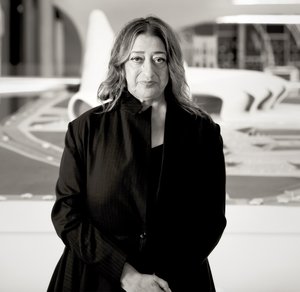
Zaha Hadid
1950 - 2016 , Irak
Érdekességek
- Artistic Movement Or Style: Dekonstruktivizmus
- Artists Or Movements Influenced By This Artist: ['Suprematizmus']
- Artists Who Influenced This Artist:
- Kazimir Malevich
- Rem Koolhaas
- Date Of Birth: 1950-10-31
- Full Name: Zaha Mohammad Hadid
- Nationality: Irak és Nagy Britanniában született
- Notable Artworks:
- Malevich Tektonik
- Tatlin Tower és Tectonic
- Place Of Birth: Bagdad, Irak

