
 Megtekintés
 Küldés
 Megosztás
 Részletek
 Útmutató

 Letöltés
 Hasonló darabok
 X-ray felvétel
 Diavetítés
 Kérdések és válaszok
 Statisztika
Metropolis

- 239.0 x 548.0 cm


 Összes részlet megjelenítése
Az ezen az oldalon megjelenített műalkotások szerzői jogi védelem alatt állnak, ami azt jelenti, hogy törvényileg nem készíthetünk és nem adhatunk el belőlük pontos másolatokat. Ez a védelem olyan nemzetközi megállapodások alapján érvényesül, mint például a Berni Egyezmény és a nemzeti jogszabályok által, beleértve azokat is, amelyeket meghatározott Az USA szerzői jogi törvénye – 17. cím.
Ez a módszer teljes mértékben megfelel a szerzői jogi szabályozásnak, mivel nem tartalmazza a védett műalkotás másolását vagy duplikálását. Ehelyett ez egy kreatív újinterpretáció – egy új festmény, amely az eredetivel való összefüggései miatt hatással van rá, de nem az az.
Giclée / Műnyomat
Múzeumi minőségű giclée vagy vászonnyomat, gyors gyártással és rugalmas finomítási lehetőségekkel. ( Kézzel festett másolat rendelése Áttérés digitális képre)




P118B Ft10

P118H Ft10

P118W Ft10

P438Z Ft10

P508JH Ft12

P508YH Ft12

P805H Ft10

P805Z Ft10

P919BZ Ft10

P919G Ft10

P919XJ Ft10

P959ZH Ft10

P968JZ Ft12

W106C Ft8

W218G Ft10

W218JH Ft8

W218Y Ft10

W307PJ Ft10

W316G Ft10

W316PJ Ft8

W316Y Ft10

W398PJ Ft8

W4111J Ft10

W500HY Ft15

W500JH Ft15

W692G Ft12

W849H Ft8

W940BG Ft15

W953PJ Ft8




Válasszon előre meghatározott méreteink közül, amelyek megfelelnek a műalkotás eredeti arányainak.

Írja be a keretének vagy a falának megfelelő szélességet és magasságot. A nyomatot csak le lehet vágni, soha nem tehető nagyobbá, mint az eredeti kép, így egy eltérő alakú méretnél a kép egy része elveszik. Mielőtt bármit kinyatintanánk, küldünk egy digitális próbamodellt jóváhagyásra. Az oldalon látható kép nem tartalmazza a valós levágást — ezt csak a próbamodell mutatja meg.
Világszerte történő kiszállítás területére mindössze 2 hét alatt, a szokásos 4-5 hét helyett. (4 november)

Ingyenes globális expressz szállítás

Prémium minőségű len vászon

Teljes körű szállítási biztosítás

Vámvisszatérítési Garancia

Hiteles színarányosság garancia

100 napos visszaküldési lehetőség (csak hibás termékek esetén)

100% pénzvisszatérítési garancia

Több darab vásárlásakor kedvezmény
 Az üvegkeretes opció csak 110 cm alatti méretben érhető el

Metropolis
Giclée / Műnyomat
Reprodukció mérete
-


Összesített ár
Ft 26301
A City’s Fever Dream: Zaha Hadid's ‘Metropolis’
Zaha Hadid’s “Metropolis,” painted in 1988, isn’t merely a cityscape; it’s a visceral representation of urban anxiety and the relentless expansion of modern life. Created during a pivotal period of her architectural career – a time when she was forging a radical new aesthetic that defied conventional spatial thinking – the painting captures a frenetic energy rarely found in traditional cityscapes. It's a work brimming with dynamism, a fever dream rendered in acrylic on canvas, and a surprisingly intimate reflection on the complexities of urban existence.
Hadid’s early artistic explorations were deeply rooted in mathematics and geometry, disciplines she approached with an almost obsessive precision. This intellectual rigor is immediately apparent in “Metropolis.” The city isn't presented as a harmonious whole but rather as a fractured mosaic of interconnected villages, each pulsating with its own distinct rhythm. These individual units – rendered in varying shades of red, ochre, and yellow – seem to be vying for dominance, creating a sense of chaotic competition. The River Thames, a vital artery of London, is depicted as a vibrant orange streak, acting as both a divider and a connector between these disparate zones.
Deconstructing the Metropolis: Style and Technique
The painting’s style is undeniably deconstructivist, anticipating many of the principles that would later define Hadid's architectural designs. The sharp angles, fragmented forms, and deliberate distortions challenge traditional notions of perspective and spatial coherence. Unlike a realistic depiction, “Metropolis” prioritizes emotional impact over photographic accuracy. Hadid employs bold brushstrokes and layered colors to build up texture and create a sense of movement—as if the city itself is constantly shifting and evolving.
Technically, the painting showcases Hadid’s early experimentation with acrylic on canvas. The medium lends itself beautifully to her fluid, dynamic style, allowing for both precise detailing and broad washes of color. Notice how she uses layering – building up colors in thin glazes—to create a luminous quality and suggest depth within the fragmented composition. The deliberate use of red isn’t simply decorative; it's symbolic, representing the intensity, urgency, and even the potential danger inherent in urban life.
Symbolism and Emotional Resonance
“Metropolis” is rich with symbolism, offering a commentary on the social and psychological pressures of modern city living. The prevalence of red—often associated with fire, passion, and conflict—suggests a simmering tension beneath the surface of the urban landscape. The individual villages represent not just physical spaces but also distinct communities, each grappling with its own challenges and aspirations. The painting subtly critiques the homogenization of urban experience, highlighting the fragmentation and isolation that can arise within densely populated areas.
Despite its somewhat unsettling depiction, “Metropolis” is ultimately a powerful and evocative work. It’s not simply a portrayal of London; it's an exploration of the human condition—our desire for connection, our struggles with identity, and our constant negotiation with the overwhelming forces of urban life. The painting invites viewers to contemplate their own relationship to the city, prompting questions about its beauty, its chaos, and its enduring allure.
A Legacy in Reproduction
Today, “Metropolis” stands as a testament to Zaha Hadid’s visionary talent and her profound impact on contemporary art and architecture. High-quality reproductions capture much of the original's dynamism and emotional intensity, offering a compelling addition to any collection or interior space. When selecting a reproduction, consider the materials used – archival quality prints on canvas or fine art paper will ensure that the colors remain vibrant for years to come, preserving the essence of this remarkable work.
Kérdések és válaszok
Elérhető diaporáma a(z) „Metropolis”, Zaha Hadid alkotása alkotáshoz?
A "Metropolis" diaporámája megtekinthető a mű Diaváltás oldalán.
Mit ábrázol a „Metropolis”, Zaha Hadid alkotása, és milyen hangulatot áraszt?
A „Metropolis”, Zaha Hadid alkotása cityscape, birds, red background, hadid, architecture, urban, metropolis-t ábrázolja, Dramatic hangulatban. A tárgy és a légkör együtt határozza meg a művet.
Milyen technikával készült és milyen méretű „Metropolis”, Zaha Hadid alkotása?
Az eredeti „Metropolis”, Zaha Hadid alkotása egy Acrylic On Canvas alkotás, amelynek mérete 239 x 548 cm. A technika és a méret az eredeti műre vonatkozik.
A művész életrajza
Zaha Hadid (1950-2016): A Revolutionary Vision
Zaha Hadid, born in Baghdad, Iraq, on October 31st, 1950, was an Iraqi and British architect whose groundbreaking designs redefined architectural practice and captivated audiences worldwide. Her journey began not within the conventional confines of artistic upbringing but amidst a stimulating intellectual environment; her father, Mohammad al-Hajj Husayn Hadid, was a successful industrialist and politician, while her mother, Wajiha al-Sabunji, nurtured a passion for art. This unique blend of pragmatism and creativity would profoundly shape young Zaha’s worldview. Initially pursuing mathematics at the American University of Beirut, she soon discovered that her true calling lay in spatial design, leading her to London in 1972 and enrollment at the Architectural Association School of Architecture. It was here, under the tutelage of influential figures like Rem Koolhaas, Elia Zenghelis, and Bernard Tschumi, that Hadid’s radical architectural thinking began to take form. These mentors encouraged a questioning of established norms, fostering an environment where experimentation and innovation thrived—a foundation upon which she would build her extraordinary career.- Early Life & Education: Zaha Hadid's formative years were marked by exposure to diverse cultural influences and a dedication to intellectual pursuits. She studied mathematics at Beirut before pursuing architecture at the Architectural Association School of Architecture in London, where she honed her skills under visionary mentors who championed innovation and challenged conventional architectural approaches.
- Style & Influences: Hadid’s distinctive style—characterized by deconstructivism—rejected rigid geometries and embraced fragmentation, dynamic curves, and fluid movement. Her aesthetic drew inspiration from Suprematism and the pioneering works of Kazimir Malevich, reflecting a commitment to abstract principles and non-rectilinear forms.
- Painting as Design Tool: Crucially, Hadid didn’t simply design buildings; she sculpted experiences. She viewed painting as an integral component of her architectural process, allowing her to explore spatial concepts and visualize complex forms before they materialized in concrete and steel—a testament to her holistic approach to creativity.
Landmark Creations: Shaping Urban Landscapes Globally
Hadid established her own practice in London in 1979, but recognition didn’t come easily. Her early designs were often considered too radical for the prevailing architectural climate. However, she persevered, and gradually, her innovative approach began to gain traction. The Hong Kong Peak Club (1983) was an early showcase of her emerging style, hinting at the breathtaking structures that would follow. Over the ensuing decades, Hadid’s firm completed a series of landmark projects that redefined urban landscapes around the globe. These included the London Aquatics Centre for the 2012 Olympics, a testament to her ability to create spaces that inspire movement and athleticism; The Broad Art Museum in Michigan, USA, with its striking pleated stainless steel facade; MAXXI – National Museum of 21st Century Arts in Rome, Italy, a complex interplay of volumes and voids; The Guangzhou Opera House in China, resembling two smooth pebbles on the Pearl River; and The Heydar Aliyev Center in Baku, Azerbaijan, embodying her signature curvilinear aesthetic. These projects weren’t just buildings—they were cultural icons, pushing the boundaries of architectural possibility.- Iconic Projects: Notable achievements included the London Aquatics Centre for the 2012 Olympics, demonstrating Hadid's ability to blend aesthetics with functionality and create spaces that fostered athletic performance; The Broad Art Museum in Michigan showcased her innovative use of materials and form, establishing a new paradigm for museum design.
- Global Recognition: Her projects garnered international acclaim, cementing Hadid’s position as one of the most influential architects of her time—a legacy that continues to inspire designers worldwide.
Recognition & Enduring Influence
The accolades bestowed upon Zaha Hadid throughout her career are a testament to her extraordinary talent and lasting impact. She received numerous awards, culminating in the Pritzker Architecture Prize in 2004—the highest honor in architecture—making her the first woman to receive this prestigious recognition individually. Further honors included the Stirling Prize (awarded twice), in 2010 and 2011, and TIME magazine including her in the ‘100 Most Influential People in the World’, naming her the world’s top thinker of 2010. Zaha Hadid was made a Dame Commander of the Order of the British Empire by Queen Elizabeth II in 2012, and in February 2016, she received the Royal Gold Medal from the RIBA. Her exploration of artistic mediums beyond architecture—such as works like “Tatlin Tower and Tectonic”—demonstrated a unique synergy between design expertise and artistic expression. Hadid’s buildings stand as enduring monuments to her innovative spirit, shaping the built environment for generations to come.Beyond Buildings: A Lasting Artistic Legacy
Hadid's creative vision extended far beyond the realm of building design. She consistently explored artistic mediums such as painting and product design, viewing them not as separate disciplines but as interconnected expressions of her unique aesthetic sensibility. Her paintings, often characterized by dynamic compositions and abstract forms, served as conceptual explorations that directly informed her architectural projects. These works weren’t simply sketches or representations; they were integral to the development of her ideas, allowing her to experiment with spatial relationships and visual textures before translating them into three-dimensional structures. Hadid's legacy transcends architectural achievements—she remains an inspiration for aspiring designers worldwide.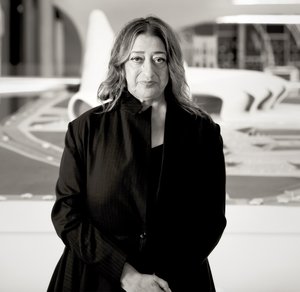
Zaha Hadid
1950 - 2016 , Irak
Rövid információk
- Artistic Movement Or Style: Dekonstruktivizmus
- Artists Or Movements Influenced By This Artist: ['Suprematizmus']
- Artists Who Influenced This Artist:
- Kazimir Malevich
- Rem Koolhaas
- Date Of Birth: 1950-10-31
- Full Name: Zaha Mohammad Hadid
- Nationality: Irak és Nagy Britanniában született
- Notable Artworks:
- Malevich Tektonik
- Tatlin Tower és Tectonic
- Place Of Birth: Bagdad, Irak
Kapcsolódó cikkek

Crimson Threads of Narrative: Exploring Symbolism & Representation in Artworks Featuring the Red Dress
Explore the rich symbolism of the red dress in art history! From ancient power displays to iconic portraits like Cézanne’s 'Madame Cezanne', discover the cultural and artistic significance behind this captivating color. Expert analysis & insights.
Urban Visions: A Historical & Artistic Exploration of the Cityscape in Painting
Explore the evolution of cityscape painting from historical maps to Impressionist masterpieces. Discover artists like Caillebotte, Utrillo & Matsumoto Shunsuke. Find museum-quality reproductions at OriginalUniqueArt.
Feathered Visions: A Historical & Artistic Exploration of Birds in Painting
Explore the rich history of birds in painting! Discover symbolism, artistic movements & master artists like Audubon. High-quality reproductions available at OriginalUniqueArt.

Mark Rothko 25 Mesterműve: Érzelmek és Színek a Modern Művészetben | OriginalUniqueArt
Fedezze fel Mark Rothko 25 legikonikusabb művét! Ismerje meg az absztrakt expresszionizmus mesterének érzelmi világát, színeit és technikáit. Múzeumi minőségű reprodukciók a OriginalUniqueArt-on – inspirálja otthonát egyedi faliképekkel! Explore the full collection online.

A National Gallery győzelmei: 25 remekmű, melyek inspirálják otthonát – OriginalUniqueArt
Fedezze fel a National Gallery London 25 legikonikusabb remekművét! Monet, Van Gogh és más mesterek festményeinek történeteit olvassa el. Inspirálja otthonát klasszikus művészettel – OriginalUniqueArt.com.