

 Megtekintés
 Küldés
 Megosztás
 Részletek

 Letöltés
 Hasonló darabok
 X-ray felvétel
 Diavetítés
Sketch


 Összes részlet megjelenítése
Giclée / Műnyomat
Múzeumi minőségű giclée vagy vászonnyomat, gyors gyártással és rugalmas finomítási lehetőségekkel. ( Kézzel festett másolat rendelése Kép letöltése)




P118B $10

P118H $10

P118W $10

P438Z $10

P508JH $12

P508YH $12

P805H $10

P805Z $10

P919BZ $10

P919G $10

P919XJ $10

P959ZH $10

P968JZ $12

W106C $8

W218G $10

W218JH $8

W218Y $10

W307PJ $10

W316G $10

W316PJ $8

W316Y $10

W398PJ $8

W4111J $10

W500HY $15

W500JH $15

W692G $12

W849H $8

W940BG $15

W953PJ $8




Válasszon előre meghatározott méreteink közül, amelyek megfelelnek a műalkotás eredeti arányainak.

Megadhat saját méreteket is egy konkrét kerethez vagy helyszínhez igazítva. Amennyiben a kiválasztott méret nem egyezik az eredeti kép arányokkal, a műalkotást le fogjuk vágni, vagy kiegészítjük a képet tükrözött vagy egyszínű szélekkel. A gyártás megkezdése előtt egy digitális tervezetet küldünk jóváhagyásra.
Kérjük, vegye figyelembe, hogy a képernyőn látható előnézet nem tükrözi a tényleges levágást vagy kiegészítést. Csak a tervezet mutatja pontosan a végső kompozíciót.
Bár az egyedi méretek is elérhetőek, az eredeti arányok megőrzése érdekében azt javasoljuk, hogy válasszon a előre meghatározott listából származó méretet.
Világszerte történő kiszállítás területére mindössze 2 hét alatt, a szokásos 4-5 hét helyett. (27 augusztus)

Ingyenes globális expressz szállítás

Prémium minőségű len vászon

Teljes körű szállítási biztosítás

Vámvisszatérítési Garancia

Hiteles színpontosság garancia

60 napos visszaküldési lehetőség (csak hibás termékek esetén)

100% pénzvisszatérítési garancia

Több darab vásárlása esetén kedvezmény
 Az üvegkeretes opció csak 110 cm alatti méretben érhető el

Sketch
Giclée / Műnyomat
Reprodukció mérete
-


Összesített ár
$ 80
A Moment of Precision: Deconstructing the Elegance of Cristóbal Balenciaga’s “Sketch”
Cristóbal Balenciaga's "Sketch," a deceptively simple study in grayscale, transcends its humble origins as a fashion illustration to become a poignant meditation on form, proportion, and the very essence of haute couture. Created around 1950, this piece isn’t merely a depiction of two hats; it’s a distilled distillation of Balenciaga's revolutionary approach to design – one that prioritized structural integrity and sculptural beauty above all else. The work speaks volumes about his profound understanding of fabric, line, and the subtle interplay between shadow and light, offering a glimpse into the mind of a master who fundamentally reshaped the landscape of 20th-century fashion.
The composition itself is remarkably restrained. Two distinct hat designs, rendered with meticulous detail, occupy nearly equal visual space, suggesting an intellectual engagement with the subject matter rather than a purely decorative exercise. Each figure – representing women in hats – is presented in profile, facing left, creating a sense of quiet observation and inviting the viewer to contemplate their individual forms. The inclusion of the address “10 Avenue George V VIII” hints at the sketch’s purpose: documentation for a design studio, a record of ideas captured before they materialized into finished garments. This detail underscores Balenciaga's methodical approach – a commitment to precision that defined his entire career.
The Language of Line and Shadow
What immediately commands attention is the sheer dominance of line in this work. Executed with remarkable control, each stroke defines shape with unwavering clarity. Hatching and cross-hatching are employed not merely for tonal variation but as a sophisticated technique to build volume and suggest texture. The crispness of the lines speaks to Balenciaga’s preference for directness – he eschewed elaborate ornamentation in favor of revealing the inherent beauty of the materials themselves. The monochromatic palette, ranging from deep charcoal to pale grey, amplifies this effect, allowing the viewer to focus entirely on the interplay of line and shadow, creating a dynamic sense of depth and form.
Balenciaga’s mastery lies in his ability to imbue seemingly static forms with a remarkable sense of movement. The hats aren't simply flat shapes; they possess an implied volume, a suggestion of weight and drape. This is achieved through the careful manipulation of line density – areas of denser hatching create darker shadows, while lighter lines delineate edges and contours. The absence of any explicit light source further enhances this effect, forcing the viewer to actively engage with the image and interpret the tonal variations as evidence of form and volume.
A Legacy of Architectural Form
“Sketch” is a quintessential example of Balenciaga’s broader artistic philosophy – one that drew heavily from the principles of Cubism and Surrealism. His designs were often described as “architectural,” reflecting his belief that clothing should be constructed with the same rigor and precision as buildings. This influence is evident in the sketch's emphasis on geometric forms, sharp angles, and a deliberate rejection of traditional draping techniques. The study’s stark simplicity mirrors the reductive aesthetic of early 20th-century modernism, while simultaneously hinting at the luxuriousness and sophistication that would become hallmarks of his couture house.
Beyond its formal qualities, “Sketch” also conveys a subtle sense of elegance and refinement. The meticulous detail, the precise lines, and the restrained palette all contribute to an atmosphere of understated luxury. It’s a testament to Balenciaga's belief that true beauty lies in simplicity and restraint – a philosophy that continues to resonate with designers and collectors today. The piece serves as a powerful reminder of his genius, not just as a fashion designer, but as a visionary artist who fundamentally altered the course of style.
A művész életrajza
Early Life and Artistic Beginnings
Cristóbal Balenciaga Eizaguirre, a name synonymous with revolutionary elegance in the world of haute couture, was born in 1895 in Getaria, a small fishing village nestled on the rugged coast of Spain’s Basque Country. This remote location, steeped in maritime tradition and surrounded by dramatic cliffs and crashing waves, would profoundly shape his artistic sensibility – a deep appreciation for structure, precision, and the inherent beauty of natural forms. His early life was marked by a close connection to his mother, a seamstress who instilled in him a profound respect for textiles and the meticulous craft of garment construction. Witnessing her dedication to detail and the artistry involved in transforming simple fabrics into wearable works of art ignited within him a lifelong passion for design. He began his apprenticeship at just twelve years old, learning the fundamentals of tailoring from a local master craftsman, absorbing techniques that would later become hallmarks of his distinctive style. This formative period laid the groundwork for his future mastery – an understanding of materials, construction, and the subtle power of form.The Rise to Parisian Prominence
Following his apprenticeship, Balenciaga’s ambition led him to San Sebastián, where he honed his skills further, eventually opening his own couture house in 1917. His early successes were fueled by patronage from prominent Spanish figures, including the Marchioness of Casa Torres, a wealthy socialite who recognized and nurtured his talent. This connection provided invaluable experience and exposure, allowing him to refine his designs and establish a reputation for impeccable quality and innovative silhouettes. In 1937, seeking new challenges and opportunities, Balenciaga moved to Paris – the undisputed heart of the fashion world. Here, he quickly established himself as a force to be reckoned with, opening a prestigious atelier on Avenue George V. His Parisian career was marked by a relentless pursuit of perfection, a commitment to pushing the boundaries of design, and an unwavering belief in his own artistic vision. He collaborated with some of the most influential figures in fashion, including Coco Chanel and Christian Dior, each of whom recognized and admired his unparalleled skill and unique aesthetic.A Revolutionary Approach to Design
Balenciaga’s designs were characterized by a remarkable departure from the prevailing trends of the mid-20th century. He rejected the overtly feminine silhouettes popularized by designers like Dior, instead favoring clean lines, geometric shapes, and an almost sculptural quality in his garments. His influence stemmed from a deep understanding of construction – he meticulously studied the way fabrics draped and moved on the human form, creating designs that were both elegant and remarkably comfortable. Key to his style was the introduction of the “barrel line” in 1947, a dramatic shift away from the traditional waistline, resulting in voluminous shapes that redefined women’s fashion. He also pioneered the "sack dress" in 1957 – a deceptively simple garment with no discernible waist – and the cocoon coat, demonstrating his ability to create garments that were both innovative and timeless. Balenciaga's work was deeply influenced by art movements such as Surrealism and Primitivism, evident in his experimental use of materials and forms.Legacy and Enduring Influence
Cristóbal Balenciaga’s impact on the world of fashion is immeasurable. He wasn’t merely a couturier; he was an architect of elegance, a master craftsman who elevated garment construction to an art form. His designs continue to inspire contemporary designers, demonstrating that true innovation lies not in fleeting trends but in a profound understanding of form, structure, and the beauty of simplicity. The Museo Balenciaga in Getaria, his birthplace, serves as a testament to his enduring legacy, preserving and celebrating his remarkable creations. He remains an iconic figure – “The Master” as he was affectionately known by his peers – whose influence continues to shape the aesthetic landscape of fashion today. His work stands as a powerful reminder that true artistry lies in the meticulous execution of a clear vision.
Cristóbal Balenciaga
1895 - 1972 , Spanyolország
A művészről röviden
- Artistic Movement Or Style: Avant-garde / Surrealista
- Artists Or Movements Influenced By This Artist: ['Hubert de Givenchy']
- Artists Who Influenced This Artist:
- Christian Dior
- Coco Chanel
- Date Of Birth: 1895. jan 21.
- Date Of Death: 1972. már 23.
- Full Name: Cristóbal Balenciaga Eizaguirre
- Nationality: Spanyol
- Notable Artworks:
- Study 'Song of Songs IV'
- Állapot gyökerei
- Acrobata
- Place Of Birth: Getaria, Spanyolország
Kapcsolódó cikkek

Cristóbal Balenciaga: Deconstructing Haute Couture's Architectural Legacy
Explore the revolutionary world of Cristóbal Balenciaga, the 'couturier's couturier'. Discover his architectural designs, lasting influence on haute couture, and guide to collecting rare pieces. A connoisseur’s resource.

The Alchemy of Graphite: An Expert Guide to Mastering Detail and Depth in Pencil Sketching
Unlock the secrets of graphite sketching with our expert guide for art students. Learn to master pencil grades, create realistic depth, and capture intricate textures through professional techniques designed to elevate your observational drawing skills.
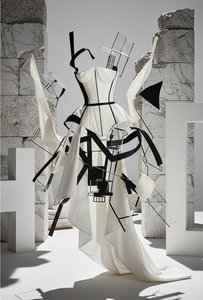
Gianfranco Ferré: Deconstructing Haute Couture – A Legacy of Architectural Form
Explore the revolutionary world of Gianfranco Ferré, 'the architect of fashion.' Discover his architectural approach to haute couture, iconic Dior designs, and lasting influence on luxury style. A deep dive for collectors & enthusiasts.

The Eloquent Line: Exploring the Artistic Significance of Sketches Across Movements and Media
Explore the profound artistic significance of sketches throughout history. From Renaissance masters to modern innovators like Van Gogh & Guston, discover how these foundational works reveal technique, emotion, and vision. Learn more at OriginalUniqueArt.
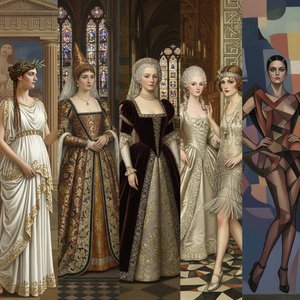
Style Through the Ages: Iconic Artworks That Defined the Evolution of Fashion Design
Explore the breathtaking intersection of fine art and high fashion. Discover how iconic masterpieces from Art Deco to Impressionism have shaped the world of luxury couture and timeless design in this curated visual journey.



