Előnézet
 Megosztás
 Megosztás
 Részletek
 Útmutató

 Letöltés
 Hasonló darabok
 X-ray felvétel
 Diavetítés
 Statisztika
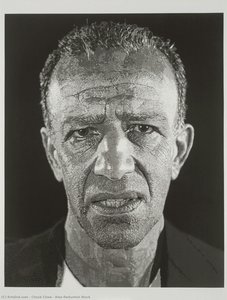
Barack Obama by Chuck Close


 Tovább olvasom
Az ezen az oldalon megjelenített műalkotások szerzői jogi védelem alatt állnak, ami azt jelenti, hogy törvényileg nem készíthetünk és nem adhatunk el belőlük pontos másolatokat. Ez a védelem olyan nemzetközi megállapodások alapján érvényesül, mint például a Berni Egyezmény és a nemzeti törvények által, beleértve azokat is, amelyeket meghatározott Az USA szerzői jogi törvénye – 17. cím.
Ez a módszer teljes mértékben megfelel a szerzői jogi szabályozásnak, mivel nem tartalmazza a védett műalkotás másolását vagy duplikálását. Ehelyett ez egy kreatív újinterpretáció – egy új festmény, amely az eredetivel való összefüggései miatt hatással van rá, de nem az az.
Giclée / Műnyomat
Múzeumi minőségű giclée vagy vászonnyomat, gyors gyártással és rugalmas finomítási lehetőségekkel. ( Kézzel festett másolat vásárlása Áttérés digitális képre)




P118B Ft10

P118H Ft10

P118W Ft10

P438Z Ft10

P508JH Ft12

P508YH Ft12

P805H Ft10

P805Z Ft10

P919BZ Ft10

P919G Ft10

P919XJ Ft10

P959ZH Ft10

P968JZ Ft12

W106C Ft8

W218G Ft10

W218JH Ft8

W218Y Ft10

W307PJ Ft10

W316G Ft10

W316PJ Ft8

W316Y Ft10

W398PJ Ft8

W4111J Ft10

W500HY Ft15

W500JH Ft15

W692G Ft12

W849H Ft8

W940BG Ft15

W953PJ Ft8




Válasszon előre meghatározott méreteink közül, amelyek megfelelnek a műalkotás eredeti arányainak.

Írja be a keretének vagy a falának megfelelő szélességet és magasságot. A nyomatot csak le lehet vágni, soha nem tehető nagyobbá, mint az eredeti kép, így egy eltérő alakú méretnél a kép egy része elveszik. Mielőtt bármit kinyatintanánk, küldünk egy digitális próbamodellt jóváhagyásra. Az oldalon látható kép nem tartalmazza a valós levágást — ezt csak a próbamodell mutatja meg.
Világszerte történő kiszállítás területére mindössze 2 hét alatt, a szokásos 4-5 hét helyett. (22 október)

Ingyenes globális expressz szállítás

Prémium minőségű len vászon

Teljes körű szállítási biztosítás

Vámvisszatérítési Garancia

Tökéletes színarányosság garancia

100 napos visszaküldési garancia (csak gyártási hibás termékek esetén)

100% pénzvisszatérítési garancia

Több darab vásárlásakor kedvezmény
 Az üvegkeretes opció csak 110 cm alatti méretben érhető el

Barack Obama by Chuck Close
Giclée / Műnyomat
Reprodukció méretei
-


Összesített ár
Ft 25277
Barack Obama by Chuck Close: A Portrait of Resilience and Reflection
Chuck Close’s “Barack Obama” is more than just a photograph; it's a testament to the artist’s groundbreaking approach to portraiture and a poignant exploration of identity. Created in 2013, this diptych—featuring two black and white prints—captures Obama’s gaze with remarkable detail and immediacy, embodying Close’s signature style: monumental hyperrealism achieved through a meticulous grid system. The artwork speaks volumes about the artist's dedication to overcoming personal challenges and his profound understanding of human expression.- The Grid System Technique: Close revolutionized portraiture by abandoning traditional painting methods after suffering paralysis in 1988. Instead, he adopted a technique where he meticulously recreated a photograph onto canvas using a grid of colored squares—a method that allowed him to maintain artistic control and overcome physical limitations. This innovative approach became synonymous with his oeuvre.
- Photographic Realism: The prints themselves are exemplary of photographic realism. Close painstakingly transferred the image from a Polaroid camera, capturing Obama’s facial features and expression with astonishing accuracy. Lines are sharply defined, outlining Obama's contours and conveying a sense of solidity and presence.
- Historical Context: “Barack Obama” emerged during a pivotal moment in American history—the election of Barack Obama as the first African American president in 2008. The photograph reflects optimism and confidence, mirroring the broader aspirations for progress and unity that characterized the era.
- Symbolism & Emotion: Close’s deliberate framing—centering Obama within a rectangular frame—emphasizes his gaze and invites contemplation. The subtle graininess of the photographic process lends texture to the image, creating a tactile impression that enhances its emotional impact. It's a portrait not merely of a figure but of an idea – resilience, determination, and unwavering focus.
Detailed Analysis: Composition and Texture
The diptych format contributes significantly to the artwork’s visual narrative. Each print is meticulously composed with Obama positioned centrally within a rectangular frame, maximizing impact and conveying a sense of balance. The artist's careful attention to detail—particularly in delineating Obama’s facial features—is evident throughout the piece. Furthermore, Close skillfully utilizes texture through the photographic process itself. The grainy surface of the prints mimics the imperfections inherent in traditional printing techniques, adding depth and realism to the image. This textural element reinforces the artwork’s emotional resonance, inviting viewers to engage with its materiality alongside its visual content.Beyond Technique: Artistic Vision and Legacy
Chuck Close's unwavering commitment to pushing artistic boundaries—particularly his pioneering use of grid painting—established him as a visionary figure in contemporary art. His exploration of face blindness (prosopagnosia) fueled his artistic practice, prompting him to seek new ways to represent human identity. “Barack Obama” exemplifies this dedication to innovation and serves as a powerful reminder of Close’s enduring influence on portraiture and visual culture. It stands as an iconic image capturing the spirit of a transformative moment in American history—a testament to both artistic mastery and profound human empathy.Considerations for Reproduction & Display
Reproductions of “Barack Obama” by Chuck Close offer exceptional quality, faithfully recreating the artist’s meticulous technique and capturing the essence of his vision. Framing this artwork in a neutral setting—such as a gallery or home interior—allows its striking composition and textural detail to shine through, enhancing its aesthetic appeal and conveying its historical significance. Its enduring presence within the art world underscores Close's legacy as one of the most influential portrait artists of our time.Gyakran Ismételt Kérdések
Hol találhatok olyan műalkotásokat, amelyek hasonlóak a(z) „Barack Obama by Chuck Close”, Chuck Close alkotása alkotáshoz?
A „Barack Obama by Chuck Close”, Chuck Close alkotása alkotással hasonló műwerkepek a műalkotás Hasonló műalkotások oldalán gyűjthetők össze.
Megtekinthetem a „Barack Obama by Chuck Close”, Chuck Close alkotása alkotást rendelés előtt?
A „Barack Obama by Chuck Close”, Chuck Close alkotása reprodukciójának megtekintéséhez nyissa meg a mű Előnézet oldalát.
Maradt-e a "Barack Obama by Chuck Close" mű a művész hon országában?
Nem – a műtárgy külföldön található. A „Barack Obama by Chuck Close” mű Egyesült Királyság múzeumának gyűjteményében található, míg Chuck Close Egyesült Államok országban született.
A művész életrajza
Chuck Close - A Pioneer of Photorealism
Chuck Close (1940–2021) redefined the portrait in the contemporary art world beginning in 1967 with his first larger-than-life portraits based on photographs. He is best known for his photorealistic technique, which combined both realistic presentation and abstract detail to create monumental images of himself and others. Close’s approach challenged conventional notions of representation, questioning how we perceive and depict the human figure. His work stands as a testament to artistic innovation and resilience, demonstrating that art can flourish even in the face of profound adversity.- Early Life & Education: Born in Monroe, Washington, Chuck Close faced significant challenges from a neuromuscular condition coupled with dyslexia—obstacles that shaped his unique perspective. He practiced drawing extensively as a child, fueled by encouragement from his parents and inspired by Jackson Pollock’s expressive drip paintings at the Seattle Art Museum.
- The Birth of Photorealism: Close's fascination with Pollock propelled him toward exploring photography as his primary source material. Rejecting abstraction, he developed a meticulous process of translation—transferring photographic images onto enormous canvases using a grid system and replicating each detail with painstaking accuracy.
- Technical Innovation & Method: His groundbreaking technique involved breaking down photographs into manageable squares and applying acrylic paint with an airbrush to duplicate the exact shadings of each grid in the photo. This method wasn’t merely about flawless reproduction but rather about revealing the underlying structure of perception itself—a radical departure from traditional portraiture.
- Influence & Legacy: Close's work profoundly impacted photorealism and contemporary art as a whole, inspiring generations of artists to explore new ways of representing reality. His exploration of scale, detail, and process continues to resonate today, cementing his place as one of the most important figures in 20th-century art.
Exploring Scale & Detail: The Grid System Technique
Close’s distinctive method—the grid system—became synonymous with photorealism and revolutionized portrait painting. He meticulously transferred photographic images onto canvases divided into squares, ensuring that every detail was faithfully reproduced. This process demanded immense patience and precision, reflecting Close's unwavering dedication to achieving an unparalleled level of realism. As Graham Thompson wrote “One demonstration of the way photography became assimilated into the art world is the success of photorealist painting in the late 1960s and early 1970s. It is also called super-realism or hyperrealism and painters like Richard Estes, Denis Peterson, Audrey Flack, and Chuck Close often worked from photographic stills to create paintings that appeared to be photographs.”- Detailed Replication: Each square of the grid was painstakingly duplicated with acrylic paint using an airbrush, capturing subtle variations in tone and texture.
- Razor Blade Scraping: After applying multiple layers of paint, Close would scrape off excess material with a razor blade—a deliberate act that stripped away illusionistic detail to reveal the underlying structure of the image.
- Philosophical Significance: This technique wasn’t simply about achieving visual accuracy; it was also an attempt to dissect and rebuild perception, prompting viewers to consider how images are constructed and how we experience them.
Facing Adversity & Continuing Artistic Expression
In 1988 Chuck Close suffered a spinal artery occlusion—a devastating event that paralyzed him from the neck down. Despite this profound physical challenge, Close refused to abandon his artistic pursuits and continued to paint using innovative techniques adapted to his limited mobility. He developed new methods for applying paint with his mouth, demonstrating an extraordinary spirit of resilience and reaffirming his belief in art’s transformative power. “Some people say we need art in school because playing violin is good for your math skills ... but I believe it solves an even bigger problem than test scores, and that's the dropout rate. When I was in school, as learning disabled as I was, we had art and music several times a week. Had I not had that, I would have dropped out of school” (Viveros-Faune). His unwavering commitment to his craft serves as an inspiration for artists worldwide.Influence & Recognition: A Lasting Impact on Contemporary Art
Chuck Close’s influence extends beyond his technical innovations; he fundamentally altered the way artists approached portraiture, prioritizing observation and meticulous detail over idealized representations. His work has been exhibited extensively internationally and resides in prestigious museum collections such as the Art Institute of Chicago, the Museum of Modern Art (New York), and the Tate Gallery (London). He remains a central figure in the history of photorealism, inspiring generations of artists to explore the boundaries between photography and painting—a legacy that continues to resonate powerfully today.
Chuck Close
1940 - , Egyesült Államok
Gyors információk
- Artistic Movement Or Style: Fotorealizmus
- Artists Or Movements Influenced By This Artist: ['Photorealizmus']
- Artists Who Influenced This Artist:
- Jackson Pollock
- Willem de Kooning
- Date Of Birth: July 5, 1940
- Full Name: Chuck Thomas Close
- Nationality: Amerikai Egyesült Államok
- Notable Artworks:
- Big Self-Portrait
- Mark
- Nat
- Place Of Birth: Monroe, Washington
Kapcsolódó cikkek

A Fehér Szín Mesterei: 10 Híres Festmény, Amelyek Elvarázsolnak – OriginalUniqueArt.com
Fedezze fel a 10 legikonikusabb fehér tónusú festményt! Monet, Van Gogh és más mesterek alkotásainak története. Vászonképek, reprodukciók – inspiráció otthonába. OriginalUniqueArt.com: minőségi művészet online.

Grant Wood & American Regionalism: Identity, Myth & the Rural Landscape
Explore the world of Grant Wood & American Regionalism with OriginalUniqueArt. Discover the symbolism behind 'American Gothic', recurring themes, and the movement's lasting impact on art history. High-quality reproductions available.

Monochrome Visions: Exploring the Aesthetic & Historical Significance of Black & White Photography
Explore the rich history & artistic power of black and white photography. From early techniques to iconic masters like Ansel Adams, discover why monochrome continues to captivate art lovers today. Expert insights for collectors.

A Fekete Szín Mesterei: 10 Híres Festmény, Amelyek Elvarázsolnak – OriginalUniqueArt.com
Fedezze fel a 10 leghíresebb, fekete tónusú festményt! Rembrandt, Goya és Manet remekművei elvarázsolják. Művészettörténet, inspiráció otthonába – OriginalUniqueArt.com kínálatából. Fedezze fel a teljes gyűjteményt online!
Shadow & Soul: Why Black & White Photography Remains the Ultimate Power Move in Modern Art
Discover why black & white photography remains a powerful force in contemporary art. Explore the impact of light, shadow, and texture through a visual journey of monochrome mastery and learn how to elevate your space with timeless grayscale aesthetics.