

 Előnézet
 Megosztás
 Megosztás
 Részletek
 Útmutató

 Letöltés
 Hasonló darabok
 X-ray felvétel
 Diavetítés
 Statisztika
Untitled (958)

 Tovább olvasom
Giclée / Műnyomat
Múzeumi minőségű giclée vagy vászonnyomat, gyors gyártással és rugalmas finomítási lehetőségekkel. ( Kézzel festett másolat vásárlása Áttérés digitális képre)




































Válasszon előre meghatározott méreteink közül, amelyek megfelelnek a műalkotás eredeti arányainak.

Megadhat saját méreteket is egy konkrét kerethez vagy helyszínhez igazítva. Amennyiben a kiválasztott méret nem egyezik az eredeti kép arányokkal, a műalkotást le fogjuk vágni, vagy kiegészítjük a képet tükrözött vagy egyszínű szélekkel. A gyártás megkezdése előtt egy digitális tervezetet küldünk jóváhagyásra.
Kérjük, vegye figyelembe, hogy a képernyőn látható előnézet nem tükrözi a tényleges levágást vagy kiegészítést. Csak a tervezet mutatja pontosan a végső kompozíciót.
Bár az egyedi méretek is elérhetőek, az eredeti arányok megőrzése érdekében azt javasoljuk, hogy válasszon a előre meghatározott listából származó méretet.
Világszerte történő kiszállítás területére mindössze 2 hét alatt, a szokásos 4-5 hét helyett. (27 szeptember)

Ingyenes globális expressz szállítás

Prémium minőségű len vászon

Teljes körű szállítási biztosítás

Vámvisszatérítési Garancia

Tökéletes színarányosság garancia

100 napos visszaküldési garancia (csak gyártási hibás termékek esetén)

100% pénzvisszatérítési garancia

Több darab vásárlásakor kedvezmény
 Az üvegkeretes opció csak 110 cm alatti méretben érhető el

Untitled (958)
Giclée / Műnyomat
Reprodukció méretei
-


Összesített ár
$ 80
A Delicate Bloom: Exploring Mackintosh's "Untitled (958)"
This captivating artwork, currently known as “Untitled (958),” offers a glimpse into the refined aesthetic of Charles Rennie Mackintosh, a pivotal figure in the Glasgow Style movement. While lacking a formal title from the artist’s hand, its visual impact speaks volumes about his mastery of decorative arts and his unique approach to floral representation. The painting presents a close-up study of pink flowers interwoven with lush green foliage, creating an intimate and visually rich composition. The presence of three small white dots adds a subtle layer of intrigue – perhaps representing dewdrops or simply serving as delicate accents within the overall design.Style & Technique: Echoes of Art Nouveau
Mackintosh’s style is instantly recognizable, firmly rooted in the Art Nouveau movement but infused with his distinct Scottish sensibility. Unlike the more overtly ornate and flowing forms often associated with Art Nouveau, Mackintosh favored a restrained elegance characterized by geometric precision and simplified lines. This piece exemplifies this approach; while depicting natural forms – flowers and leaves – they are rendered with a clarity and linearity that borders on abstraction. The technique appears to be executed in oil paint, allowing for subtle gradations of color within the petals and leaves, creating depth and texture despite the relatively flat perspective. The close cropping of the subject matter is also characteristic of his work, focusing attention entirely on the beauty of the floral arrangement.Historical Context & The Glasgow Style
Created during Mackintosh’s prolific period (likely around the turn of the 20th century), “Untitled (958)” reflects the burgeoning artistic scene in Glasgow. The "Glasgow Style" was a unique blend of Art Nouveau, Celtic Revival influences, and Scottish vernacular architecture and design. Mackintosh spearheaded this movement, leaving an indelible mark on interior design, furniture making, and decorative arts. His work aimed to create harmonious environments – total works of art encompassing architecture, furnishings, and decorative elements. This painting can be seen as a smaller-scale manifestation of that holistic vision, demonstrating his ability to translate the principles of good design into a captivating floral study. His collaborations with his wife, Margaret Macdonald Mackintosh, were also crucial in shaping this distinctive style; her own symbolic and often mystical imagery frequently complemented his architectural designs.Symbolism & Emotional Impact
While seemingly straightforward in its depiction of flowers, the painting likely carries deeper symbolic weight within the context of Mackintosh’s broader artistic philosophy. Flowers often represent themes of growth, beauty, and transience – concepts that resonate with the Art Nouveau fascination with nature. The restrained palette of pinks and greens evokes a sense of tranquility and understated elegance. The overall effect is one of quiet contemplation; the viewer is invited to appreciate the delicate details and subtle harmonies within this miniature floral world. It’s a piece that inspires serenity and offers a moment of respite from the complexities of modern life, embodying Mackintosh's desire to create spaces and objects that nurture the soul.A művész életrajza
A Scottish Visionary: The Life and Art of Charles Rennie Mackintosh
Charles Rennie Mackintosh, born in Glasgow on June 7, 1868, was more than an architect; he was a philosophical artist who sought to harmonize every aspect of the built environment. From the grandest structures to the smallest details of furniture and ornamentation, his vision aimed for a holistic aesthetic experience—a distinctly Scottish interpretation of the burgeoning Art Nouveau movement. Growing up as one of eleven children in a family where his father served as a police superintendent, Mackintosh’s early life offered little indication of the artistic revolution he would ignite. His education at Reid's Public School and Allan Glen's Institution revealed an aptitude for art but also hinted at challenges with traditional academic disciplines, possibly indicative of dyslexia. This divergence from conventional learning may have fostered his unique perspective, allowing him to approach design unbound by established norms. His formative years were significantly shaped by his apprenticeship under architect John Hutchison, coupled with evening classes at the Glasgow School of Art—a crucible where he forged crucial relationships with fellow students Herbert McNair, Margaret Macdonald, and Frances Macdonald, collectively known as “The Four.” These connections weren’t merely professional; they were deeply collaborative, influencing each other's artistic trajectories and forming the core of what would become the Glasgow Style.Forging a New Aesthetic: The Glasgow Style and Architectural Masterpieces
By the 1890s, Mackintosh had emerged as a leading figure in the “Glasgow Style,” an Art Nouveau variant infused with Celtic symbolism, Japanese aesthetics, and the principles of the Arts and Crafts movement. This wasn’t simply about applying decorative motifs; it was about creating a total work of art—where architecture, furniture, interiors, and even textiles were conceived as interconnected elements of a unified design. His architectural philosophy centered on rejecting Victorian grandeur in favor of simplicity, elegance, and organic forms—a deliberate reaction against the prevailing stylistic trends of his time. The Glasgow School of Art building stands as testament to this conviction: its soaring ceilings, expansive windows, and innovative use of steel framing prioritized natural light and spatial openness, reflecting Mackintosh’s belief that architecture should inspire creativity and foster contemplation. Notable projects included Windyhill, Kilmacolm—a country house designed with meticulous attention to detail and blending seamlessly into the surrounding landscape—and Hill House, Helensburgh—a hauntingly beautiful dwelling celebrated for its ethereal atmosphere and masterful manipulation of light and shadow. Furthermore, Mackintosh’s contribution to Scotland Street School exemplifies his commitment to educational spaces that nurture imagination and promote a harmonious relationship between humans and nature.The Four: Collaboration and Artistic Influence
Mackintosh's artistic journey was inextricably linked with the partnership he established with Margaret Macdonald Mackintosh—his wife since 1900—Herbert McNair, and Frances Macdonald. Collectively known as “The Four,” these artists shared a profound intellectual kinship and pursued a unified aesthetic vision that transcended individual styles. Their collaborative endeavors produced iconic designs for furniture, textiles, and interiors—works characterized by their geometric precision, muted color palettes, and subtle textural variations. The Glasgow Style itself was born from this collective effort, representing a radical departure from conventional decorative arts and establishing Mackintosh and his associates as pioneers of modern design. McNair’s influence on Mackintosh's architectural approach is evident in the restrained materiality and understated elegance of buildings like Scotland Street School—a space designed to stimulate creativity and foster a connection with the natural world. Macdonald’s contribution extended beyond collaborative projects; she was also a skilled watercolorist whose evocative depictions of Scottish landscapes captured the spirit of Mackintosh’s artistic sensibility.A Period of Transition and Artistic Exploration
The First World War profoundly impacted Mackintosh's life, prompting him to relocate to Walberswick, Suffolk, England—a move that marked a significant shift away from his Glasgow base and professional commitments. During this period, Mackintosh largely ceased active architectural practice, dedicating himself instead to watercolor painting—an activity that allowed him to express his artistic sensibilities in a quieter, more contemplative manner. These paintings—often featuring depictions of flowers and landscapes—reveal a different facet of Mackintosh’s artistry—one characterized by delicate brushstrokes, subtle tonal gradations, and an unwavering focus on capturing the beauty of the natural world. Despite facing financial difficulties and professional obscurity, Mackintosh continued to refine his artistic skills, producing a body of work that would eventually be recognized for its enduring elegance and originality.Legacy and Rediscovery: A Lasting Impact on Modern Design
Charles Rennie Mackintosh died in London on December 10, 1928—a tragic end to a life devoted to artistic innovation. For decades after his death, his work remained largely unrecognized, overshadowed by more dominant architectural trends. However, beginning in the late 1960s and continuing into the present day, Mackintosh experienced a remarkable revival of interest—fueled by scholars, designers, and critics who championed his pioneering vision and celebrated his enduring influence on modern art and design. His emphasis on simplicity, functionality, and the integration of art and architecture resonated powerfully with modernist principles—establishing him as one of Scotland’s most important architects and artists—a visionary whose aesthetic continues to inspire generations of creatives worldwide. Today, Mackintosh's buildings stand as monuments to his genius—testaments to a belief that true artistic achievement lies in pursuing a singular vision—one that transcends time and remains eternally relevant.
Charles Rennie Mackintosh
1868 - 1928 , Egyesült Királyság
Gyors információk
- Artistic Movement Or Style: Art Nouveau, Glasgow Style
- Artists Or Movements Influenced By This Artist: ['Modernism']
- Date Of Birth: June 7, 1868
- Date Of Death: December 10, 1928
- Full Name: Charles Rennie Mackintosh
- Nationality: Scottish
- Notable Artworks:
- Untitled (958)
- Untitled (592)
- Glasgow School of Art
- Place Of Birth: Glasgow, Scotland
Kapcsolódó cikkek
The Flowing Line & Flourishing Form: Exploring Art Nouveau's Aesthetic Legacy
Explore the captivating world of Art Nouveau! Discover its origins, key artists like Horta & Mucha, regional styles, innovative techniques, and lasting influence on architecture & design. A comprehensive guide for art enthusiasts.
Art Nouveau Mesterek: A 10 Legikonikusabb Műalkotás, Amelyek Meghatározták a Stílust
Fedezze fel a 10 legikonikusabb Art Nouveau műalkotást! Ismerje meg Alphonse Mucha, Gustav Klimt és más mesterek történetét. Szecessziós festmények, plakátok és dekorációk – inspirálódjon otthona számára a OriginalUniqueArt.com-on!
The Elegance of Art Nouveau: Embracing Nature's Fluid Beauty and the Belle Époque Spirit
Discover the enchanting world of Art Nouveau. Explore the organic beauty, flowing lines, and Belle Époque elegance that defined an era of unparalleled craftsmanship and natural inspiration.
A fényrózsaszín varázsa: 10 ikonikus festmény a művészettörténetből
Fedezze fel a 10 legikonikusabb festményt, melyeket a fényrózsaszín varázsa jellemez! Monet-tól Renoir-ig, ismerje meg a művészettörténet e gyönyörű árnyalatainak szerepét. Vászonképek és reprodukciók prémium minőségben – OriginalUniqueArt.com
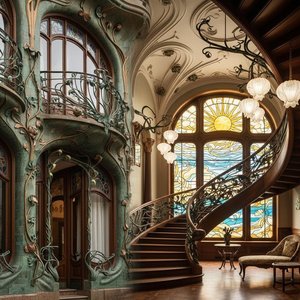
Art Nouveau: The Elegant Fusion of Nature and Design – A Journey Through Organic Sophistication
Discover the exquisite world of Art Nouveau. Explore the elegant fusion of nature and design through architectural masterpieces, organic forms, and the legendary masters of the Belle Époque. Immerse yourself in a journey of timeless sophistication and ornamental beauty.