() ·

A painting made for you, by hand

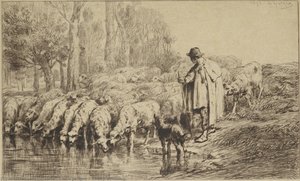
On the Pasture

Kézzel készített olajfestmény reprodukció

Kézzel festett olajvastú vászon, az Ön által választott méretben és keretben, művészeink készítik meglévőre. ( Váltás nyomtatványra Áttérés digitális képre)

A gyűjtemény leírása

Charles-Émile Jacque's 'On the Pasture' captures a serene rural scene of a man and sheep under a tree, showcasing the Barbizon School’s idyllic landscapes and masterful detail.

A művész életrajza

Charles-Émile Jacque (1813-1894): A Barbizon Iskola festője az idilli vidéki jelenetek, juhok és állatok világának. Remekművészi rémtéltések készítője és a realizmus kulcsfontosságú alakja.

from ·

Chapter 1

How large should it be?

Slide to change the size; the picture on the left shows the frame at its real width. The proportions of the original are kept.

Standard méret
egyedi méretű
CM
INCH

Válasszon előre meghatározott méreteink közül, amelyek megfelelnek a műalkotás eredeti arányainak.

szélesség
magasság

Írja be a kívánt szélességet és magasságot, hogy illeszkedjen a keretéhez vagy a falához. Mivel ez kézzel festett alkotás, egy eltérő formájú méret esetén a művész akár festhet is valamivel többet a kép körül, vagy korolathat is belőle — az Ön döntésének megfelelően. A festés megkezdése előtt küldünk egy digitális tervezetet jóváhagyásra. Az oldalon látható kép nem tartalmazza a végeredményt — csak a tervezet mutatja meg a valódi eredményt.

Chapter 2

How should it arrive?

Choose the edges of the stretched canvas

Choose your frame

Corner sample of the WhiteWrap canvas edge finish, stretched on tömörfa bars
White Ft1
Corner sample of the BlurSideWrap canvas edge finish, stretched on tömörfa bars
Blurside Ft1
Corner sample of the ExtendedWrap canvas edge finish, stretched on tömörfa bars
Extended Ft1
Corner sample of the P118B picture frame: formázott polisztirol, 5 cm wide and 3 cm thick
P118B Ft10
Corner sample of the P118H picture frame: formázott polisztirol, 5 cm wide and 3 cm thick
P118H Ft10
Corner sample of the P118W picture frame: formázott polisztirol, 5 cm wide and 3 cm thick
P118W Ft10
Corner sample of the P438Z picture frame: formázott polisztirol, 5.5 cm wide and 3.5 cm thick
P438Z Ft10
Corner sample of the P508JH picture frame: formázott polisztirol, 7 cm wide and 3.5 cm thick
P508JH Ft12
Corner sample of the P508YH picture frame: formázott polisztirol, 7 cm wide and 3.5 cm thick
P508YH Ft12
Corner sample of the P805H picture frame: formázott polisztirol, 5 cm wide and 3.5 cm thick
P805H Ft10
Corner sample of the P805Z picture frame: formázott polisztirol, 5 cm wide and 3.5 cm thick
P805Z Ft10
Corner sample of the P919BZ picture frame: formázott polisztirol, 7 cm wide and 3.5 cm thick
P919BZ Ft10
Corner sample of the P919G picture frame: formázott polisztirol, 7 cm wide and 3.5 cm thick
P919G Ft10
Corner sample of the P919XJ picture frame: formázott polisztirol, 7 cm wide and 3.5 cm thick
P919XJ Ft10
Corner sample of the P959ZH picture frame: formázott polisztirol, 5 cm wide and 3 cm thick
P959ZH Ft10
Corner sample of the P968JZ picture frame: formázott polisztirol, 6 cm wide and 4 cm thick
P968JZ Ft12
Corner sample of the W106C picture frame: tömörfa, 5 cm wide and 3 cm thick
W106C Ft8
Corner sample of the W218G picture frame: tömörfa, 5 cm wide and 3 cm thick
W218G Ft10
Corner sample of the W218JH picture frame: tömörfa, 5 cm wide and 3 cm thick
W218JH Ft8
Corner sample of the W218Y picture frame: tömörfa, 5 cm wide and 3 cm thick
W218Y Ft10
Corner sample of the W307PJ picture frame: tömörfa, 6 cm wide and 3 cm thick
W307PJ Ft10
Corner sample of the W316G picture frame: tömörfa, 6 cm wide and 3 cm thick
W316G Ft10
Corner sample of the W316PJ picture frame: tömörfa, 6 cm wide and 3 cm thick
W316PJ Ft8
Corner sample of the W316Y picture frame: tömörfa, 6 cm wide and 3 cm thick
W316Y Ft10
Corner sample of the W398PJ picture frame: tömörfa, 5 cm wide and 3 cm thick
W398PJ Ft8
Corner sample of the W4111J picture frame: tömörfa, 6.5 cm wide and 3.5 cm thick
W4111J Ft10
Corner sample of the W500HY picture frame: tömörfa, 7 cm wide and 5 cm thick
W500HY Ft15
Corner sample of the W500JH picture frame: tömörfa, 7 cm wide and 5 cm thick
W500JH Ft15
Corner sample of the W692G picture frame: tömörfa, 8 cm wide and 4 cm thick
W692G Ft12
Corner sample of the W849H picture frame: tömörfa, 5 cm wide and 3 cm thick
W849H Ft8
Corner sample of the W940BG picture frame: tömörfa, 7.5 cm wide and 4.5 cm thick
W940BG Ft15
Corner sample of the W953PJ picture frame: tömörfa, 6 cm wide and 3.5 cm thick
W953PJ Ft8
Corner sample of the H24-GOLD picture frame: faragott fa gesszóval, 10 cm wide and 6 cm thick
H24-GOLD Ft30
Corner sample of the H24-SILVER picture frame: faragott fa gesszóval, 10 cm wide and 6 cm thick
H24-SILVER Ft30
Corner sample of the H36-GOLD picture frame: faragott fa gesszóval, 15 cm wide and 6.5 cm thick
H36-GOLD Ft45
Corner sample of the H36-SILVER picture frame: faragott fa gesszóval, 15 cm wide and 6.5 cm thick
H36-SILVER Ft45

Moulding: . Overall size with the frame: .

Chapter 3

Who paints it, and should anything change?

Examples of what can be changed: Replace face with customer photo; Add pet (e.g., replace cat with dog); Include hidden message in background; Change background landscape or elements.
After order, OriginalUniqueArt.com team will email client for instructions and provide a mockup preview

Világszerte elérhető szállítás () 3-4 hét alatt a szokásos 5 hét helyett. (3 november). A minőség nem kérdőjelezhető.

Chapter 4

The finishing touches

A nameplate, as in a museum?

A gravírozott bronztábla részletei

This elegant plaque features the artist's name and the title of the artwork, finely engraved for a timeless presentation.

It is made from bronze with a refined, elegant finish. The text is precisely laser-engraved for a sharp and permanent result. Measuring 9x2 cm, the plaque is compact yet easy to read. It's built to be durable and scratch-resistant, offering a professional, museum-quality look. Mounting is simple thanks to the included adhesive backing.

Átlátszó akril tábla részletei

The plaque includes essential engraved details such as the artist's name, the title of the artwork, the date it was created, the type of media used-like oil on canvas or watercolor-a brief description of the piece, and a QR code that links to the complete artwork information.

It is crafted from clear acrylic, offering a sleek, modern appearance. The text is UV-engraved in black to ensure strong visual contrast. With a size of 10x15 cm, it ensures optimal readability. It comes equipped with two metal hooks for secure wall mounting. The plaque is designed to be weather-resistant, making it suitable for various environments, and it includes interactive features that work seamlessly with smartphone scanning.

Fekete akril tábla részletei

This elegant plaque includes engraved information such as the artist's name, the title of the artwork, the date it was created, the type of media used (like oil on canvas or watercolor), a short description of the artwork, and a QR code for quick access to more information.

The plaque itself is made from refined black acrylic with a premium finish. The text is laser-engraved in white for high contrast and readability. Its size is 10x15 cm, designed to be easy to read. It comes with two metal hooks for professional mounting. The design is sleek and fits any interior style. It is also weather-resistant and durable, with built-in digital integration for mobile compatibility.

A protective varnish?

When do you need it?

Chapter 5

Your painting, as you ordered it

On the Pasture

Reprodukciós technika

Reprodukció mérete

-

Kiváló mesterművész

Nagyobb részletesség, finomság és bővített gyártási idő

-

Reprodukció keretezése

-

-

A bármely oldalsó méretét túlszálaló 105 cm (kb. 41 hüvelyk) meghaladó műalkotások vagy reprodukciók esetében a keret összeszerelhető készletként, szétszerelve kerül szállításra. Ez a módszer biztosítja a biztonságos szállítást, és megakadályozza a szállítás során fellépő sérüléseket.

Szakmész összeszerelést igényel – ez nem DIY (önösszeszerelhető) termék.
A készletet egy tapasztalt keretező szakembernek kell összeszerelnie és a vásznat feszítenie kell, fa ragasztó (nem tartalmazza a csomag), vásznfeszítő fogó és szorítók használatával, amelyek a ragasztó száradásáig a keretrészeket egymáshoz vuôngjba tartják. A helytelen összeszerelés vagy a nem egyenletes vásznfeszítés maradandó károsíthatja a műalkotást, és ez nem része a garanciánknak.

  • A készlet tartalmazza az összes tömörfa rudat, pontosan méretre vágva.

  • A mellékelt csavarokkal, valamint a sarokszerekhez szükséges faütő ragasztóval kell összeszerelnie (ez nem tartalmazható a csomagban), így a keretrendezőnek külön kell beszereznie.

  • A csomag nem tartalmazza a szükséges professzionális eszközöket: egy vászonfeszítőt és klipseket a rácsok vízszintes tartásához a ragasztó megszáradásáig.

Fontos:
A sarokcsatlakozásokhoz fánylagra van szükség, a keretrudakat szorítókapcsokkal kell rögzíteni, amíg a rag teljesen meg nem szárad, a kész keretre feszített vászonhoz pedig vászonfeszítő fogat szükséges. Ezek egyike sem található meg a készletben. Kérjük, rendelés előtt győződjön meg róla, hogy rendelkezik tapasztalt keretező szakemberrel.

Névtábla

-

-

Védőréteg (Lakk)

Fényes lakk (intenzívabb színek, védelem a fény és a nedvesség hatása ellen)

-

Műalkotásom egyedi igényre szabása

Példák a módosíthatóságra: az arc kicserélése az ügyfél fotójára; háziállat hozzáadása (pl. macska helyett kutya); rejtett üzenet elhelyezése a háttérben; a háttér tájainak vagy elemeinek megváltoztatása.

-

Sürgős

Világszerte szóló szállítás () mindössze 3-4 hét alatt, a szokásos 5 hét helyett. (3 november). A minőség nem kérdőjelezhető.

-

Express szállítás

Világszerte elérhető szállítás területre 5 héten belül. (10 november).

A szállítás díja tartalmazza

Összesített ár

Ft 98255

Összesített ár Ft 98255

Az üvegkeretes opció csak 110 cm alatti méretben érhető el

Included with every order

  • Ingyenes globális expressz szállítás
  • Prémium minőségű len vászon
  • Teljes körű szállítási biztosítás
  • Vámvisszatérítési Garancia
  • Hiteles színarányosság garancia
  • 100 napos visszaküldési lehetőség (csak hibás termékek esetén)
  • 100% pénzvisszatérítési garancia
  • Több darab vásárlásakor kedvezmény

A Pastoral Moment Frozen in Time: Charles-Émile Jacque’s “On the Pasture”

Charles-Émile Jacque's "On the Pasture" is more than just a depiction of a rural scene; it’s a poignant meditation on tranquility, connection to nature, and the quiet dignity of everyday life. Painted in 1860 during his time with the Barbizon School, this oil on canvas transports us to a sun-drenched field in France, where a solitary figure finds solace beneath the shade of an ancient tree while sheep graze peacefully around him. The painting immediately evokes a sense of serenity—a deliberate antidote to the burgeoning industrialization and urban sprawl that were rapidly reshaping 19th-century Europe.

Jacque’s artistic journey was surprisingly unconventional, beginning not with brushes and canvas but with the meticulous craft of map engraving for the French army. This early training instilled in him a remarkable attention to detail, a precision of observation, and an appreciation for capturing subtle nuances – qualities that would later become hallmarks of his pastoral paintings. He transitioned into painting after serving his military duty, initially exploring illustration before finding his true voice within the Barbizon School’s embrace of direct observation and rejection of academic conventions.

The Barbizon School: A Return to Nature

To understand “On the Pasture,” one must appreciate the context of the Barbizon School. Emerging in the 1850s, this movement represented a deliberate rebellion against the rigid formality of the French Salon system and the prevailing academic style. Artists like Jacque, Millet, and Corot sought to capture the essence of rural France—its landscapes, its people, and its rhythms—with an unprecedented level of realism and immediacy. They eschewed studio work in favor of *plein air* painting, directly observing nature and translating it onto canvas with bold brushstrokes and a focus on capturing light and atmosphere.

Unlike the idealized landscapes favored by earlier Romantic painters, the Barbizon School’s depictions were often rough-hewn and unpolished. Jacque's work is particularly notable for its earthy palette—a symphony of muted greens, browns, and ochres—that perfectly captures the weathered beauty of the French countryside. The composition itself is deceptively simple: a central tree acting as a visual anchor, framing the scene and drawing the viewer’s eye to the solitary figure and the grazing sheep.

Symbolism and Emotional Resonance

The lone man beneath the tree isn't merely an observer; he embodies a quiet contemplation, a connection to something larger than himself. He is not actively engaged in labor or social interaction—rather, he seems lost in thought, absorbing the peace of the natural world. The sheep, symbols of innocence and simplicity, further reinforce this theme of pastoral harmony. The painting’s emotional impact is profoundly calming; it invites us to slow down, breathe deeply, and appreciate the beauty of a moment suspended in time.

Furthermore, Jacque's work reflects a broader cultural shift—a growing awareness of the importance of rural life and a yearning for an escape from the pressures of modern society. The painting speaks to a desire for authenticity, for connection with the land, and for a simpler way of being.

Technical Details and Legacy

Jacque’s masterful technique is evident in his skillful rendering of texture—the rough bark of the tree, the soft wool of the sheep, the undulating grass of the field. He employs loose, expressive brushstrokes that convey both a sense of immediacy and a deep understanding of light and shadow. The painting's size – approximately 81 x 65 cm – allows for a remarkable level of detail while maintaining an overall feeling of spaciousness and tranquility.

“On the Pasture” remains a powerful example of Barbizon School art, showcasing Jacque’s unique ability to capture the essence of rural France. It's a timeless depiction of human connection with nature, offering a poignant reminder of the beauty and serenity that can be found in the simplest of moments. Reproductions of this evocative work continue to resonate with viewers today, transporting them to a world of quiet contemplation and pastoral charm.

Kérdések és válaszok

Mikor és milyen anyagokból készült a "On the Pasture"?

A "On the Pasture" alkotása 1860-ben készült, Acrylic On Canvas technikával.

Ismertebb műalkotás a „On the Pasture”, Charles-Émile Jacque alkotása?

A „On the Pasture”, Charles-Émile Jacque alkotása népszerűségi szintje: Recognized.

Mennyire erős a kontraszt a(z) „On the Pasture”, Charles-Émile Jacque alkotása alkotásban?

A „On the Pasture”, Charles-Émile Jacque alkotása kontrasztját Statement teszi.

More about this painting

Megtekintés AR előnézet Váltás nyomtatványra Áttérés digitális képre Küldés
Részletek Útmutató Kedvencekhez ad Letöltés Hasonló darabok X-ray felvétel Diavetítés Q&A Statisztika

In numbers

  • 1860the year it was painted
  • 29frames to choose from
  • standard sizes, in its own proportions
  • 5weeks to paint and deliver it
Charles-Émile Jacque

Charles-Émile Jacque

1813 - 1894, Franciaország

Quick facts about Charles-Émile Jacque

  • Artistic Movement Or Style: Barbizon Iskola
  • Artists Or Movements Influenced By This Artist: ['Realizmus']
  • Artists Who Influenced This Artist: ['Adriaen van Ostade']
  • Date Of Birth: 1813
  • Date Of Death: 1894
  • Full Name: Charles-Émile Jacque
  • Nationality: Francia
  • Notable Artworks:
    • Kiskékék fiú
    • A juhkarcolat
    • A juhászlány
  • Place Of Birth: Paris, Francia

A művész életrajza

A Francia Vidékbe Gyökerező Élet

Charles-Émile Jacque, aki 1813-ban született Párizsban, nem a hagyományos művészeti utat volt rendeltelt befutni. Fiatal évei váratlan fordulatot vett, amikor hét évig a francia hadsereg szolgálatában állt. Még a katonai élet fegyelmezett szerkezetében is megszületett veleszületett tehetsége – bár kezdetben nem festészetében, hanem a térképegató gravírozás precíz művészetében,,, tudott kifejeződni. Ez az alapvető képzés, amely rendkívüli pontosságot és megfigyelőkészséget igényelt, meglepően döntővé vált későbbi művészeti törekvéseiben is, beágyazva munkásságának jellegzetességét a részletek iránti elkötelezettség. Ez egy hihetetlen kezdet volt egy olyan festő számára, aki később Franciaország vidéki idilljének szimbólumává vált, mégis sokat mond arról, Jacque alkalmazkodóképességéről és veleszületett művészi szelleméről. A katonaság távozása után rövid ideig illusztrátorként és karikaturistaként tevékenykedett a párizsi folyóiratokban, mielőtt megtalálta valódi hivatását az etiket és a festészet világában.

A Barbizon-iskola és a Tájszépi Látás Felvétele

A 19. század közepe Jacque-et a Barbizon felé vonzta, e kis faluba, amely egy forradalmi művészeti mozgalom gócpontjává vált. Párizst sújtó koleraepidemia elől menekülve csatlakozott Jean-François Millethez és más hasonló gondolkodású művészekhez, akik a természetből keresték az inspirációt. Ez a döntő fordulat volt a szakembultól való távolodásban, és az élet őszintebb, realista ábrázolása felé vezető úton. Jacque teljes szívvel magába fogadta ezt az új megközelítést, önmagát a vidéki létezés lényegének megörökítésének szentelte – a csiklást gondozó pásztorok csendes méltóságának, a mezőgazdasági munka lassan ritmusának, a napsütötte rétekben legélő állatok egyszerű szépségének. Festményei nem csupán jelenetek ábrázolásai voltak; mély nyugalommal és harmóniával voltak átárasztva, tükrözve a természet iránti mély tiszteletet. Nem egyszerűen csak *festette* a bárányokat vagy az istállókat; egy érzést, egy hangulatot közvetített – a tájszép élet iránti reverenciát, amely mélyen megérintette a közönséget.

A Készzetmester: Festészet és Grafika

Jacque művészeti képessége túlmutatott a festészet keretein. Olyan mesteri szintű etkerzőként és gravírozóként vált ismertté, amely újjáélesztette a 1ért century technikákat és kiterjesztette a grafikai művészet határait. Etiketje ájulat вну, bátor szándékukról és jól átgondolt témáikról, ami Charles Baudelaire gibi kritikusok dicséretét is elnyerte. Henri Béraldi két különálló időszakot különített el Jacque grafikai munkásságában: egy korai szakaszban, amely a holland vinetek inspirálta, és amelyet a spontanitás jellemzett, valamint egy későbbi korszakban, amely nagyobb, részletesebb tárcsákkal mutatta be precíz mesterségét. Ez a kettős mesterség – a ecsettel és a burint is – lehetővé tette számára, hogy szélesebb közönséghez érjen, és megszilárdítsa hírnevét a művészet világának jelentős alakjaként. Nem különálló ágként tekintett a festészetre és a grafikára, hanem egymást kiegészítő utakra a művészi vízió kifejezéséhez. Az irodalmi klasszikusokhoz készített illusztrációi – beleértve Goldsmith *The Vicar of Wakefield* című művét és Wordsworth *Picturesque Greece* alkotását – tovább bizonyították sokoldalúságát és tudását.

Örökség és Tartós Hatás

Charles-Émile Jacque 1894-ben távozott, gazdag művészeti örökséget hagyva себе, amely ma is lenyűgözi a nézőket. Kulcsszerepet játszott a francia művészet realizmusának fejlődésében, utat nyitva a következő generációk számára, akik az élet őszinteséggel és érzékenységgel ábrázolásáért küzdöttek. A vidéki élet ábrázolás iránti elkötelezettsége a művészeti táj szerves részévé tette a műfajfestészetet – a mindennapi létezés jeleneteit –, kiemelkedő helyre emelve azt.
  • Az etiket-reneszánsz úttörője: Jacque a 17. századi etiket-technikák újjáélesztése jelentős hatást gyakorolt a grafikára.

  • <Hatása Milletre: Korai munkái és etiketjei mélyen befolyásolták barátját és a Barbizon-iskola társát, Jean-François Milletet.
  • <A vidéki élet védelmezője: Megörökítette Franciaország vidéki életének szépségét és méltóságát, létrehozva egy eltűnő életmód tartós vizuális feljegyzését.
Jacque festményei és gravírjai túlmutatnak a szép tájképeken; ablakot nyitnak egy régmúlt időbe, felidézve az emberiség és a természet közötti örök kapcsolatot. Művészete tanúbizonyság marad arra, hogy a művészet képes nemcsak azt megörökíteni, amit látunk, hanem azt is, hogyan érezzük magunkat.

Gyors információk

  • Location: Szépmûvészeti Múzeum
  • Subject or theme: Rural life
  • Title: On the Pasture
  • Artist: Jacque, Charles-Émile
  • Year: 1860

Művészeti kvíz

Minden kérdésre csak egy helyes válasz létezik.

Kérdés 1:
What is the primary subject depicted in Charles-Émile Jacque’s painting, ‘On the Pasture’?
Kérdés 2:
In what artistic movement was Charles-Émile Jacque primarily associated?
Kérdés 3:
According to the provided information, what was Charles-Émile Jacque’s early career before pursuing painting?
Kérdés 4:
What year does the description state that Charles-Émile Jacque was born?
Kérdés 5:
The description mentions that Jacque’s work influenced Jean-François Millet. What characteristic of Jacque's style is highlighted in this connection?
Fedezze fel a műalkotásokat témák, stílusok és jellemzők szerint csoportosítva.