Megtekintés
 Küldés
 Megosztás
 Részletek
 Útmutató

 Letöltés
 Hasonló darabok
 X-ray felvétel
 Diavetítés
 Kérdések és válaszok
 Statisztika
Springtime


 Összes részlet megjelenítése
Giclée / Műnyomat
Múzeumi minőségű giclée vagy vászonnyomat, gyors gyártással és rugalmas finomítási lehetőségekkel. ( Kézzel festett másolat rendelése Áttérés digitális képre)




P118B Ft10

P118H Ft10

P118W Ft10

P438Z Ft10

P508JH Ft12

P508YH Ft12

P805H Ft10

P805Z Ft10

P919BZ Ft10

P919G Ft10

P919XJ Ft10

P959ZH Ft10

P968JZ Ft12

W106C Ft8

W218G Ft10

W218JH Ft8

W218Y Ft10

W307PJ Ft10

W316G Ft10

W316PJ Ft8

W316Y Ft10

W398PJ Ft8

W4111J Ft10

W500HY Ft15

W500JH Ft15

W692G Ft12

W849H Ft8

W940BG Ft15

W953PJ Ft8




Válasszon előre meghatározott méreteink közül, amelyek megfelelnek a műalkotás eredeti arányainak.

Írja be a keretének vagy a falának megfelelő szélességet és magasságot. A nyomatot csak le lehet vágni, soha nem tehető nagyobbá, mint az eredeti kép, így egy eltérő alakú méretnél a kép egy része elveszik. Mielőtt bármit kinyatintanánk, küldünk egy digitális próbamodellt jóváhagyásra. Az oldalon látható kép nem tartalmazza a valós levágást — ezt csak a próbamodell mutatja meg.
Világszerte történő kiszállítás területére mindössze 2 hét alatt, a szokásos 4-5 hét helyett. (10 november)

Ingyenes globális expressz szállítás

Prémium minőségű len vászon

Teljes körű szállítási biztosítás

Vámvisszatérítési Garancia

Hiteles színarányosság garancia

100 napos visszaküldési lehetőség (csak hibás termékek esetén)

100% pénzvisszatérítési garancia

Több darab vásárlásakor kedvezmény
 Az üvegkeretes opció csak 110 cm alatti méretben érhető el

Springtime
Giclée / Műnyomat
Reprodukció mérete
-


Összesített ár
Ft 26473
Charles Edward Conder’s “Springtime,” A Window into Heidelberg’s Soul
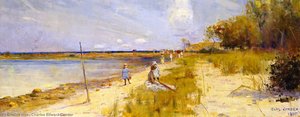
Charles Edward Conder's "Springtime," painted in 1888, isn’t merely a depiction of a rural scene; it’s a vibrant distillation of the Heidelberg School’s artistic philosophy – a celebration of light, color, and the fleeting beauty of the Australian landscape. This oil on canvas captures a moment of idyllic tranquility nestled within the rolling hills of New South Wales, yet it resonates with a deeper sense of observation and emotional resonance that distinguishes Conder's work from purely topographical representations.
The painting immediately draws the eye to the luminous quality of the light, characteristic of the Heidelberg School’s approach. Conder masterfully employs broken brushstrokes and a palette dominated by greens, blues, and yellows – not in a photographic realism, but rather as an expression of how these colors *feel* under the intense Australian sun. The composition is deceptively simple: a meandering dirt track cuts through a field dotted with grazing sheep and cows, leading towards distant trees that are rendered with a hazy, atmospheric quality. A small group of figures – likely children – are visible in the foreground, adding a touch of human presence to this otherwise serene vista.
The Heidelberg School and its Artistic Roots
To fully appreciate “Springtime,” it’s crucial to understand the context within which Conder was working. The Heidelberg School, emerging in Melbourne during the 1880s, represented a significant shift away from the academic traditions of European art that had previously dominated Australian painting. Artists like Conder, Tom Roberts, and Frederick McCubbin sought inspiration directly from the Australian landscape, rejecting idealized representations in favor of capturing its raw beauty and inherent drama. They embraced *plein air* painting – working outdoors directly from nature – a technique championed by Impressionist painters in Europe.
Conder’s early life, marked by his mother's death in India and subsequent relocation to England before returning to Australia, undoubtedly shaped his artistic sensibility. His experiences as a surveyor instilled a keen eye for detail and an appreciation for the natural world, while his time spent studying art in London exposed him to the burgeoning Impressionist movement. However, Conder ultimately forged his own unique style, blending European influences with a distinctly Australian perspective.
Symbolism and Emotional Resonance
Beyond its picturesque subject matter, “Springtime” is rich in symbolic meaning. The dirt track suggests a journey – perhaps a metaphorical one – while the grazing animals represent the bounty of the land. The figures in the foreground invite us to contemplate our relationship with nature and the simple pleasures of rural life. There’s an underlying sense of nostalgia for a bygone era, a yearning for connection with the earth and its rhythms.
The hazy atmosphere and diffused light contribute significantly to the painting's emotional impact. It evokes a feeling of warmth, tranquility, and perhaps even melancholy – a recognition that such moments of beauty are fleeting and precious. Conder’s use of color is particularly effective in conveying this mood, creating a sense of depth and luminosity that draws the viewer into the scene.
A Legacy of Australian Impressionism
“Springtime” stands as a pivotal work in the development of Australian Impressionism. It exemplifies the Heidelberg School’s commitment to capturing the essence of the Australian landscape with vibrant color, loose brushwork, and an emphasis on light and atmosphere. Conder's ability to imbue his paintings with both visual beauty and emotional depth cemented his place as one of Australia’s most important artists. Reproductions of this captivating work continue to resonate with audiences today, offering a glimpse into the soul of Heidelberg and the enduring appeal of the Australian landscape.
Kérdések és válaszok
Milyen érzelmi hangulatot áraszt a „Springtime”, Charles Edward Conder alkotása?
A "Springtime" egy Tranquil érzetet kelt. Az érzelmi hangulat azt az impressziót írja le, amelyet a mű közvetít.
Mennyire ismert a Charles Edward Conder "Springtime" című alkotása?
A „Springtime”, Charles Edward Conder alkotása népszerűségi szintje: Recognized.
Mikor készült „Springtime”, Charles Edward Conder alkotása, és milyen stílusú?
A „Springtime”, Charles Edward Conder alkotása alkotás 1888-ból származik, és a Heidelberg School stílushoz tartozik.
A művész életrajza
korai életút és művészeti utazás
Charles Edward Conder, a británában született festő, litografus és tervező maradandót hagyott a művészet világában. 1868. október 24-én született Tottenham, Middlesex megyében; korai gyermekét tragikus veszteség kísérte, hiszen édesanyja Indiában hunyt el, amikor Conder mindössze négy éves volt.művészeti karrier Ausztráliában
1884-ben, mindössze 16 éves korán Conder Ausztrália, Sydney mellett telepedett le, ahol nagybátyja mellett dolgozott földmérőként. Azonban hamar rájött, hogy valódi szenvedélye nem a tájak felmérése, hanem azok ecsetvonalakká varázsolása. 1886-ra időre már olyan neves művészek mellett dolgozott, mint Albert Henry Fullwood és Frank Mahony, mint az Illustrated Sydney News festőművésze.a heidelberg iskola és meghatározó alkotások
Conder mesterműve, a Departure of the Orient – Circular Quay (1888), megmutatta formateremtő képességeinek és virtuóz ecsetvezetésének új diadalonát. Ez a dokkoló parti jelenet, amely a Sydney Cove nyüzsgő kikötőjét ábrázolja, rögtön megvételt nyert a New South Wales Művészeti Galériában, így Conder első alkotása került be egy állami gyűjteménybe.- A holiday at Mentone (1888), egy vidám, életre ábrázoló festmény, amely férfiakat és nőket mutat be a tengerparton pihenő módban, szintén Conder munkásságának egyik kiemelkedő példája.
- A művész kapcsolata G. P. Nerli, egy vándorló olasz festő munkásságával jelentős mélységet adott fejlődésének.
- Melbournei 9 by 5 Impression kiállításban mutatkozott be Tom Roberts és Arthur Streeton mellett, ami végleg rögzítette helyét a heidelberg iskola mozgalmában.
örökség és későbbi évek
Conder későbbi éveit súlyos egészségügyi problémák sújtották, köztük bénulás és a delirium tremens okozta rohamok. Ennek ellenére nem hagyta abba a festést, és a heidelberg iskola kulcsfontosságú alakjaként örök belegondolni a művészetbe. Művészete Angliában kedvesebben fogadták, mint Párizsban; 1892-ben Henri de Toulouse-Lautrec is megfestette portréját. Tekintse meg Conder műveit a New South Wales Művészeti Galériában, vagy fedezze fel a heidelberg iskola további titkait az OriginalUniqueArt Charles Edward Conder oldalán.- Tudjon meg többet Conder életéről és munkáiról a Wikipedia Charles Conder oldalán.
- Böngésszen a Conder festményeinek gyűjteményében az OriginalUniqueArt kínálatában, beleértve az A holiday at Mentone (1888) és a Departure of the Orient – Circular Quay (1888) alkotásokat az OriginalUniqueArt weboldalán.
konklúzió
Charles Edward Conder hatása az ausztrál impresszionizmusra tagadhatatlan. Öröksége, amelyet lenyűgöző festményei és a heidelberg iskola iránti elkötelezettsége meghatároz, ma is inspirációt nyújt a művészettudósoknak és az alkotás szerelmeseinek a világ minden tájáról.
Charles Edward Conder
1868 - 1909 , Egyesült Királyság
Rövid információk
- Artistic Movement Or Style: Heidelberg School
- Artists Who Influenced This Artist:
- Alfred Daplyn
- Victor Mann
- Julian Ashton
- Date Of Birth: 1868. október 24.
- Full Name: Charles Edward Conder
- Nationality: brit
- Notable Artworks:
- Departure of the Orient – Circular Quay
- A holiday at Mentone
- Under The Southern Sun
- Place Of Birth: Tottenham, Egyesült Királyság
Kapcsolódó cikkek

The Sublime Landscape: Exploring the Hudson River School Movement
Explore the captivating world of the Hudson River School! Discover the history, artists, and defining characteristics of this iconic American art movement. Learn about Romanticism's influence & find inspiration for your collection.

A Romantikus Tájképfestészet 10 Legikonikusabb Műalkotása – OriginalUniqueArt.com
Fedezze fel a romantikus tájképfestészet 10 legikonikusabb műalkotását! Caspar David Friedrich, J.M.W. Turner és más mesterek festményeinek története – inspiráló olajfestmények otthonába. OriginalUniqueArt.com: múzeumi minőségű reprodukciók és egyedi dekorációk online.

Evoking Nature's Sublime: A Comprehensive Exploration of 19th-Century Landscape Painting
Explore the captivating world of 19th-century landscape painting! Discover renowned artists like Friedrich & Monet, key movements, and find the perfect artwork to bring nature's serenity into your home. Expert insights at OriginalUniqueArt.

Evocations of Place: A Historical Journey Through Landscape Art
Explore the rich history of landscape art with OriginalUniqueArt. Discover renowned artists, movements like Impressionism & Romanticism, and expert guidance for collecting timeless pieces. Find your perfect serene escape today!

Evocations of Place: A Historical Journey Through Landscape Art
Explore the rich history of landscape art with OriginalUniqueArt. Discover renowned artists, movements like Impressionism & tonalism, and expert guidance for collecting timeless pieces. Find your perfect serene escape today!