

 Megtekintés
 Küldés
 Megosztás
 Részletek
 Útmutató

 Letöltés
 Hasonló darabok
 X-ray felvétel
 Diavetítés
 Q&A
Q&A Statisztika
Sem título


 Összes részlet megjelenítése
Az ezen az oldalon megjelenített műalkotások szerzői jogi védelem alatt állnak, ami azt jelenti, hogy törvényileg nem készíthetünk és nem adhatunk el belőlük pontos másolatokat. Ez a védelem olyan nemzetközi megállapodások alapján érvényesül, mint például a Berni Egyezmény és a nemzeti jogszabályok által, beleértve azokat is, amelyeket meghatározott Az USA szerzői jogi törvénye – 17. cím.
Ez a módszer teljes mértékben megfelel a szerzői jogi szabályozásnak, mivel nem tartalmazza a védett műalkotás másolását vagy duplikálását. Ehelyett ez egy kreatív újinterpretáció – egy új festmény, amely az eredetivel való összefüggései miatt hatással van rá, de nem az az.
Giclée / Műnyomat
Múzeumi minőségű giclée vagy vászonnyomat, gyors gyártással és rugalmas finomítási lehetőségekkel. ( Kézzel festett másolat rendelése Áttérés digitális képre)




P118B Ft10

P118H Ft10

P118W Ft10

P438Z Ft10

P508JH Ft12

P508YH Ft12

P805H Ft10

P805Z Ft10

P919BZ Ft10

P919G Ft10

P919XJ Ft10

P959ZH Ft10

P968JZ Ft12

W106C Ft8

W218G Ft10

W218JH Ft8

W218Y Ft10

W307PJ Ft10

W316G Ft10

W316PJ Ft8

W316Y Ft10

W398PJ Ft8

W4111J Ft10

W500HY Ft15

W500JH Ft15

W692G Ft12

W849H Ft8

W940BG Ft15

W953PJ Ft8




Válasszon előre meghatározott méreteink közül, amelyek megfelelnek a műalkotás eredeti arányainak.

Írja be a keretének vagy a falának megfelelő szélességet és magasságot. A nyomatot csak le lehet vágni, soha nem tehető nagyobbá, mint az eredeti kép, így egy eltérő alakú méretnél a kép egy része elveszik. Mielőtt bármit kinyatintanánk, küldünk egy digitális próbamodellt jóváhagyásra. Az oldalon látható kép nem tartalmazza a valós levágást — ezt csak a próbamodell mutatja meg.
Világszerte történő kiszállítás területére mindössze 2 hét alatt, a szokásos 4-5 hét helyett. (30 október)

Ingyenes globális expressz szállítás

Prémium minőségű len vászon

Teljes körű szállítási biztosítás

Vámvisszatérítési Garancia

Hiteles színarányosság garancia

100 napos visszaküldési lehetőség (csak hibás termékek esetén)

100% pénzvisszatérítési garancia

Több darab vásárlásakor kedvezmény
 Az üvegkeretes opció csak 110 cm alatti méretben érhető el

Sem título
Giclée / Műnyomat
Reprodukció mérete
-


Összesített ár
Ft 26157
A Symphony of Shadow and Texture
In the quiet, profound depths of "Sem título," created in 2002 by the Brazilian master Célia Euvaldo de Oliveira, we encounter a world where language fails and only the visceral reality of paint remains. This abstract masterpiece does not seek to represent the external world; instead, it invites the viewer into an internal landscape of shadow and light. The composition is dominated by a powerful interplay of dark gray and black blocks, creating a rhythmic, almost architectural weight upon the canvas. There is no horizon line to ground us, nor a vanishing point to guide our eyes, leaving the spectator to wander through an ambiguous, atmospheric space that feels both infinite and intimately enclosed.
The true soul of this work lies in its extraordinary tactile presence. Through the masterful use of impasto, Oliveira transforms the flat surface of the canvas into a sculptural relief. Each stroke is thick, heavy, and deliberate, leaving behind ridges and valleys that catch the light in unexpected ways. This rugged texture creates a sense of geological depth, as if we are peering into the stratified layers of ancient stone or the charred remains of a forgotten memory. The way the paint overlaps and fragments suggests a continuous process of creation and erosion, making the artwork feel less like a finished object and indeed more like a living, breathing entity.
The Legacy of Brazilian Abstraction
To understand the emotional gravity of "Sem título," one must look to the artistic lineage of Célia Euvaldo de Oliveira. Emerging from the vibrant, experimental pulse of São Paulo, Oliveira was a vital participant in the Grupo Riso, a collective that sought to dismantle the rigid boundaries of traditional art. Her work embodies the spirit of Abstract Expressionism, where the act of painting is an emotional release—a direct engagement with the materiality of the medium. In this piece, we see the culmination of a lifetime spent exploring how color and gesture can evoke profound psychological states without the need for recognizable figures.
The somber palette of blacks and grays evokes a sense of quiet contemplation and a touch of melancholy, making it an ideal centerpiece for spaces designed for reflection. For the discerning collector or interior designer, this painting offers a sophisticated anchor for modern environments. Its monochromatic intensity provides a dramatic contrast to lighter textures in a room, while its heavy, physical presence commands attention in minimalist settings. Owning a reproduction of such a significant work is not merely about decorating a wall; it is about bringing a piece of Brazilian art history and the raw, unbridled emotion of the 20th-century avant-garde into the sanctuary of the home.
Kérdések és válaszok
Hogyan egyensúlyozza a fényt és a sötétséget a "Sem título"?
A „Sem título”, Célia Euvaldo De Oliveira alkotása rögzített értékei: deep_shadow fényerő és Soft Shadow luminancia.
Melyik évben készült a „Sem título”, Célia Euvaldo De Oliveira alkotása?
A "Sem título" 2002-ban készült. Ez az időpont meghatározó jelentőséggel bír Célia Euvaldo De Oliveira pályájában és az adott korszak kontextusában is.
„Sem título”, Célia Euvaldo De Oliveira alkotása erős kontrasztokat vagy lágy harmóniákat használ?
A "Sem título" alkotásban egy Statement kontraszt párosul egy Discordant Palette harmóniával.
A művész életrajza
Célia Euvaldo de Oliveira: A Bold Voice of Brazilian Abstraction
Célia Euvaldo de Oliveira (1934-2017) stands as a significant, yet often underappreciated, figure in the landscape of 20th and 21st-century Brazilian art. Born in São Paulo, Brazil, her artistic journey began in the early 1960s, marked by a deliberate rejection of prevailing artistic norms and an embrace of abstract expressionism. Euvaldo’s work wasn't simply about creating images; it was a visceral exploration of color, texture, and gesture – a direct engagement with the materiality of paint itself. She belonged to the Grupo Riso (The Group of Laughter), a collective of Brazilian artists who sought to dismantle traditional artistic conventions and forge new paths for creative expression, injecting a vital dose of irreverence into the Brazilian art scene. Her legacy resides not just in individual works but within the spirit of experimentation and challenging established boundaries that she embodied.Early Years and Influences: A São Paulo Foundation
Euvaldo’s formative years were deeply rooted in the vibrant cultural atmosphere of São Paulo. While details about her early artistic training are somewhat sparse, it's clear that she developed a strong foundation through observation and independent study. The city itself – with its blend of European influences and burgeoning modernism – undoubtedly played a role in shaping her aesthetic sensibilities. The Grupo Riso, formed in the mid-1960s, provided a crucial context for her artistic development. This group, comprised of artists like Antonio Dias and Lygia Clark, shared a commitment to challenging conventional art practices and exploring new forms of interaction between artist and viewer. The emphasis on process over product, and the blurring of lines between art and life, were central tenets of Grupo Riso’s philosophy – principles that profoundly influenced Euvaldo's approach. Early influences likely included the European abstract expressionists—particularly those who prioritized gesture and emotional intensity—but she quickly developed a distinctly Brazilian voice, informed by her unique cultural background and experiences.A Distinctive Style: Layered Abstraction and Impasto
Euvaldo’s artistic style is immediately recognizable for its bold use of color and dynamic gestural brushstrokes. Her paintings are characterized by layered application of paint – often employing a technique known as *impasto*, where thick layers of pigment create a tactile, three-dimensional surface. This layering isn't merely decorative; it’s integral to the expressive power of her work. Dark tones frequently dominate her palette, creating a sense of depth and contemplation. She wasn’t interested in representational accuracy but rather in conveying emotional states through color and texture. Her compositions are often fragmented and asymmetrical, avoiding traditional notions of balance or harmony. The works evoke a feeling of raw emotion, as if the paint itself is struggling to contain the energy within. A particularly compelling example of this style can be seen in “Sem título” (2002), where layered dark tones and impasto texture create an atmosphere of profound introspection – a testament to her ability to imbue abstract forms with emotional resonance.Exhibitions and Recognition: A Growing Presence
Throughout the 1970s, 80s, and 90s, Euvaldo’s work steadily gained recognition within Brazil. She participated in numerous group exhibitions across the country, including those at the Museu da Gravura da Cidade de Curitiba, the Centro Universitário Maria Antônia, and the Estação Pinacoteca de São Paulo. Her commitment to challenging artistic conventions also led her to participate in international events, notably the 7th Biennial International of Painting of Cuenca (Spain) and the 5th Mercosul Biennial. These engagements broadened her visibility and cemented her position as a leading figure in contemporary Brazilian art. While she may not have achieved widespread international fame during her lifetime, her work is now increasingly appreciated for its originality and emotional depth.Legacy and Significance: A Quiet Revolutionary
Célia Euvaldo de Oliveira’s contribution to Brazilian art lies not in grand pronouncements or sensational exhibitions, but in a consistent dedication to exploring the expressive potential of abstraction. She was a quiet revolutionary—a painter who refused to be defined by conventional categories and instead forged her own path through experimentation and unwavering commitment to her artistic vision. Her work serves as a powerful reminder that art can be a vehicle for profound emotional expression, independent of representational concerns. Her influence continues to resonate within the Brazilian art community, inspiring artists to push boundaries and challenge established norms. Today, her paintings are exhibited in galleries and museums throughout Brazil, and her legacy is being increasingly recognized as an essential part of the country’s artistic heritage.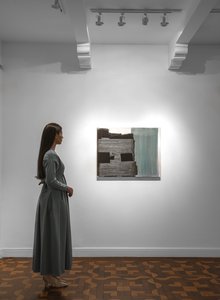
Célia Euvaldo De Oliveira
1934 - 2017 , Brazil
Rövid információk
- Full Name: Célia Euvaldo de Oliveira
- Nationality: Brazilian
- Date Of Birth: 1934
- Date Of Death: 2017
- Place Of Birth: São Paulo, Brazil
- Notable Artworks:
- Sem título (2002)
- Sem título
- Artistic Movement Or Style: Abstract & Expressionist
- Artists Who Influenced This Artist: ['Grupo Riso']
- Artists Or Movements Influenced By This Artist: ['Modern Brazilian Art']
Kapcsolódó cikkek
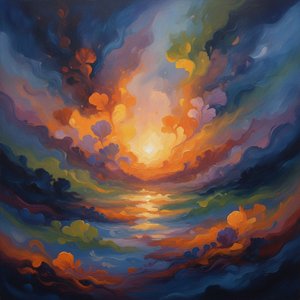
The Soul of Color: A Journey into the Emotional Resonance of Lyrical Abstraction
Embark on a cultural journey through Lyrical Abstraction. Explore how masters like Kandinsky used color and motion to translate emotion into visual poetry. Discover the profound beauty of abstract expressionism and learn to curate emotional resonance in your own art collection.

Geometrikus Absztrakció Mesterei: 10 Alapvető Műalkotás a Lakberendezéshez
Fedezze fel a geometrikus absztrakció 10 legikonikusabb műalkotását! Kandinsky, Mondrian és más mesterek festményeinek története inspirálja otthona dekorációját. Múzeumi minőségű reprodukciók a OriginalUniqueArt.com-on – fedezze fel online!

Absztrakt Expresszionizmus Mesterei: 10 alkotás, ami meghatározta a művészetet | OriginalUniqueArt.com
Fedezze fel a 10 legikonikusabb absztrakt expresszionista alkotást! Ismerje meg Jackson Pollock, Mark Rothko és más mesterek történetét. Művészeti reprodukciók prémium minőségben – OriginalUniqueArt.com.
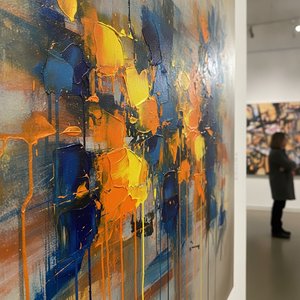
Beyond the Lines: Mastering the High-Impact World of Contemporary Abstraction
Master the high-impact world of contemporary abstraction. Discover how bold colors, textures, and modern movements like Abstract Expressionism can transform your space with premium, high-energy art curated for the design-conscious professional.
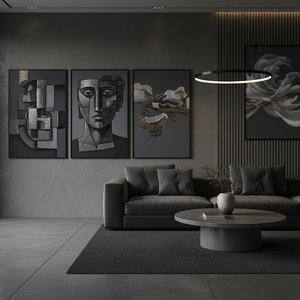
A sötétszürke árnyalatok 10 mesterműve: Klasszikus festmények a OriginalUniqueArt kínálatában
Fedezze fel a 10 legikonikusabb sötétszürke árnyalatok festményét! Rembrandt, Goya és Manet remekművei – művészettörténet, technika és inspiráció. Vászonképek online a OriginalUniqueArt kínálatában. Explore the full collection online!