Előnézet
 Megosztás
 Megosztás
 Részletek
 Útmutató

 Letöltés
 Hasonló darabok
 X-ray felvétel
 Diavetítés
 Statisztika
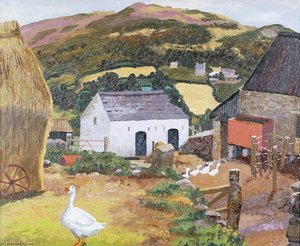
Halcyon
 Oil On Canvas
- WallArt
- Symbolism
 1927
1927 51.0 x 66.0 cm
 Norwich Castle Museum And Art Gallery
 Tovább olvasom
Giclée / Műnyomat
Múzeumi minőségű giclée vagy vászonnyomat, gyors gyártással és rugalmas finomítási lehetőségekkel. ( Kézzel festett másolat vásárlása Áttérés digitális képre)




P118B $10

P118H $10

P118W $10

P438Z $10

P508JH $12

P508YH $12

P805H $10

P805Z $10

P919BZ $10

P919G $10

P919XJ $10

P959ZH $10

P968JZ $12

W106C $8

W218G $10

W218JH $8

W218Y $10

W307PJ $10

W316G $10

W316PJ $8

W316Y $10

W398PJ $8

W4111J $10

W500HY $15

W500JH $15

W692G $12

W849H $8

W940BG $15

W953PJ $8




Válasszon előre meghatározott méreteink közül, amelyek megfelelnek a műalkotás eredeti arányainak.

Megadhat saját méreteket is egy konkrét kerethez vagy helyszínhez igazítva. Amennyiben a kiválasztott méret nem egyezik az eredeti kép arányokkal, a műalkotást le fogjuk vágni, vagy kiegészítjük a képet tükrözött vagy egyszínű szélekkel. A gyártás megkezdése előtt egy digitális tervezetet küldünk jóváhagyásra.
Kérjük, vegye figyelembe, hogy a képernyőn látható előnézet nem tükrözi a tényleges levágást vagy kiegészítést. Csak a tervezet mutatja pontosan a végső kompozíciót.
Bár az egyedi méretek is elérhetőek, az eredeti arányok megőrzése érdekében azt javasoljuk, hogy válasszon a előre meghatározott listából származó méretet.
Világszerte történő kiszállítás területére mindössze 2 hét alatt, a szokásos 4-5 hét helyett. (27 szeptember)

Ingyenes globális expressz szállítás

Prémium minőségű len vászon

Teljes körű szállítási biztosítás

Vámvisszatérítési Garancia

Tökéletes színarányosság garancia

100 napos visszaküldési garancia (csak gyártási hibás termékek esetén)

100% pénzvisszatérítési garancia

Több darab vásárlásakor kedvezmény
 Az üvegkeretes opció csak 110 cm alatti méretben érhető el

Halcyon
Giclée / Műnyomat
Reprodukció méretei
-


Összesített ár
$ 80
The Enigmatic Beauty of Cedric Lockwood Morris’s Halcyon
Cedric Lockwood Morris's Halcyon, painted in 1927, isn’t merely a depiction of a beach scene; it’s an arresting meditation on the delicate balance between beauty and danger, tranquility and predation. This oil-on-canvas masterpiece, currently residing within the Norwich Castle Museum & Art Gallery, immediately draws the viewer into its dreamlike atmosphere – a hazy expanse of sand, sea, and sky rendered with a remarkable sensitivity to light and texture. The painting’s power lies not in photographic realism but in Morris's masterful manipulation of color and form to evoke a profound emotional response.
At first glance, the composition appears deceptively simple: a woman reclining gracefully on the beach, her limbs spread languidly, seemingly lost in blissful repose. However, a closer examination reveals a subtle tension beneath this surface serenity. The central figure, bathed in soft, diffused light, possesses an almost ethereal quality, yet her posture—a slight tilt of the head, a barely perceptible curve of the lips—suggests a quiet awareness, a hint of vulnerability. Above her, poised and predatory, is a magnificent kingfisher, its vibrant blue plumage contrasting sharply with the muted tones of the sand and sea. This bird isn’t merely an accessory; it's a potent symbol – a representation of both beauty and threat, innocence and impending danger.
Decoding Symbolism: Nature, Humanity, and Mortality
Morris, a British artist known for his unique blend of realism and fantasy, frequently explored themes of nature, landscapes, and the human condition. Halcyon exemplifies this approach, layering symbolic meaning within a seemingly straightforward scene. The beach itself represents a liminal space – a transition zone between land and sea, reality and dream. The woman’s reclining pose can be interpreted as an invitation to contemplation, a surrender to the allure of nature's beauty. Yet, the kingfisher’s presence introduces a darker element, hinting at the precariousness of this idyllic state. The bird is often associated with transformation, but in this context, it carries a more ominous connotation – a reminder of mortality and the inevitability of predation.
Furthermore, the painting's style—rooted in early 20th-century Symbolism and Expressionism—contributes to its evocative power. The flattened perspective, loose brushstrokes, and emphasis on emotional expression rather than precise representation create a dreamlike quality, inviting viewers to project their own interpretations onto the scene. Morris’s use of oil paint allows for rich textures and subtle gradations of color, adding depth and luminosity to the canvas. The rough texture suggests an immediacy, as if the artist captured a fleeting moment in time.
Technique and Artistic Context
Morris's technical skill is evident in every detail of Halcyon. The careful rendering of light and shadow creates a sense of atmosphere, while the vibrant colors—particularly the striking blue of the kingfisher—draw the eye to the focal point of the composition. The painting’s dimensions – 51 x 66 cm – are perfectly suited to capture the intimacy and drama of the scene. It's important to note that Morris was a prominent figure in the British art world, known for his exhibitions and teaching roles. His work reflects a broader artistic movement that sought to explore subjective experience and emotional truth.
Considering its creation in 1927, during a period of significant social and cultural change, Halcyon offers a poignant reflection on the relationship between humanity and nature. It’s a captivating artwork that continues to resonate with viewers today, prompting questions about beauty, danger, and the enduring mysteries of the human psyche.
A művész életrajza
A Life Rooted in Colour: The World of Cedric Lockwood Morris
Sir Cedric Lockwood Morris, a name synonymous with vibrant colour and the evocative beauty of the English countryside, was far more than just a painter. Born on December 11, 1889, in Sketty, a charming coastal village near Swansea, Wales, his life unfolded as a remarkable tapestry woven from privilege, artistic passion, personal loss, and an enduring commitment to nurturing both art and nature. His lineage traced back to the founders of the Dulwich Picture Gallery, hinting at a heritage steeped in art history, yet he forged his own distinct path – one that led him far beyond the confines of tradition and into the heart of the burgeoning modern British art scene. The son of George Lockwood Morris, an industrialist and celebrated rugby international, and Wilhelmina Cory, Cedric’s upbringing was imbued with both a strong physical presence and a nascent artistic sensibility—a duality that would profoundly shape his creative journey. Early attempts at pursuing a military career ultimately proved unsuccessful, leading to periods of travel and work across Canada and New York City before he finally found his true calling in the vibrant studios of early 20th-century Paris.From Parisian Studios to East Anglian Landscapes
Morris’s formal artistic training began in 1914 at the Académie Delécluse in Montparnasse, a crucible of creativity where artists from across Europe converged. The outbreak of World War I abruptly interrupted this promising start, forcing him to abandon his studies and serve with the Artists’ Rifles. His subsequent assignment as a horse trainer—a seemingly incongruous role—proved surprisingly formative, honing his keen observational skills and deepening his understanding of animal form and movement. It was in 1918 that a pivotal relationship blossomed: his partnership with Arthur Lett-Haines. This artistic and personal alliance would become the cornerstone of his life’s work, fostering a collaborative spirit that extended far beyond their individual canvases. Initially influenced by Impressionism and Post-Impressionism—the bold brushstrokes and luminous colours of artists like Monet and Van Gogh clearly informing his early landscapes and portraits—Morris quickly developed a uniquely expressive style. The vibrant hues and dynamic compositions that would become his signature began to emerge as he increasingly focused on the natural world, particularly the rolling hills and dramatic skies of East Anglia after settling there with Lett-Haines. He wasn’t merely depicting what he saw; he was conveying its *feeling*, its essence—the light, the atmosphere, the very soul of the landscape.A Celebration of Flora and a Legacy of Teaching
Cedric Lockwood Morris is perhaps best remembered for his captivating flower paintings. These weren't botanical illustrations in the traditional sense, but rather intensely personal interpretations of blooms – explosions of colour and texture that captured their fleeting beauty with remarkable vitality. The influence of artists like Van Gogh and Utrillo is readily apparent in the swirling brushstrokes and emotionally charged palettes, yet Morris’s work possessed a distinct originality. Critics often likened his paintings to those of these masters, but emphasized their accessibility—“a Van Gogh or Utrillo for those of modest means,” as one commentator noted. Beyond flowers, Morris produced numerous portraits, revealing a talent for capturing the character and personality of his sitters with remarkable sensitivity. A significant chapter in his career unfolded in 1935 when he was commissioned to paint large-scale flower murals aboard the luxurious ocean liner Queen Mary—a testament to his growing recognition and a chance to bring his vibrant vision to a wider audience. However, perhaps his most enduring legacy lies in co-founding the East Anglian School of Painting and Drawing at Benton End, Suffolk, with Lett-Haines in 1937. This school became a haven for aspiring artists—including luminaries such as Lucian Freud and Maggi Hambling—emphasizing personal expression and connection to nature over rigid academic constraints.Key Facts & Enduring Influence
- Titles: Sir (1947), 9th Baronet
- Nationality: British
- Movement: Associated with Modern British Art
- Media: Oil paint, watercolor
- Significant Locations: Sketty, Wales; Paris, France; Benton End, Suffolk
Later Years and Rediscovered Recognition
Following World War II, Morris experienced a period of relative obscurity, overshadowed by the more prominent figures of the post-war art scene. However, in the later years of his life, a renewed appreciation for his work began to emerge—a testament to the enduring power of his artistic vision. He remained actively involved in local politics, serving on the Hadleigh Labour Party and demonstrating a commitment to social issues alongside his artistic pursuits. Cedric Lockwood Morris died peacefully on February 8, 1982, in Hadleigh, Suffolk, leaving behind a rich and varied body of work that continues to captivate and inspire viewers today. His legacy extends far beyond the canvases themselves—through the East Anglian School, he fostered a spirit of experimentation and individuality that profoundly influenced a generation of British artists, ensuring his place as a truly significant figure in the history of modern British art.
Cedric Morris
1889 - 1982 , Egyesült Királyföld
Gyors információk
- Artistic Movement Or Style: Modern Brit Art
- Artists Or Movements Influenced By This Artist:
- Lucian Freud
- Maggi Hambling
- Artists Who Influenced This Artist:
- Impressionizmus
- Post-impressionizmus
- Date Of Birth: 1889. 12. 11.
- Date Of Death: 1982. 02. 08.
- Full Name: Cedric Lockwood Morris
- Nationality: Brit
- Notable Artworks:
- Near Cagnes
- Halcyon
- Place Of Birth: Sketty, Egyesült Királyság
Kapcsolódó cikkek

The Enduring Power of Painting: A Historical & Contemporary Exploration of Form and Emotion
Explore the rich history & enduring techniques of oil painting with OriginalUniqueArt. Discover masterpieces, learn about art collecting, and find authentic handmade reproductions crafted by skilled artists.

Oil on Canvas: A Historical & Technical Exploration of a Timeless Artistic Medium
Explore the rich history & enduring techniques of oil painting on canvas. Discover the science behind its longevity, conservation practices, and contemporary relevance. Expert insights for art enthusiasts.

The Enduring Legacy of Oil on Canvas: Technique, History & Aesthetic Impact
Explore the rich history & techniques of oil painting – from Renaissance masters to Impressionism. Discover pigments, layering methods, and why this timeless medium endures. Expert insights for artists & art enthusiasts.
The Timeless Charm of Oil on Board: Reimagining Texture and Light through the Impressionist Lens
Discover the profound intimacy of oil on panel. Explore how Impressionist masters used rigid supports to capture light, texture, and impasto depth through exquisite, handmade oil reproductions for discerning collectors.

Az olajfestészet örökös hagyatéka: technika, történelem és kortárs gyakorlat
Fedezze fel az olajfestészet történetét, technikáit és a kortárs művészeti trendeket! Szakértői útmutatók, híres festők alkotásai és tippek az olajfestmény ápolásához. Inspirálódjon most!