

 Megtekintés
 Küldés
 Megosztás
 Részletek

 Letöltés
 Hasonló darabok
 X-ray felvétel
 Diavetítés
 Statisztika
Landscape with Farm Building


 Összes részlet megjelenítése
Giclée / Műnyomat
Múzeumi minőségű giclée vagy vászonnyomat, gyors gyártással és rugalmas finomítási lehetőségekkel. ( Kézzel festett másolat rendelése Áttérés digitális képre)




































Válasszon előre meghatározott méreteink közül, amelyek megfelelnek a műalkotás eredeti arányainak.

Megadhat saját méreteket is egy konkrét kerethez vagy helyszínhez igazítva. Amennyiben a kiválasztott méret nem egyezik az eredeti kép arányokkal, a műalkotást le fogjuk vágni, vagy kiegészítjük a képet tükrözött vagy egyszínű szélekkel. A gyártás megkezdése előtt egy digitális tervezetet küldünk jóváhagyásra.
Kérjük, vegye figyelembe, hogy a képernyőn látható előnézet nem tükrözi a tényleges levágást vagy kiegészítést. Csak a tervezet mutatja pontosan a végső kompozíciót.
Bár az egyedi méretek is elérhetőek, az eredeti arányok megőrzése érdekében azt javasoljuk, hogy válasszon a előre meghatározott listából származó méretet.
Világszerte történő kiszállítás területére mindössze 2 hét alatt, a szokásos 4-5 hét helyett. (11 szeptember)

Ingyenes globális expressz szállítás

Prémium minőségű len vászon

Teljes körű szállítási biztosítás

Vámvisszatérítési Garancia

Hiteles színpontosság garancia

100 napos visszaküldési lehetőség (csak hibás termékek esetén)

100% pénzvisszatérítési garancia

Több darab vásárlása esetén kedvezmény
 Az üvegkeretes opció csak 110 cm alatti méretben érhető el

Landscape with Farm Building
Giclée / Műnyomat
Reprodukció mérete
-


Összesített ár
$ 80
Introduction
Cecilia Beaux, a renowned American artist, created the captivating oil painting Landscape with Farm Building in 1888. This artwork is currently housed at the Pennsylvania Academy of the Fine Arts in the United States.Composition and Elements
The painting features a serene landscape with a farmhouse as its central focus. The house boasts a distinctive red roof and a chimney, adding a touch of warmth to the scene. Two figures are visible in the painting: one near the left side and another closer to the center. The presence of these individuals adds a sense of life and activity to the otherwise peaceful setting. The landscape is dotted with birds, which contribute to the overall sense of movement and vitality. Some birds can be seen flying close to the house, while others are perched on branches or other structures within the field. The composition of the painting is well-balanced, with the farmhouse serving as a focal point surrounded by lush green grass.Artistic Style and Influences
Cecilia Beaux was trained in Philadelphia and later studied in Paris, where she was influenced by academic artists such as Tony Robert-Fleury and William-Adolphe Bouguereau. Her style is often compared to that of John Singer Sargent, with Bernard Berenson jokingly referring to her paintings as the best Sargents in the room.Exhibition History
Cecilia Beaux was one of the many American artists who exhibited their works at the 1893 World's Columbian Exposition in Chicago. This event showcased modern American painting, with hundreds of artists submitting their works for exhibition.Legacy and Recognition
Cecilia Beaux was awarded a gold medal for lifetime achievement by the National Institute of Arts and Letters. She was also honored by Eleanor Roosevelt as "the American woman who had made the greatest contribution to the culture of the world."Conclusion
Landscape with Farm Building is a testament to Cecilia Beaux's skill and artistic vision. This captivating oil painting continues to inspire art enthusiasts today, offering a glimpse into the serene landscapes of rural America in the late 19th century. For more information on Cecilia Beaux and her works, visit: Painting by 'Cecilia Beaux' | Cecilia Beaux:Landscape with Farm Building (Pennsylvania Academy of the Fine Arts (United States),Oil On Canvas,) To explore other works by Cecilia Beaux, see: Painting by 'Cecilia Beaux' | Cecilia Beaux:Twilight Confidences (Georgia Museum of Art (Athens, United States),Oil On Canvas,) For a comprehensive list of American painters exhibited at the 1893 World's Columbian Exposition, refer to: List of American painters exhibited at the 1893 World's Columbian Exposition To learn more about Cecilia Beaux, visit: Cecilia BeauxA művész életrajza
A Life Illuminated: The World of Cecilia Beaux
Cecilia Beaux, born Eliza Cecilia Beaux on May 1st, 1855, in Philadelphia, emerged as a pivotal figure in American portraiture during the Gilded Age. Her story is one woven with threads of personal tragedy, determined self-reliance, and an unwavering commitment to artistic excellence. The shadow of early loss fell upon her life when her mother succumbed to puerperal fever just twelve days after Beaux’s birth, leaving a void that would subtly shape her perspective. Raised by her maternal grandmother and aunts in Philadelphia, she experienced a childhood marked by both stability and the quiet absence of parental guidance. Her father, unable to cope with his grief, returned to France for extended periods, creating a somewhat detached familial dynamic. Yet, within this framework, Beaux’s artistic inclinations were nurtured, initially through lessons with her relative Catherine Ann Drinker, an accomplished artist who served as an early role model and mentor. These formative years instilled in her not only technical skills but also a profound understanding of the dedication required to pursue a life devoted to art.Forging a Path: Education and Early Influences
Beaux’s artistic education continued under Francis Adolf van der Wielen, where she honed her skills in perspective and drawing from casts. However, the societal constraints of the Victorian era presented significant obstacles for aspiring female artists; direct study of anatomy was largely denied to women until much later in her career. Undeterred, Beaux persevered, securing a place at the prestigious Pennsylvania Academy of the Fine Arts in 1876. While she maintained a degree of independence from the fervent followers of Thomas Eakins, his progressive teaching philosophy undeniably influenced her approach to art. It was during this period that Beaux began to establish herself as a skilled portraitist, winning several Mary Smith Prizes at the Pennsylvania Academy exhibitions between 1885 and 1892 – accolades that signaled her rising talent and recognition within the artistic community. A crucial turning point came with her decision to study in Paris in 1888, immersing herself in the European art scene and absorbing influences from academic masters like Tony Robert-Fleury and William-Adolphe Bouguereau, as well as the burgeoning Impressionist movement exemplified by artists such as Édouard Manet and Edgar Degas. This exposure broadened her artistic horizons and refined her technique, laying the foundation for her distinctive style. Beaux’s early works often reflected a classical sensibility, demonstrating a careful attention to detail and a mastery of traditional techniques.A Master of Society Portraiture
Upon returning to Philadelphia, Cecilia Beaux quickly ascended to prominence as a sought-after portraitist, capturing the essence of America’s social and intellectual elite with remarkable sensitivity and skill. Her portraits weren't merely likenesses; they were insightful studies of character, imbued with psychological depth and an elegant aesthetic sensibility. She possessed an extraordinary ability to convey not only the physical appearance but also the inner lives of her subjects. Her paintings often featured wealthy industrialists, prominent politicians, and socialites, reflecting the opulence and dynamism of the Gilded Age. Beaux’s style evolved over time, incorporating elements of Impressionism while retaining a strong sense of formal structure and classical restraint. She was particularly adept at capturing fleeting expressions and subtle nuances of personality, creating portraits that felt both intimate and grand. Her masterpiece, *Portrait of Harriet Sears Amory* (1892), exemplifies this mastery – a vibrant and emotionally resonant depiction of a wealthy Philadelphia socialite. Executed with bravura brushstrokes and a heavy impasto reminiscent of Impressionism, it showcases Beaux’s technical prowess and her ability to capture both the grandeur and vulnerability of her sitter. Along with John Singer Sargent and William Merritt Chase, Beaux became one of the leading portraitists in the United States at the turn of the twentieth century. Chase himself famously declared her “not only the greatest living woman painter, but the best that has ever lived,” a testament to the high regard she held within artistic circles. Her clientele included First Lady Edith Roosevelt, Admiral Sir David Beatty, and Georges Clemenceau, solidifying her reputation as a chronicler of the Gilded Age.Legacy and Enduring Influence
Cecilia Beaux’s contributions extended beyond her captivating portraits; she also broke barriers for women in the art world. She was the first woman to teach at the Pennsylvania Academy of the Fine Arts, paving the way for future generations of female artists. Her dedication to her craft earned her numerous accolades, including a gold medal from the National Institute of Arts and Letters and recognition from Eleanor Roosevelt as “the American woman who had made the greatest contribution to the culture of the world.” Her works are now held in esteemed collections such as The Westmoreland Museum of American Art and the Pennsylvania Academy of the Fine Arts, ensuring her legacy endures for generations to come. Beaux’s art continues to resonate with viewers today, offering a glimpse into a bygone era while simultaneously celebrating the enduring power of human connection and artistic expression. *Landscape with Farm Building*, painted in 1888, demonstrates her skill beyond portraiture, showcasing an evocative Impressionistic style applied to rural American life. Her ability to seamlessly blend technical mastery with emotional depth cemented her place as a significant figure in the history of American art, and continues to inspire artists and art lovers alike.Notable Works
* *Portrait of Harriet Sears Amory* (1892) * *Portrait of Georges Clemenceau* (1919) * *Admiral Sir David Beatty* (1917) * *Mrs. William K. Woolworth* (1906) * *The Last Days of Infancy* (1888)
Cecília Beaux
1855 - 1942 , Egyesült Államok
A művészről röviden
- Artistic Movement Or Style: Impressionizmus, portréfestés
- Artists Or Movements Influenced By This Artist: ['William Merritt Chase']
- Artists Who Influenced This Artist:
- Thomas Eakins
- John Singer Sargent
- Date Of Birth: 1855-05-01
- Date Of Death: 1942-09-17
- Full Name: Cecilia Beaux
- Nationality: Amerikai Egyesült Államok
- Notable Artworks:
- Harriet Sears Amory
- Georges Clemenceau
- Man with the Cat
- Place Of Birth: Philadelphia, USA
Kapcsolódó cikkek
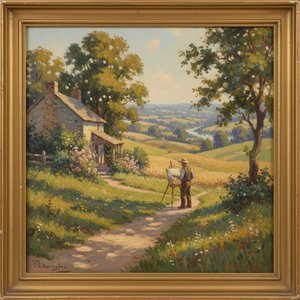
Julian Alden Weir: A Quiet Master of American Impressionism & Rural Life
Discover Julian Alden Weir, a leading American Impressionist painter celebrated for his serene landscapes & depictions of rural life. Explore his artistic evolution, influence on 'The Ten', and legacy at Weir Farm.

Grant Wood & American Regionalism: Identity, Myth & the Rural Landscape
Explore the world of Grant Wood & American Regionalism with OriginalUniqueArt. Discover the symbolism behind 'American Gothic', recurring themes, and the movement's lasting impact on art history. High-quality reproductions available.
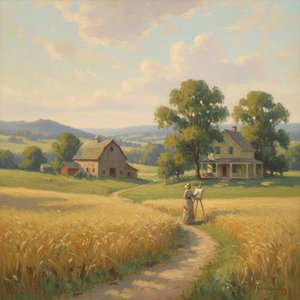
Arthur Stockdale Cope: A Study in American Impressionism & Rural Life's Poetics
Explore the life & work of Arthur Stockdale Cope, a prominent British portraitist influenced by American Impressionism. Discover his captivating rural landscapes and royal commissions at OriginalUniqueArt.
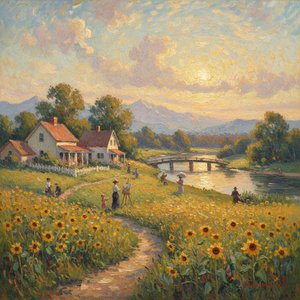
Capturing a Nation's Light: Exploring the American Impressionist Movement
Explore the captivating world of American Impressionism! Discover key artists, techniques & its lasting impact on art history. Find museum-quality reproductions and expert guidance at OriginalUniqueArt.

The Enduring Legacy of Oil on Canvas: Technique, History & Aesthetic Impact
Explore the rich history & techniques of oil painting – from Renaissance masters to Impressionism. Discover pigments, layering methods, and why this timeless medium endures. Expert insights for artists & art enthusiasts.
