

 Előnézet
 Megosztás
 Megosztás
 Részletek
 Útmutató

 Letöltés
 Hasonló darabok
 X-ray felvétel
 Diavetítés
 Statisztika
Self-Portrait


 Tovább olvasom
Giclée / Műnyomat
Múzeumi minőségű giclée vagy vászonnyomat, gyors gyártással és rugalmas finomítási lehetőségekkel. ( Kézzel festett másolat vásárlása Áttérés digitális képre)




P118B Ft10

P118H Ft10

P118W Ft10

P438Z Ft10

P508JH Ft12

P508YH Ft12

P805H Ft10

P805Z Ft10

P919BZ Ft10

P919G Ft10

P919XJ Ft10

P959ZH Ft10

P968JZ Ft12

W106C Ft8

W218G Ft10

W218JH Ft8

W218Y Ft10

W307PJ Ft10

W316G Ft10

W316PJ Ft8

W316Y Ft10

W398PJ Ft8

W4111J Ft10

W500HY Ft15

W500JH Ft15

W692G Ft12

W849H Ft8

W940BG Ft15

W953PJ Ft8




Válasszon előre meghatározott méreteink közül, amelyek megfelelnek a műalkotás eredeti arányainak.

Írja be a keretének vagy a falának megfelelő szélességet és magasságot. A nyomatot csak le lehet vágni, soha nem tehető nagyobbá, mint az eredeti kép, így egy eltérő alakú méretnél a kép egy része elveszik. Mielőtt bármit kinyatintanánk, küldünk egy digitális próbamodellt jóváhagyásra. Az oldalon látható kép nem tartalmazza a valós levágást — ezt csak a próbamodell mutatja meg.
Világszerte történő kiszállítás területére mindössze 2 hét alatt, a szokásos 4-5 hét helyett. (25 október)

Ingyenes globális expressz szállítás

Prémium minőségű len vászon

Teljes körű szállítási biztosítás

Vámvisszatérítési Garancia

Tökéletes színarányosság garancia

100 napos visszaküldési garancia (csak gyártási hibás termékek esetén)

100% pénzvisszatérítési garancia

Több darab vásárlásakor kedvezmény
 Az üvegkeretes opció csak 110 cm alatti méretben érhető el

Self-Portrait
Giclée / Műnyomat
Reprodukció méretei
-


Összesített ár
Ft 25605
A Portrait of Quiet Devotion: Carlo Dolci’s Self-Portrait
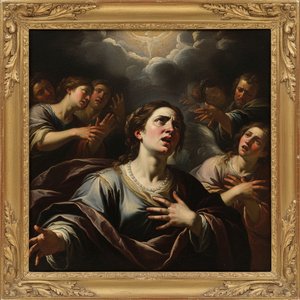
Carlo Dolci's "Self-Portrait," painted in 1674, is not merely a likeness; it’s an intimate glimpse into the soul of a Florentine master. This oil on canvas transcends the conventions of formal portraiture, offering instead a profound meditation on faith, artistic practice, and the quiet dignity of a life dedicated to spiritual contemplation. The painting immediately draws the viewer in with its somber palette – deep blacks, muted browns, and subtle grays—a deliberate choice that evokes a sense of introspection and solemnity, characteristic of Dolci’s distinctive style. The lighting is remarkably soft, diffusing light across his features and highlighting the delicate textures of his clothing, creating an atmosphere both serene and deeply personal.
At the heart of the composition lies Dolci himself, presented with a dignified restraint that speaks volumes about his artistic philosophy. He holds in his right hand a small, painted portrait – likely a devotional image or perhaps a representation of a loved one – a gesture laden with symbolic weight. This inclusion suggests themes of memory, legacy, and the artist’s own relationship to his craft. The crisp lines defining his clothing and face are hallmarks of Baroque realism, yet they're executed with an almost obsessive attention to detail, reflecting Dolci’s meticulous approach to every brushstroke. The subtle layering of elements – Dolci in the foreground, the miniature portrait receding slightly—creates a convincing sense of depth, anchoring the viewer within this intimate space.
The Florentine Baroque and Carlo Dolci's Unique Path
Carlo Dolci’s artistic journey is particularly noteworthy. Unlike many of his contemporaries who flocked to the grandeur of Rome, he remained firmly rooted in the traditions of Florence. This decision shaped his distinctive style—one characterized by a profound sense of piety, an avoidance of dramatic narratives, and an unwavering commitment to detail. He wasn't driven by the ambition of large-scale frescoes or dynamic compositions; instead, Dolci focused on creating small, intensely personal works that explored the depths of religious emotion. His life unfolded against a backdrop of artistic fervor, yet he carved out a unique path defined by quiet intensity and spiritual depth.
His training under Jacopo Vignali provided him with a solid foundation, but it was Dolci’s own innate talent—demonstrated early through works like the infant Christ – that truly set him apart. He wasn't interested in merely replicating reality; he sought to capture the essence of faith and devotion, imbuing his paintings with an almost palpable sense of spirituality. This dedication is evident in the meticulous rendering of his features, particularly the subtle nuances of light and shadow that bring his face to life.
Symbolism and the Miniature Portrait
The inclusion of the small painted portrait held by Dolci adds another layer of complexity to the work. While its precise meaning remains open to interpretation, it likely functions as a symbolic representation of memory, legacy, or perhaps even an embodiment of someone significant in his life. The act of holding this miniature image suggests a deep connection to the past and a reverence for those who have shaped his artistic vision. It’s a poignant reminder that art is not simply about depicting reality but also about preserving and honoring it.
Furthermore, Dolci's consistent repetition of compositions—often creating multiple versions of the same subject—underscores his methodical approach to painting. This practice wasn’t driven by mere habit; rather, it reflected a deep understanding of the spiritual power inherent in each image. Each iteration served as an opportunity for him to refine his technique and deepen his connection with the subject matter.
A Timeless Testament to Spiritual Devotion
Carlo Dolci’s “Self-Portrait” is more than just a painting; it's a window into the soul of a master artist. It stands as a testament to the power of faith, the beauty of meticulous craftsmanship, and the enduring appeal of quiet contemplation. Reproductions of this work offer a remarkable opportunity to experience the serenity and spiritual depth that defined Dolci’s artistic legacy—a legacy that continues to resonate with viewers today.
Gyakran Ismételt Kérdések
Mi a „Self-Portrait”, Carlo Dolci alkotása általános hangulata?
A „Self-Portrait”, Carlo Dolci alkotása hangulata Calm, ami segíthet a mű megfelelő környezetbe illesztésében.
Milyen nyomtatási méretet javasolunk a(z) „Self-Portrait”, Carlo Dolci alkotása alkotáshoz?
A "Self-Portrait" alkotás esetében a Medium nyomtatási méret javasolt. Ugyanakkor ugyanazon arányokban elérhető egyéb méretű változat is.
Hogyan tölthetem le a(z) „Self-Portrait”, Carlo Dolci alkotása képét?
A „Self-Portrait”, Carlo Dolci alkotása képe letölthető a mű alkotásának Letöltés oldaláról: magas felbontású digitális kép letöltés.
A művész életrajza
Egy firenzei barokk áhítat mestere
Carlo Dolci, Firenze városában 1616-ban született festő a barokk művészet egyik legérdekesebb alakja – munkái mély vallásossága és precíz technikája biztosították helyét az akkori keresett művészek között. Sok kortársával ellentétben, akik Rómába vonzódtak annak nagyszerűségéért, Dolci hű maradt a firenzei hagyományokhoz, olyan stílust alakítva ki, amelyet csendes intenzitás és mély spirituális mélység jellemez. Élete egy művészeti láz közepén zajlott, mégis egyedi utat vájt magának, melyet nem a nagyszabású termelékenység, hanem a részletek iránti töretlen elkötelezettség és az érzelmi rezonancia határozott meg. Már legkorábbi tanulmányai során Jacopo Vignali műhelyében tehetségét mutatta, gyorsan megalapozva hírnevét a pontosságban, ami munkásságának védjegyévé vált. Nem tágas kompozíciókra vagy dinamikus narratívákra törekedett; ehelyett intime ábrázolásokra koncentrált vallási témákban, gyakran megismételve kedvelt motívumait – ez a tartós vonzalom és talán módszeres megközelítése is tükröződött benne.Korai élet és művészeti formálódás
Dolci művészi útja egy olyan családban kezdődött, amelyet már átsuhintott a kreativitás szelleme, korán táplálva veleszületett képességeit. Rendkívül fiatalon Jacopo Vignalihoz került tanítónak, és elsajátította a drámai fellángolásra híres mester leckéit, ám Dolci hamarosan saját hangot kezdett formálni. Már fiúként is kitartóan törekedett a legapróbb részletek megragadására és az érzelmi súly közvetítésére. Számos történet kering pontos megközelítéséről – egy olyan elkötelezettségről, amelyről azt mondják, hogy heteket vett igénybe akár csak egyetlen végtag elkészítése is. Ez a lassú tempó nem lassan való munkálkodásból fakadt, hanem az iránti mély vágyból, hogy minden ecsetvonást spirituális jelentőséggel ruházzon fel. Gyorsan elismertté vált firenzei körökben, prominens családok megbízásait szerezve és felállítva saját műhelyét még a felnőttkor betöltése előtt. Míg más művészek Rómába törekedtek a pezsgő művészeti élet érdekében, Dolci Firenzében maradt, mélyen kapcsolódva annak hagyományaihoz és mecénásaihoz. Ez a szülővárosához való kitartó lojalitás nemcsak karrierjét alakította, hanem a művészetének lényegét is meghatározta.Stílus és kiemelkedő alkotások
Dolci stílusa azonnal felismerhető – gazdag színpaletta, precíz részletesség és mély érzelmi kifejezés harmonikus keveréke. Képfestményei nem a nagyszabású látványosságra építenek; a hit bensőséges találkozásai, olyan gyengédséggel ábrázolva, amely elgondolkodásra ösztönöz. Gyakran szentek életéből vett jeleneteket és bibliai történeteket festett, csendes odaadás vagy fájdalmas szenvedés pillanataira koncentrálva. A Szent Sebestyén például nem egy hősi mártírként, hanem spirituális gyötrelmekben elmerült alakként jelenik meg, testét kifinomultan ábrázolva a sebezhetőség hangsúlyozása érdekében. Hasonlóképpen, az evangélisták négy portréja mély pszichológiai érzékenységet mutat, egyéni személyiségüket figyelemre méltó finomsággal rögzítve. A Krisztus a kenyeret töri, egy másik ünnepelt alkotás, példázza képességét arra, hogy szent pillanatokat visszafogott eleganciával és érzelmi erővel közvetítsen. Lányát, Agnese Dolcit fontos szerepet játszott művészeti látókörének terjesztésében, ügyesen készítve apja festményeinek másolatait, amelyek tovább növelték elérését és befolyását. Ezek a reprodukciók, bár nem eredeti alkotások, tanúskodnak Dolci munkáinak iránti keresletéről és stílusának tartós vonzerejéről.Örökség és történelmi jelentőség
Carlo Dolci hatása a firenzei művészetre vitathatatlan. Kulcsfigura a város barokk stílusának fejlődésében, jelentős mértékben hozzájárulva annak gazdag művészeti örökségéhez. Bár korábbi mesterek, mint Giovanni Bellini és Bramantino befolyásolták, saját egyedi utat vájt magának, amelyet a csendes intenzitás és vallásos fókusz jellemzett, amely megkülönböztette kortársaitól. Képfestményei ma is tekintélyes intézményekben díszítenek, mint például a firenzei Uffizi Galéria, ahol a Contini Bonacossi Gyűjtemény különösen gazdag reprezentációt kínál munkásságáról. Dolci alkotásainak tartós vonzereje nemcsak műszaki bravúrjukban rejlik, hanem képességükben is arra, hogy mély spirituális érzelmeket váltsanak ki. Nem csupán vallási jeleneteket festett; vizuális meditációkat teremtett a hitről, meghívva a nézőket, hogy személyes szinten kapcsolódjanak az istenséghez. Öröksége túlmutat képein – művészeti kiválóság iránti elkötelezettséget és a művészet erejébe vetett hitet képvisel, amely áhítatot és elmélkedést inspirál. Még ma is Dolci remekműveinek felfedezése betekintést nyújt a 17. századi Firenze szívébe és a barokk művészet tartós erejébe.
Carlo Dolci
1616 - 1686 , Olaszország
Gyors információk
- Artistic Movement Or Style: Barokk
- Artists Or Movements Influenced By This Artist: ['Agnese Dolci']
- Artists Who Influenced This Artist: ['Jacopo Vignali']
- Date Of Birth: 1616. május 25.
- Date Of Death: 1686. január 17.
- Full Name: Carlo Dolci
- Nationality: Olasz
- Notable Artworks:
- St Sebastian
- Christ Breaking Bread
- Place Of Birth: Firenze, Olaszország
Kapcsolódó cikkek

Barokk dráma: A nagyság és az érzelem bevonása a kortárs belső terekbe
Fedezze fel a barokk stílus nagyságát és drámáját! Ismerje meg a belsőépítészet jellegzetességeit, inspirálódjon híres enteriőrökből, és valósítsa meg álmai luxus otthonát szakértő útmutatásunkkal.

Drama and Light: A Definitive Guide to the Italian Baroque Masterpieces and the Revolution of Chiaroscuro
Explore the dramatic world of Italian Baroque art. Discover how masters like Caravaggio used chiaroscuro and tenebrism to revolutionize painting through light, shadow, and profound realism. A definitive guide for history lovers and art collectors.
Chiaroscuro and Soul: A Definitive Guide to the Drama and Emotion of Italian Baroque Masterpieces
Embark on a sophisticated journey through Italian Baroque art. Discover the dramatic interplay of light and emotion in Caravaggio’s masterpieces and explore how to bring this timeless grandeur into your collection with expert art insights.

A Barokk Mesterek 10 Legikonikusabb Remekműve – OriginalUniqueArt.com
Fedezze fel a barokk művészet 10 legpártosabb remekművét! Caravaggio, Rembrandt és Vermeer alkotásainak története – OriginalUniqueArt.com kínálatában exkluzív reprodukciók és inspiráló dekorációs ötletek várják Önt. Nézze meg most!

Baroque Classicism: The Grandeur of Order and Drama in 17th-Century Art History
Explore the profound elegance of Baroque Classicism. Discover how 17th-century masters synthesized dramatic emotion with classical order through the lens of the Counter-Reformation and the works of legends like Carlo Maratta and Andrea Sacchi.

